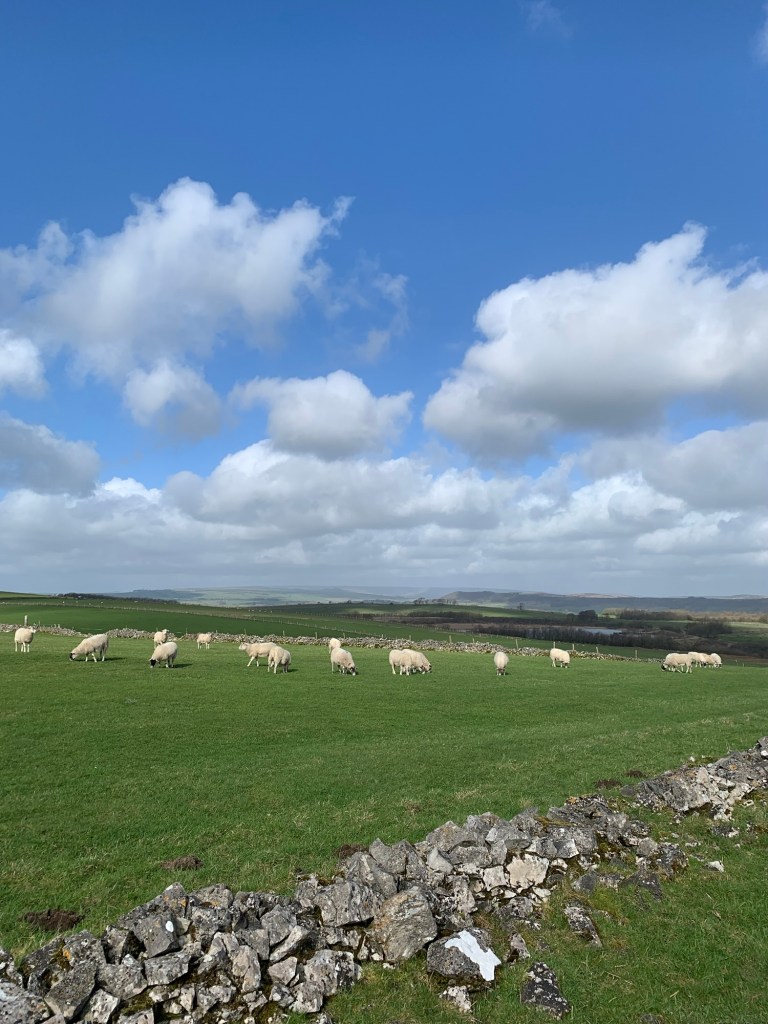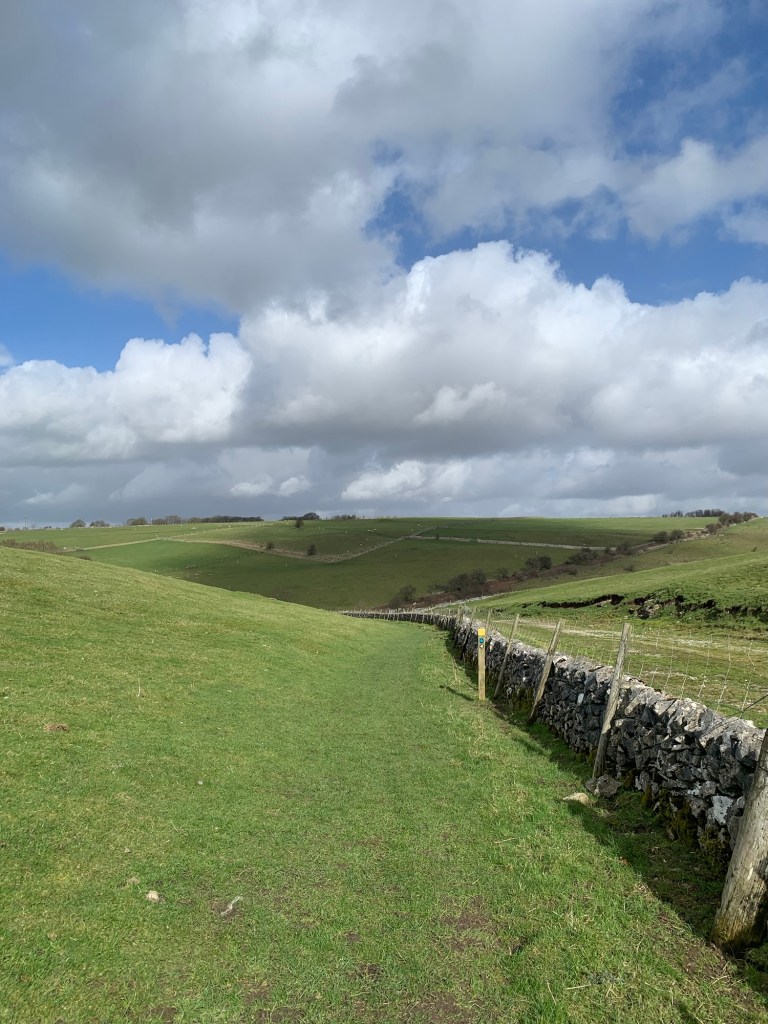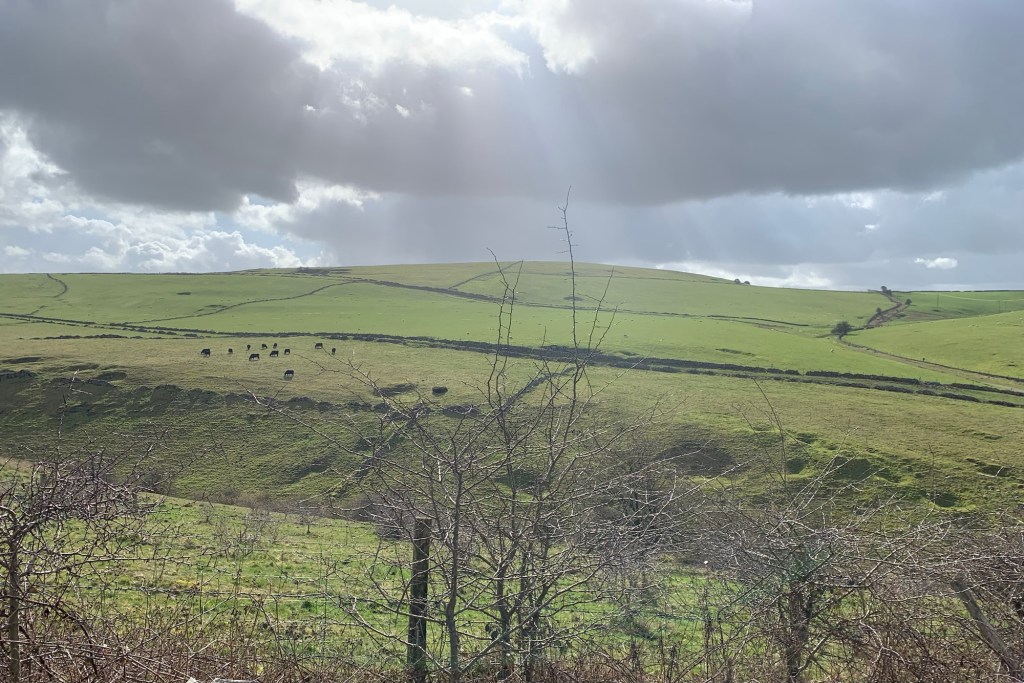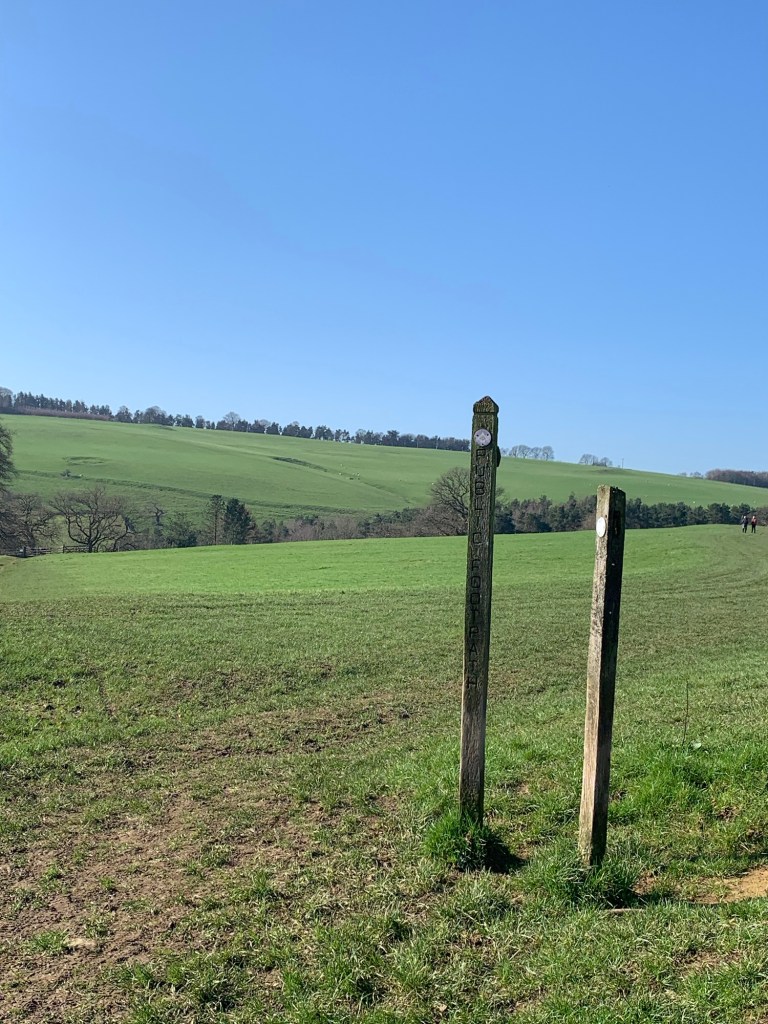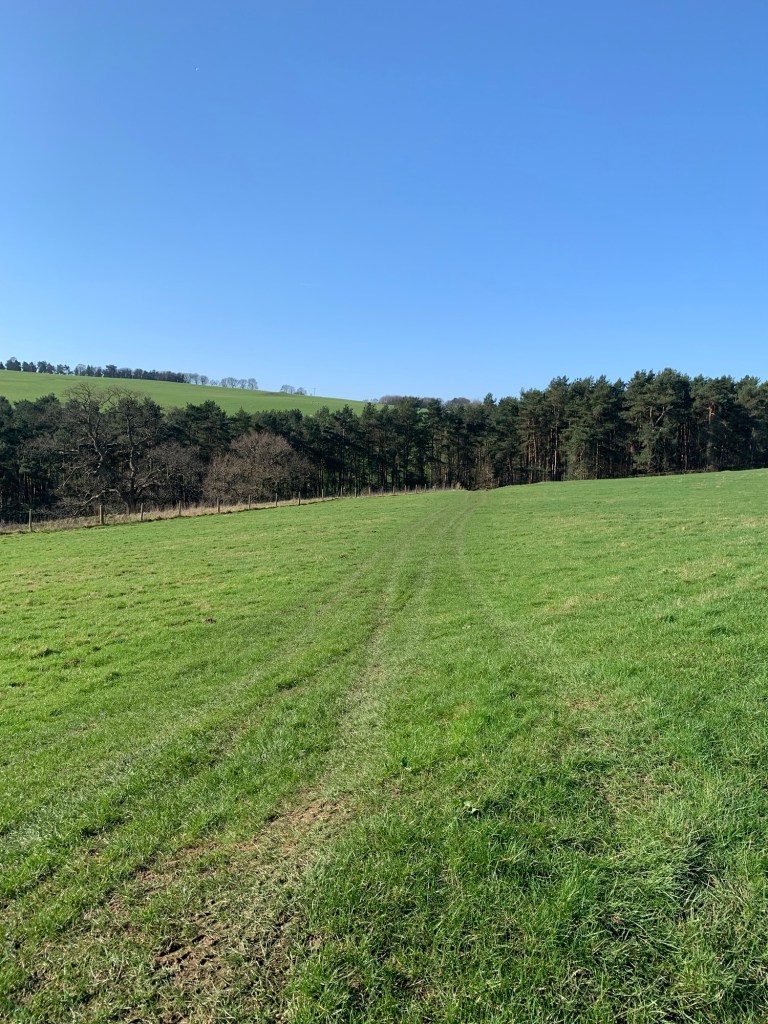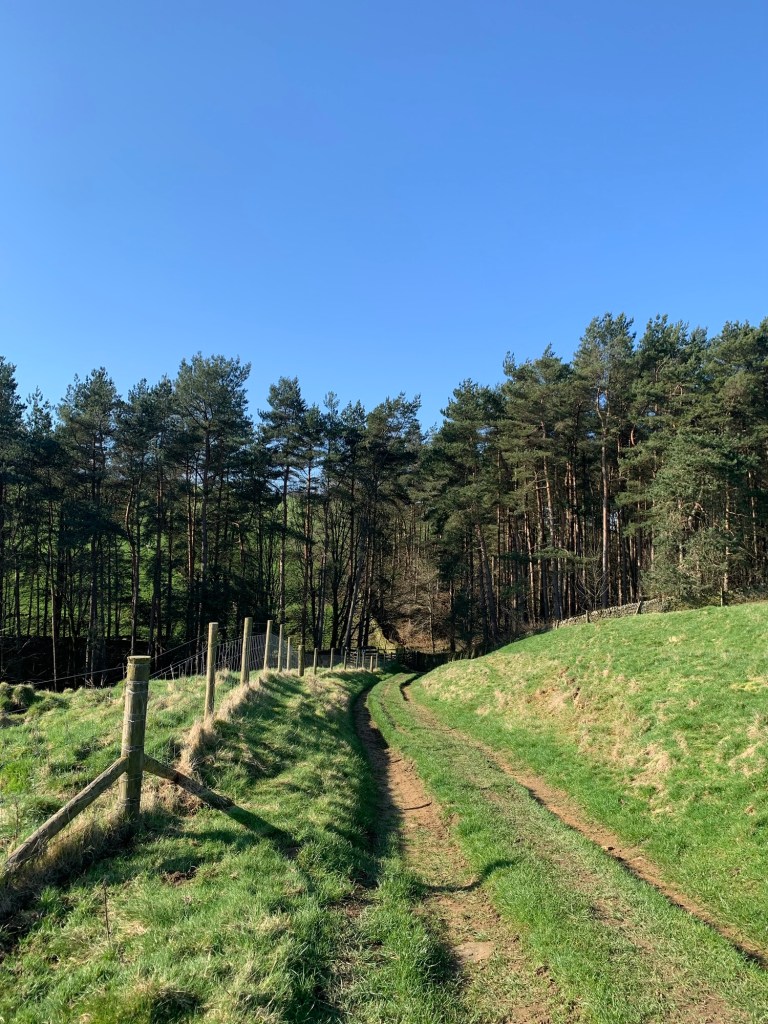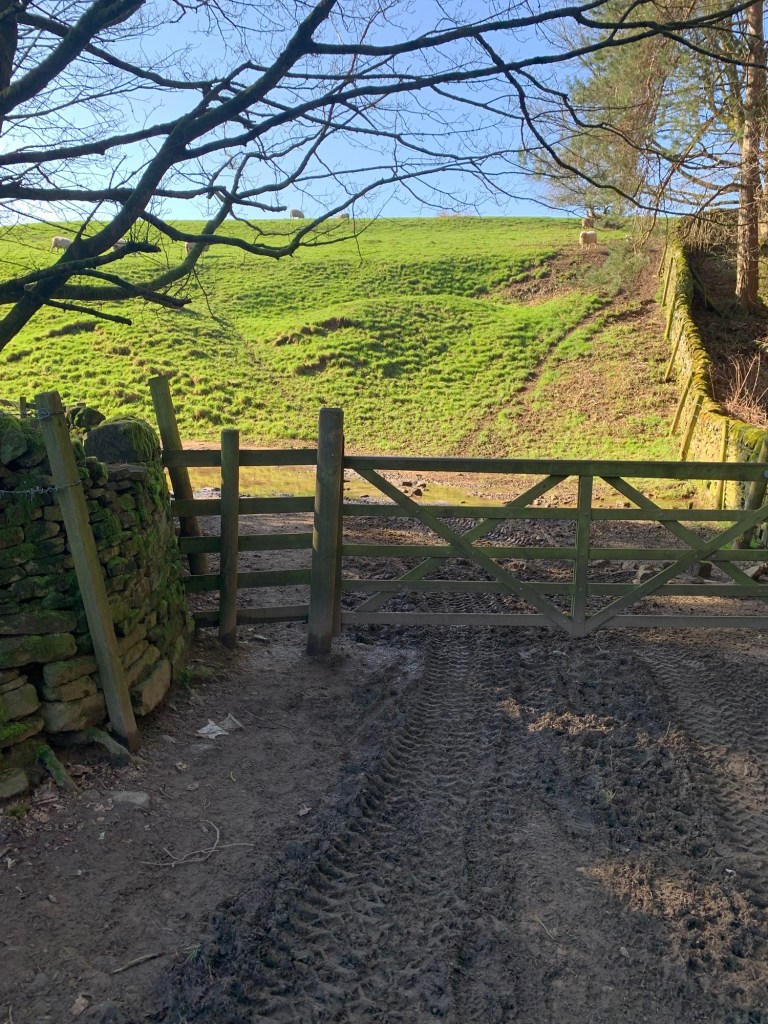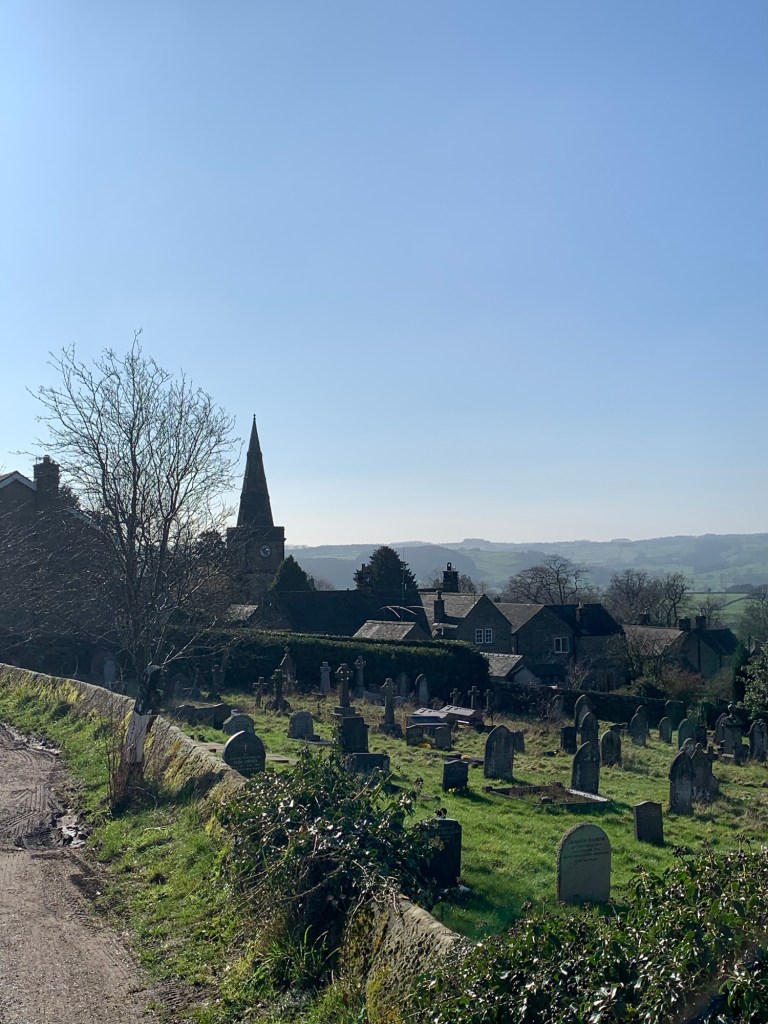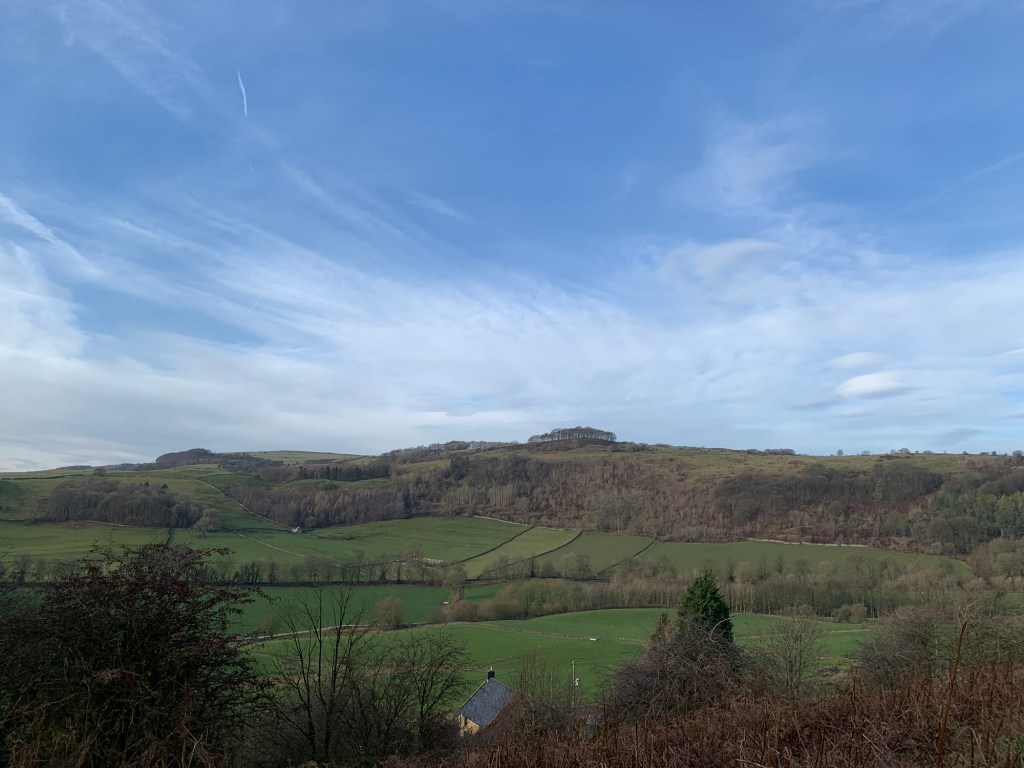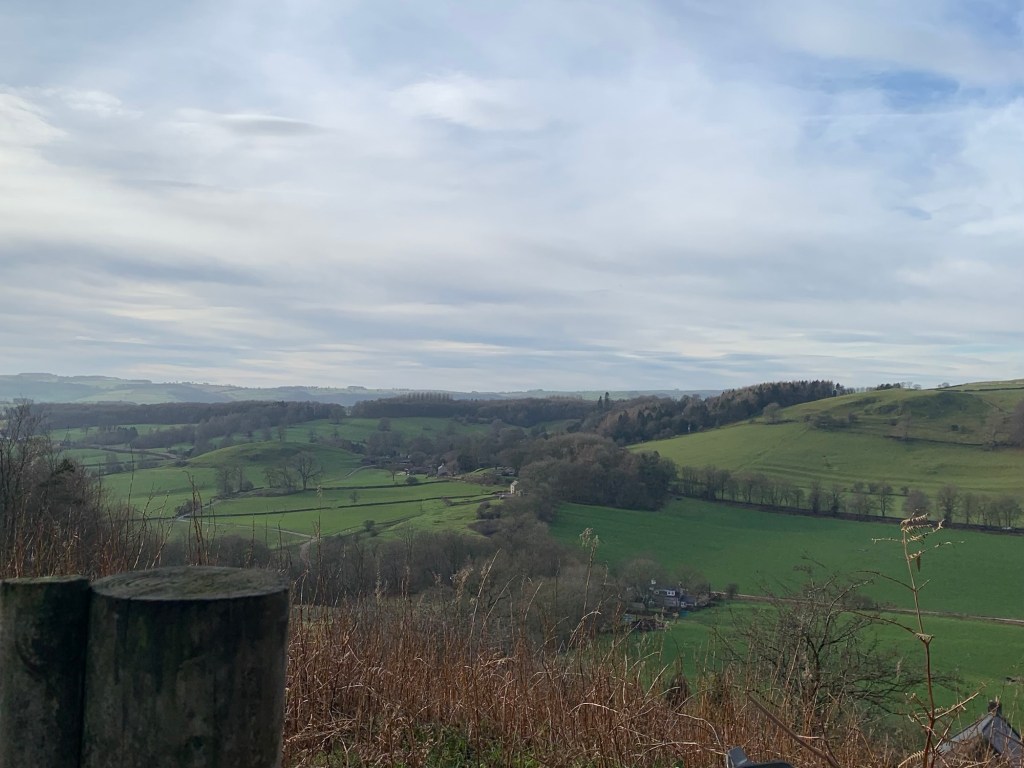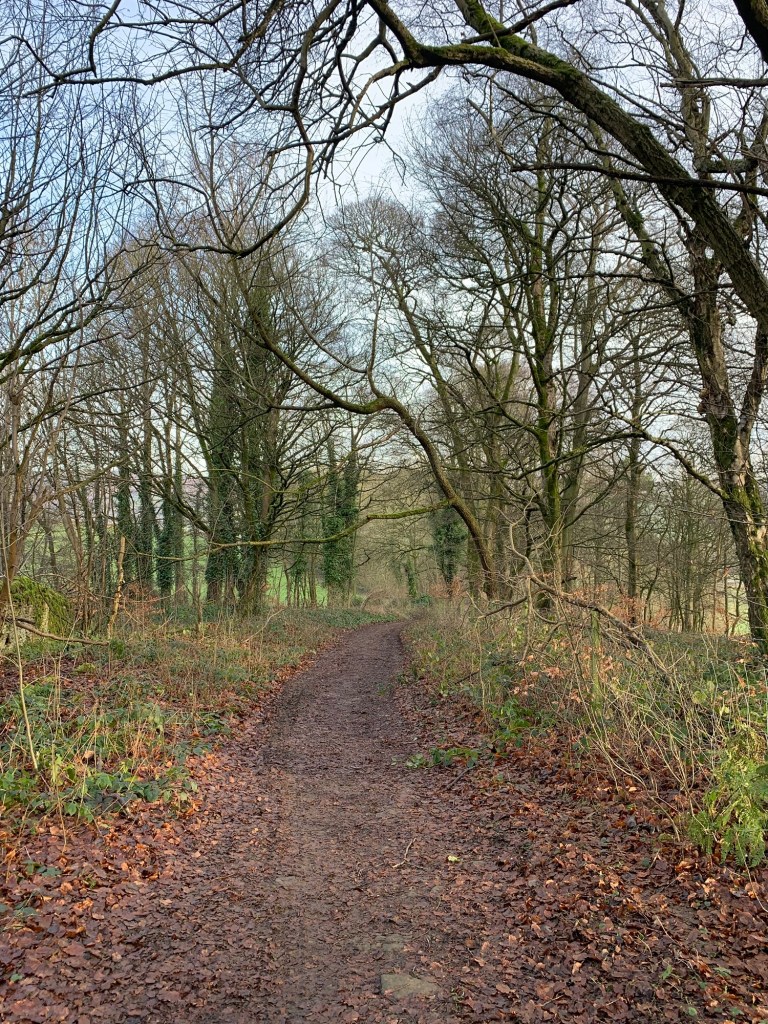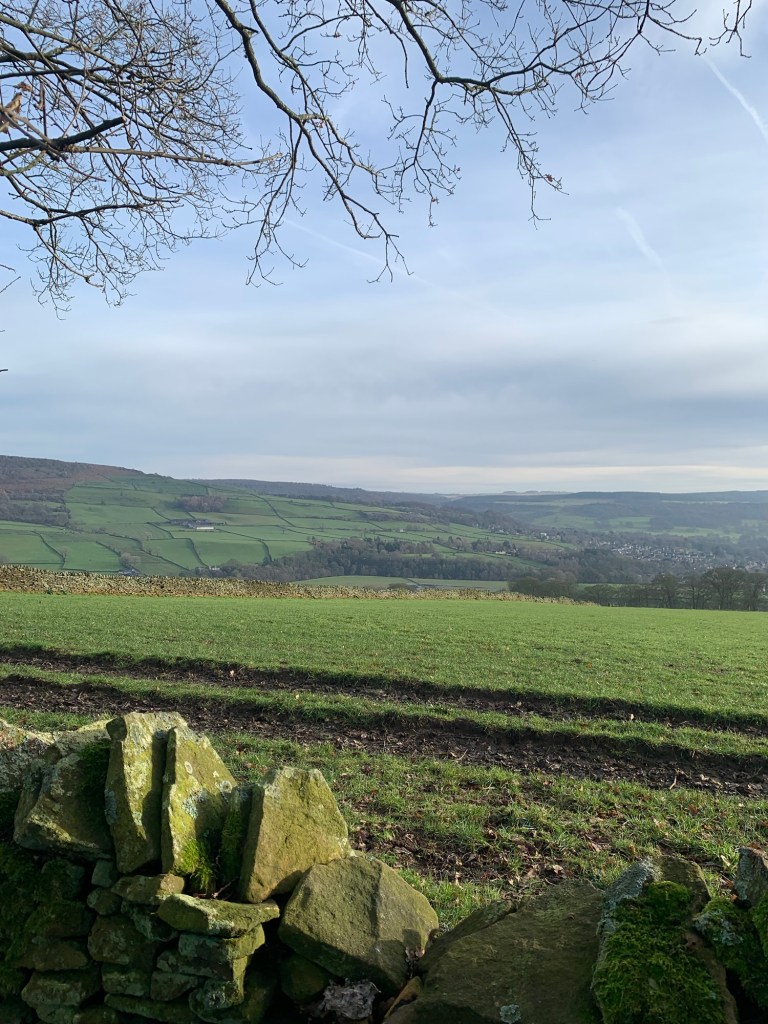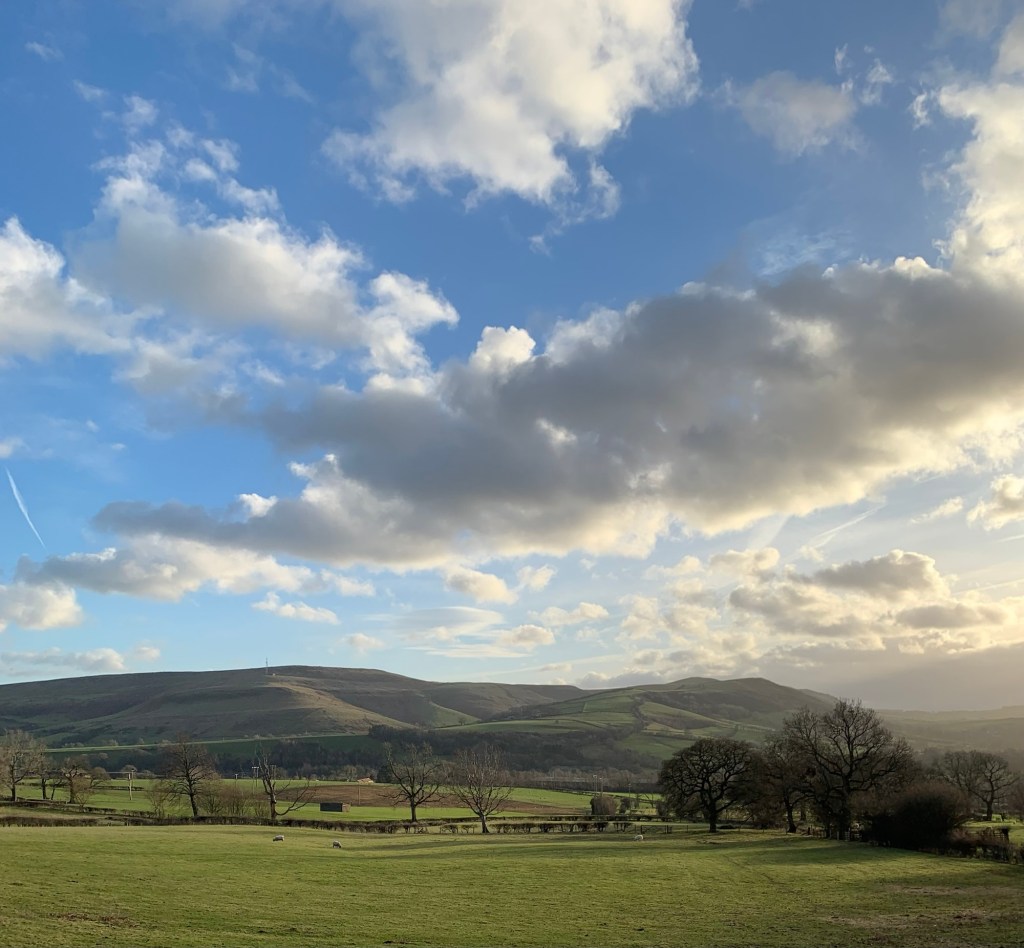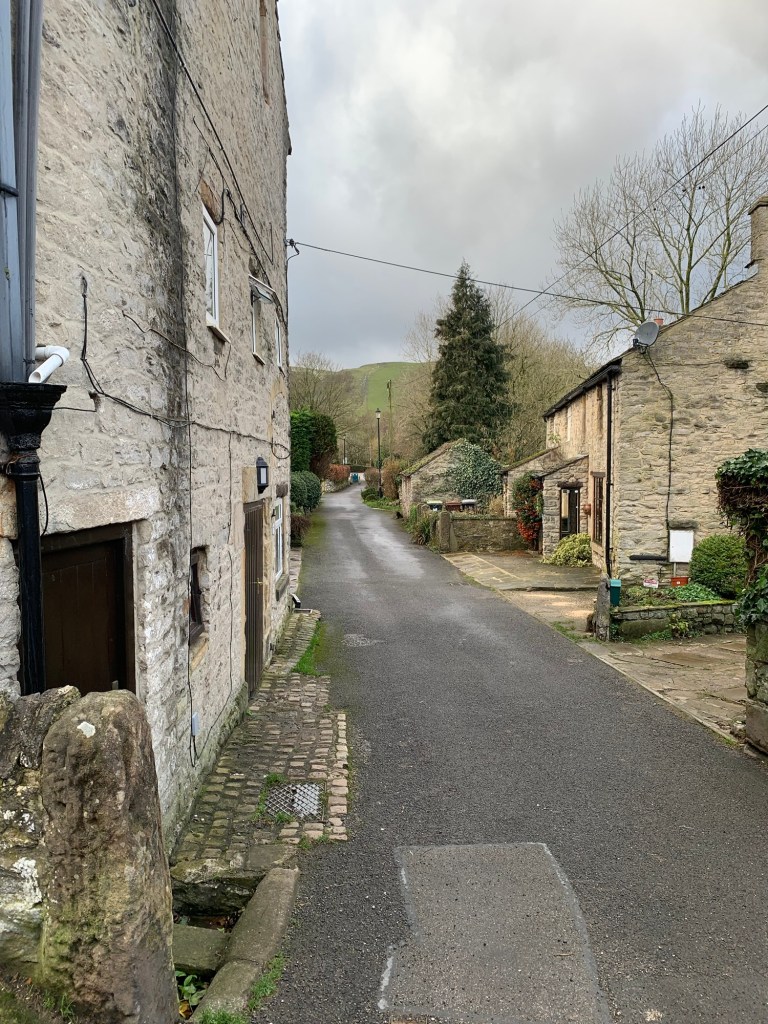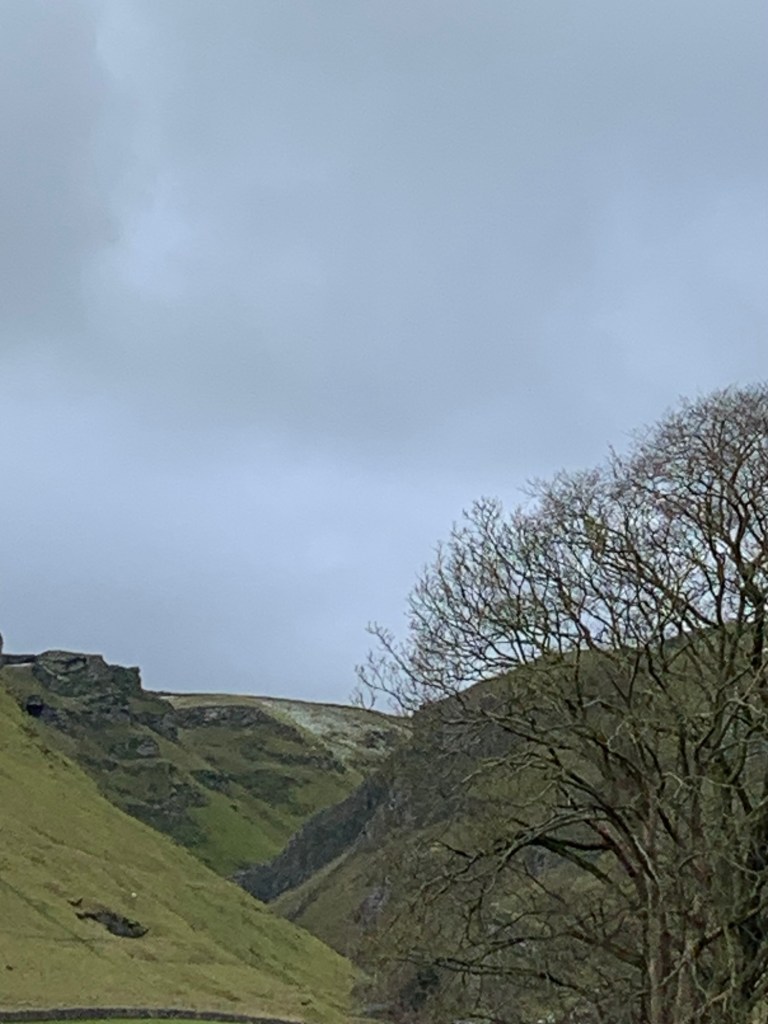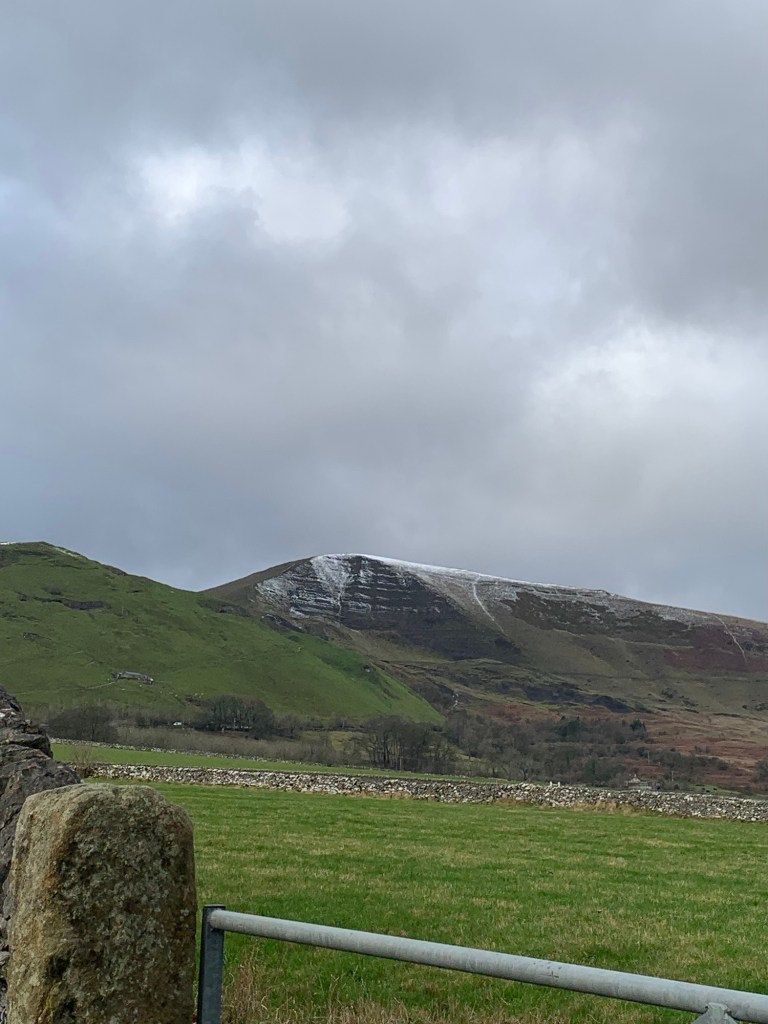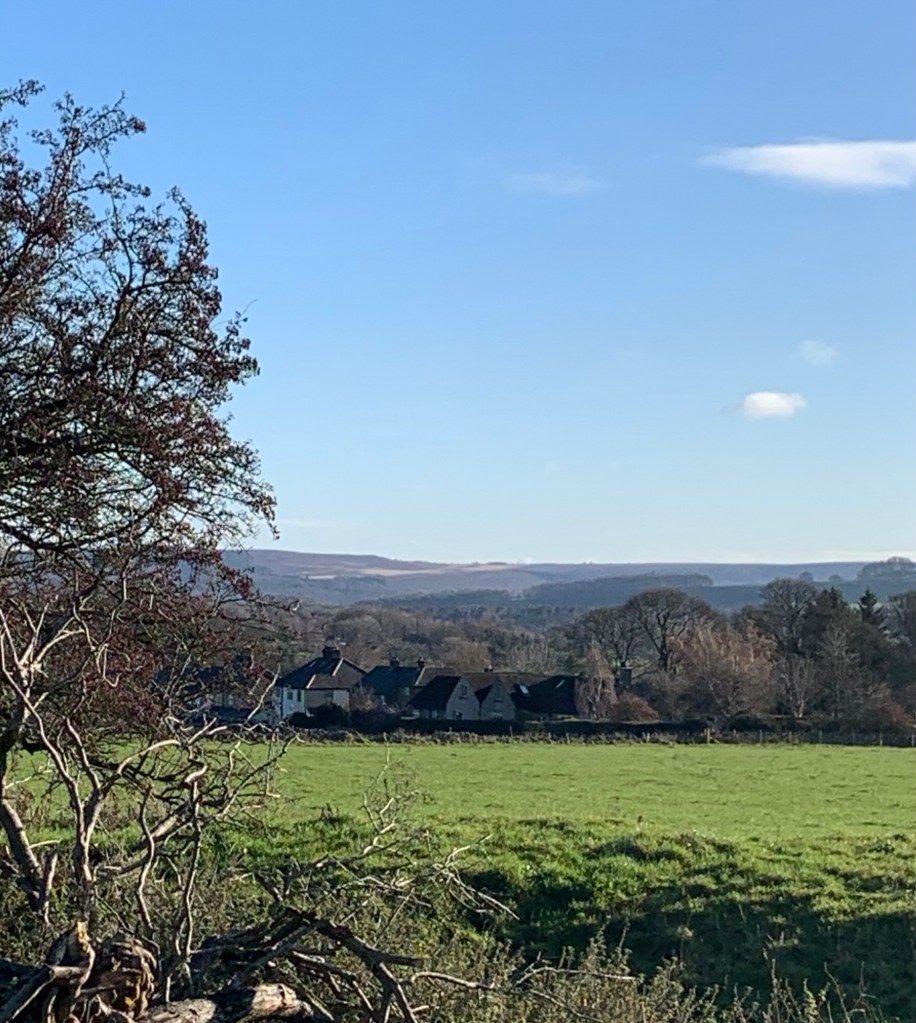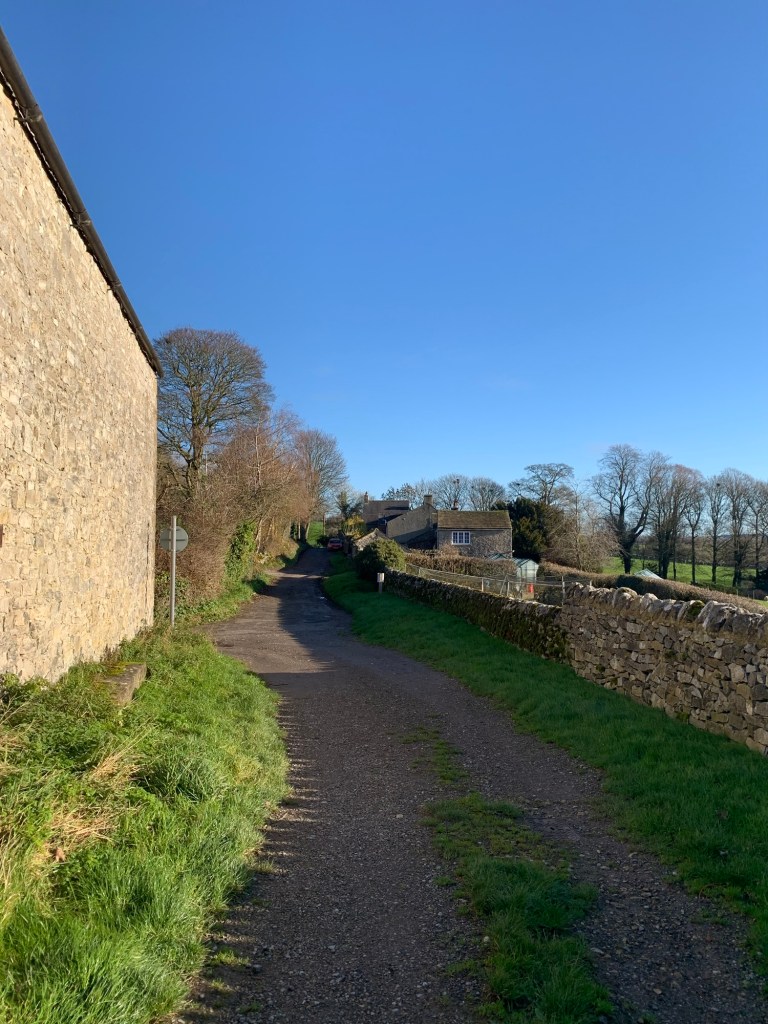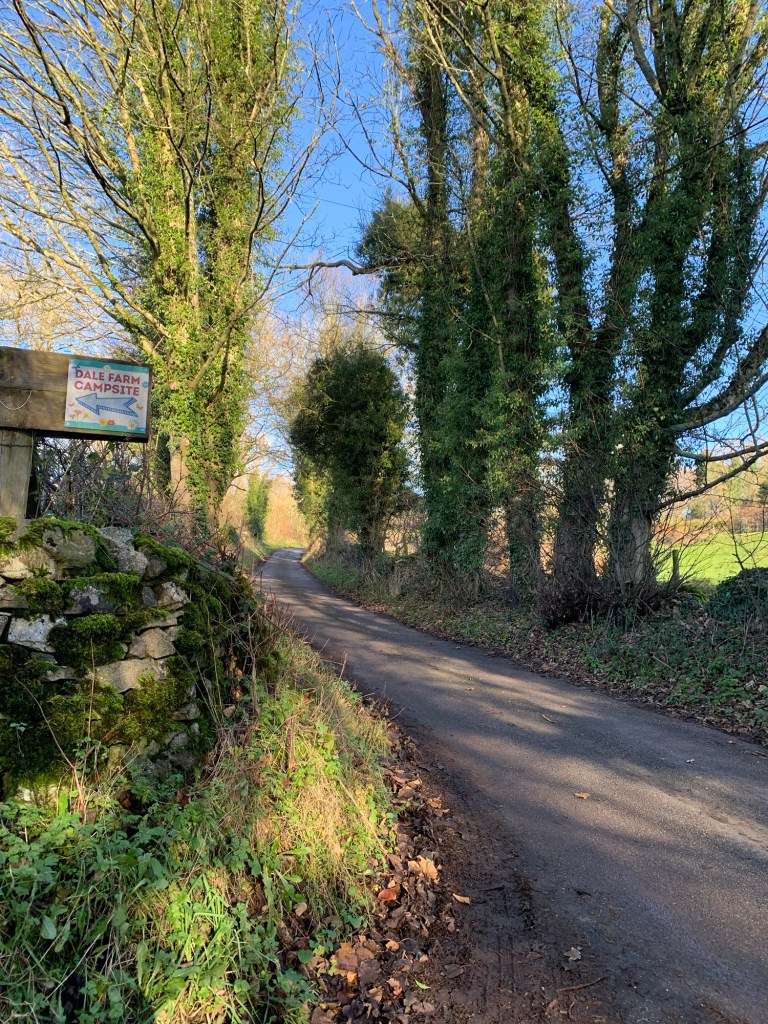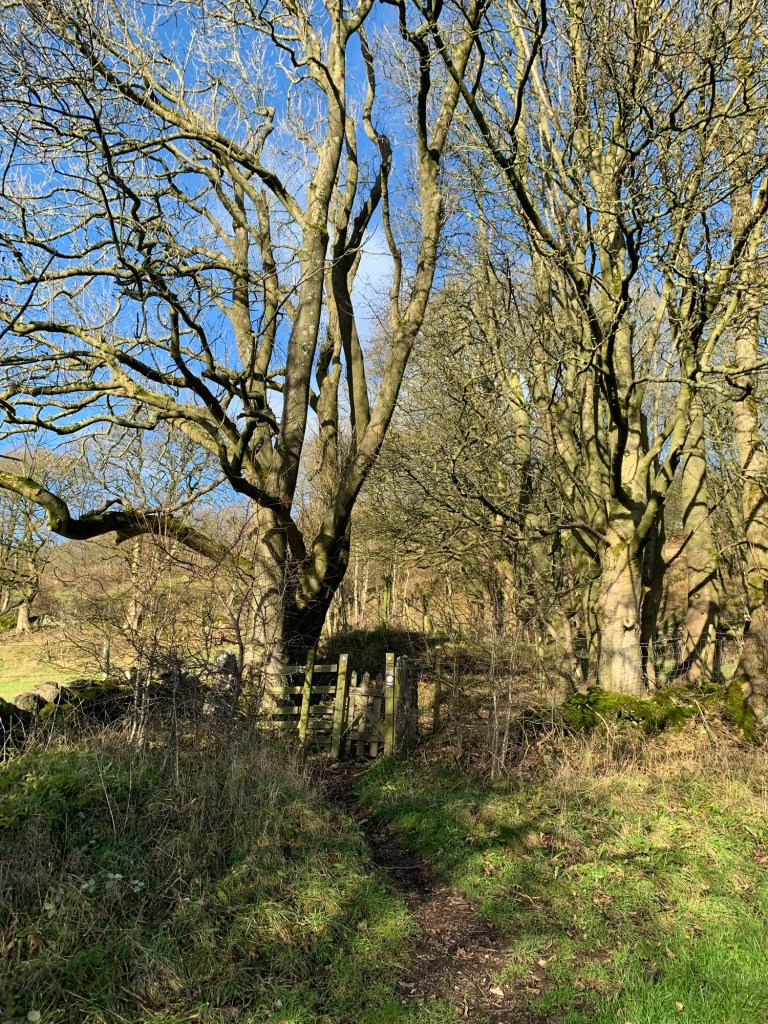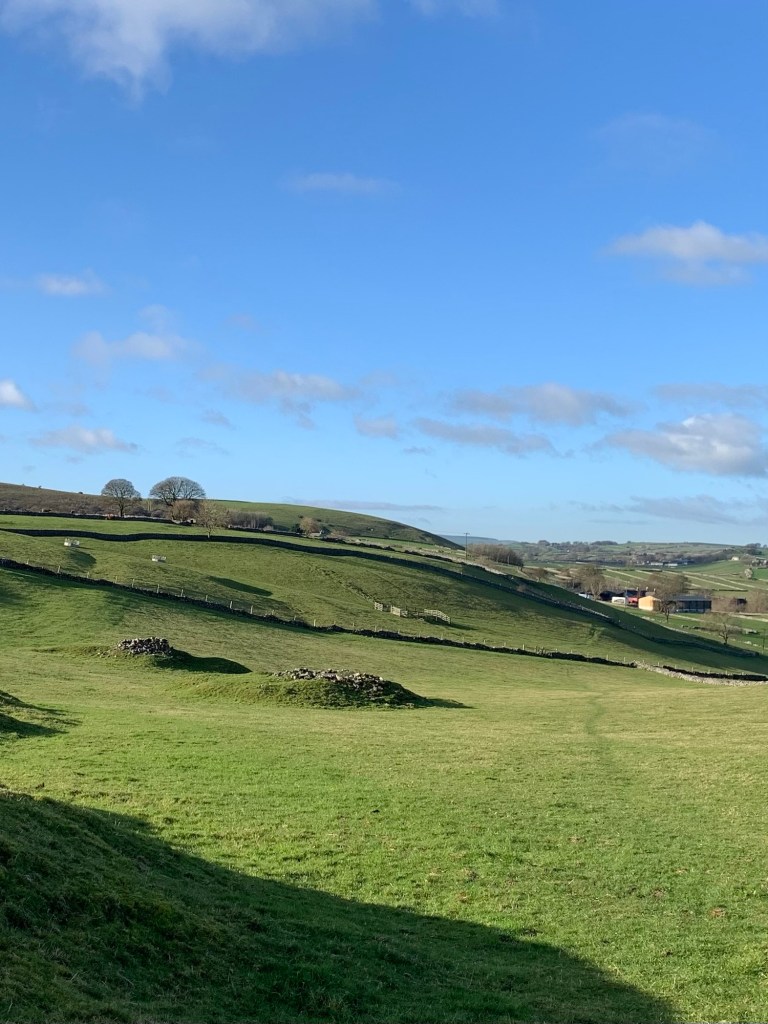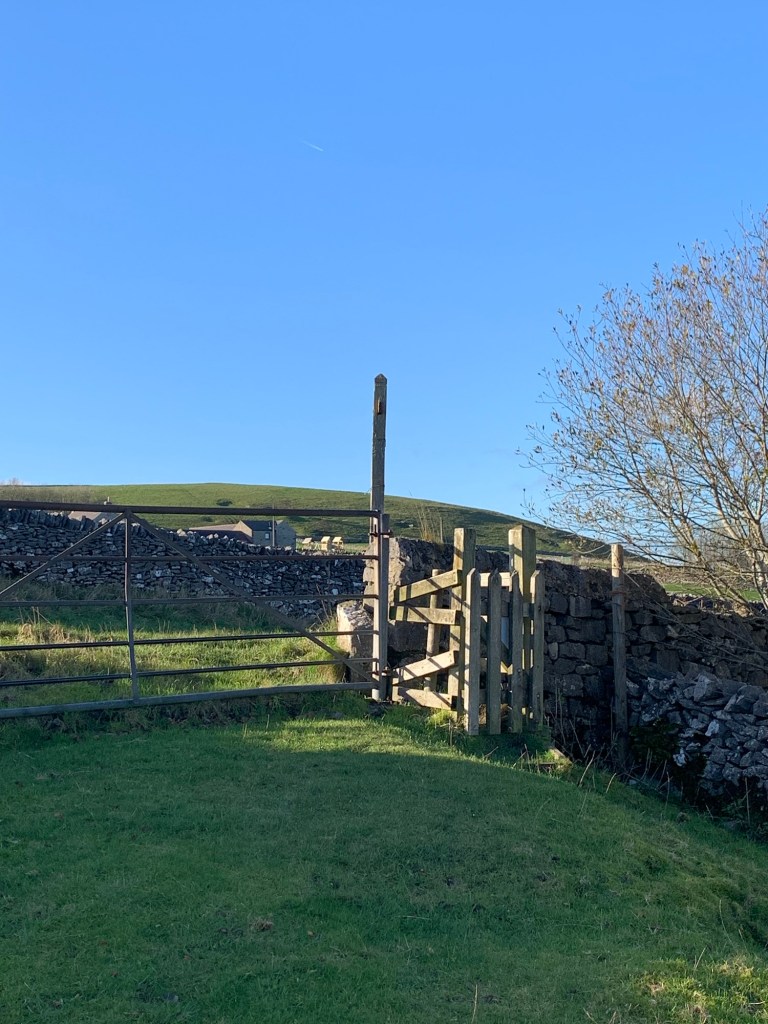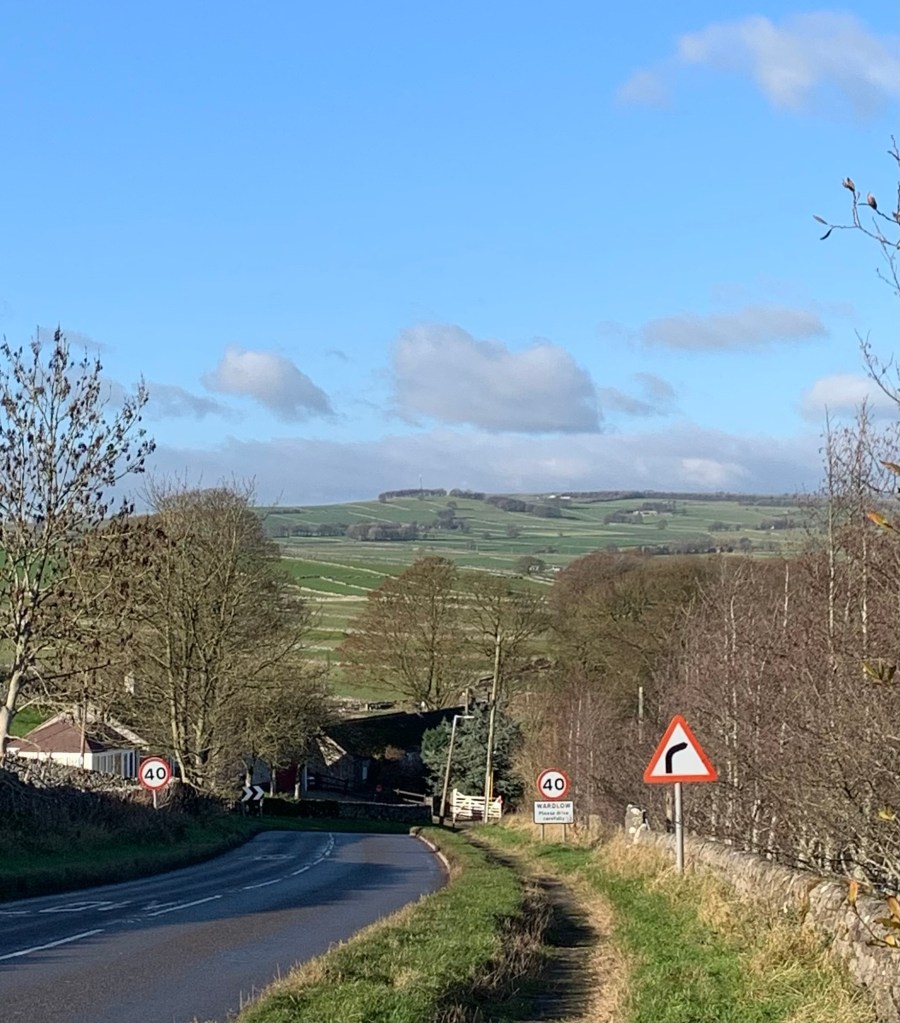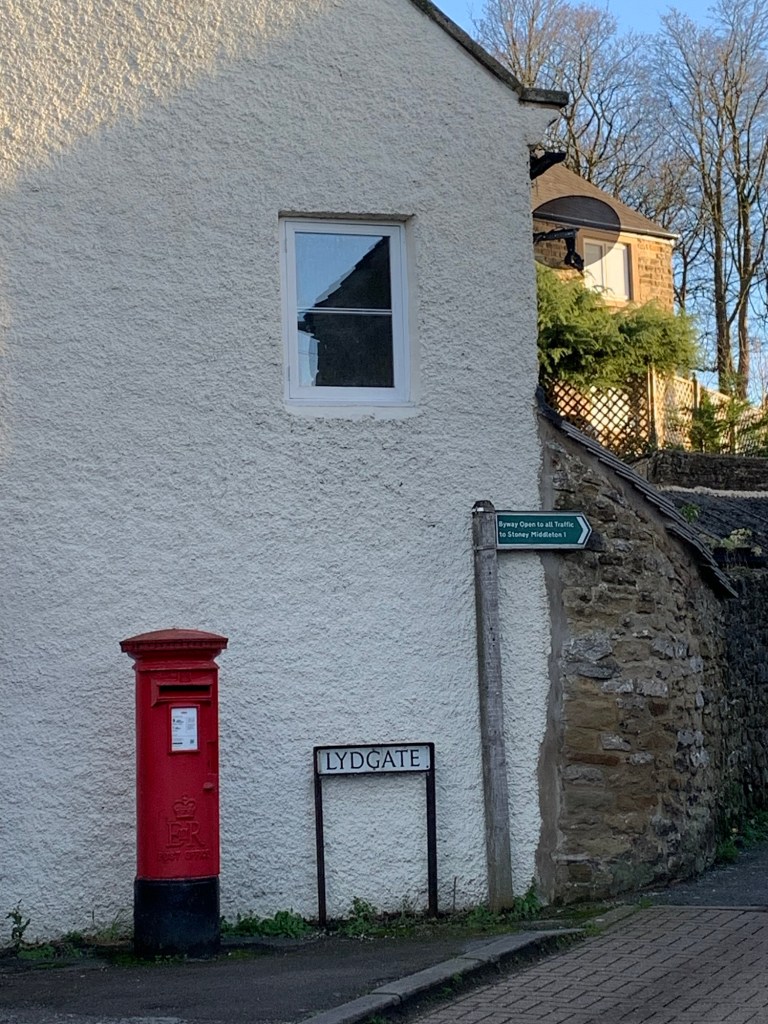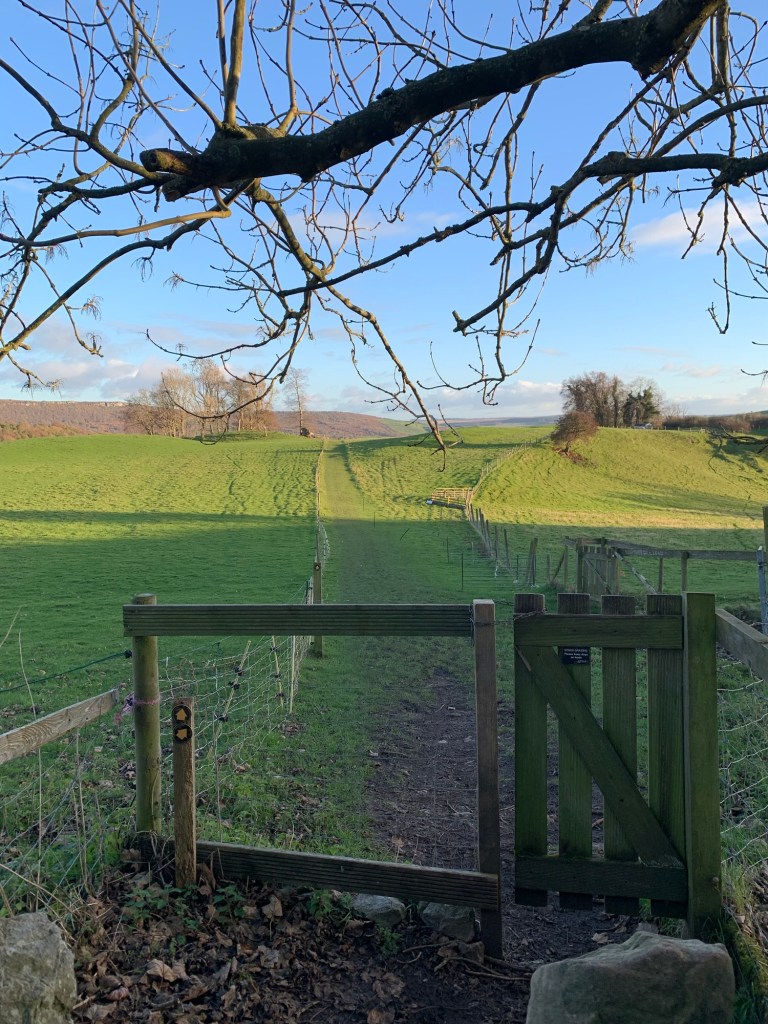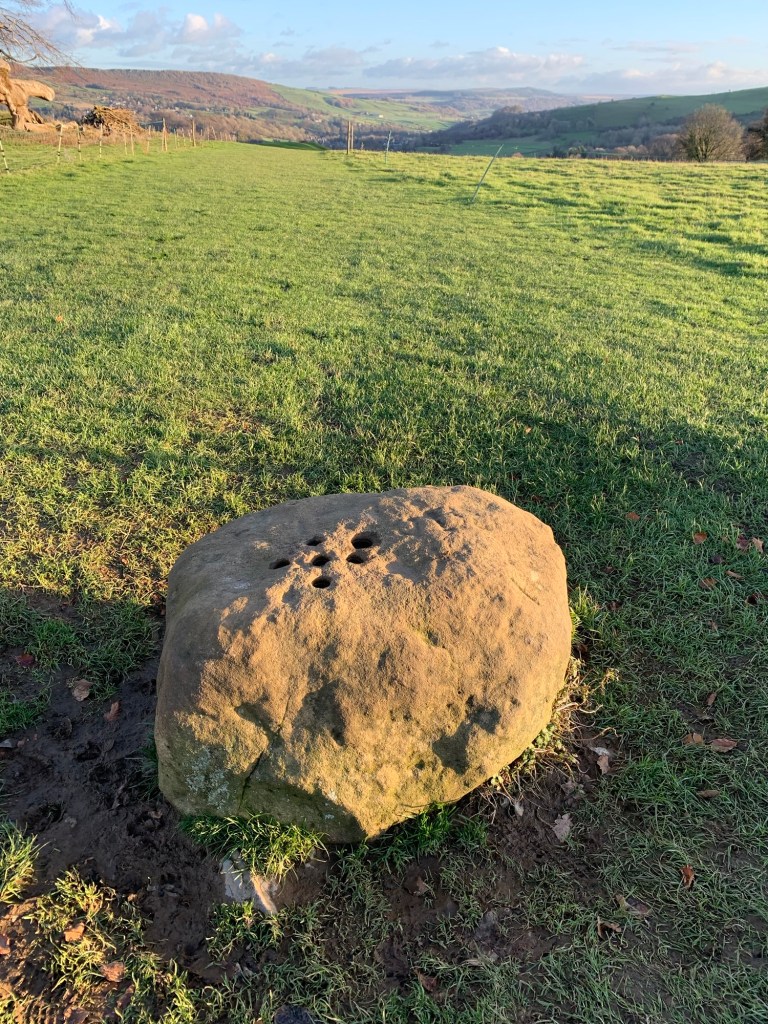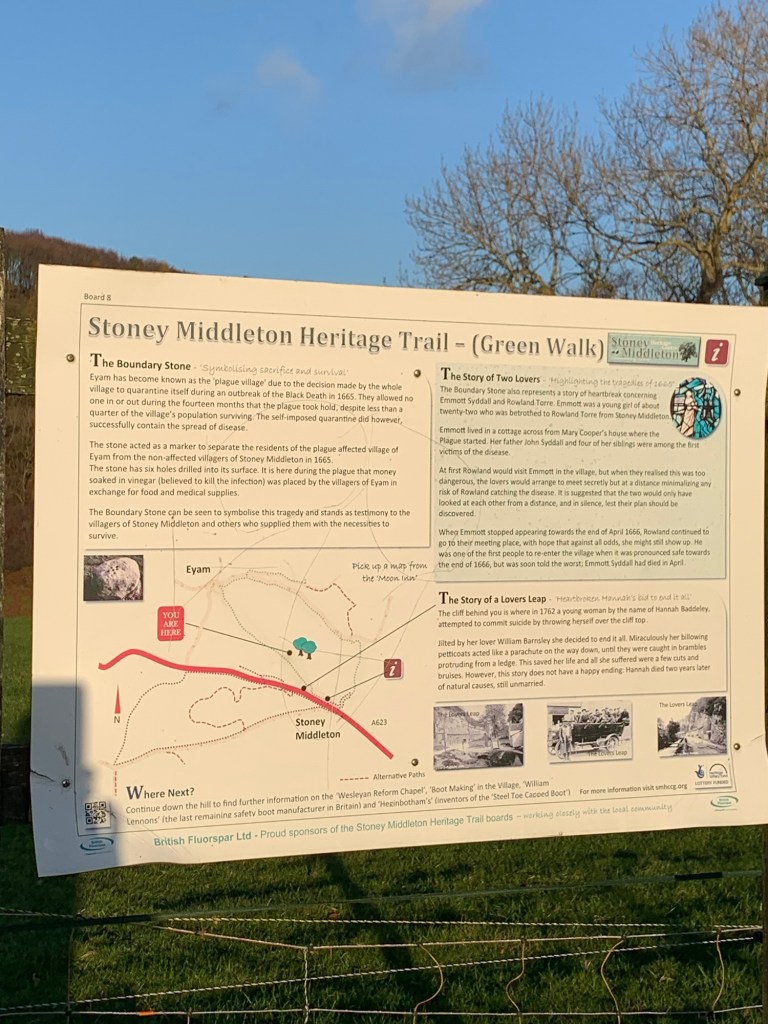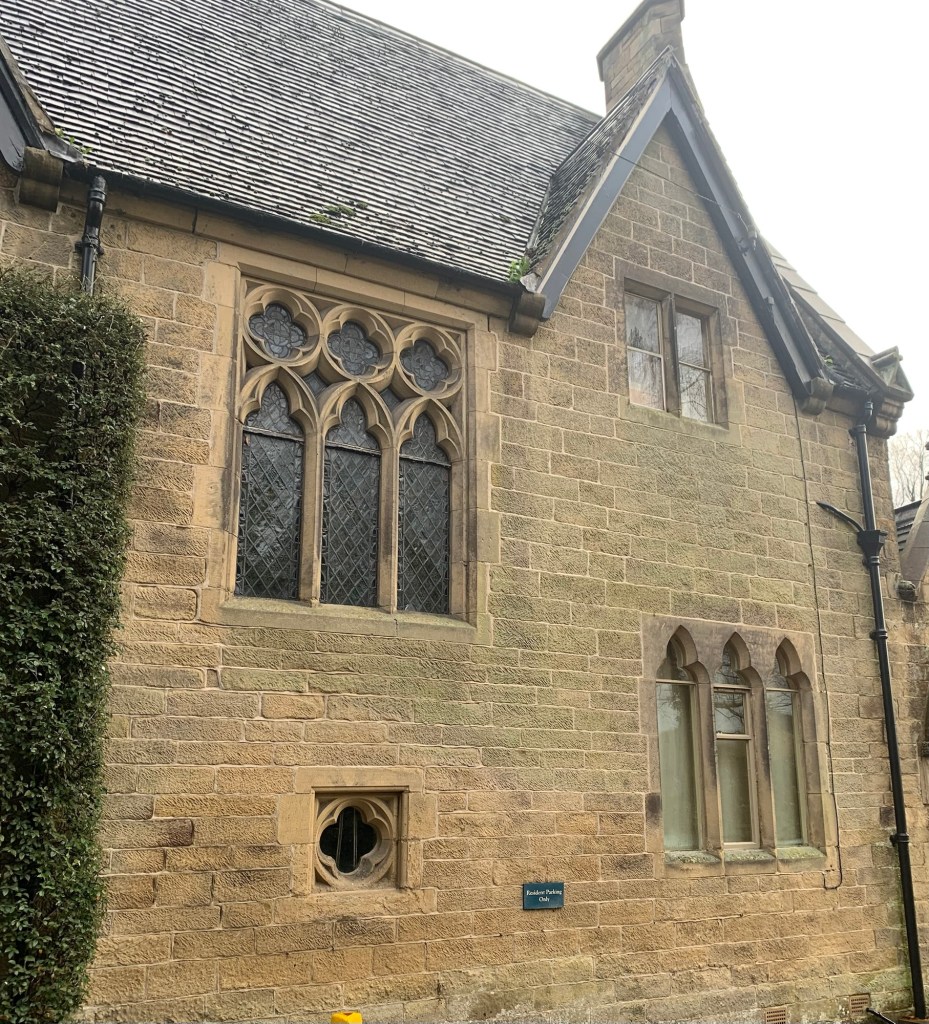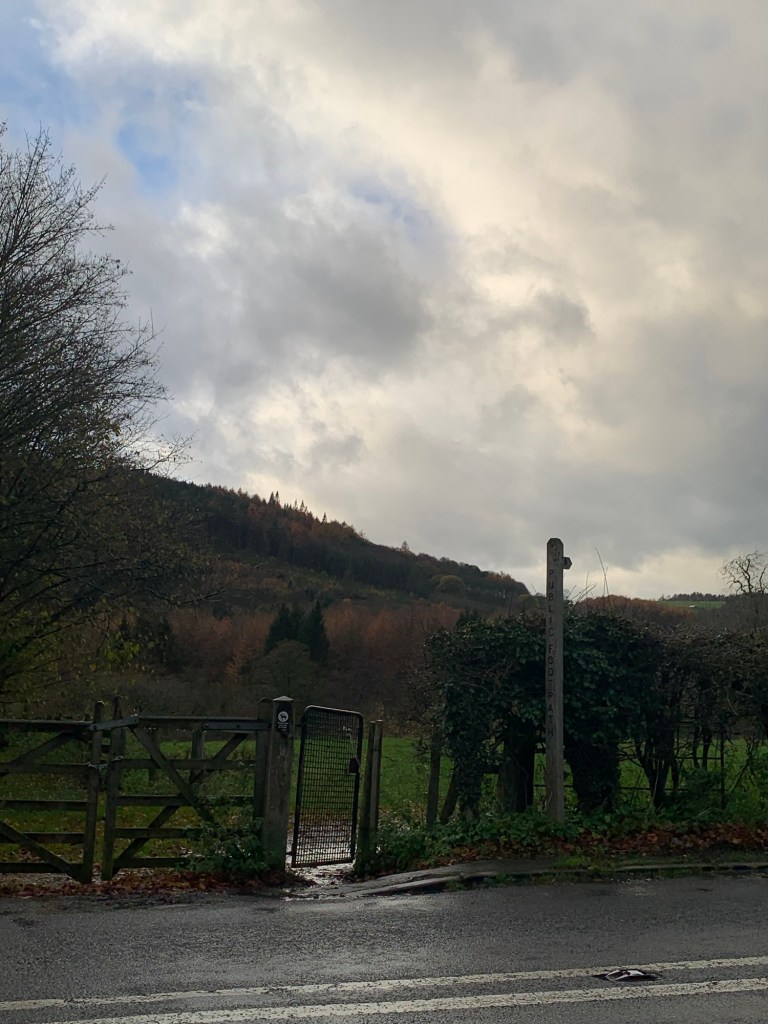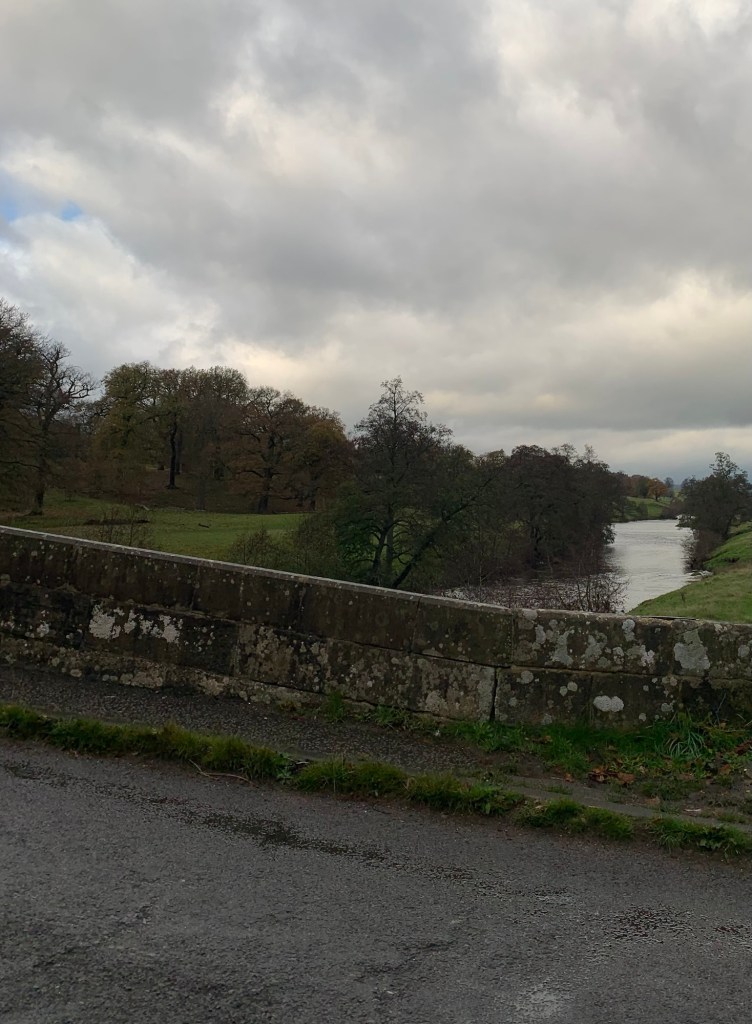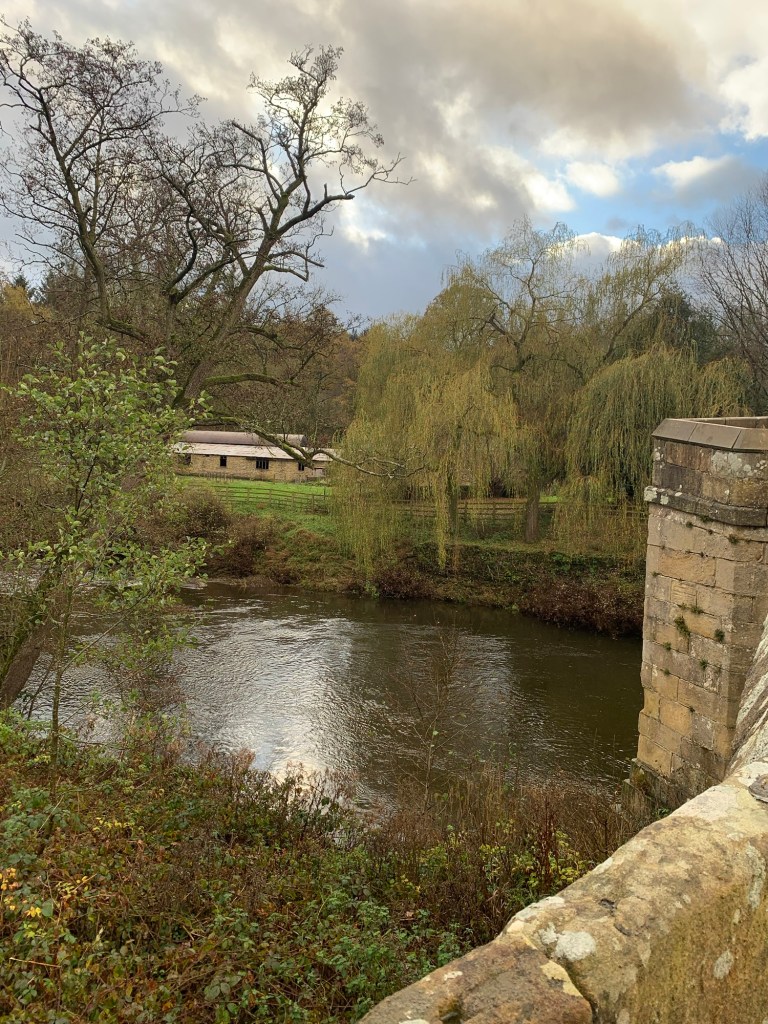
• T is for Tideswell

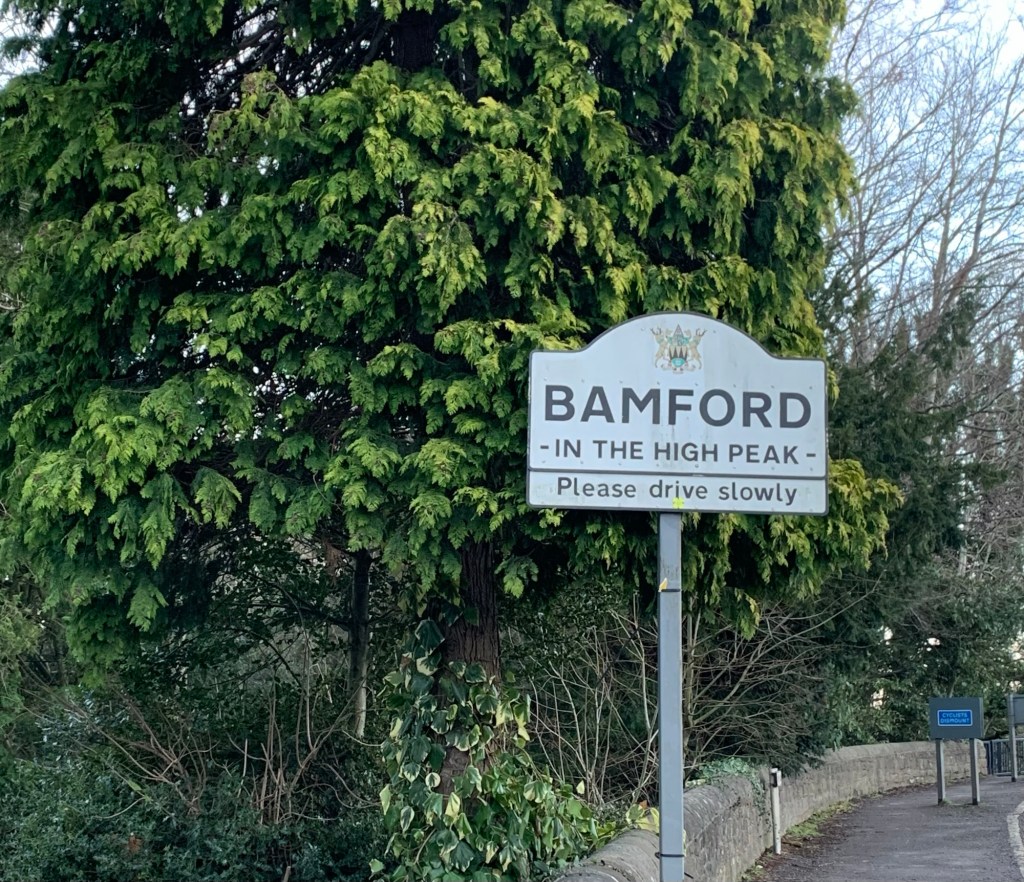
    Today we took the Hope Valley train but of course the 272 bus is another option to take you to Bamford, or yet another choice is the 257.

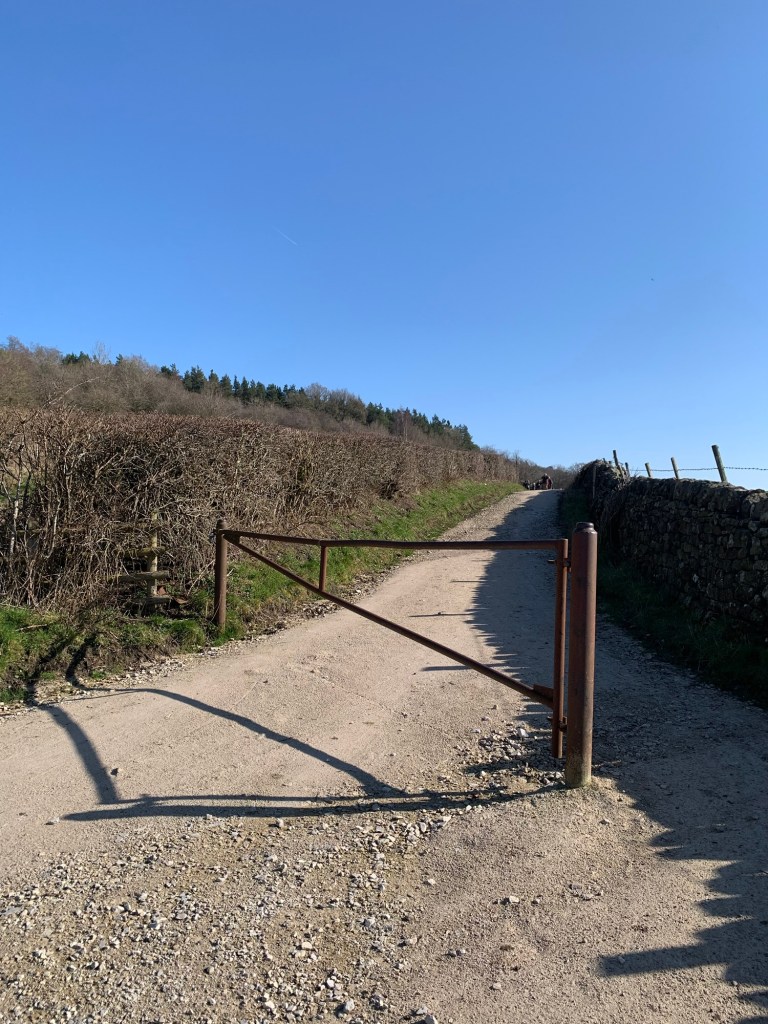
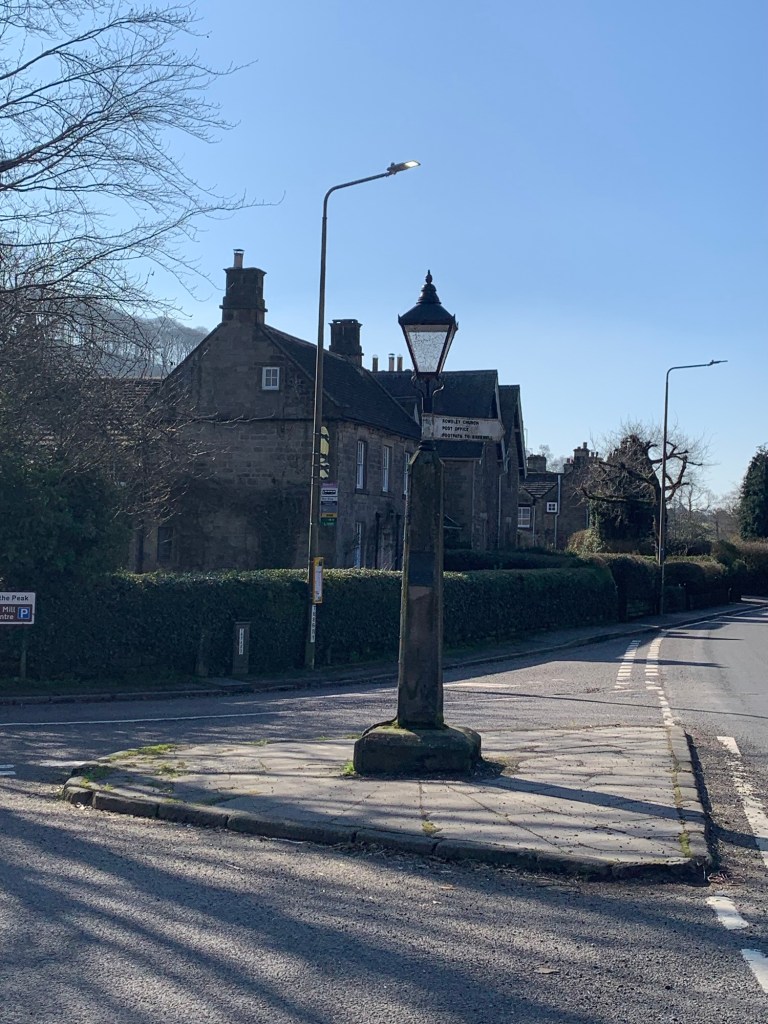
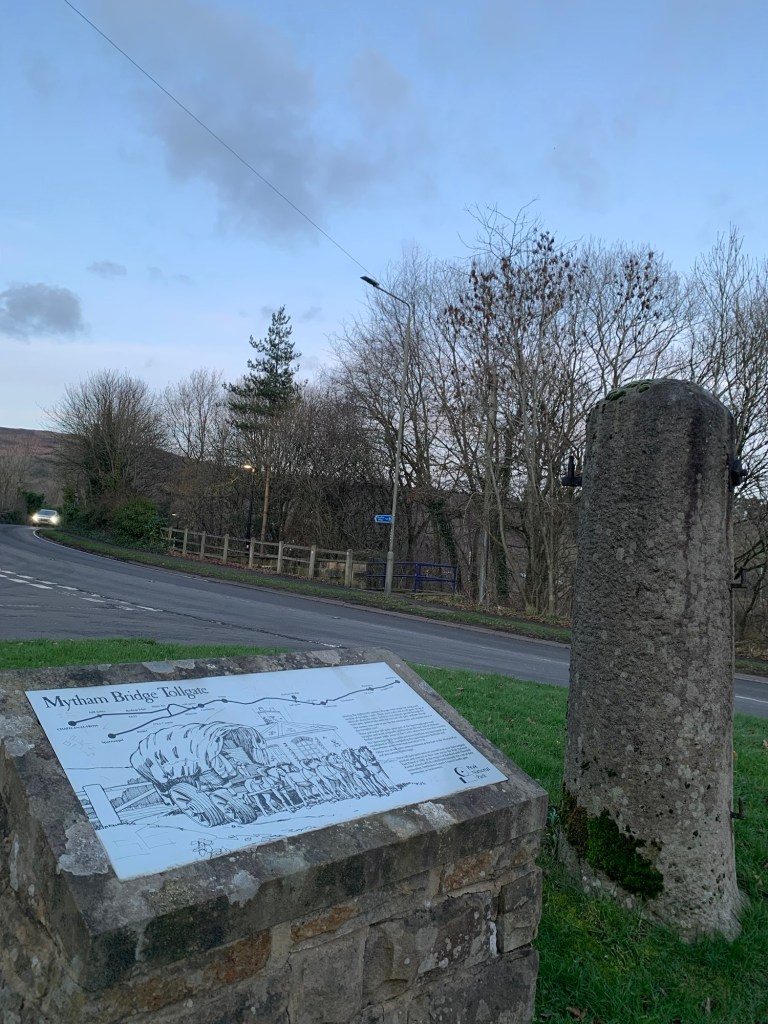
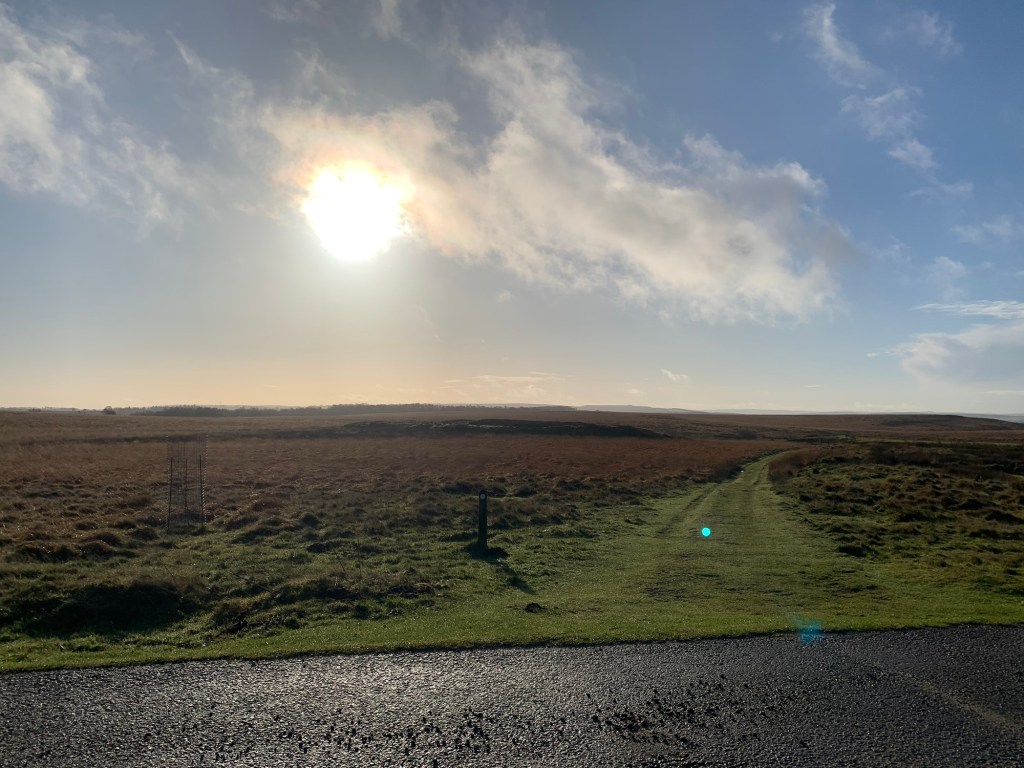
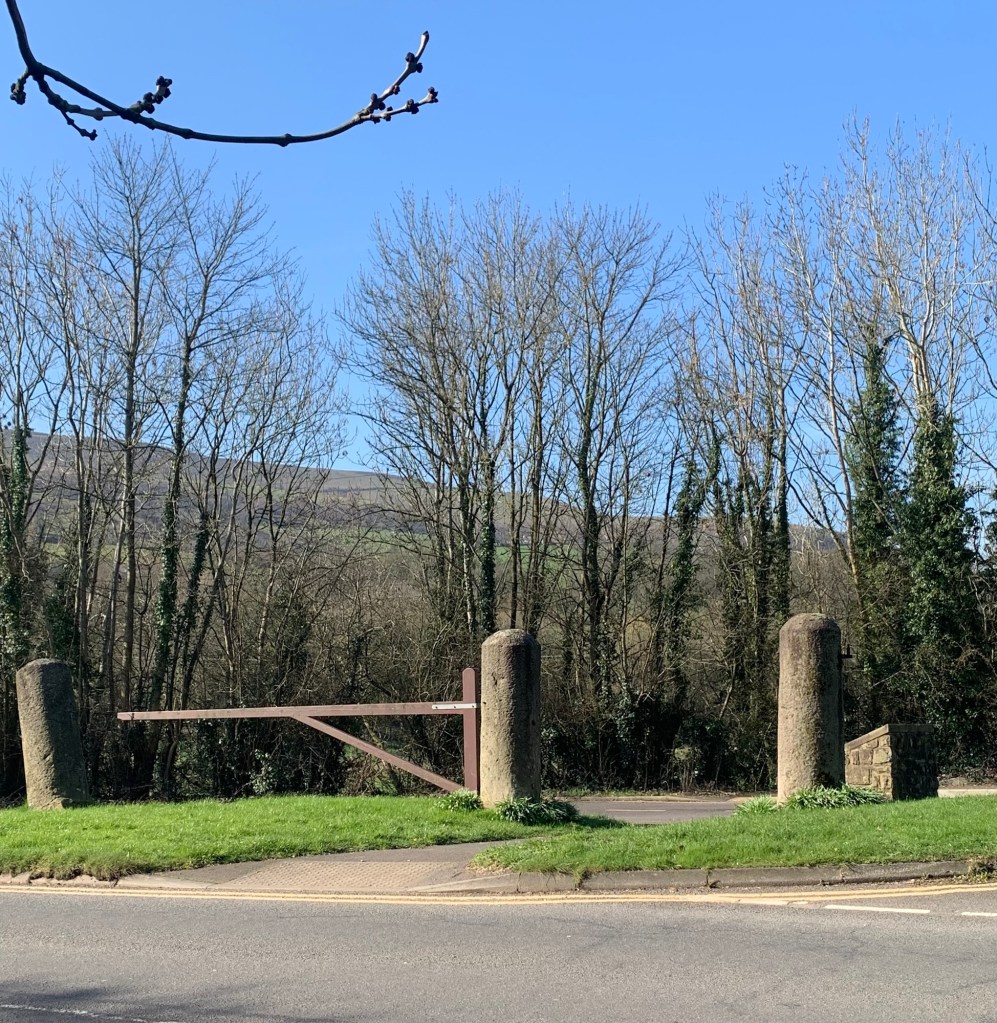
    Across the road from the station we walk past the old toll-road gate at the Bamford bus turn around and cut through to the bridge over the Derwent.
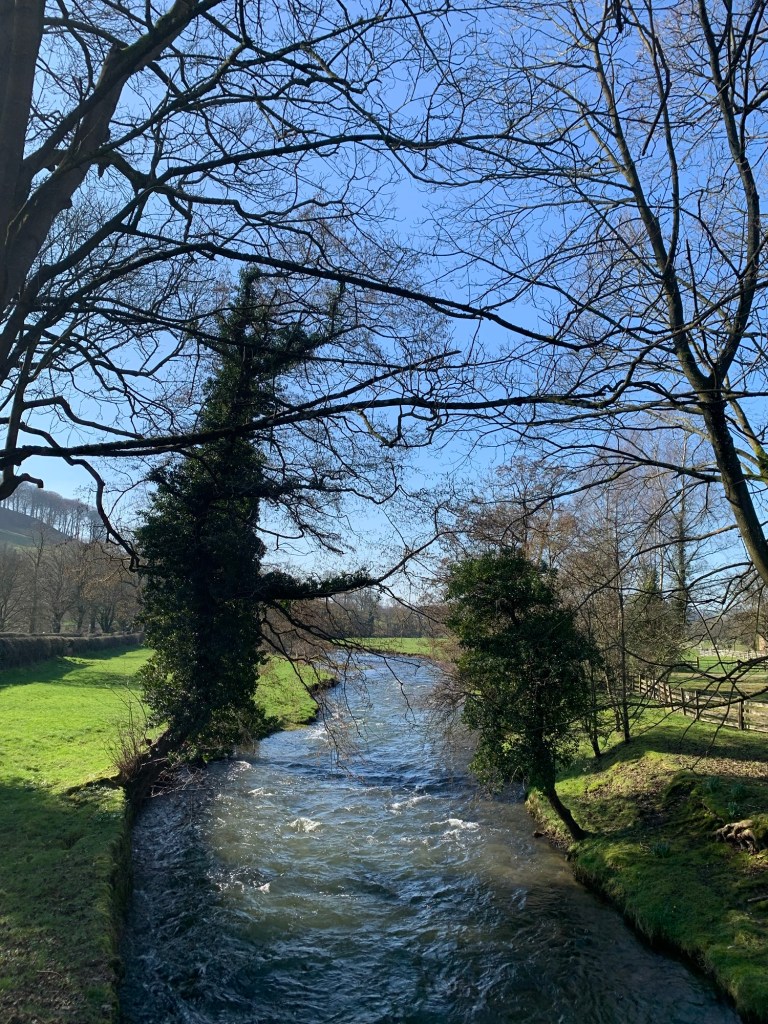
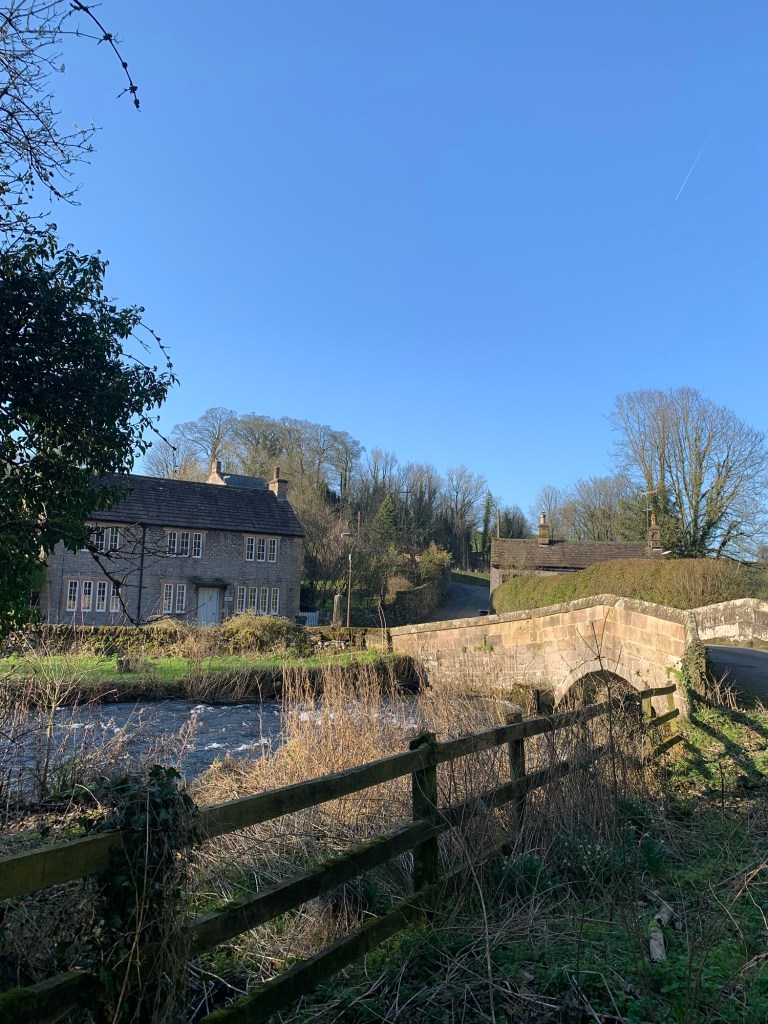
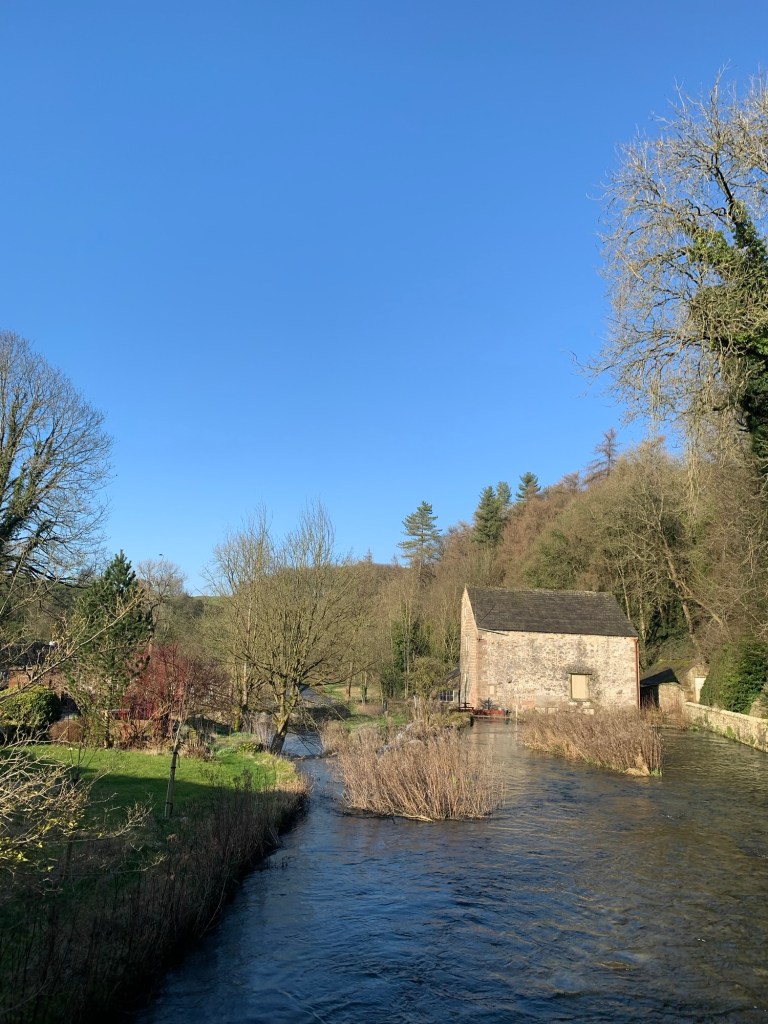
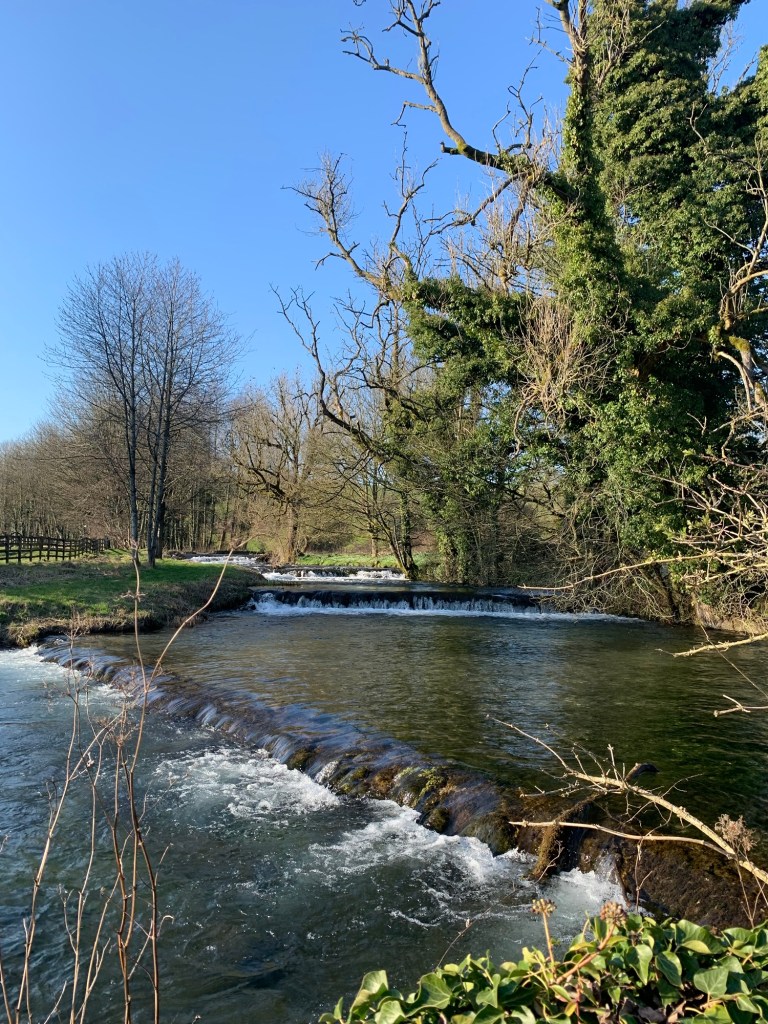
    Just past the garden centre, we cross the main A6197 to take the lane through Shatton. We straight away cross over another river; this time it’s The Noe which has wound its way down from the Edale Valley and is about to end its journey as such. In a few hundred metres it’ll be consumed by the Derwent as it flows on down the Hope Valley. 
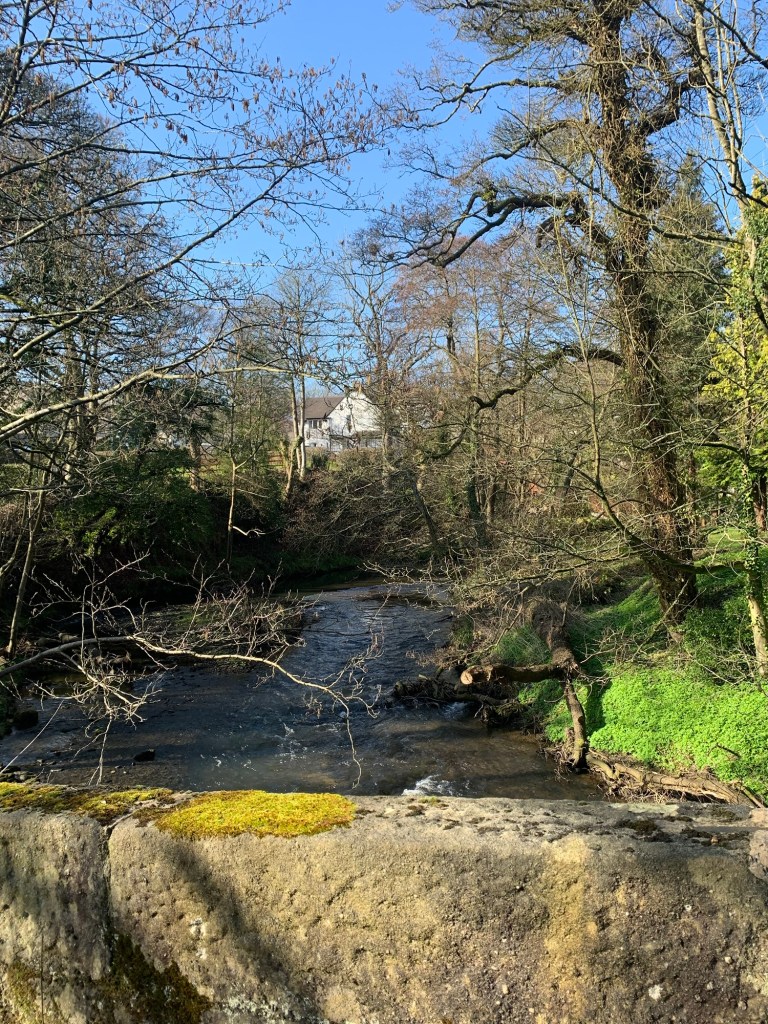
    Whilst we’re looking at the river we feel we’re being watched and it’s true….as we turn around we find a couple of turkeys have come to check us out.
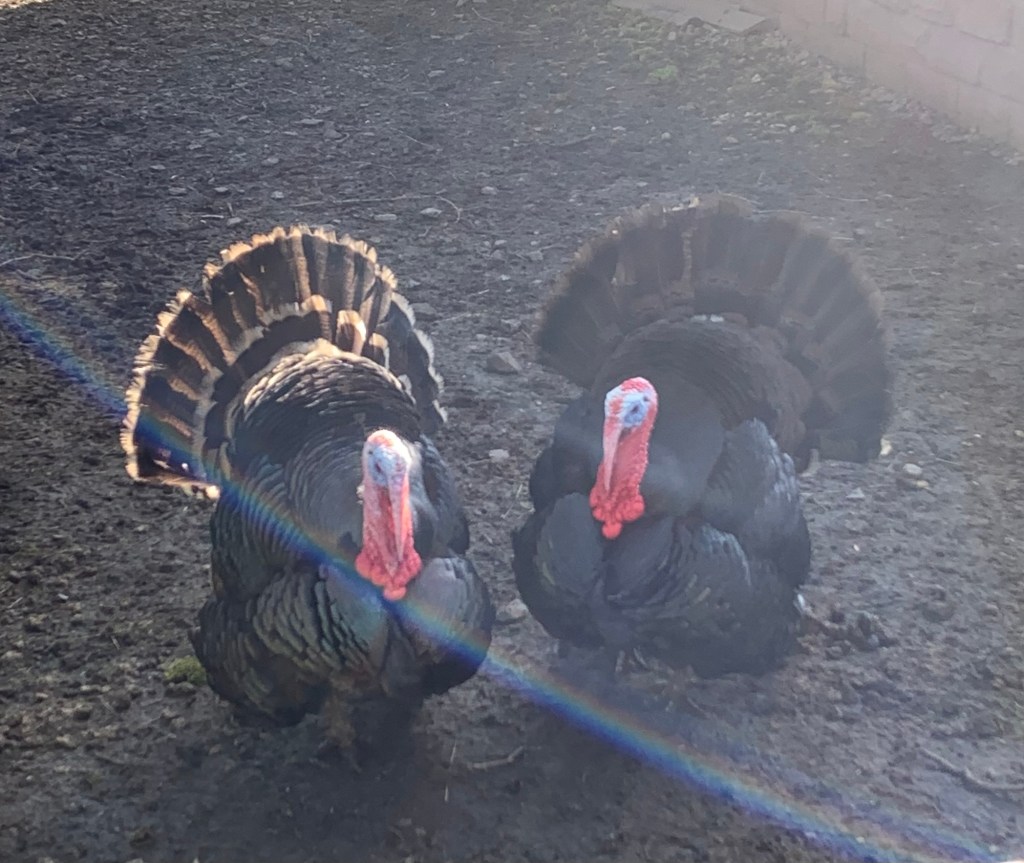
    They seem curious by nature and certainly curious by appearance too; a characterful combination of ugliness and beauty. And, oh dear, now we’re adding a question mark to this year’s Christmas dinner menu ( and that’s in addition to no more Lamb Rogan Josh since the lambs we met on R for Rowsley )

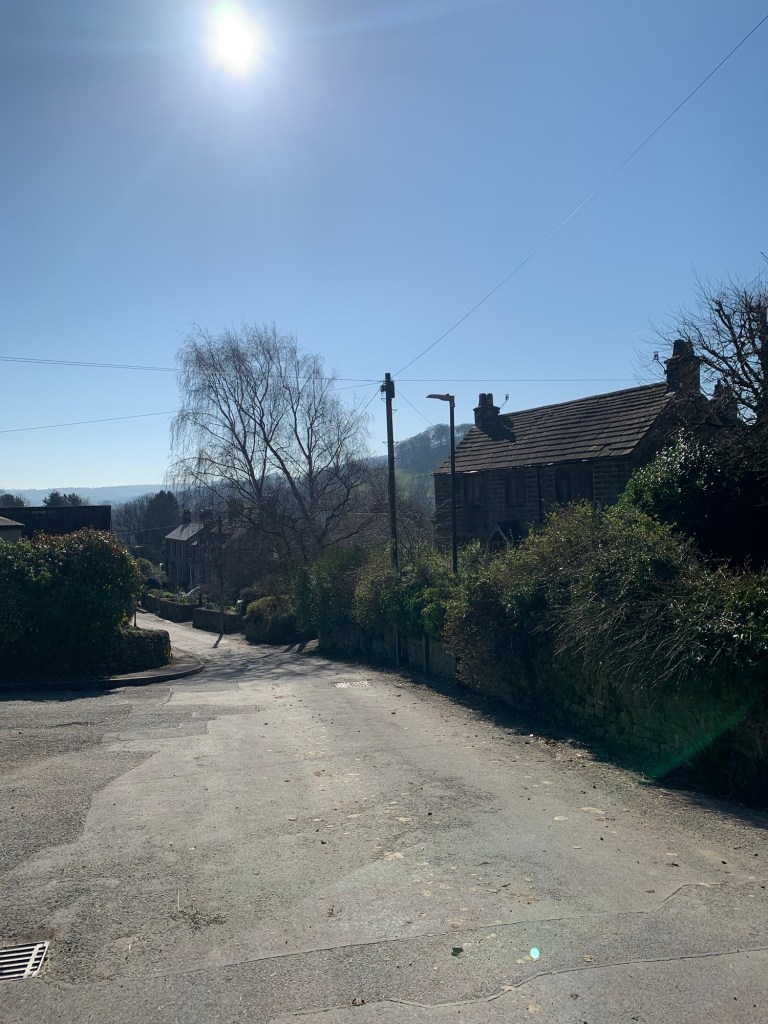
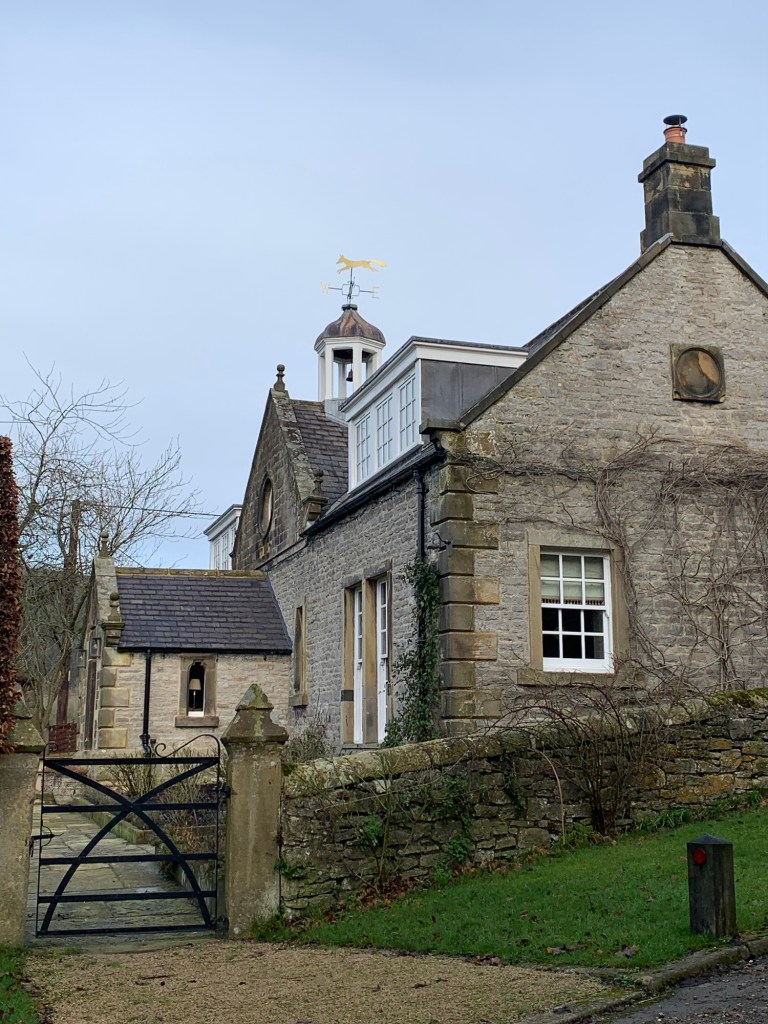
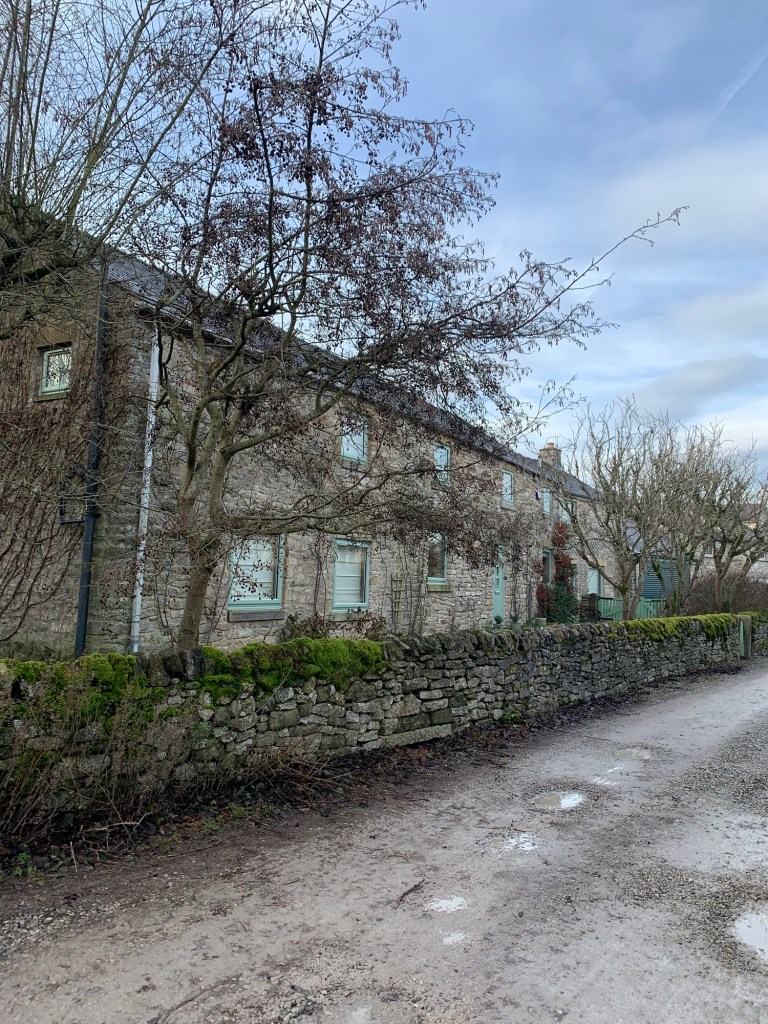
    Shatton has a variety of desirable looking residences all with beautifully kept gardens. Everything is practically sparkling in today’s beautiful sunshine.
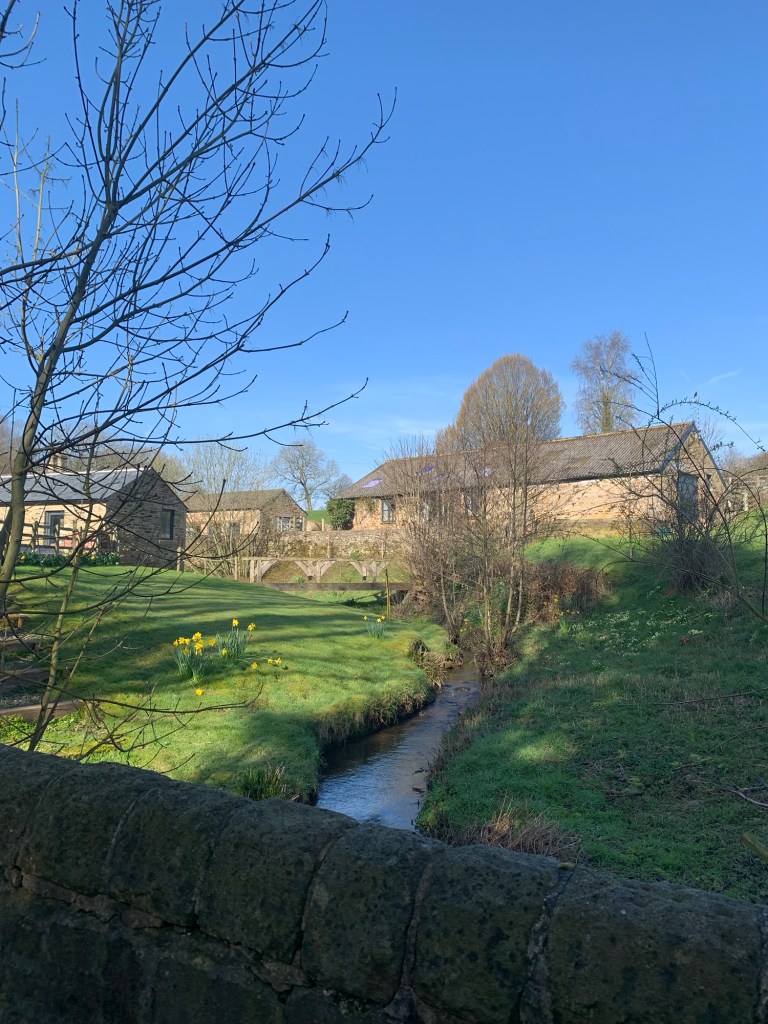
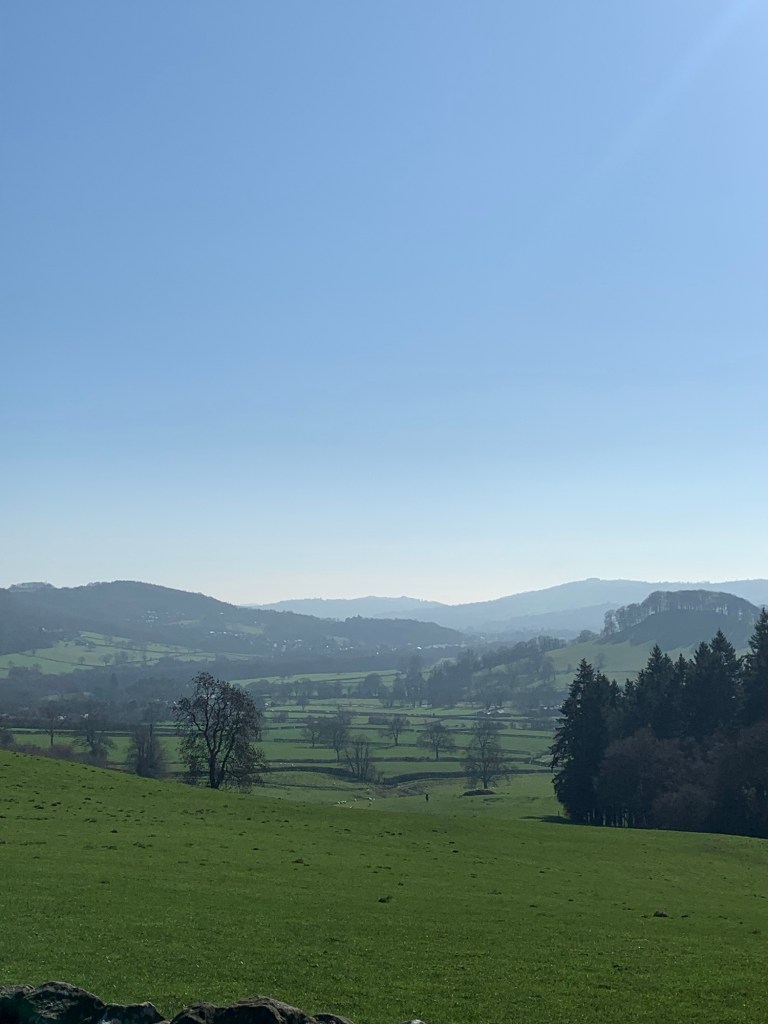
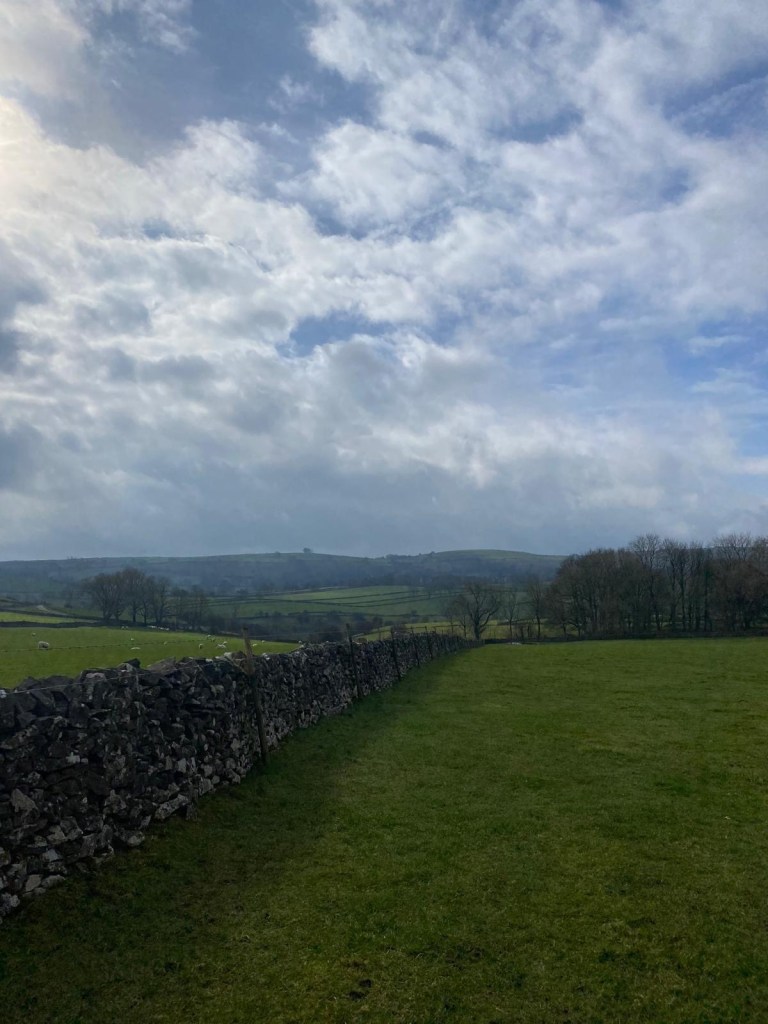
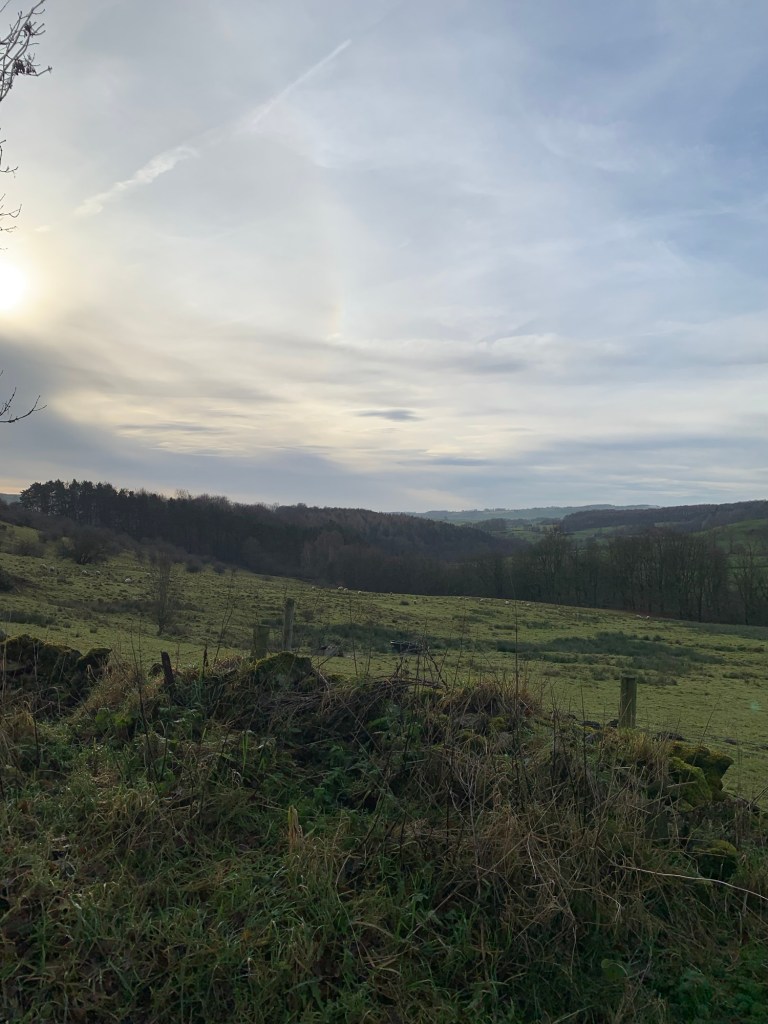
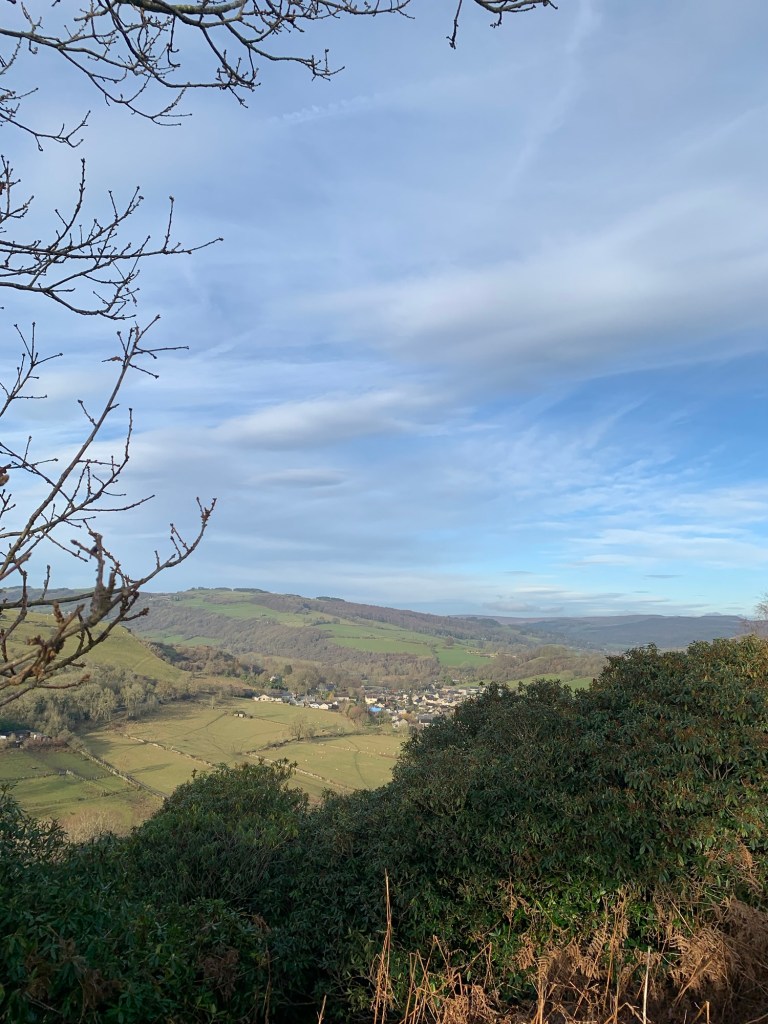
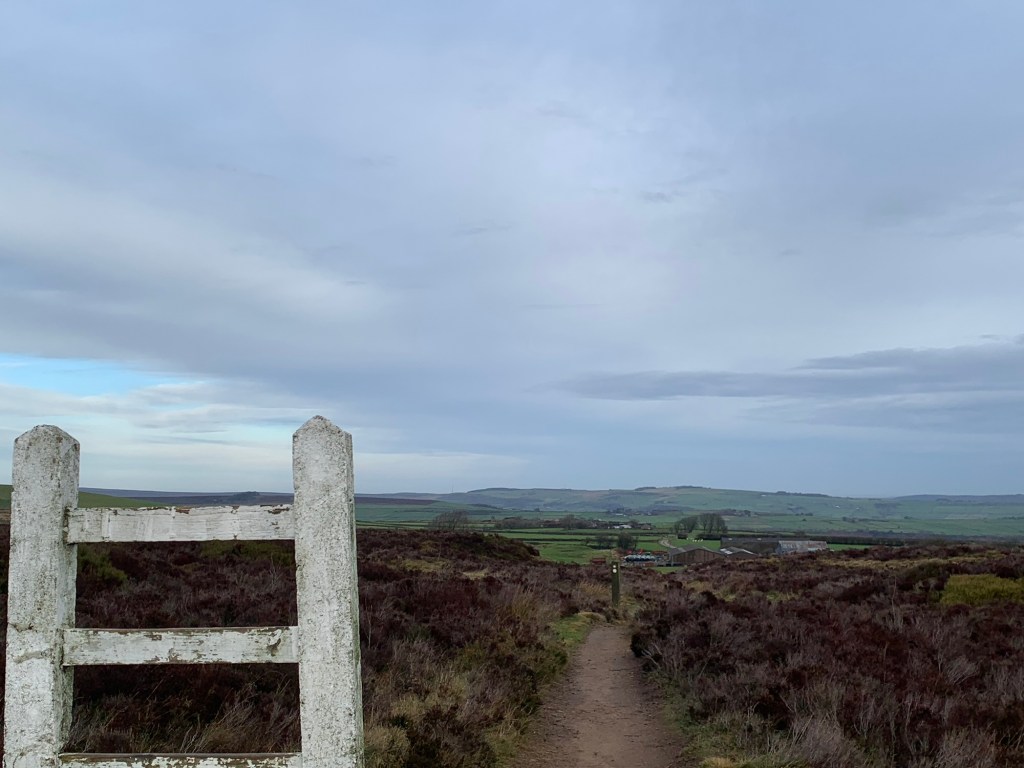
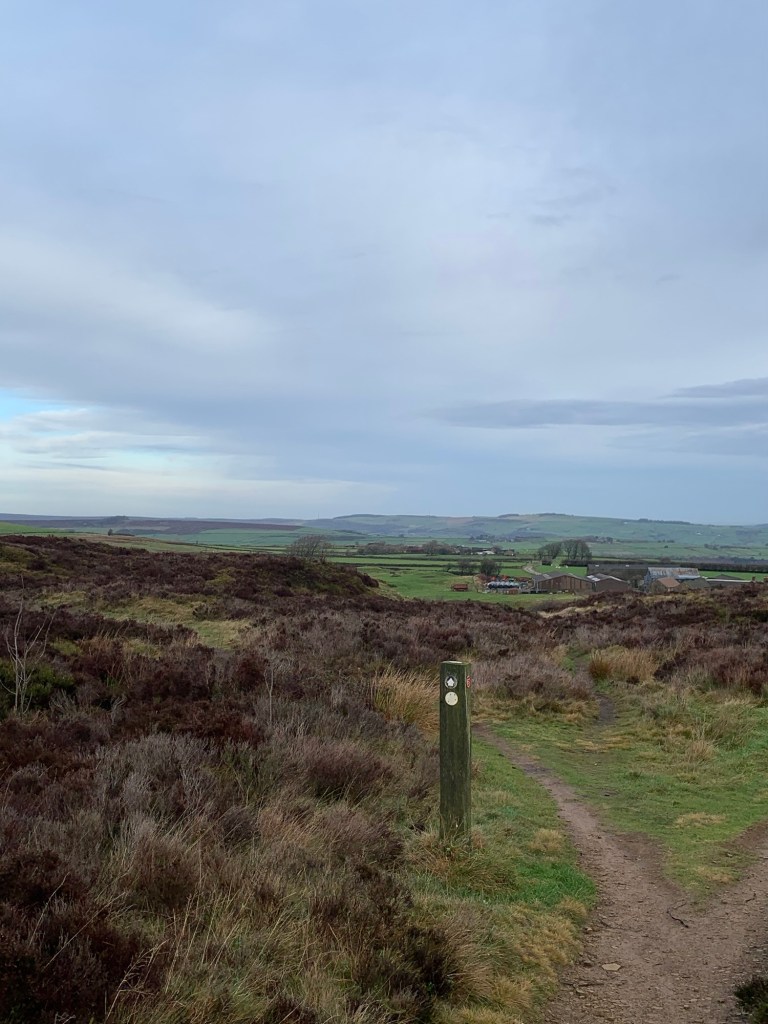
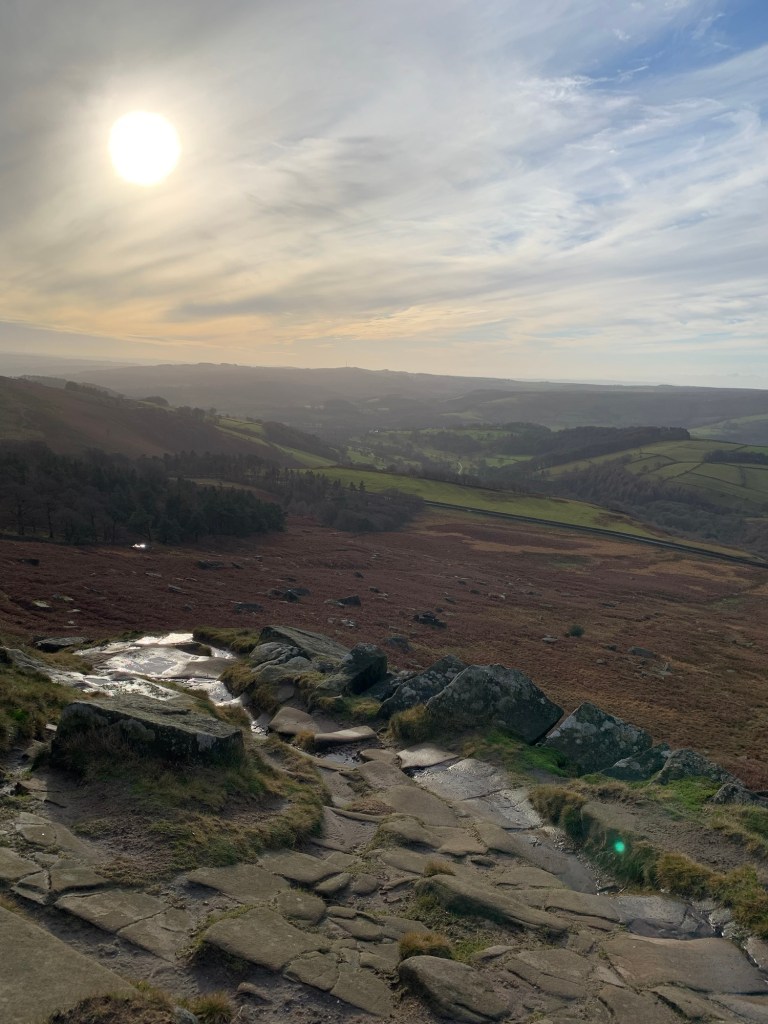
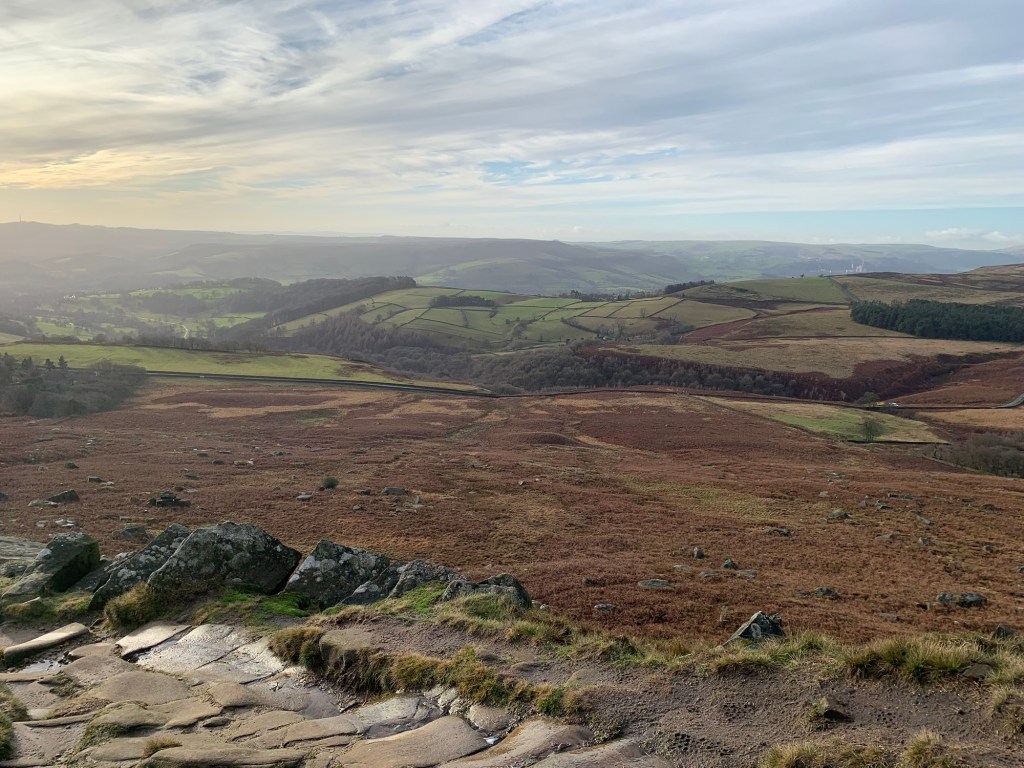
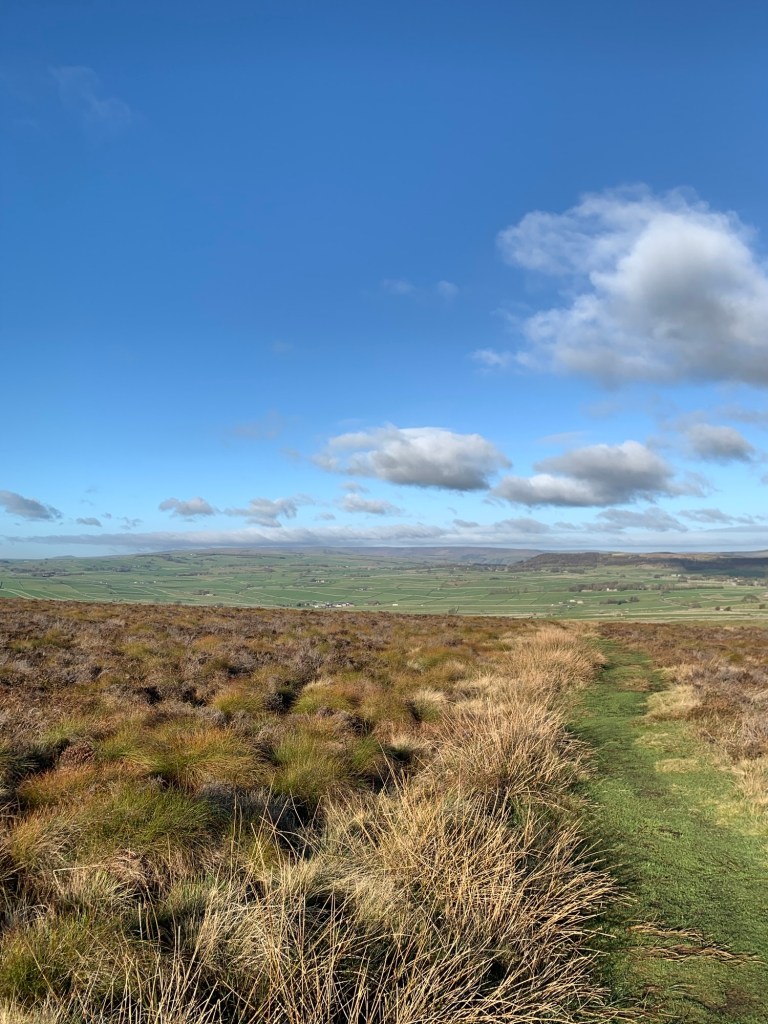
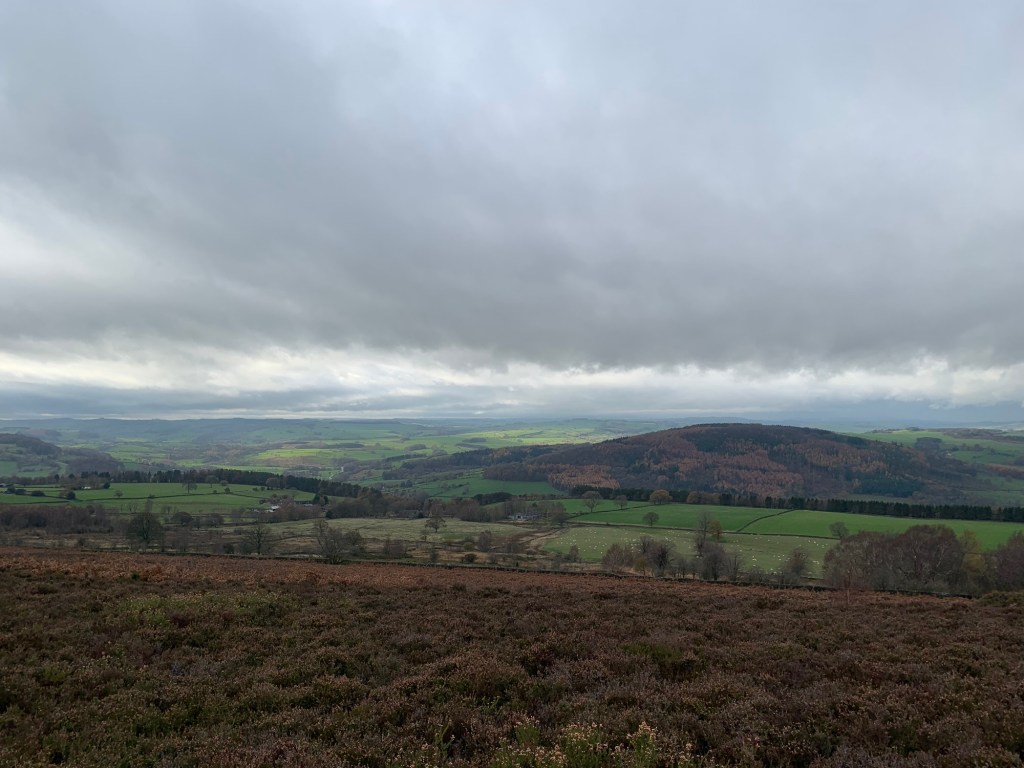
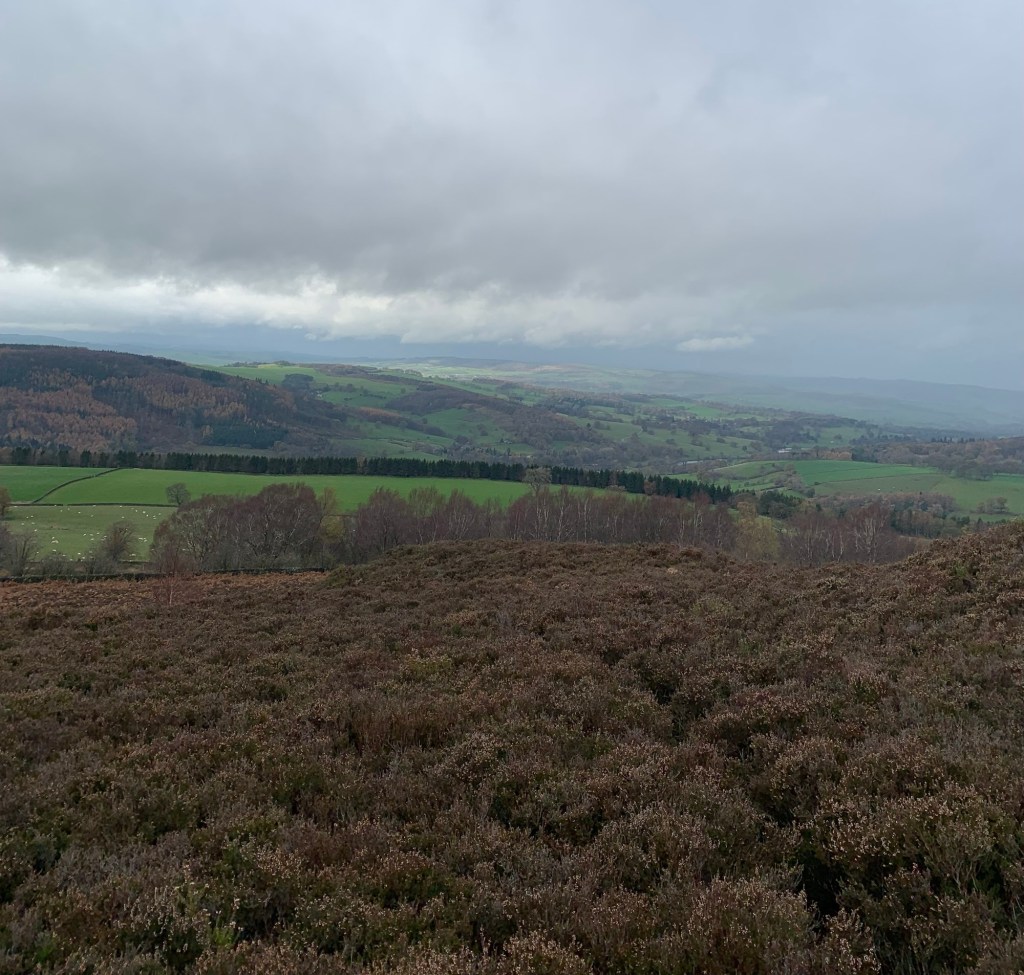
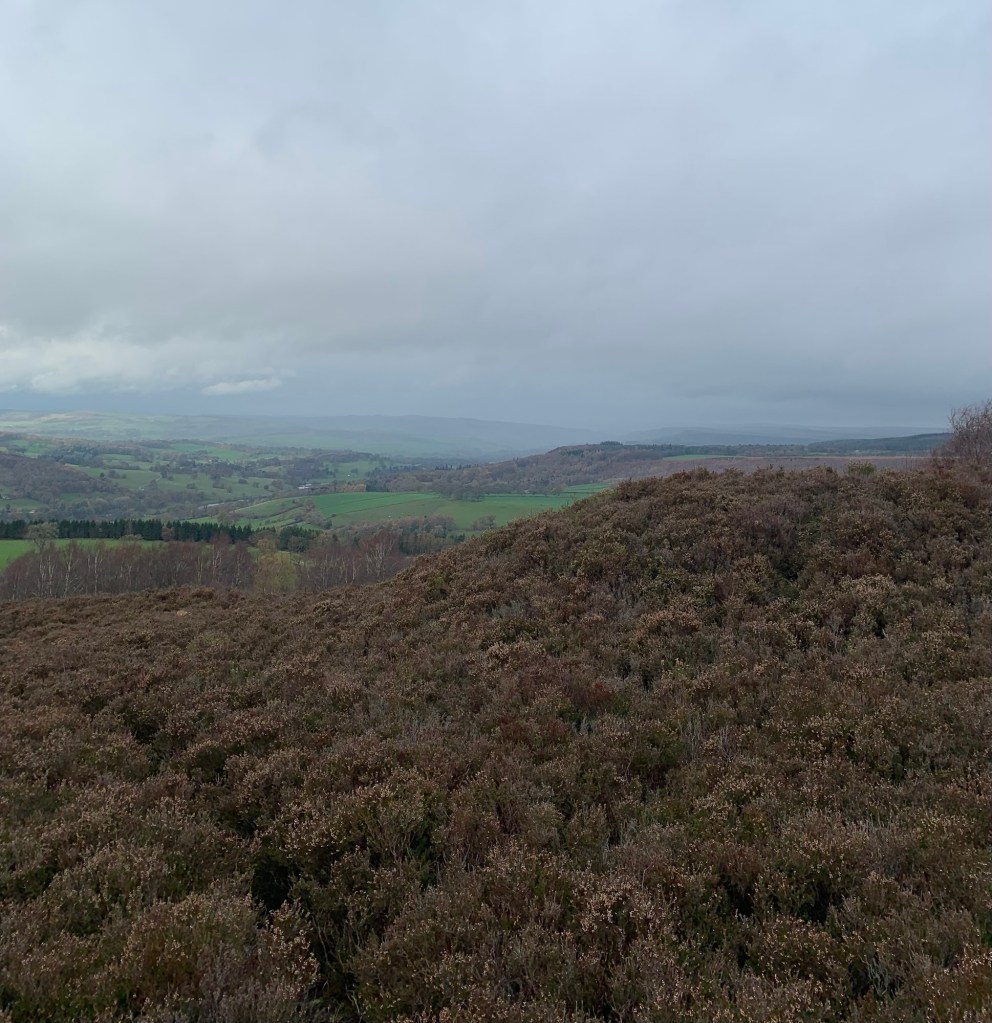
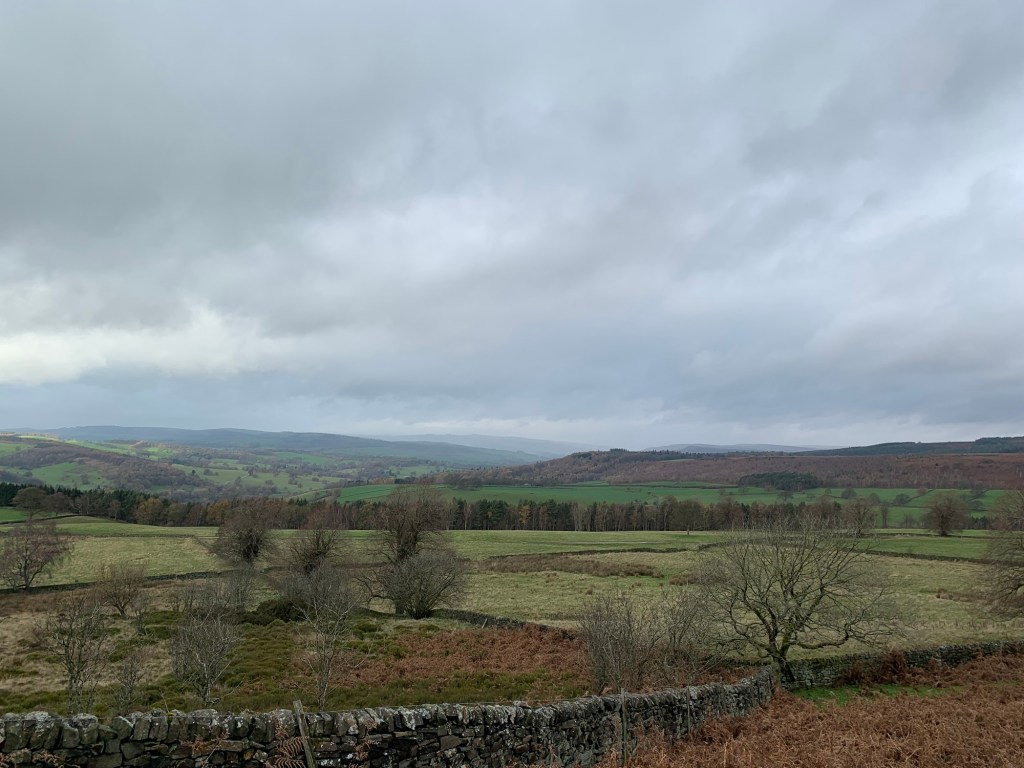
    Just before the ford we break left and start to climb up Shatton Lane onto the moor. It’s steep but hugely rewarding with fabulous views in all directions as we gain height.
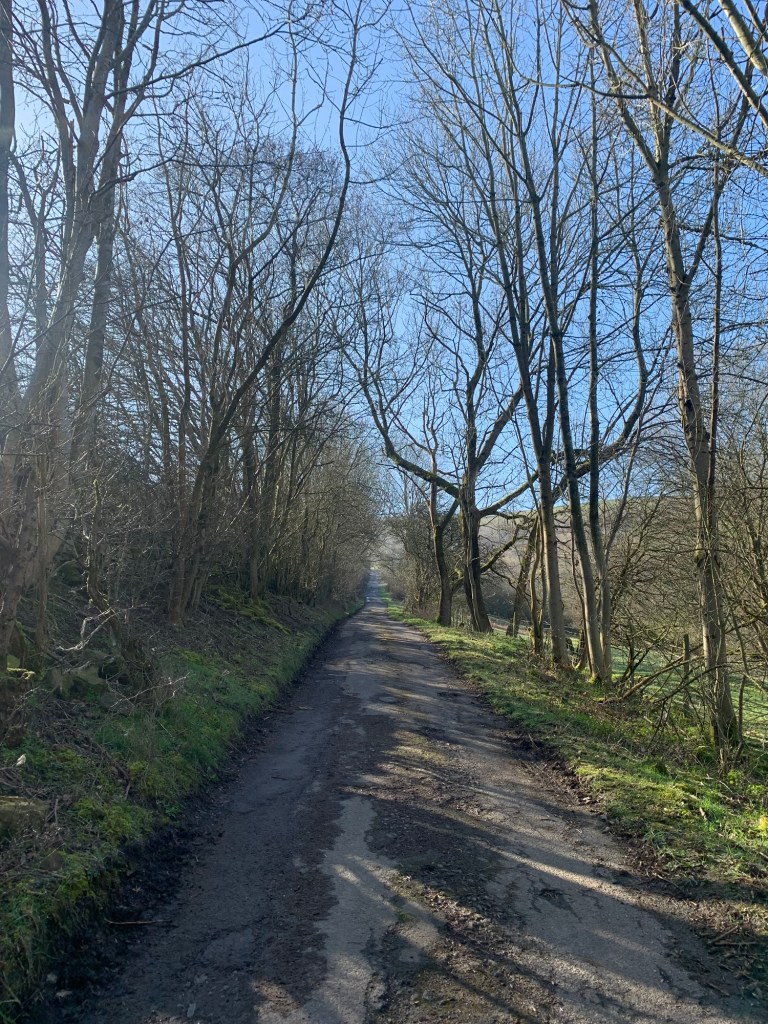
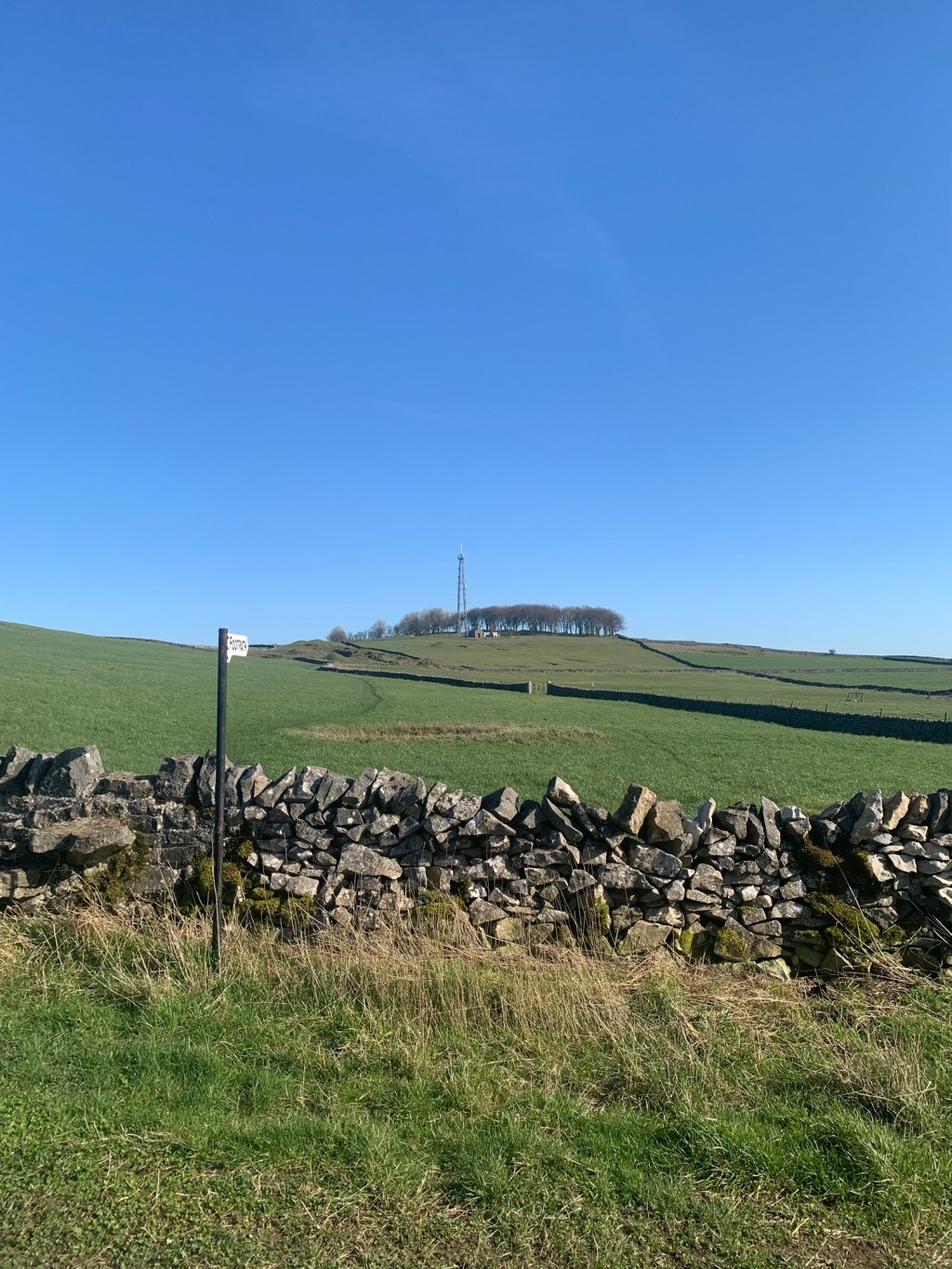
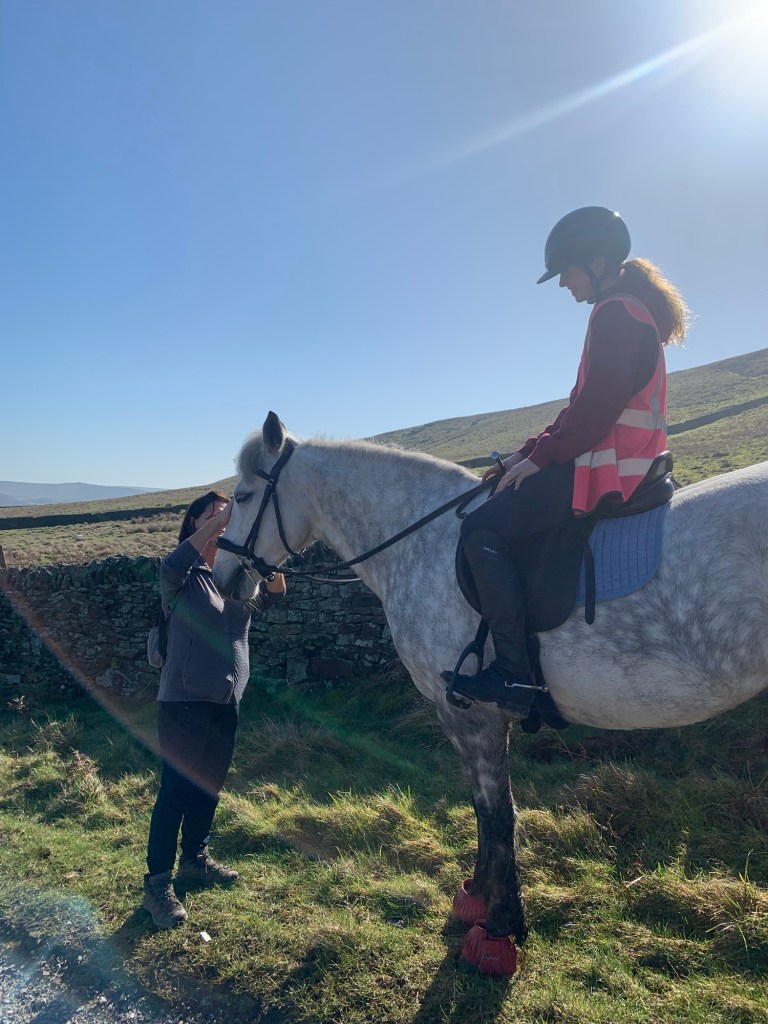
    We stop to admire a handsome young horse and chat with its rider before following the lane as it curves around to the right, levelling off a bit as it passes the tv mast.
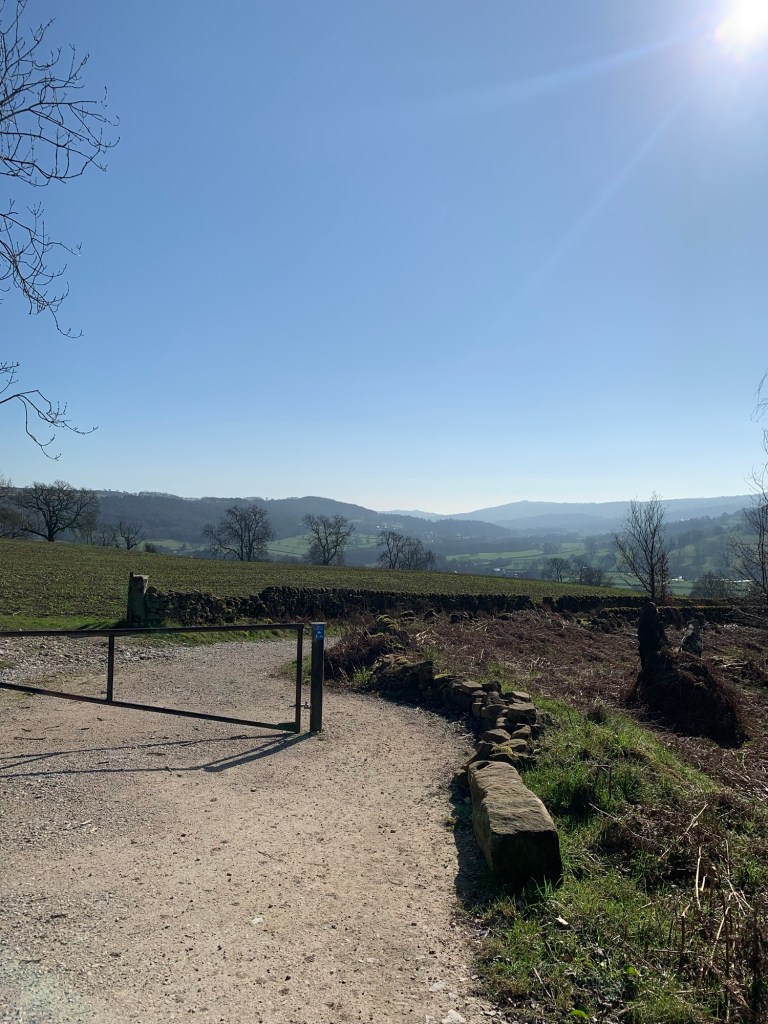
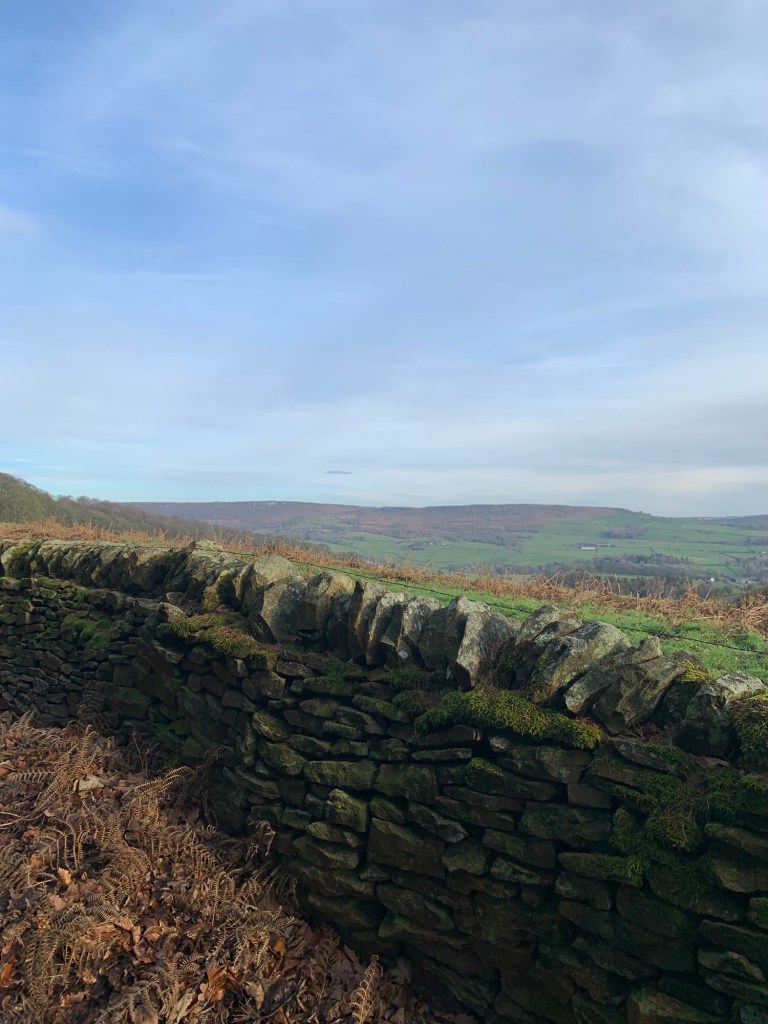
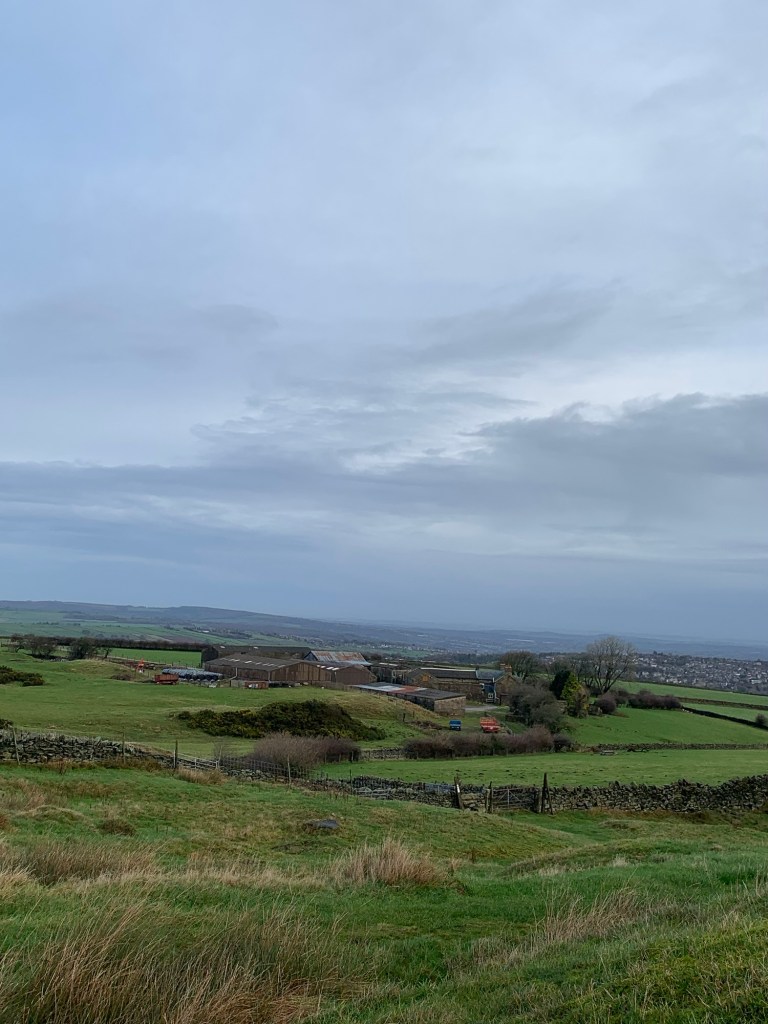
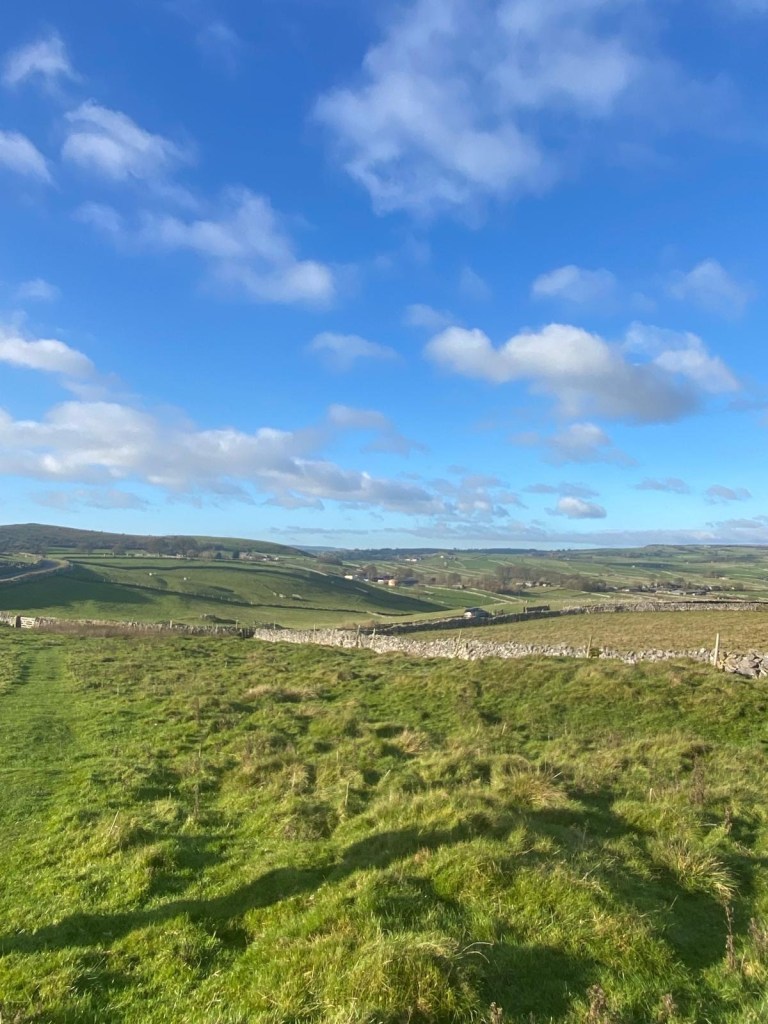
    We’re contouring across the hillside and as we turn another corner we get a new feast full of views. It’s elevated but easy walking and perfect weather, we feel like we’re on top of the world.
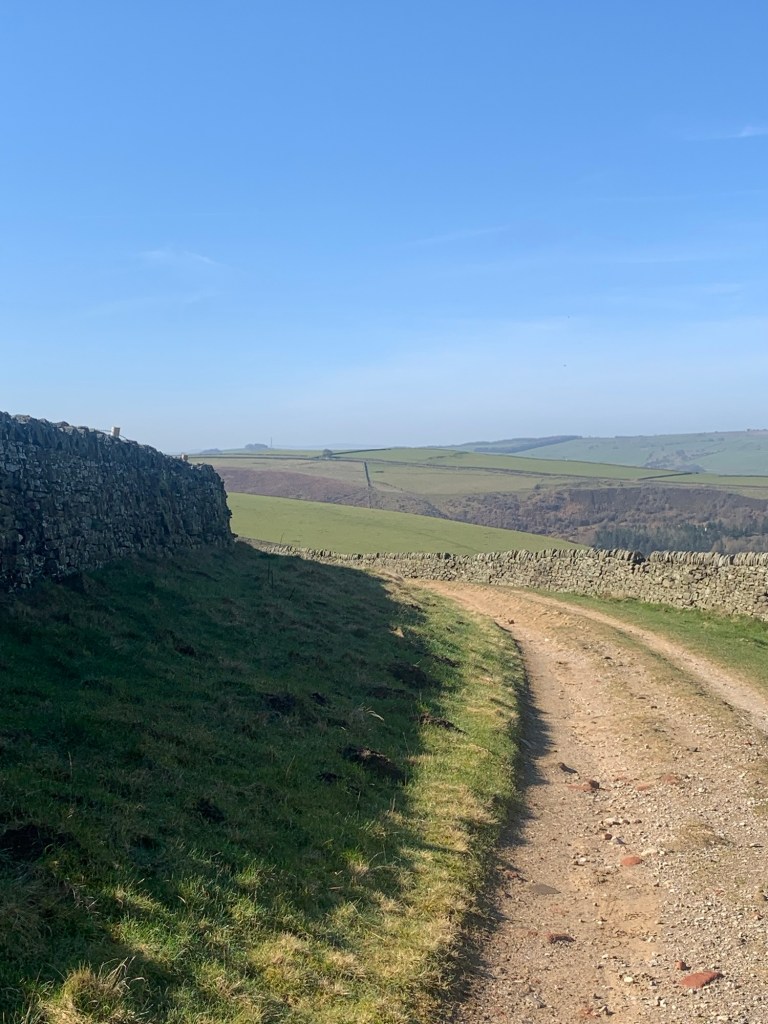
    The path makes a broad right curve across the moor passing the lane that leads off left to Abney
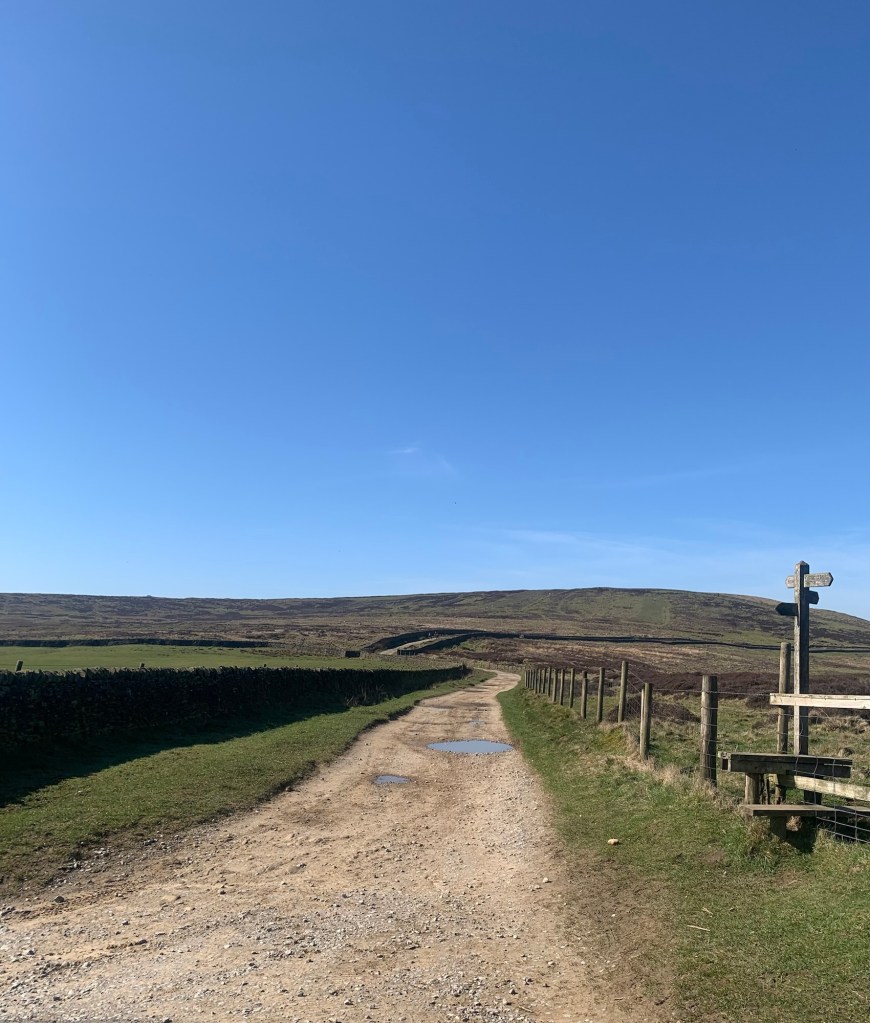
    and just after we start to lose height, after turning more definitely right, we take the footpath on our left. This will take us steeply down to Bradwell.
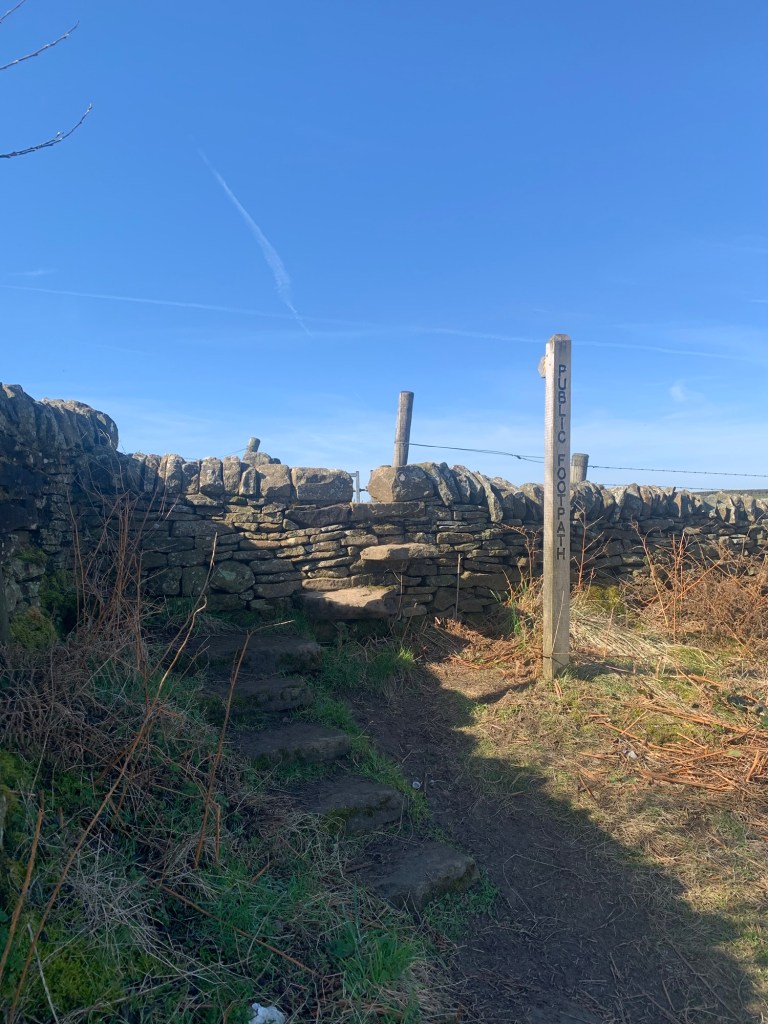
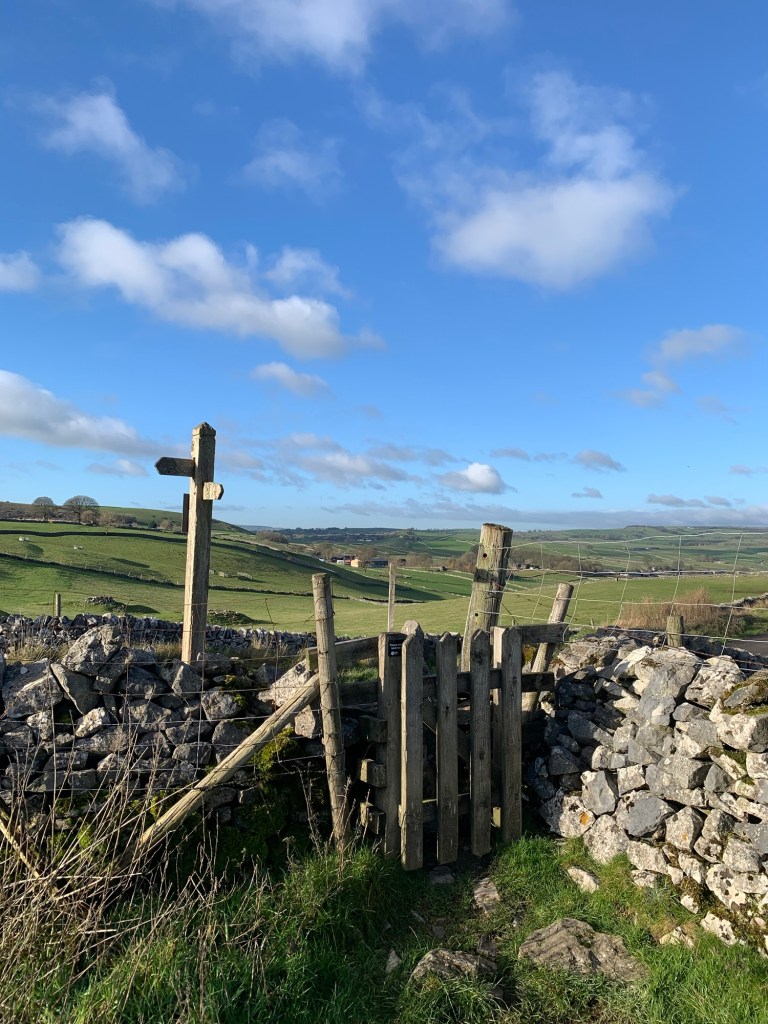
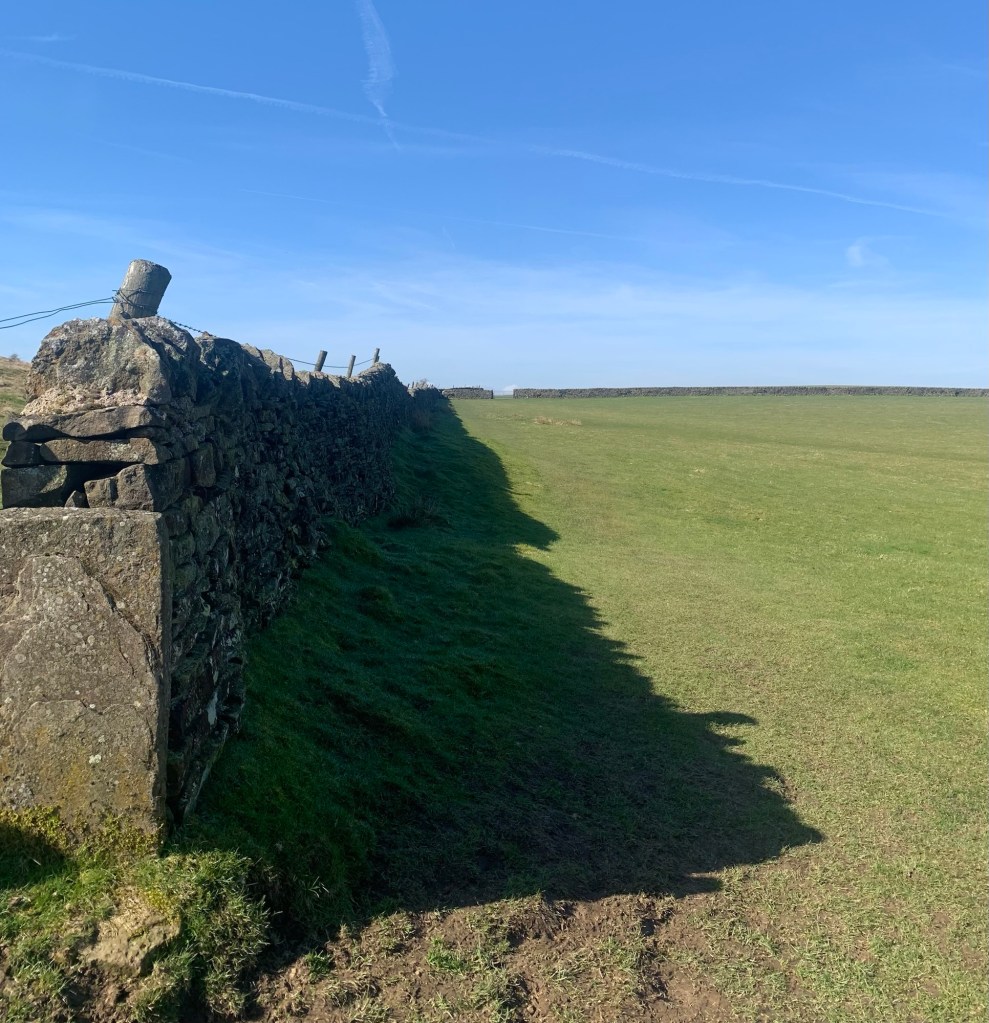
    Take care here as, once over the first stile, another beckons immediately to the left. However it must be ignored as the path we need heads straight forward with the field wall on our left.
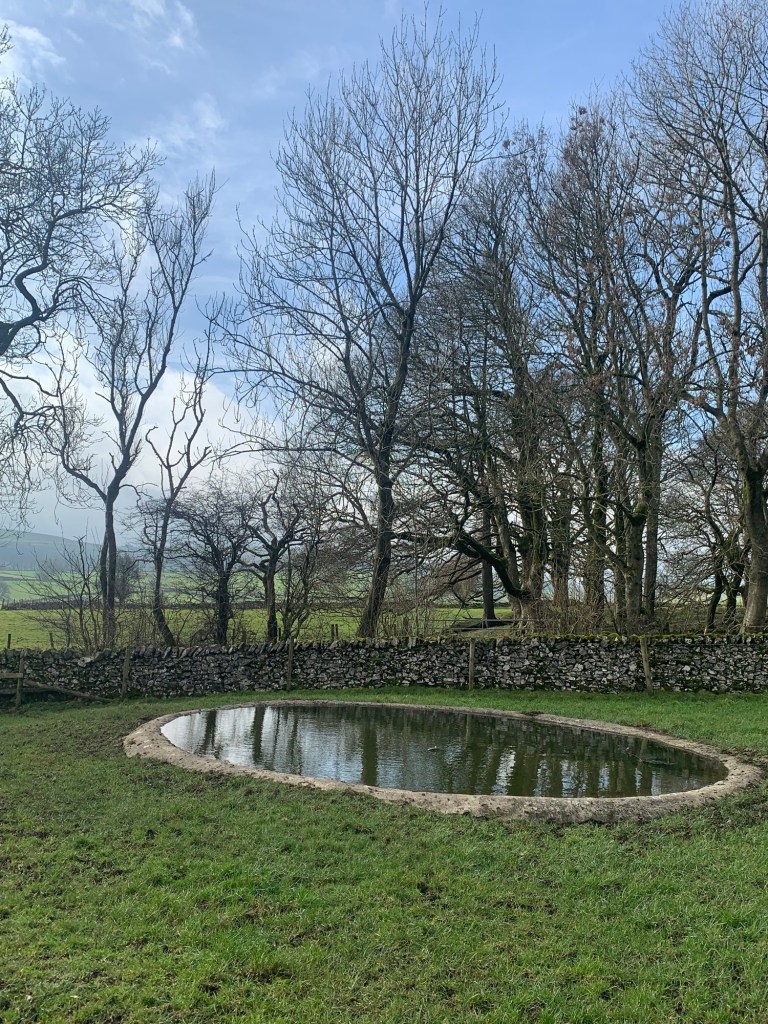
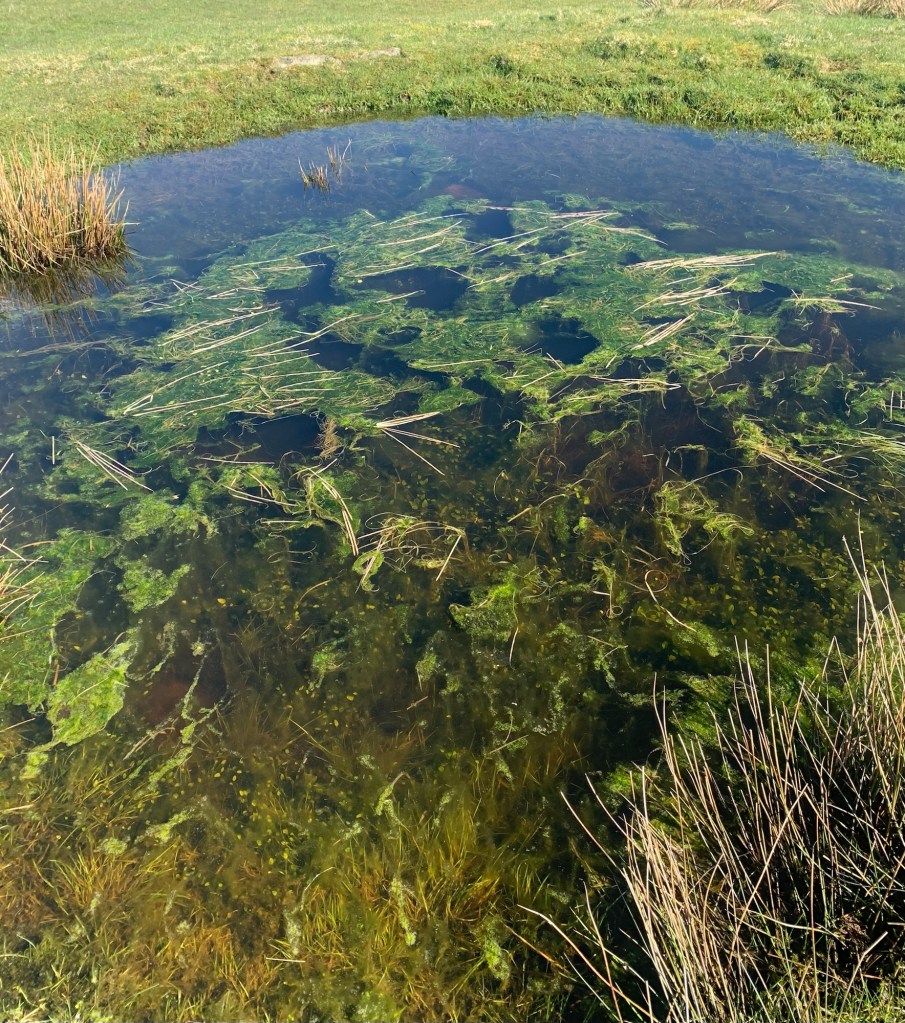
    We very shortly pass an extremely green pond which will surely soon be full of frogspawn.
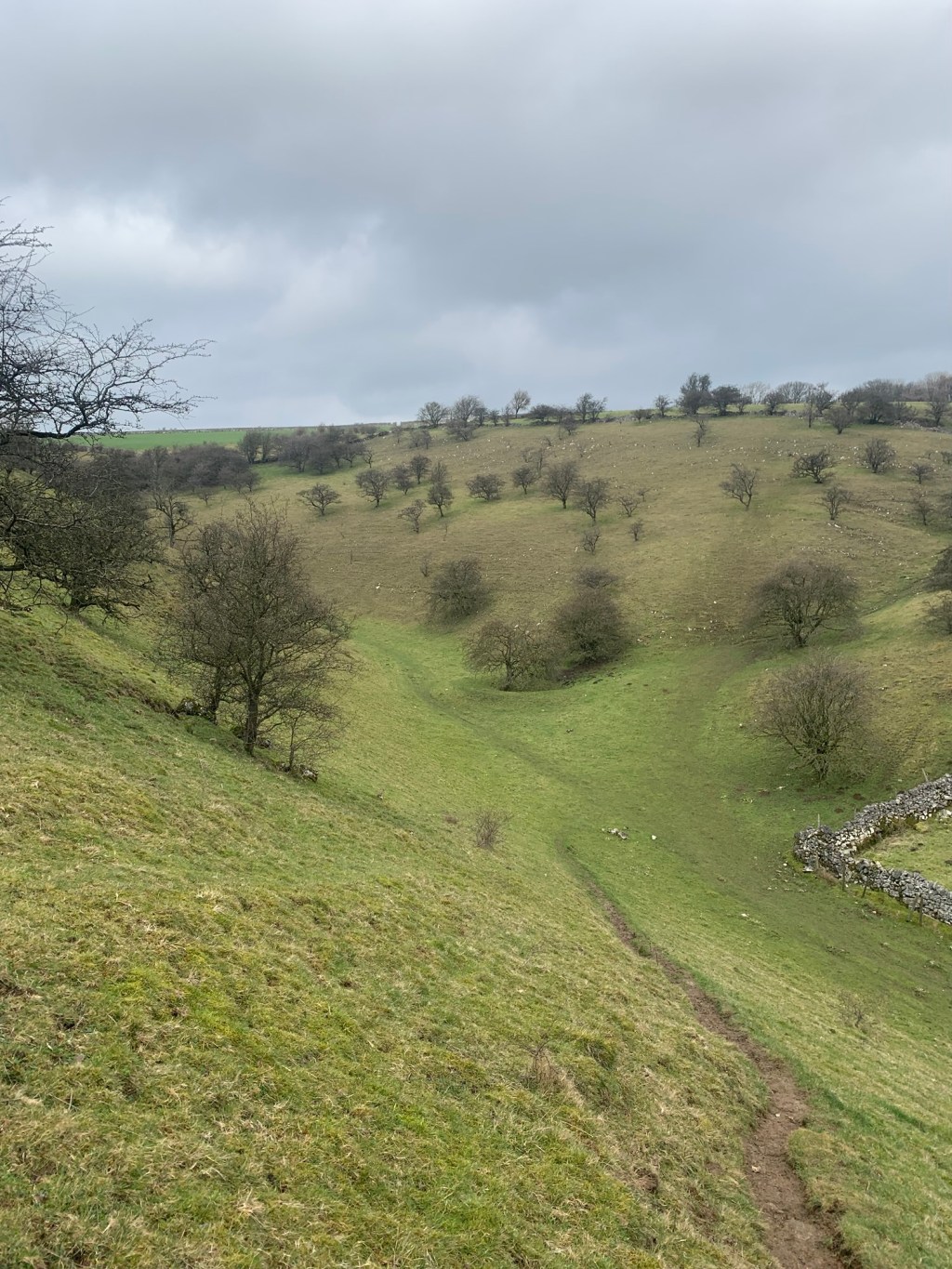
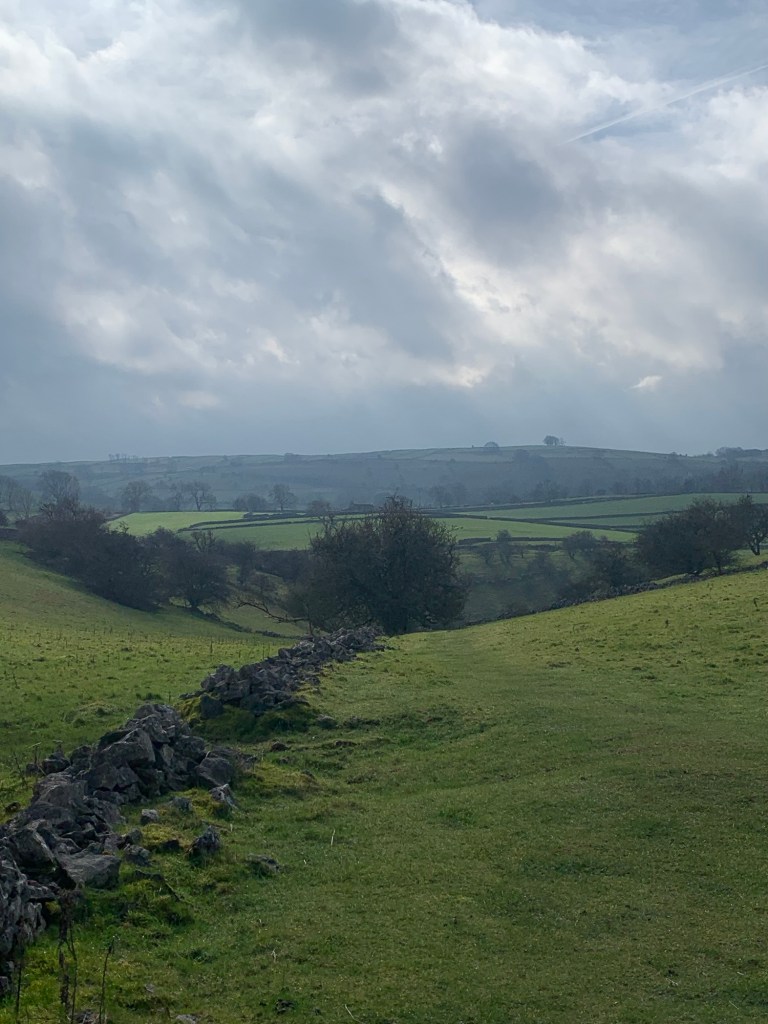
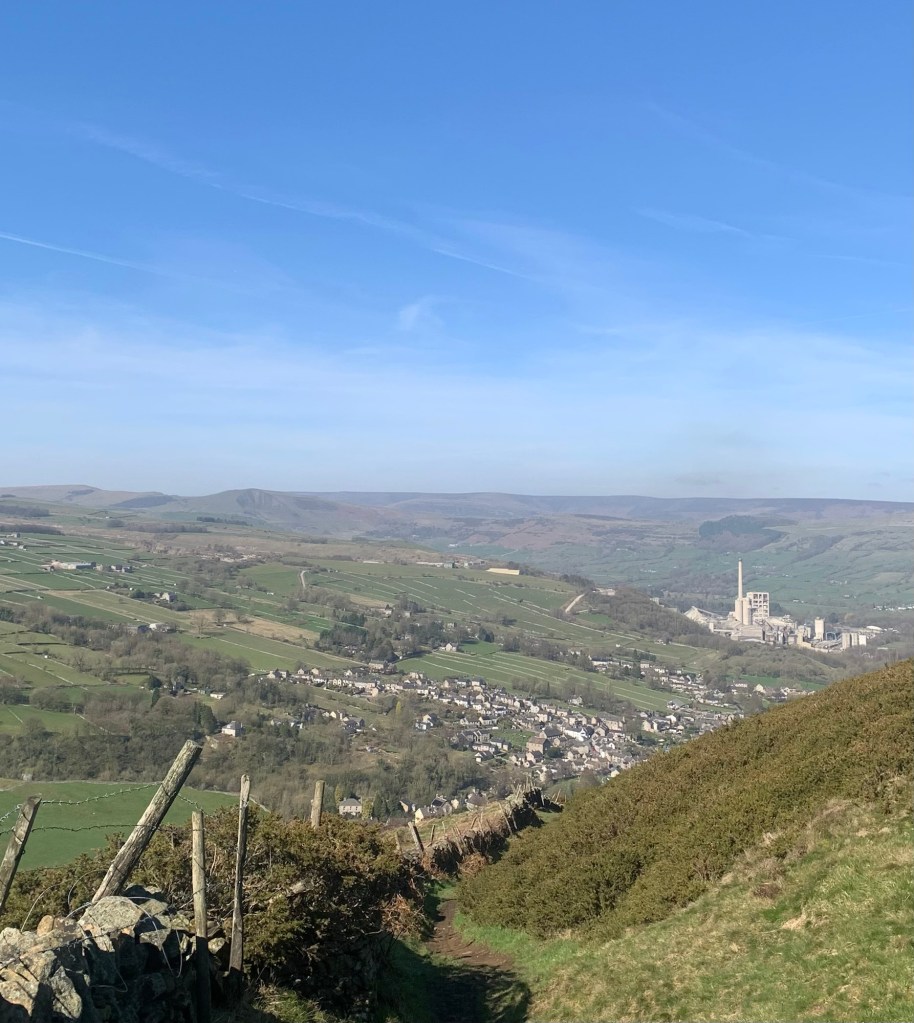
    After a couple of fields the path nose dives very steeply down the valley side. The views across to Bradwell are like a historical illustration of the area showing remains of lead mining, agricultural field enclosures, quarries and the cement works. And in case the geographers feel left out, on our left we manage an almost bird’s eye view of Bradwell Dale with its wide upper basin funnelling into a narrow gorge like section before reaching the edge of the village. 
    For a full and fascinating account of all aspects of Bradwell I recommend the following:

    https://www.peakdistrict.gov.uk/__data/assets/pdf_file/0024/69810/B-BRADWELL-Adopted-Appraisal-Section-3.pdf

    Eventually the path emerges onto a tarmac lane and we’re still heading downhill although a little less steeply now,
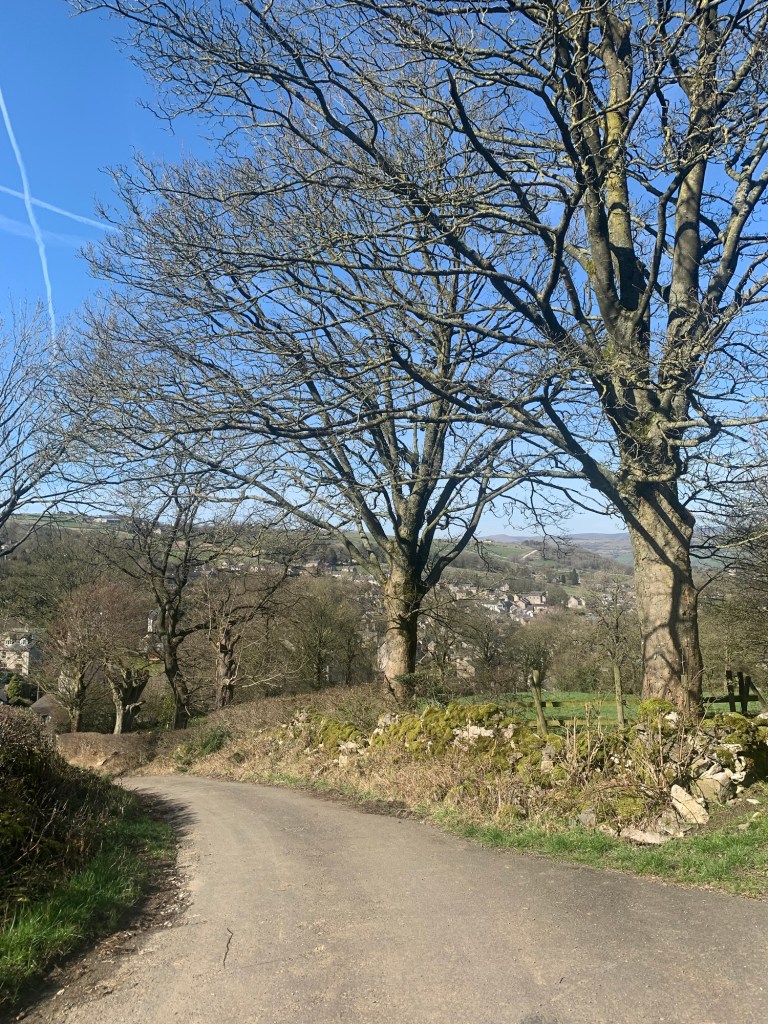
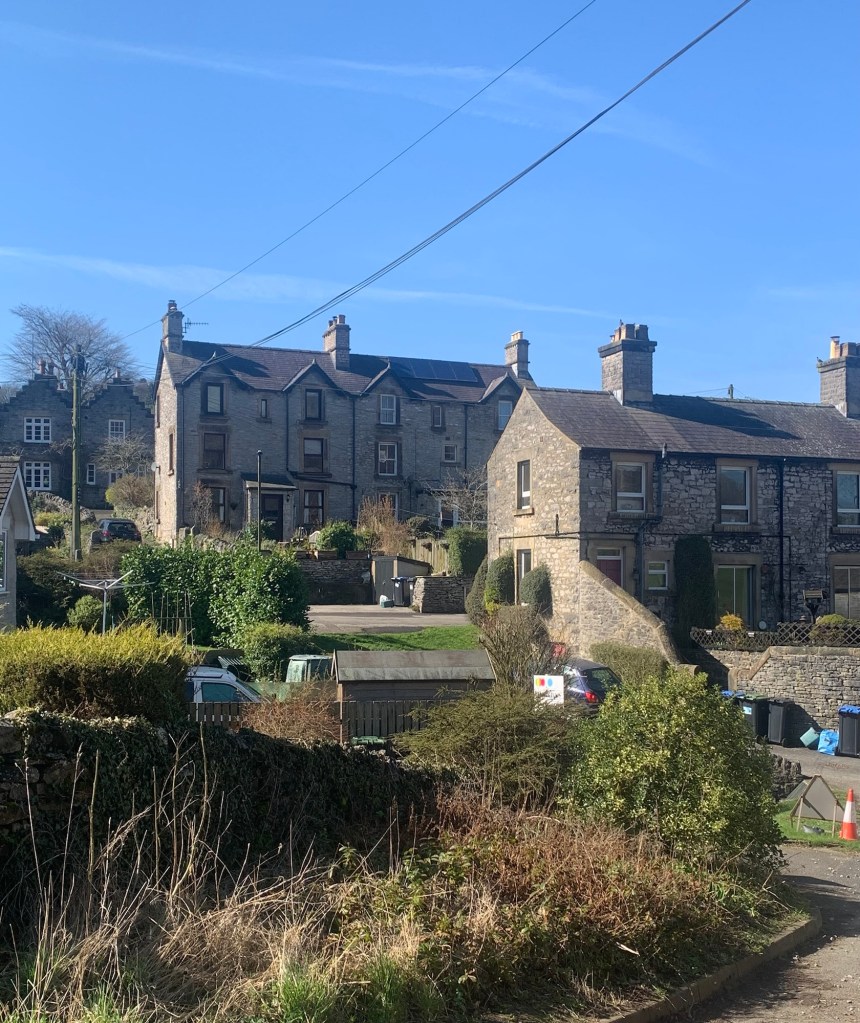
    and then we come into the first cluster of houses of the village.
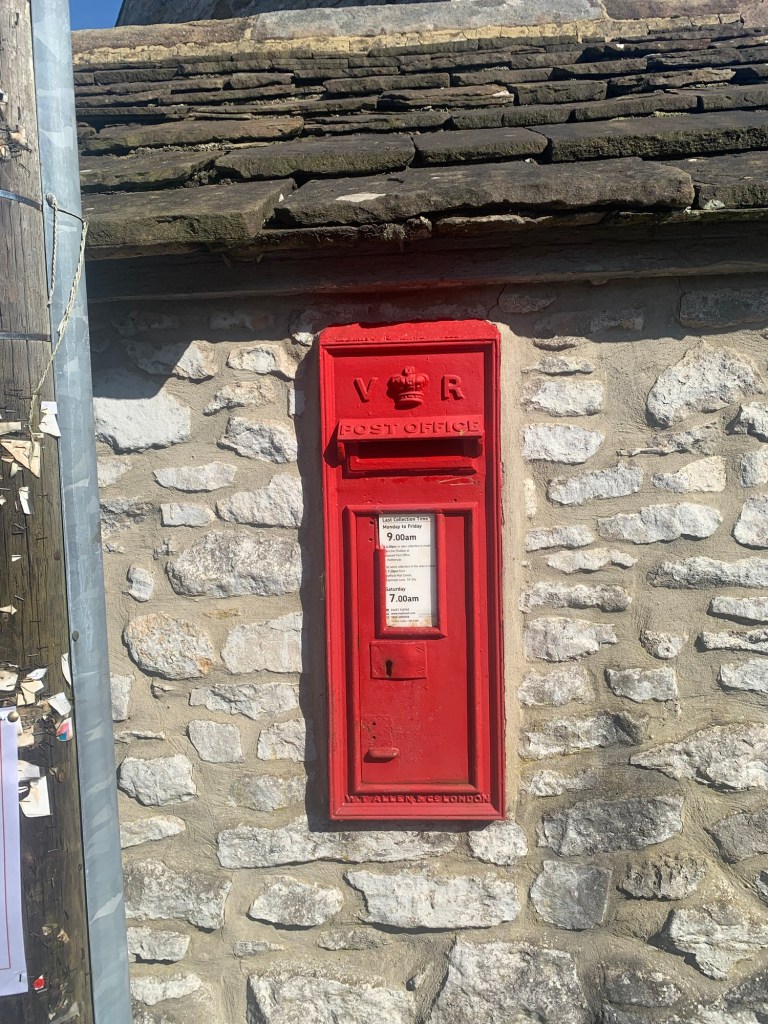
    We pass a Queen Victoria post box ( always worth a mention) before descending some ancient looking steps.
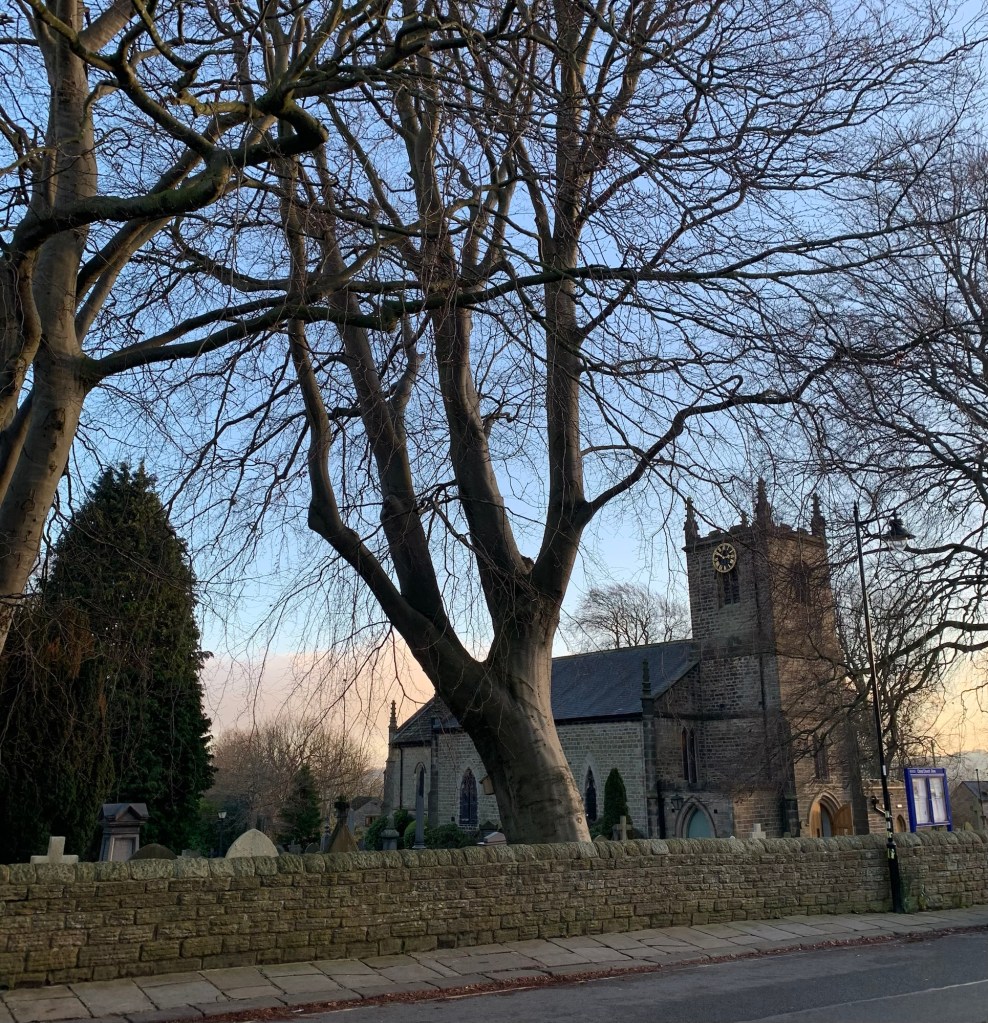
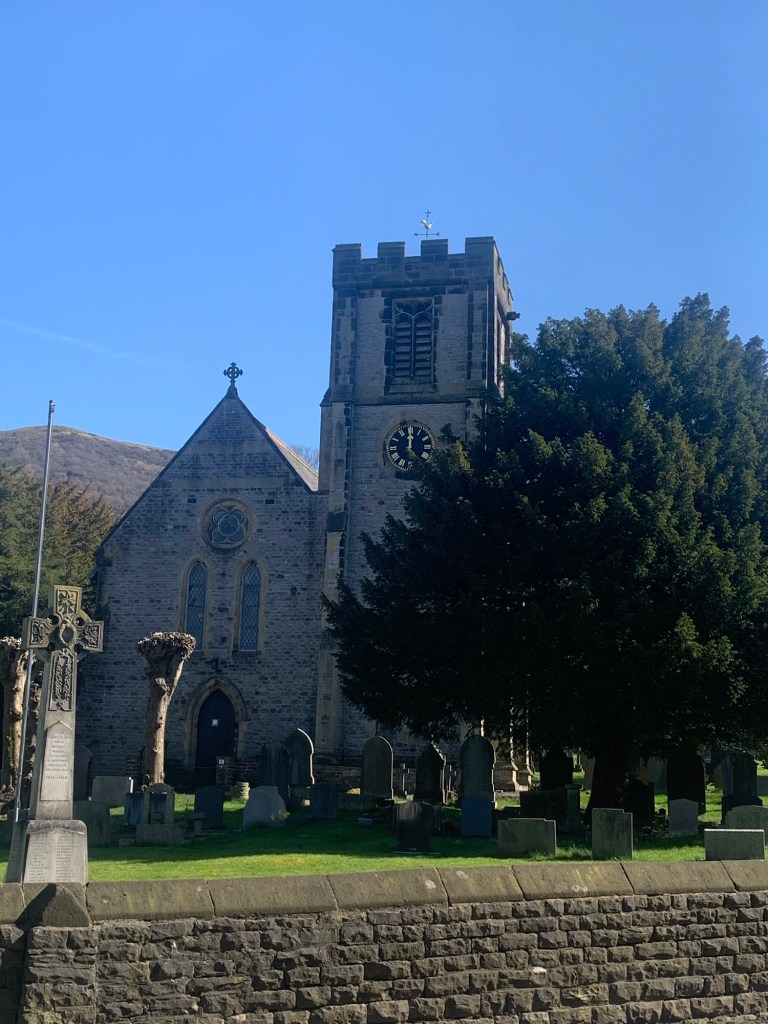
    Once on the main thoroughfare we turn right past the church which is looking very pretty today
    and then left to the Brook Cafe which is, surprise surprise, next to the Bradwell Brook. 
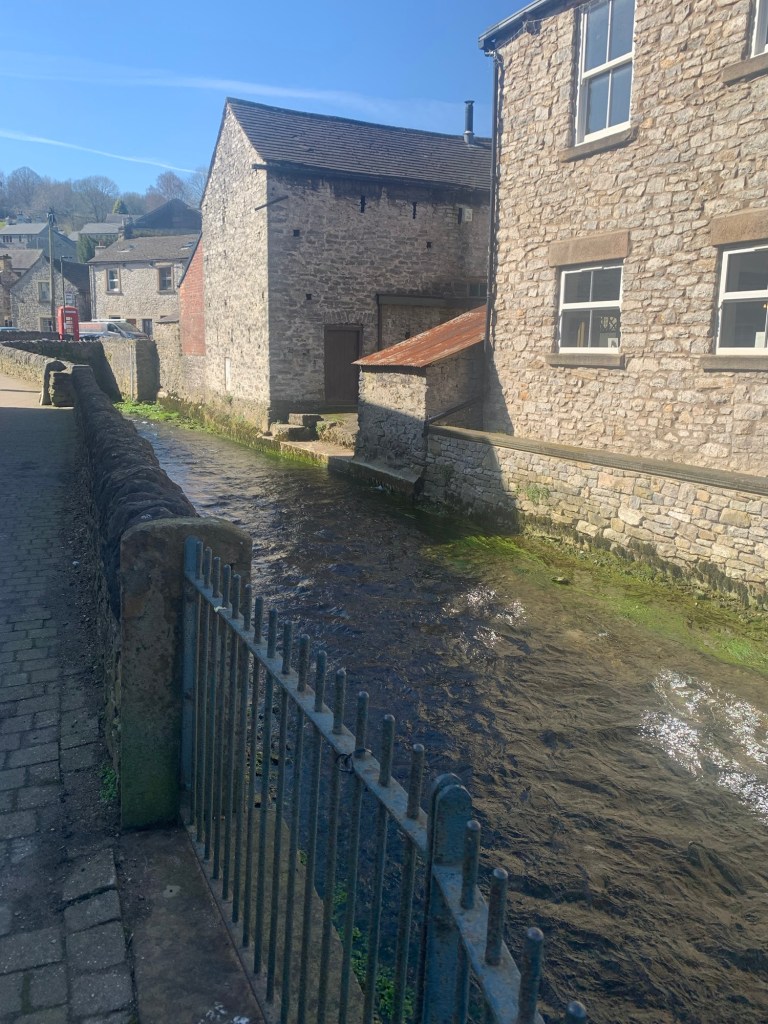
    This stream flows through the village having just emerged from part of the Bagshawe Cave, ( a system which comprises a mix of old lead mining and natural caverns)  just on the edge of the village.

    It’s a treat to sit outside in the sun for our pot of tea, in fact it’s so warm that some kiddiwinks are even paddling in the stream.
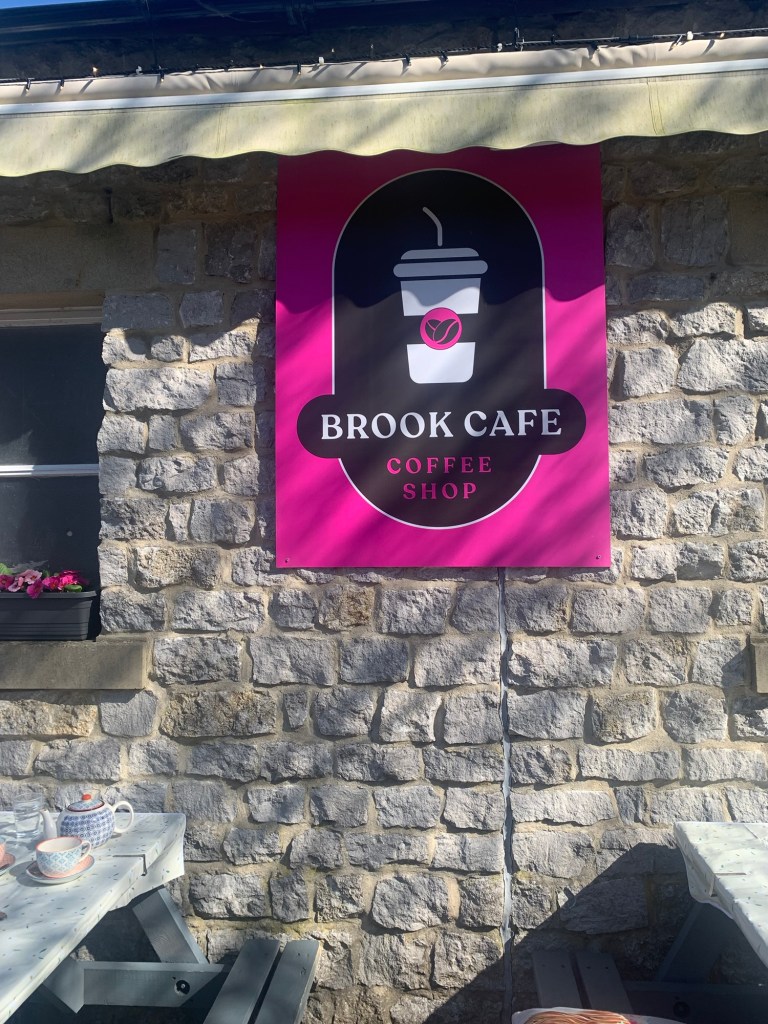
    Once refreshed we head back up through the village along Brookside, the road on the other side of the brook, until we see a finger post on our right
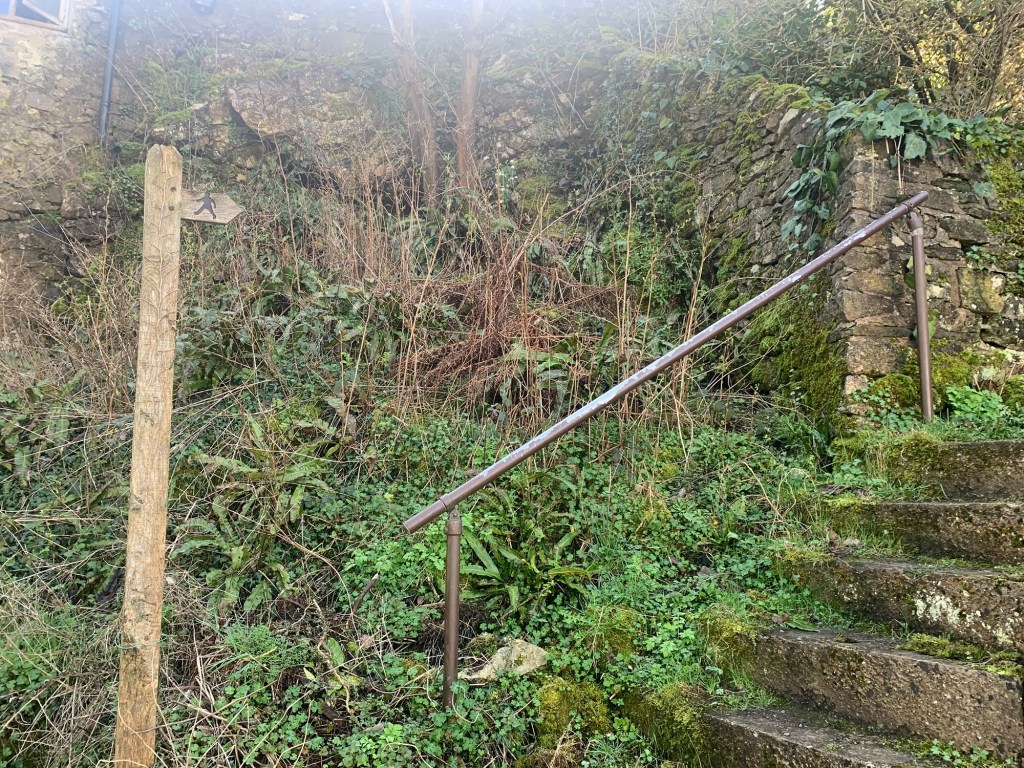
    leading us up a steep path with steps ( and interesting views back of the village)
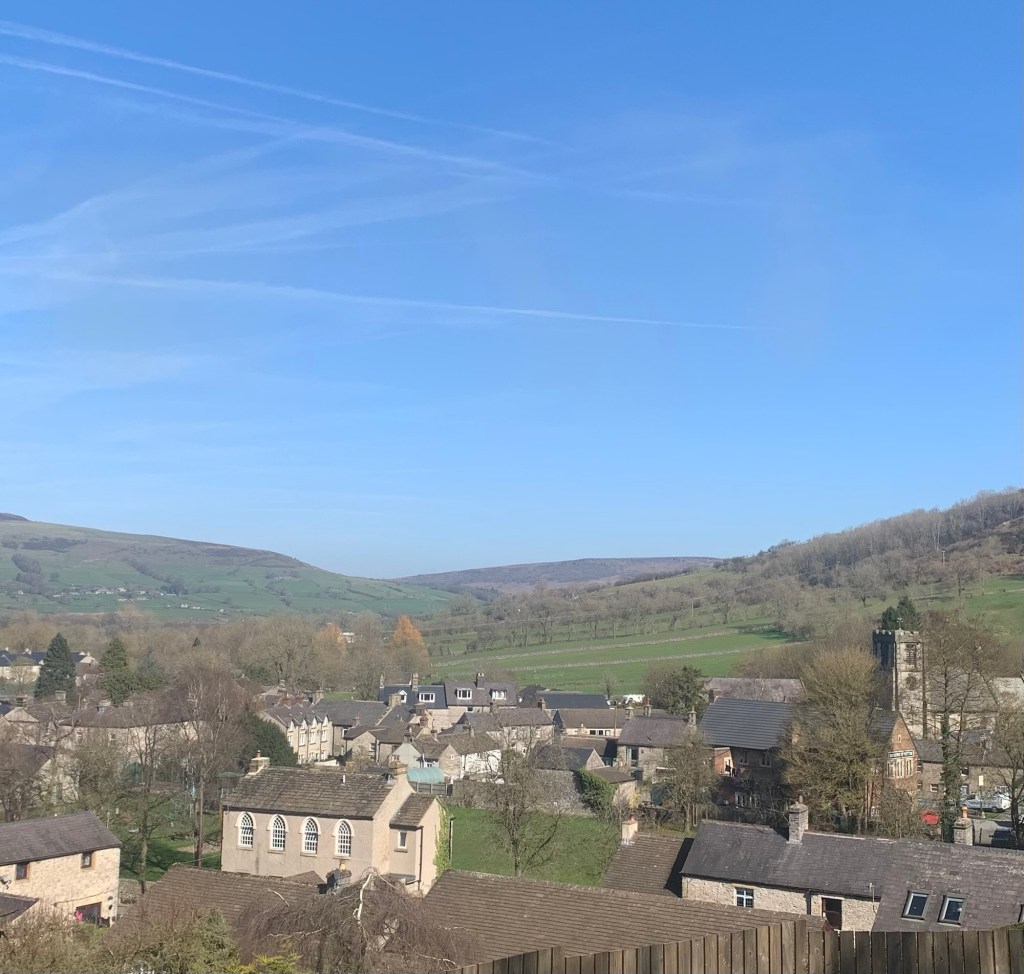
    and out onto the ominously named Hungry Lane. 
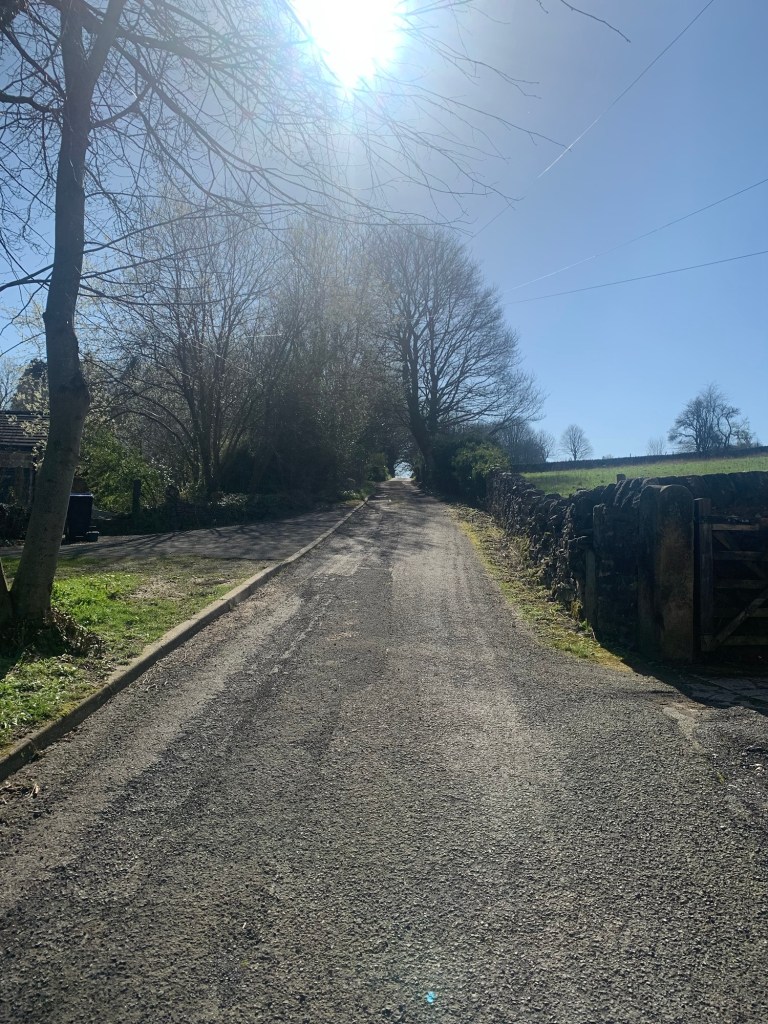
    We’re out of the village now heading along the side of Bradwell Dale above and more or less parallel with the main road that runs from Bradwell to Tideswell. The lane, which used to be the main road out of Bradwell until the B6049 was built, goes through a number of other intriguing name changes to Jeffrey Lane and then Tophole Road as it winds its way along the valley side. Just when it feels as though we are going to be forced down onto the busy main road we find our footpath heading off right across grazing fields and making very pleasant walking indeed.
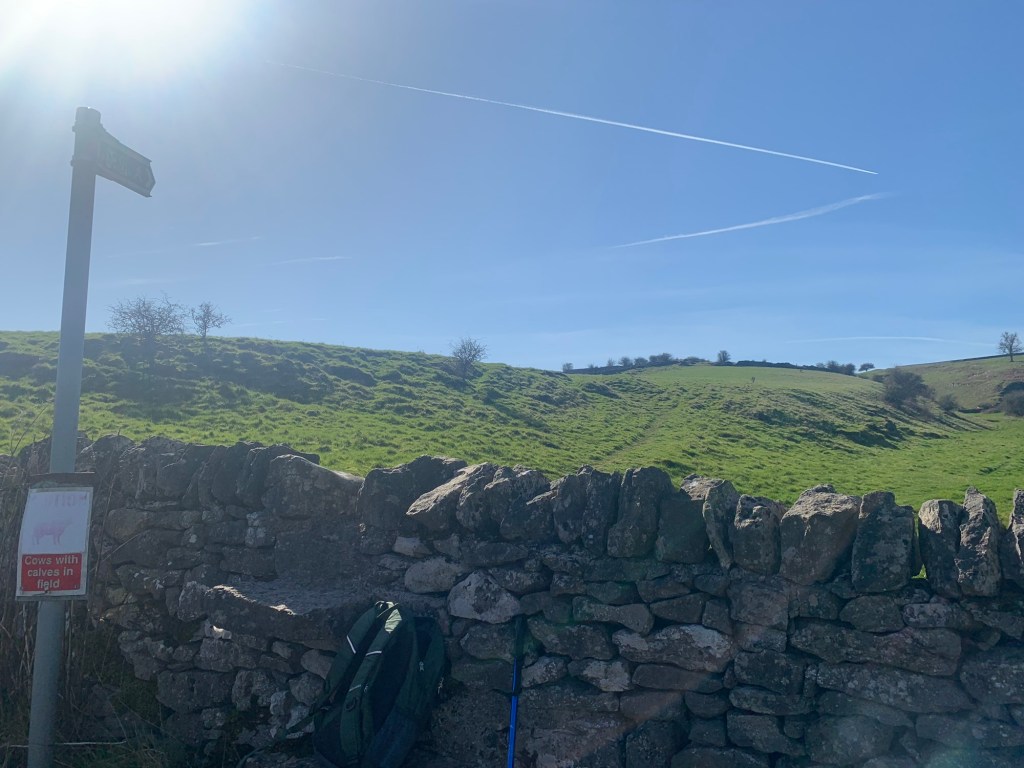
    Although the path is only lightly defined underfoot the way is made obvious by always being able to spot the next stile. This makes for very enjoyable walking and today there’s not even a suggestion of mud.

    At the hamlet of Coplow Dale the path gives onto a lane. It looks as though there is a footpath continuing on the other side of the road but we decide to quit whilst we’re ahead after such a pleasant footpath experience rather than risk a path that might be there in name only. It’s only a hunch ( and we’ll never know because we didn’t try it) but it’s a simple matter to turn right up the tarmac lane and then left at the top of the hill.
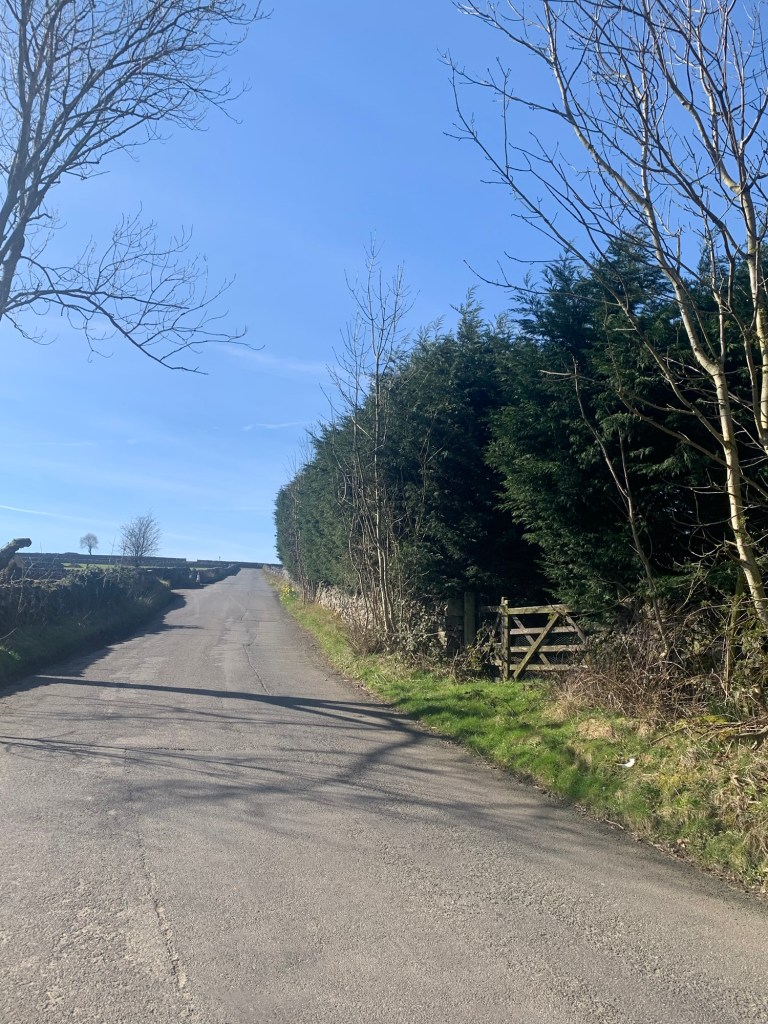
    We’ve now joined the road known as Washhouse Bottom ( another great name!) and it’s another quiet back-road which just skims past the edge of Little Hucklow before taking us to our next path.
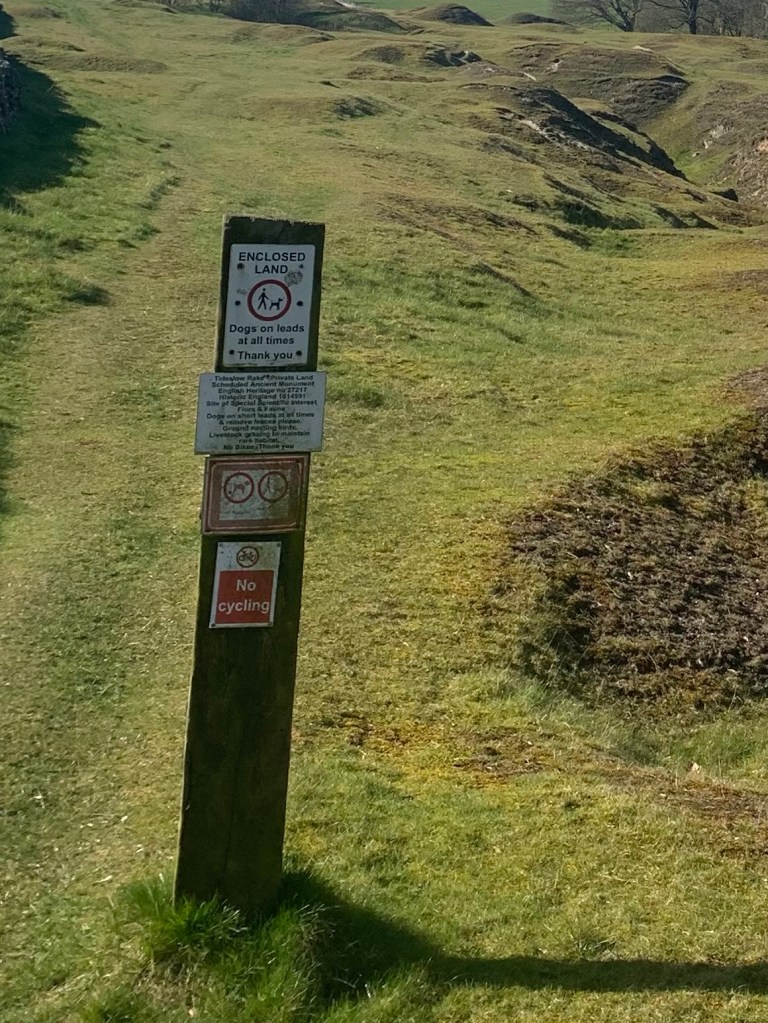
    This is one of my favourite paths. It’s the path to the right that we need to follow today (but the path to the left holds further lead mining interest including remains of the old mine buildings, for anyone inclined to make an out and back detour.)

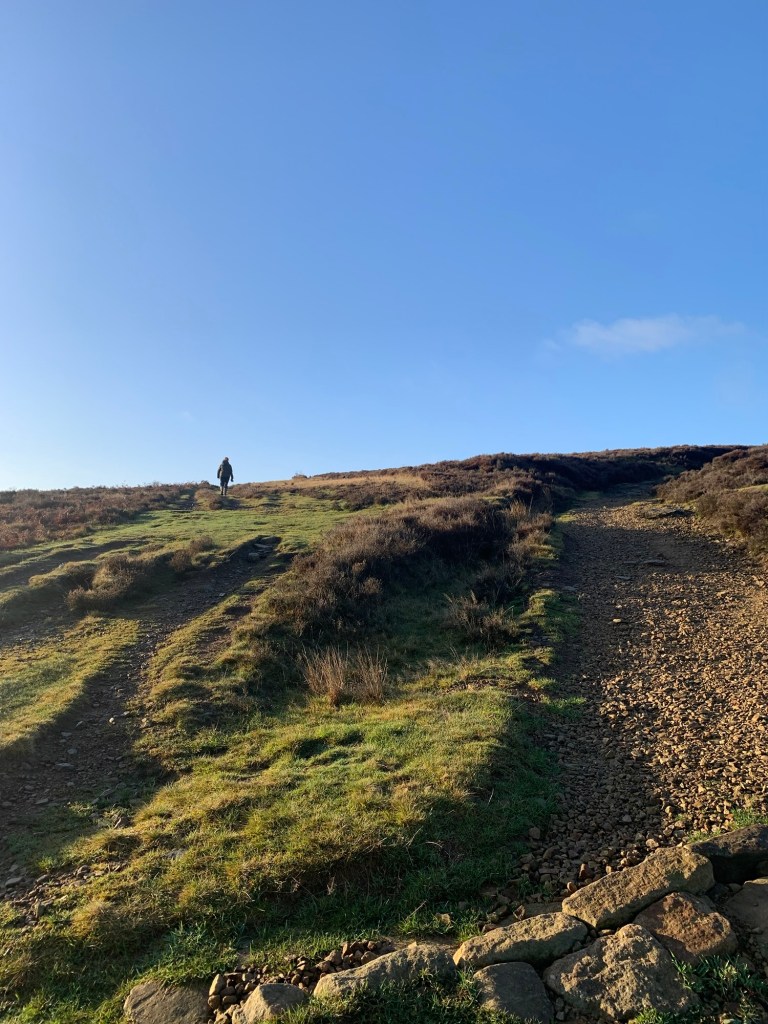
    Heading uphill we’re taken along the remains of a phenomenal lead mining rake worked as long ago as the 13th century, known as Tideslow Rake. The peculiar shapes and hollows look even more interesting than ever with today’s lighting exaggerating the light and shade. It’s such a fascinating landscape.
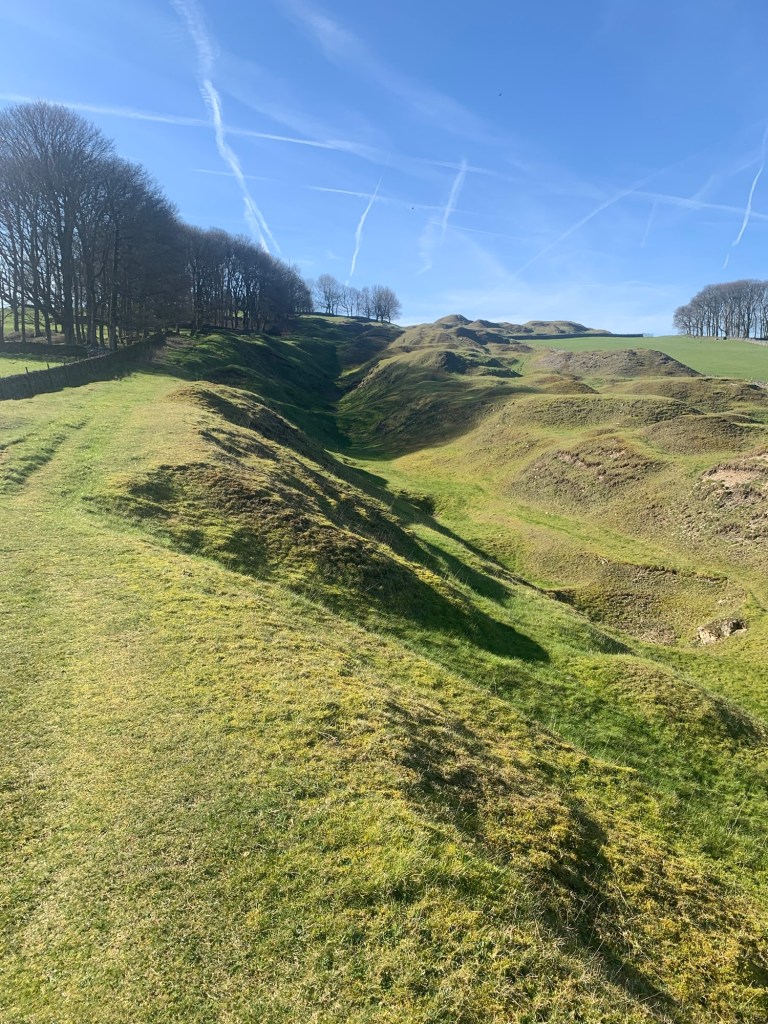
    At the top of the hill is another telecom mast and as we pause to look back we realise we can just make out the one we passed earlier on Shatton Moor AND for an exciting bonus we can also see the Sir William Hill mast near Bretton.

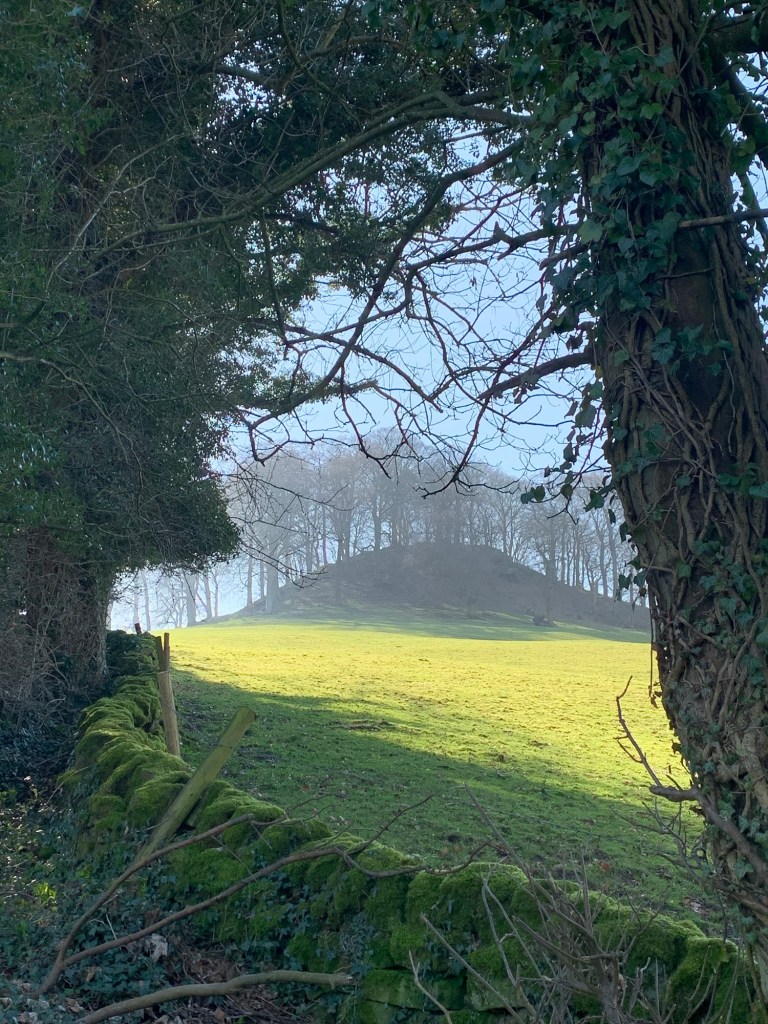
    Somewhere on this hilltop,  known as Tideslow, in amongst the telecom mast and the debris of the lead mining, is an ancient burial mound where allegedly Tida,  a local Saxon chief was buried in the 7th century.

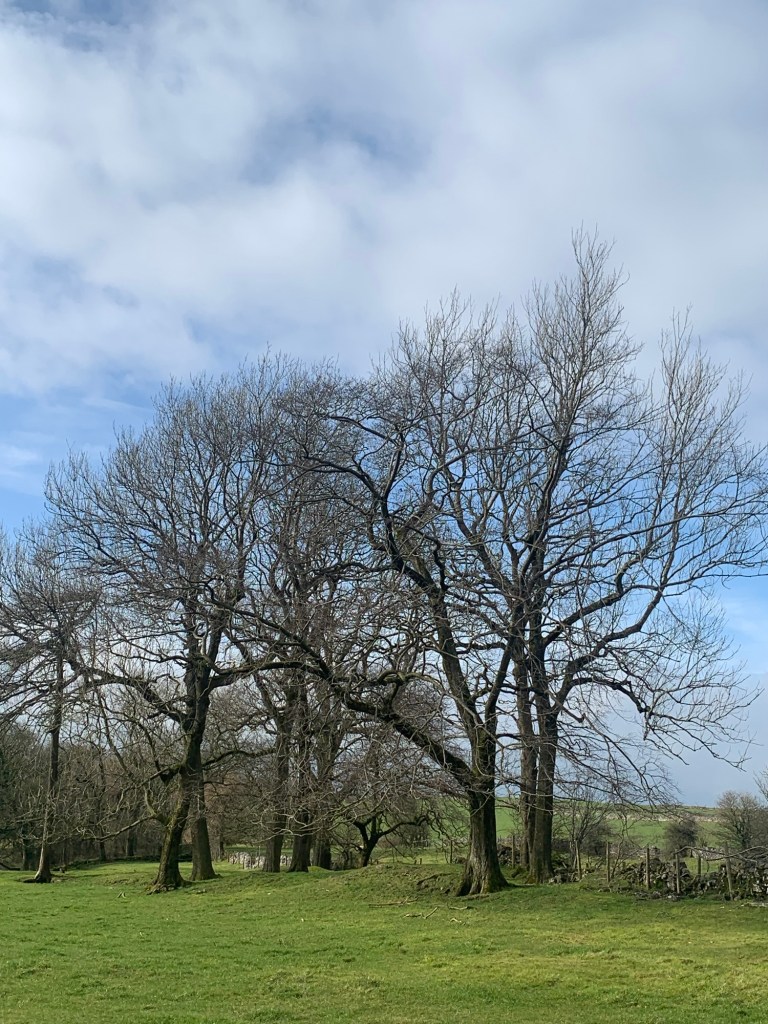
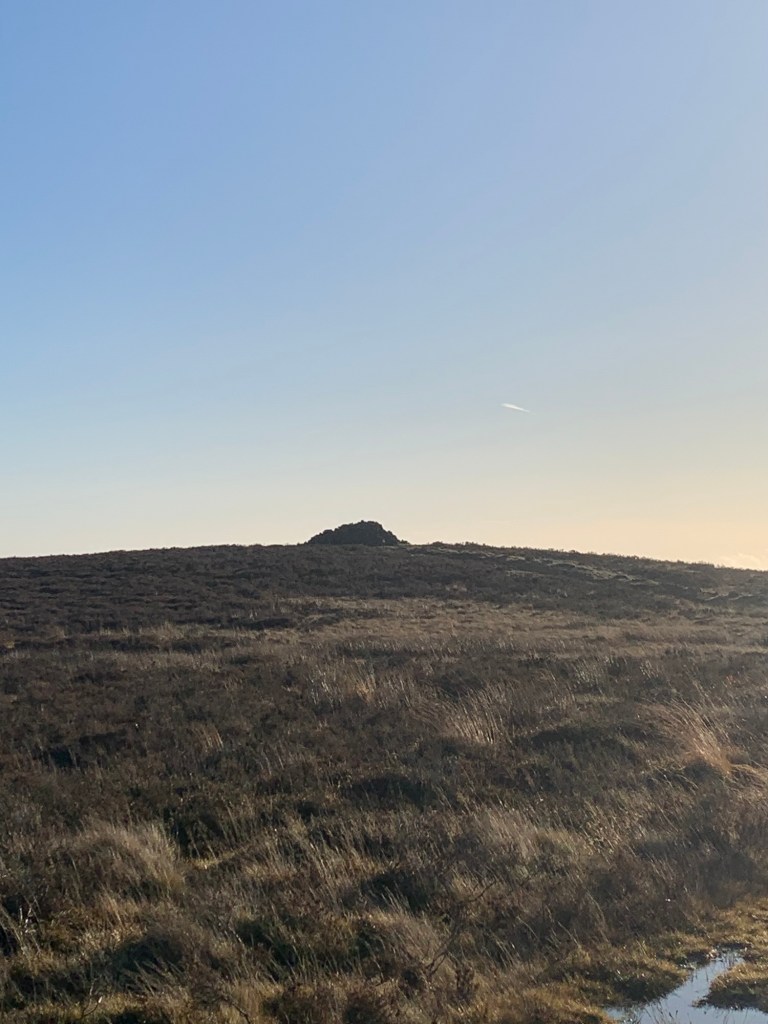
    We decide, totally unscientifically and on something of a whim, that it’s this bump with a circle of trees around it.
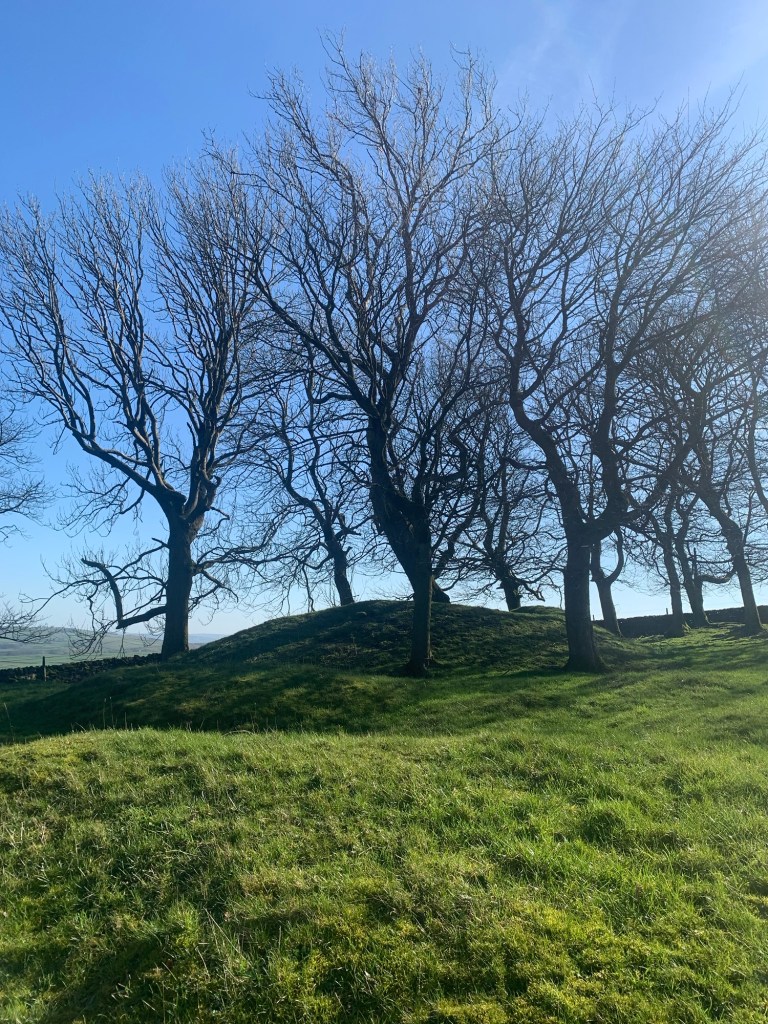
    But whether or not Tida lies here, there’s definitely a special atmosphere in the place suited to a prehistoric site, as with Five Wells Tomb over near Chelmorton ( see C for Chelmorton) for example.

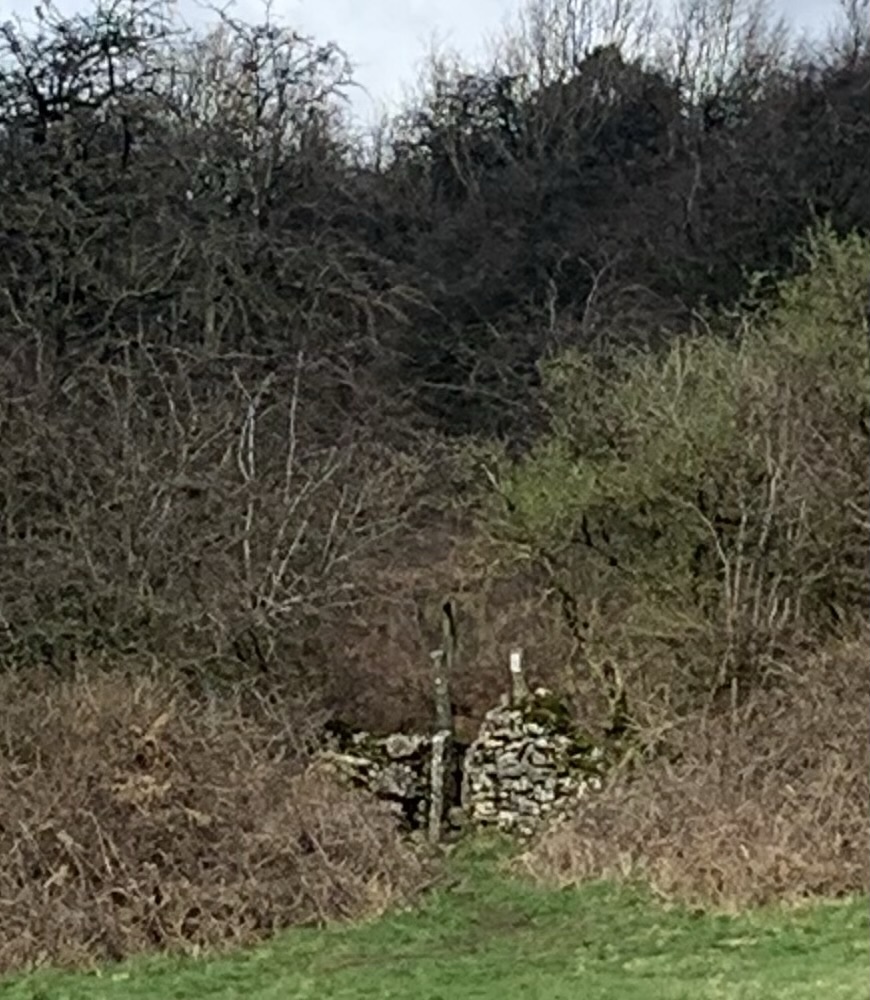
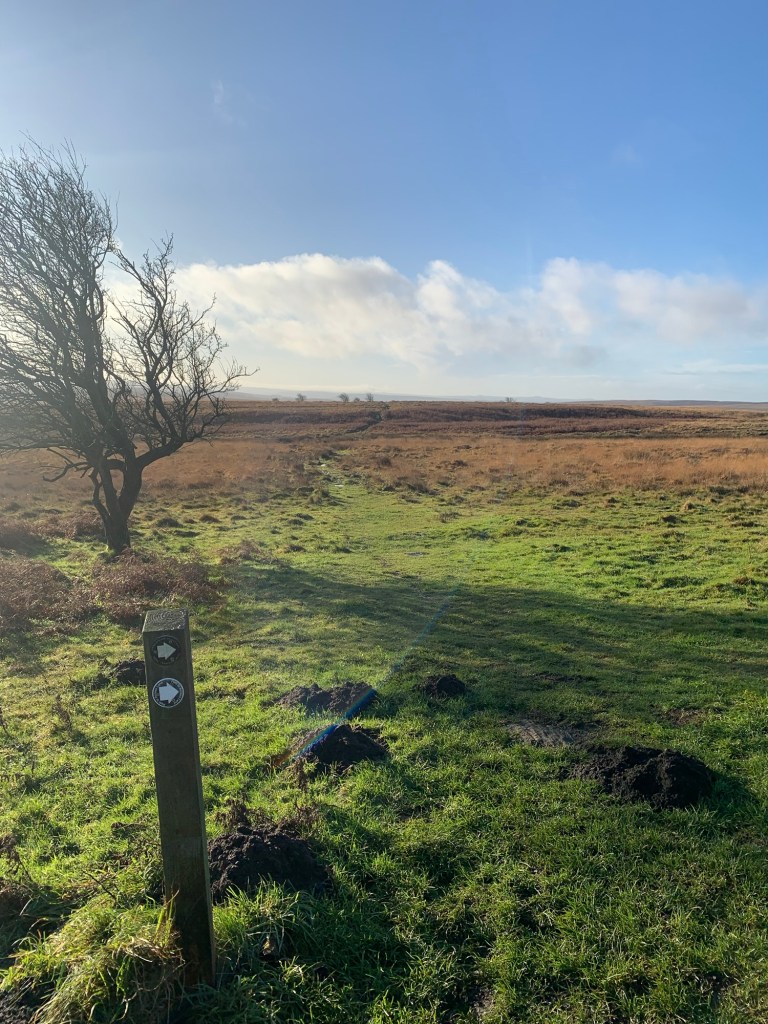
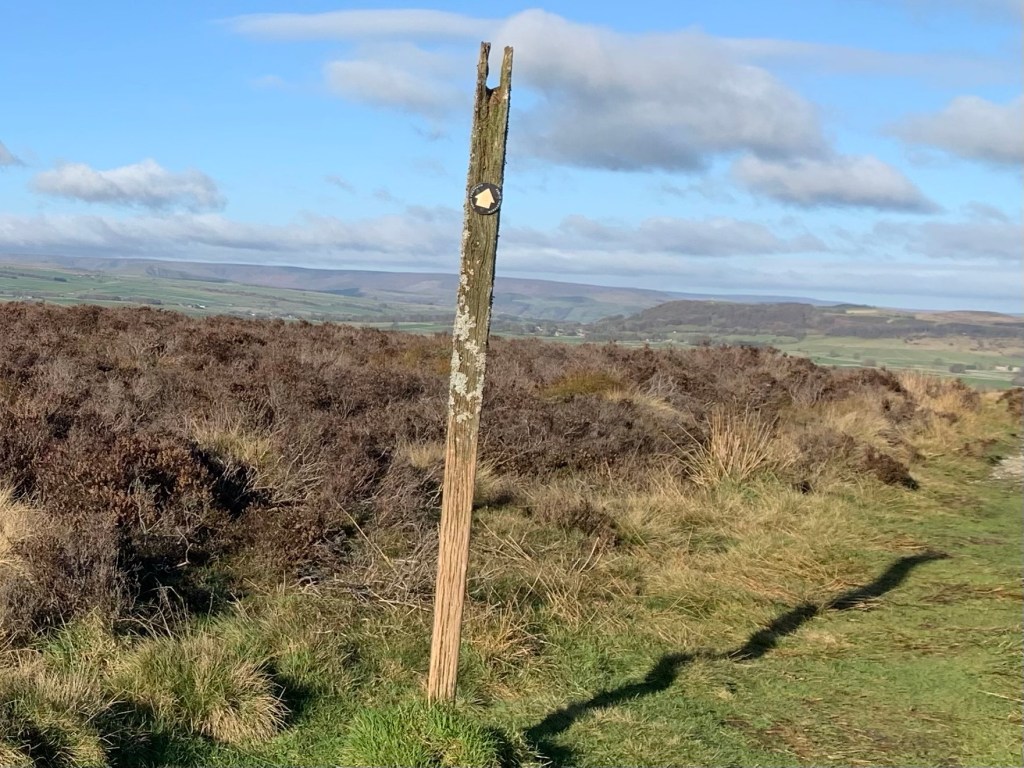
    Once over the brow of the hill the path swings right ( look for an arrow sticking up above the wall )
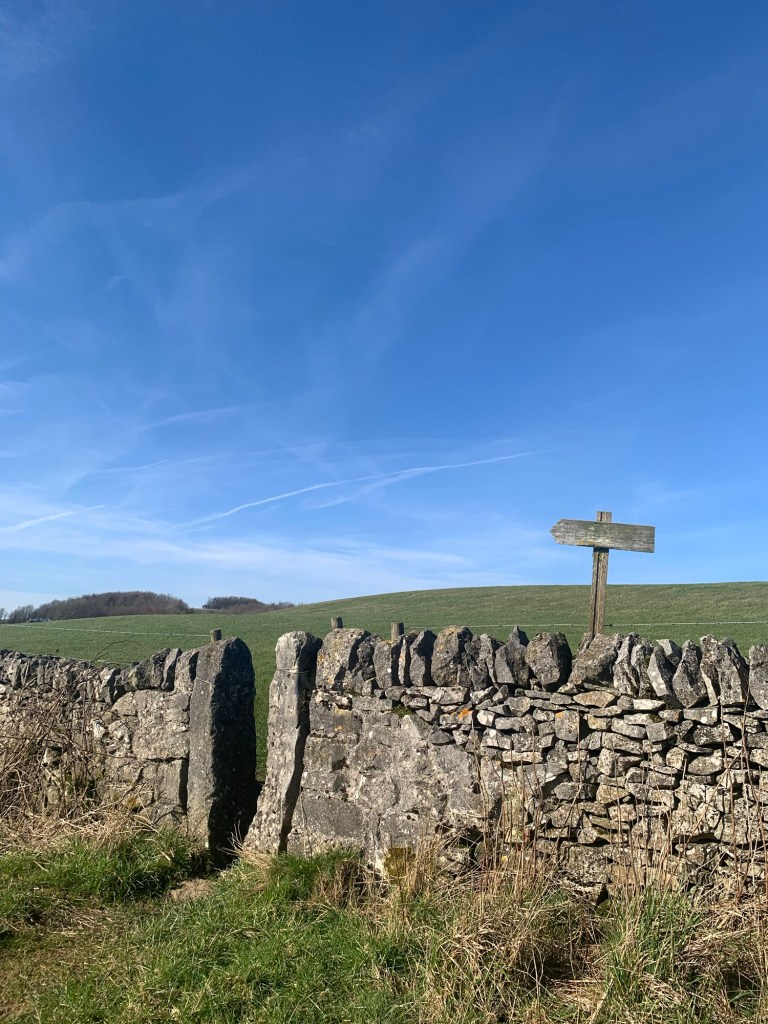
    and the path then turns left following along the other side of the wall until we reach the road. 

    There’s an enticing finger post pointing to a continuation of the path on the other side of the lane but we’ll have to explore that way another day. 

    Our route to Tideswell takes us left along this quiet lane to its crossing point with the very busy A623. The traffic is very fast moving and we are between two bends so we’re relieved to have got to the other side in one piece and back into the peacefulness of our quieter road.
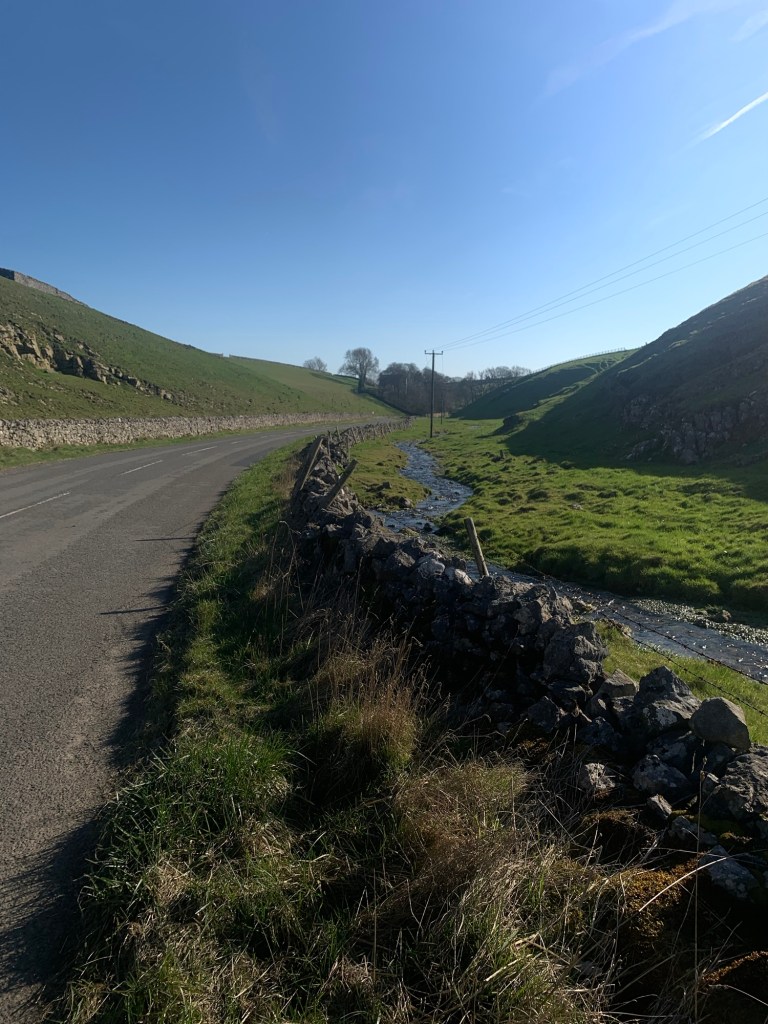
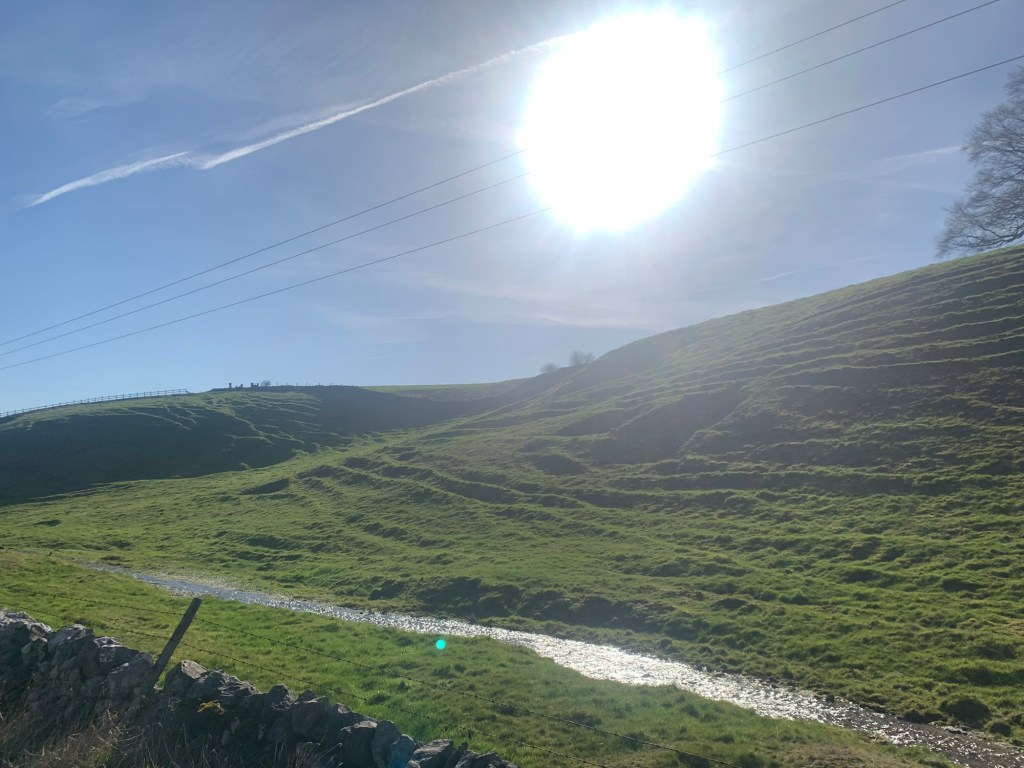
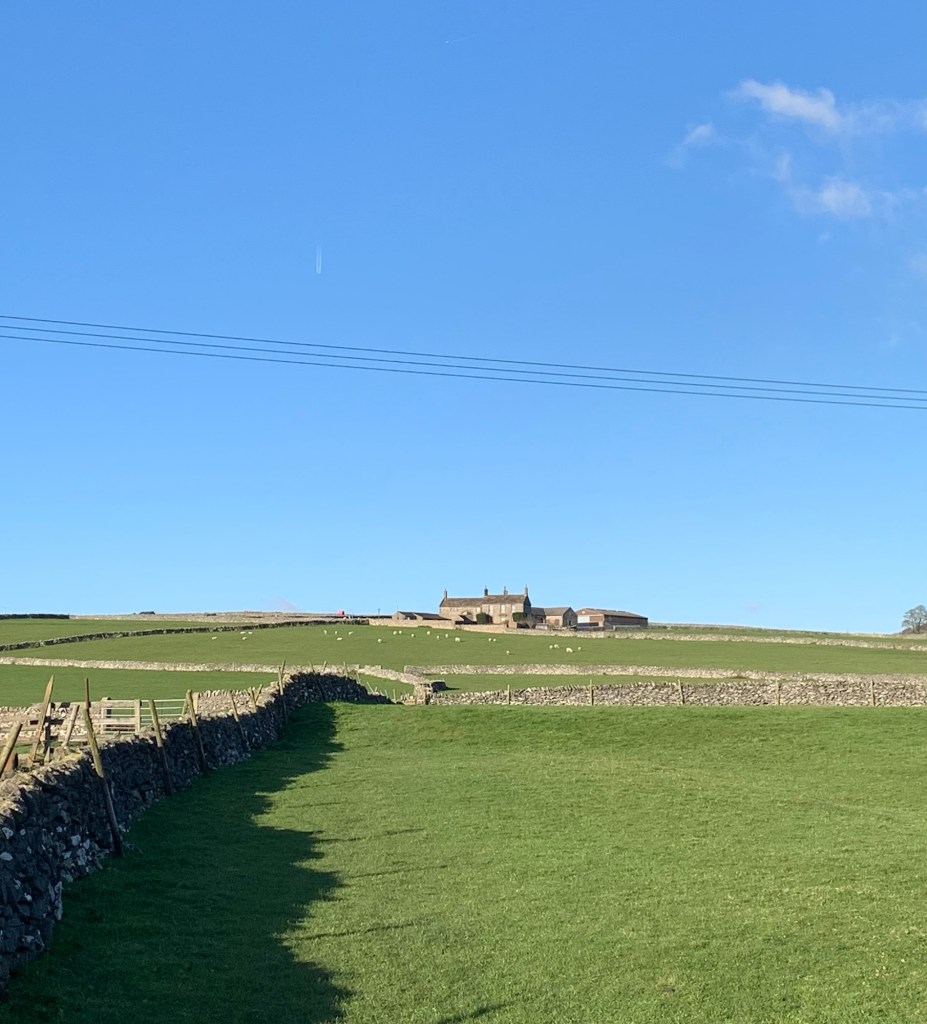
    There’s a beautiful stream now running alongside us as we gradually descend towards the village but we leave it in the valley bottom as we strike off left briefly uphill again along a minor lane.
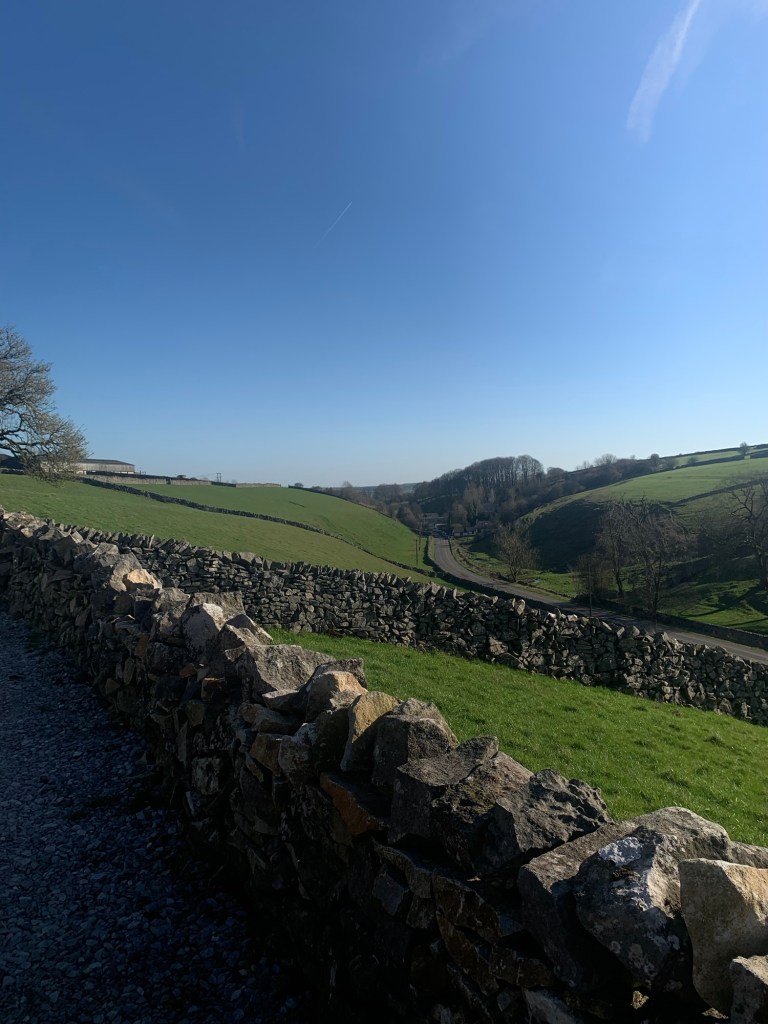
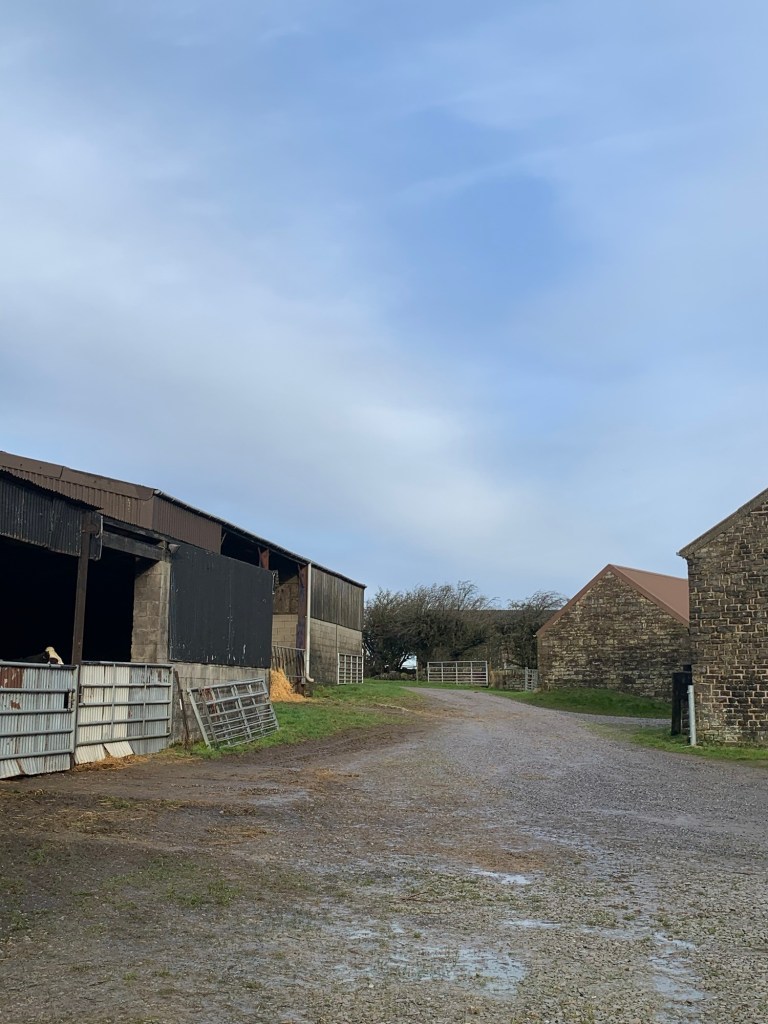
    After passing through a farm yard
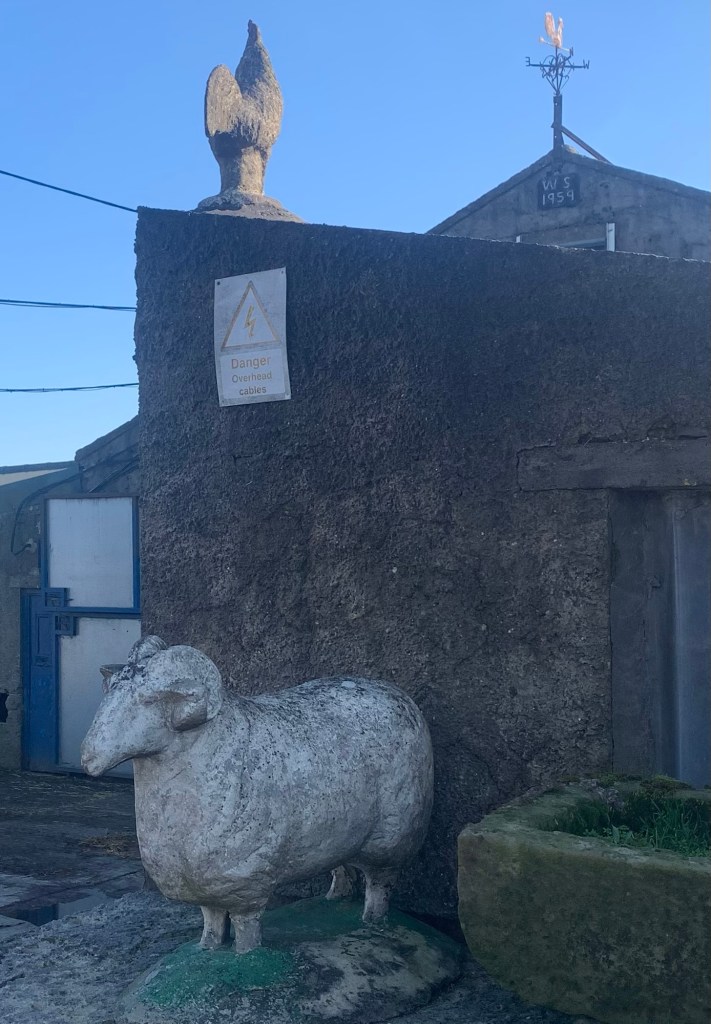
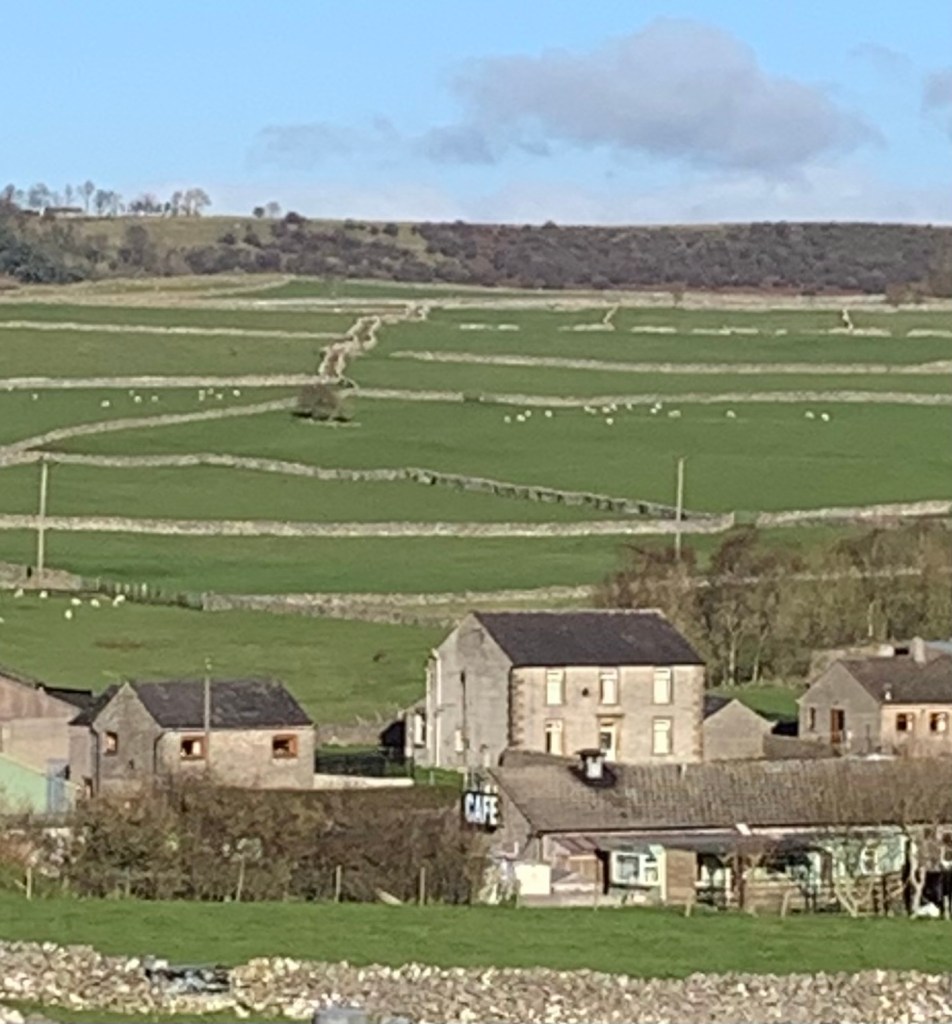
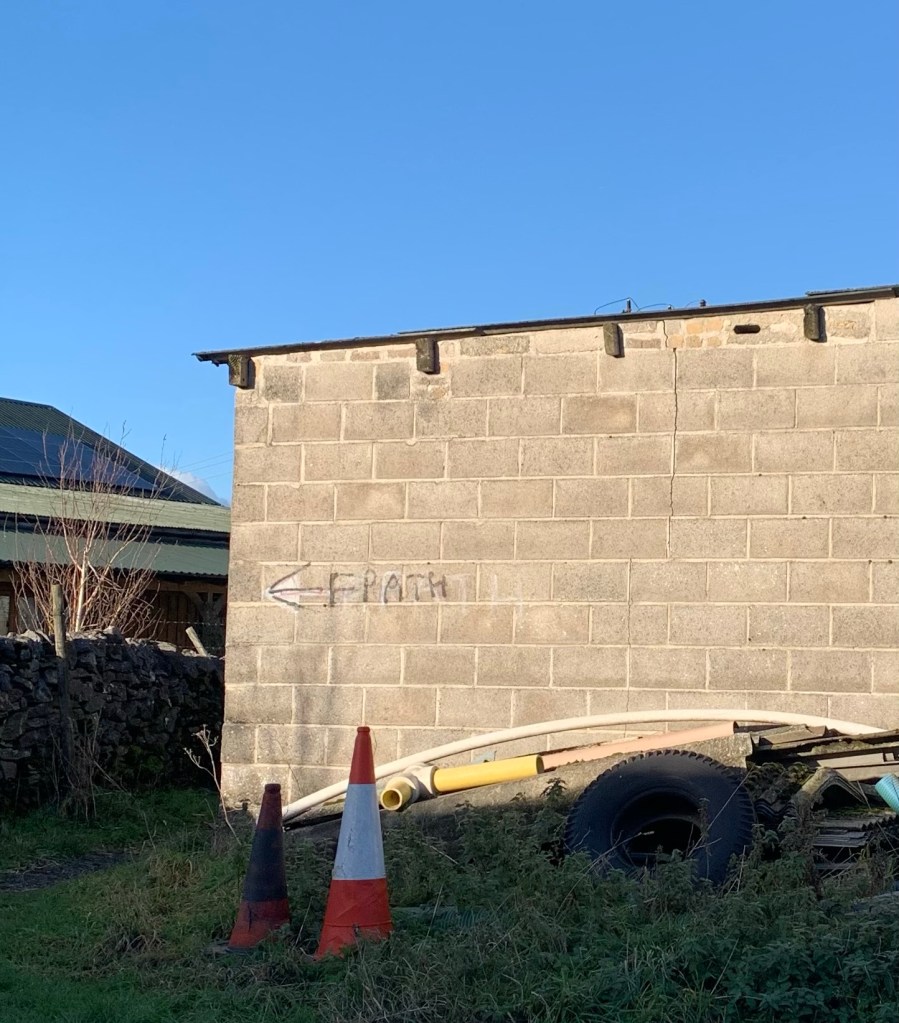
    we reach a T junction and we walk right, entering into the village past a small play area and a strangely tall outhouse
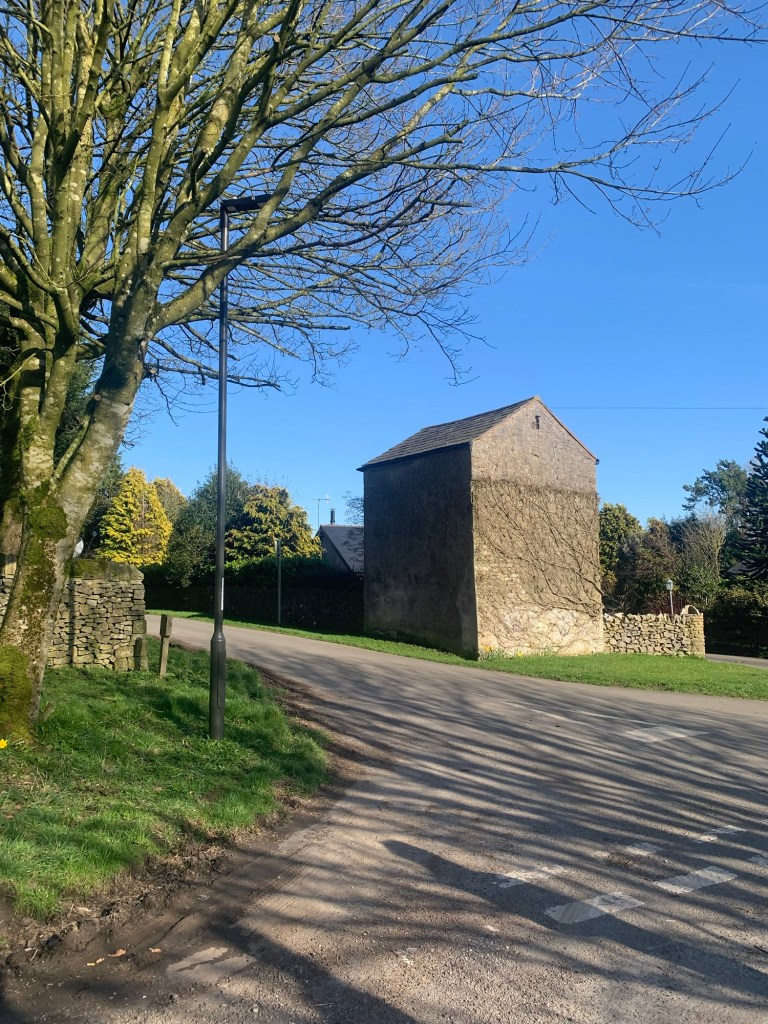
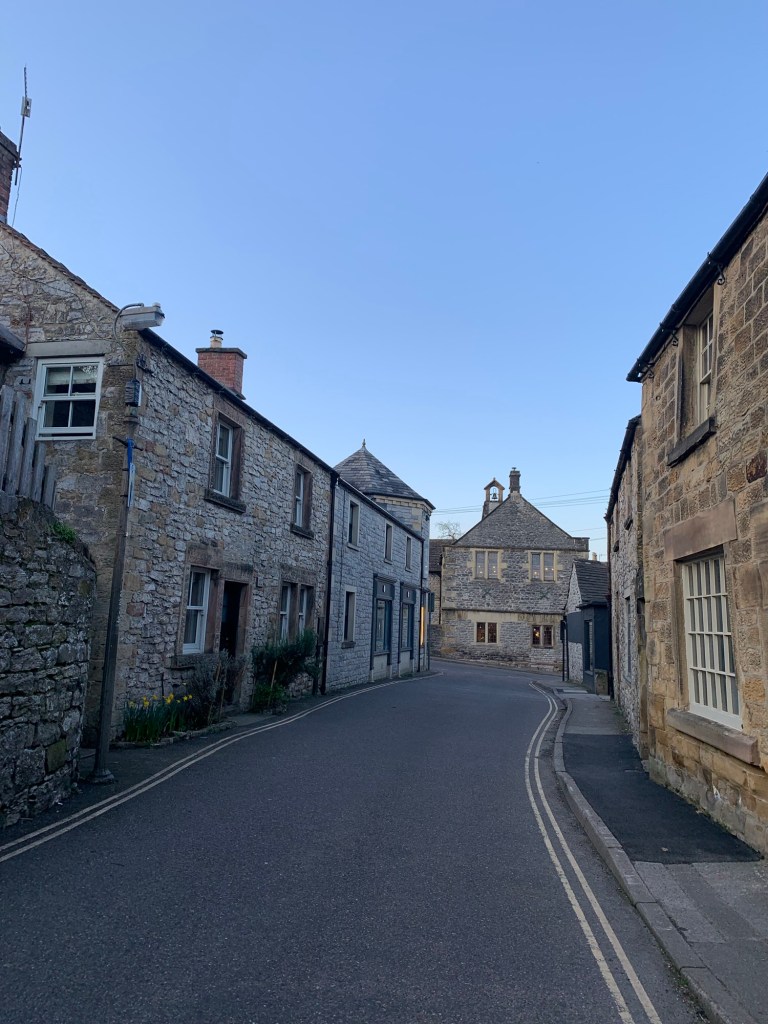
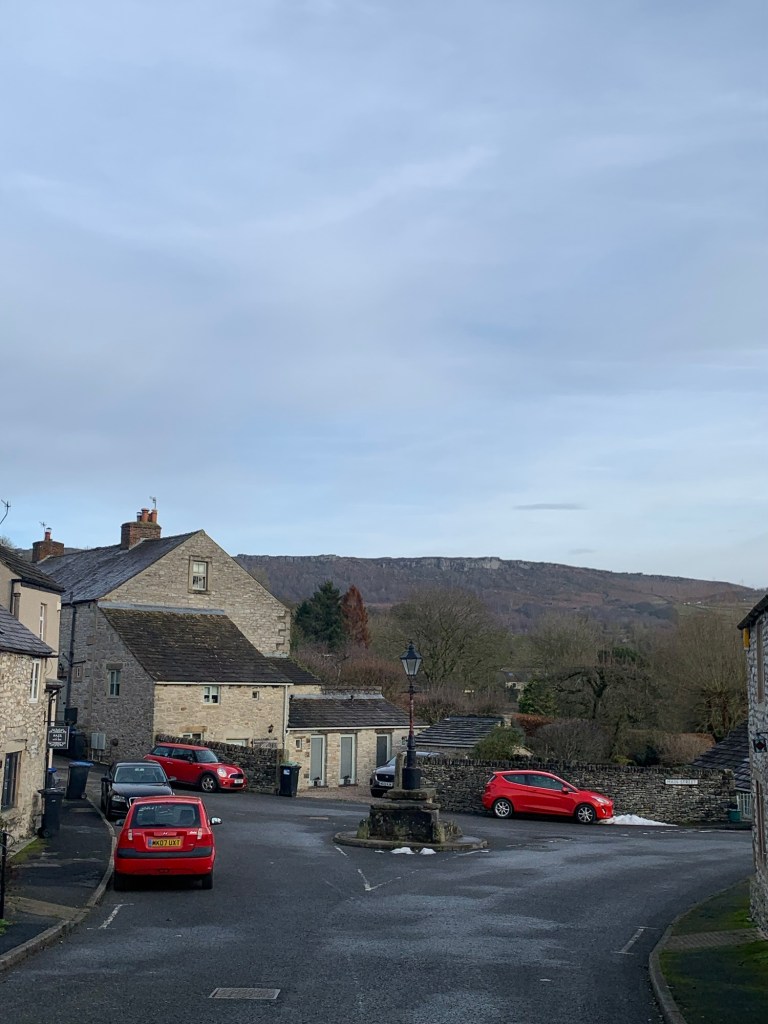
    before a quick wander through the back alleys of Tideswell brings us out between the church and the Co-op.
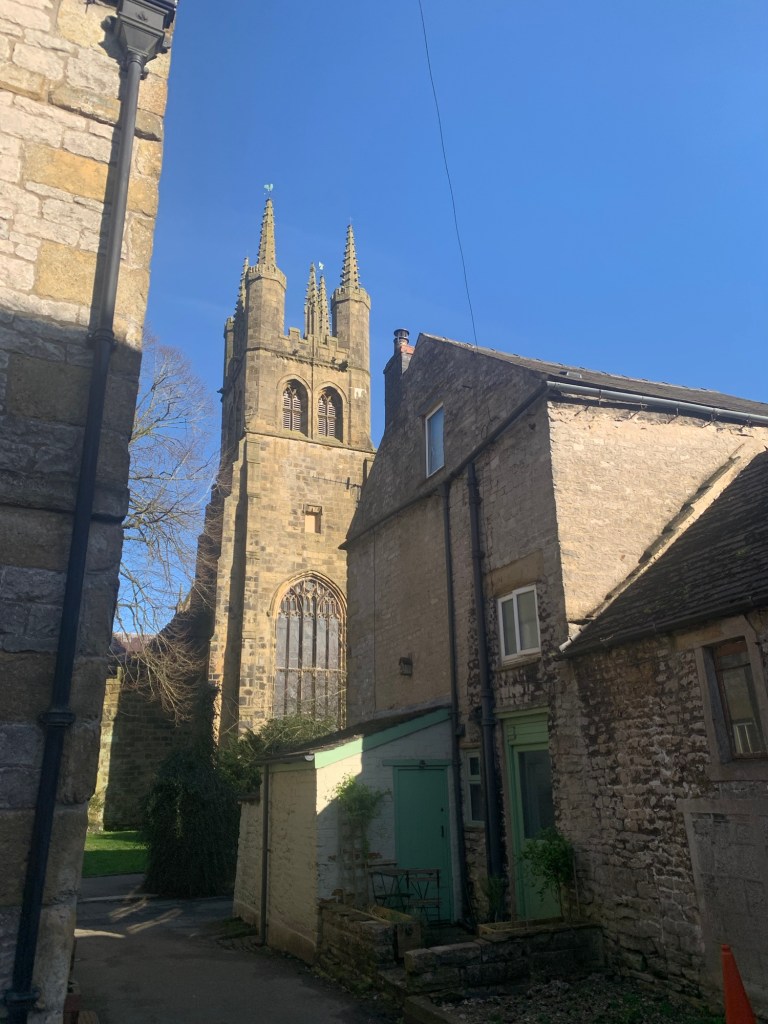
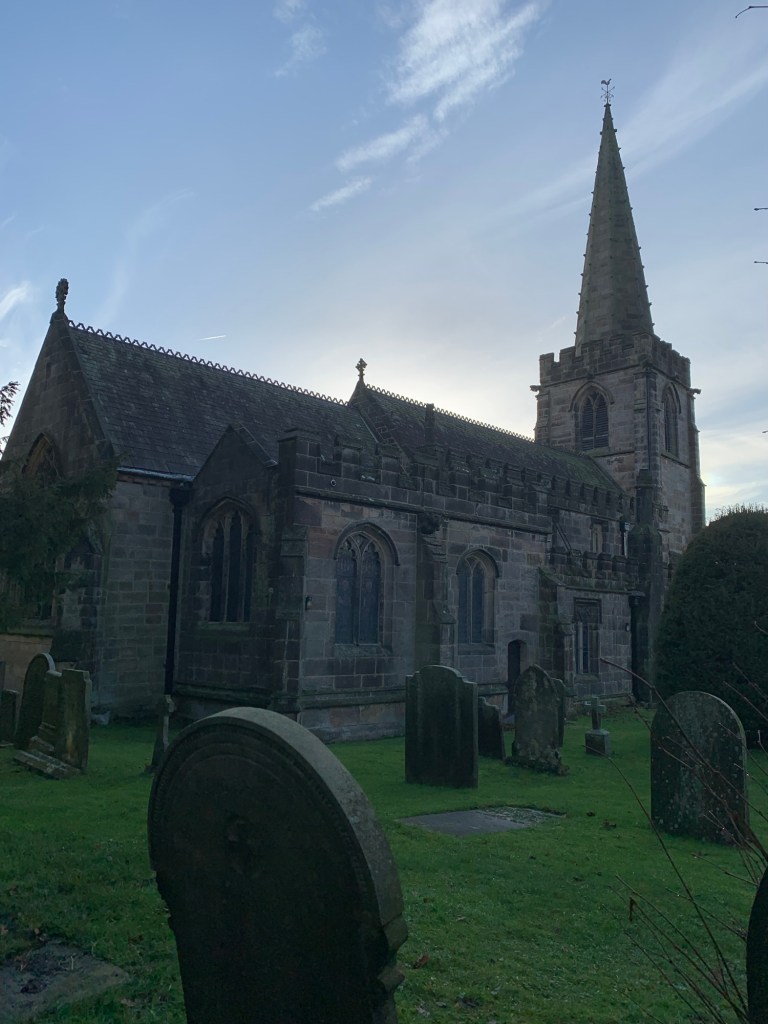
    The church is known as the Cathedral of the Peak due to its size and apparently its size is due to the amount of wealth that was once in the area thanks to the lead mining industry.
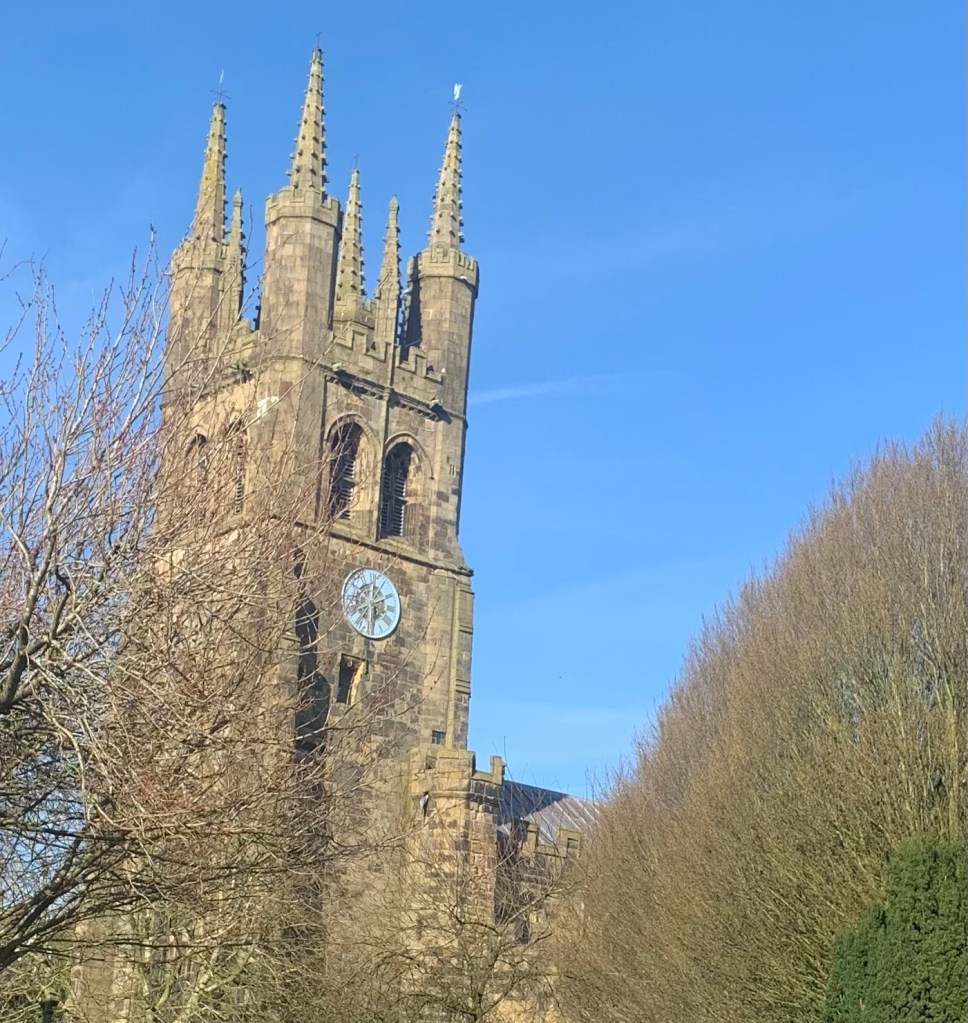
    It’s certainly grand and imposing from the outside but when we decide to explore inside it’s clear that a lot of improvement work needs doing and we read that the funds needed for the upkeep are in the region of £400,000+ . Although we make a donation it feels like a drop in the ocean. Hopefully they will receive some funding from somewhere as it would be such a shame for a building like this to decline past the point of rescue.

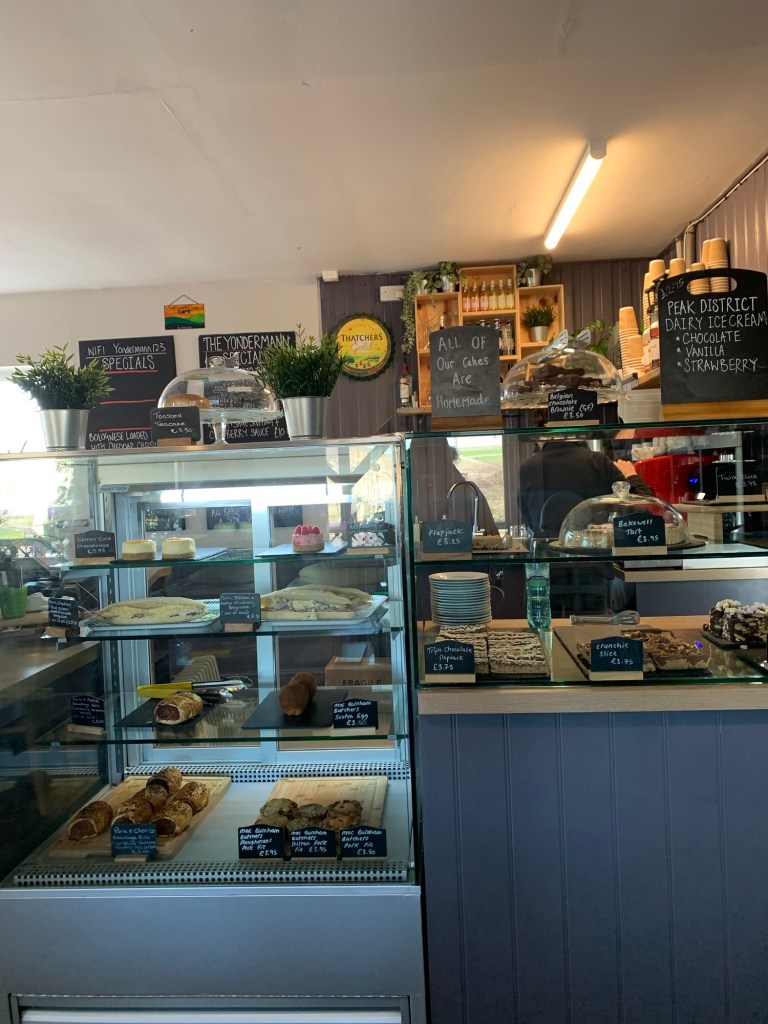
    Back in the sunshine once more we head just around the corner to the Tideswell Lounge cafe and very much enjoy our second pot of tea of the day whilst we wait for the 65 bus to take us back home.

    There may not be many of them but the 65s usually do turn up and this one is no exception; it’s bang on time and we enjoy a sunny afternoon scenic ride back to Sheffield after another lovely day in the Peak. 
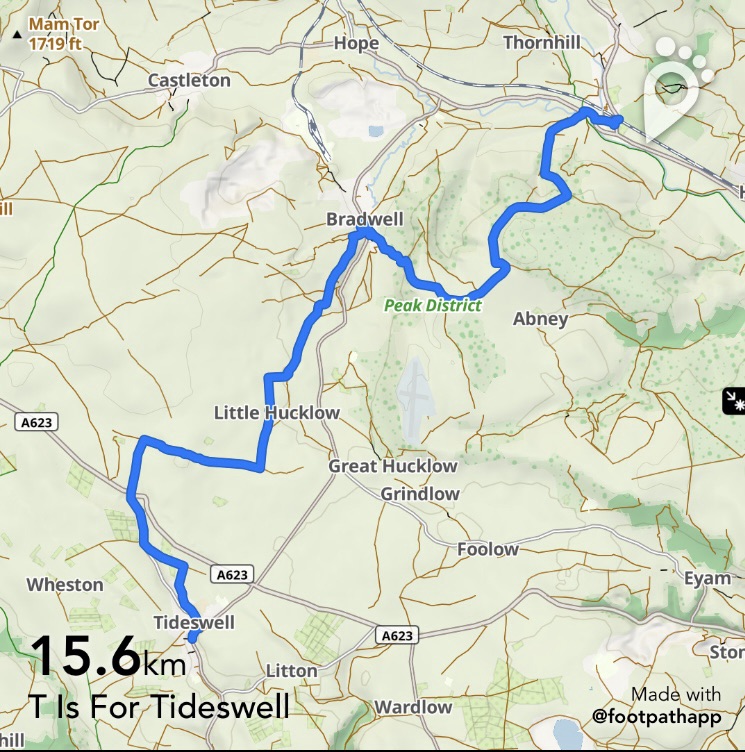
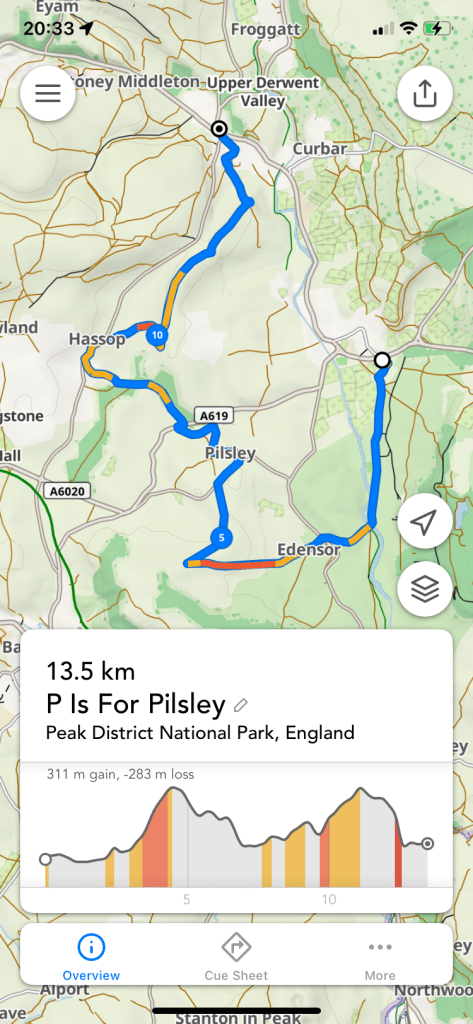
    https://footpathapp.com/routes/F67E4027-BEE4-446F-B0D4-DDDA02A8D9EF?units=metric

    Transport 

    272 or Hope Valley train from Sheffield to Bamford 

    Pubs/Cafes

    The Wild Kettle Cafe ( Bamford Garden Centre)

    The Brook Cafe ( Bradwell)

    Tideswell Lounge ( Tideswell)

    How far?

    Around 20k

    Route Synopsis 

    Bamford station/bus turning circle- Shatton- Shatton Moor- Robin Hoods Cross- Bradwell- Coplow Dale- Little Hucklow- Tideslow Rake- Tideslow- Brook Bottom- Tideswell

    Dogs?

    Okay for dogs 

    Map

    OS Dark Peak and 

    OS White Peak 
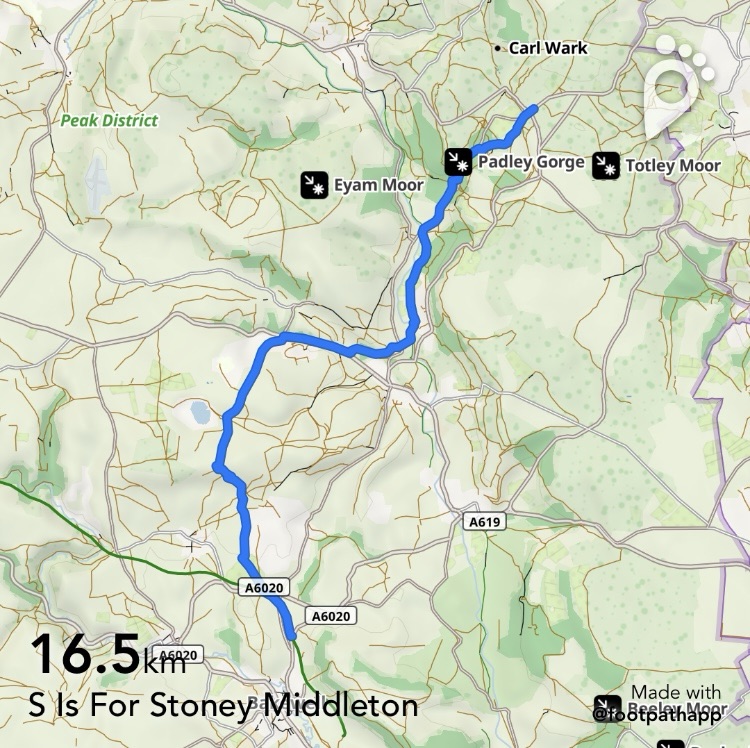
  • S is for Stoney Middleton 

    We’ll soon be wearing out the seats on the 218 bus, not to mention the footpath along the Monsal Trail! 

    Yes, yet again, we alight at Pineapple Farm just on the edge of Bakewell and, crossing the road, drop down the steps onto the trail heading in the direction of Hassop Station Cafe.

    At the signpost just past the cafe, we take the path on the right.

    Heading down the first field and across the road we can see our next path which takes a left diagonal across a field of young mowing grass. It seems to have been conveniently marked out for us by the farmer with weed killer; just follow the yellow stripe and you can’t go wrong!

    After walking through a few farm buildings at the end of the path we turn right onto a lane known as Longreave Lane until we reach a road junction where we head straight across onto the next footpath which starts as a paved track.

    So far it’s all very straightforward but we mustn’t get too carried away on the paved track as we soon need to branch off right over a stile and head up the hill to the top of the Longstone Edge Road.

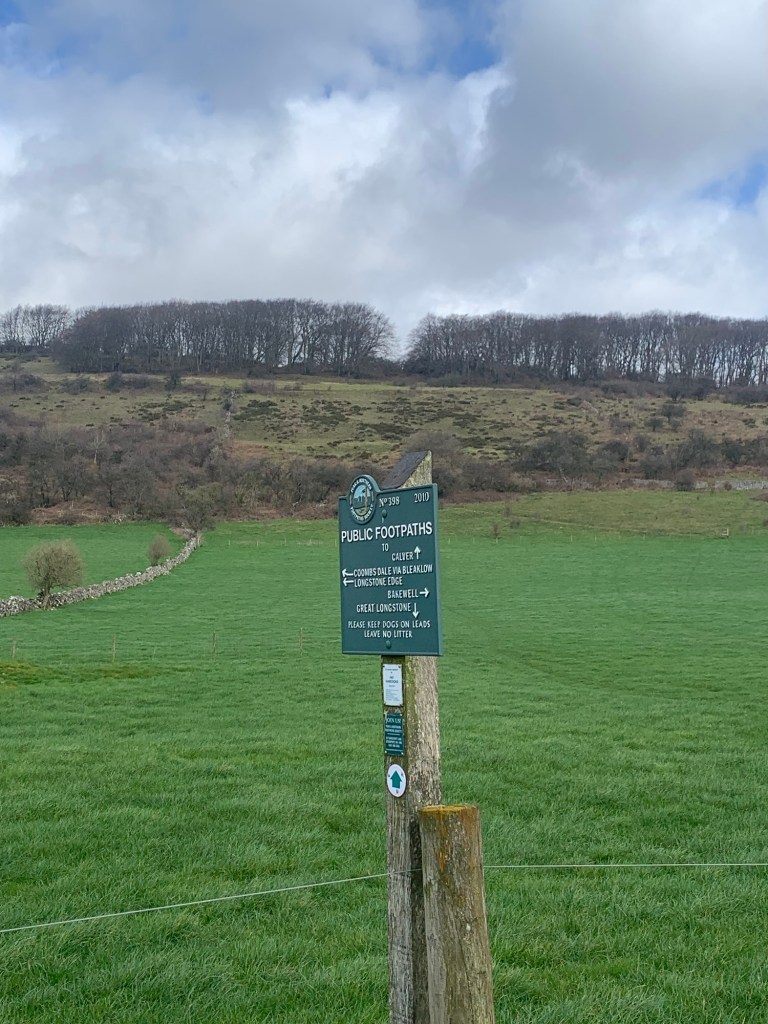
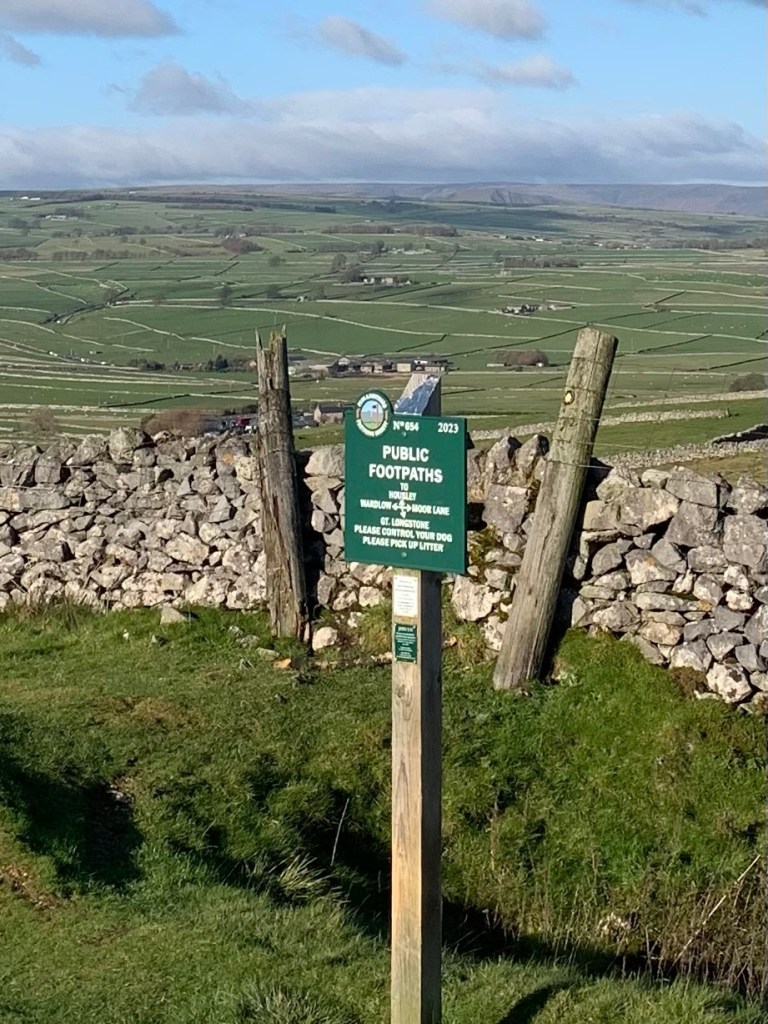
    There’s a very informative square green footpath sign but it’s just past the stile we need and has it’s back towards us, so we need to walk past it to be able to read it and then come back to the stile!

    The curiosities continue as our path up the hill is defined by a couple of stiles, bizarrely unattached to any fencing, but at least this makes it easy to find the way. 

    After the second stile it’s important to break left towards the top left corner of the field. Here, there’s a stone wall and a stile through to rougher scrub land, and a more definite path for a while.

    This area has a strong lead mining heritage and as usual in these places there are so many footpaths it can make for bewildering route-finding.

    I have marked our way on the footpath map ( see link at the end of the post) for you to follow but I’m sure there are alternatives that will still lead you to the brow of the Longstone Edge road and hopefully provide you with as many spectacular views as we enjoyed, every time we paused for breath.

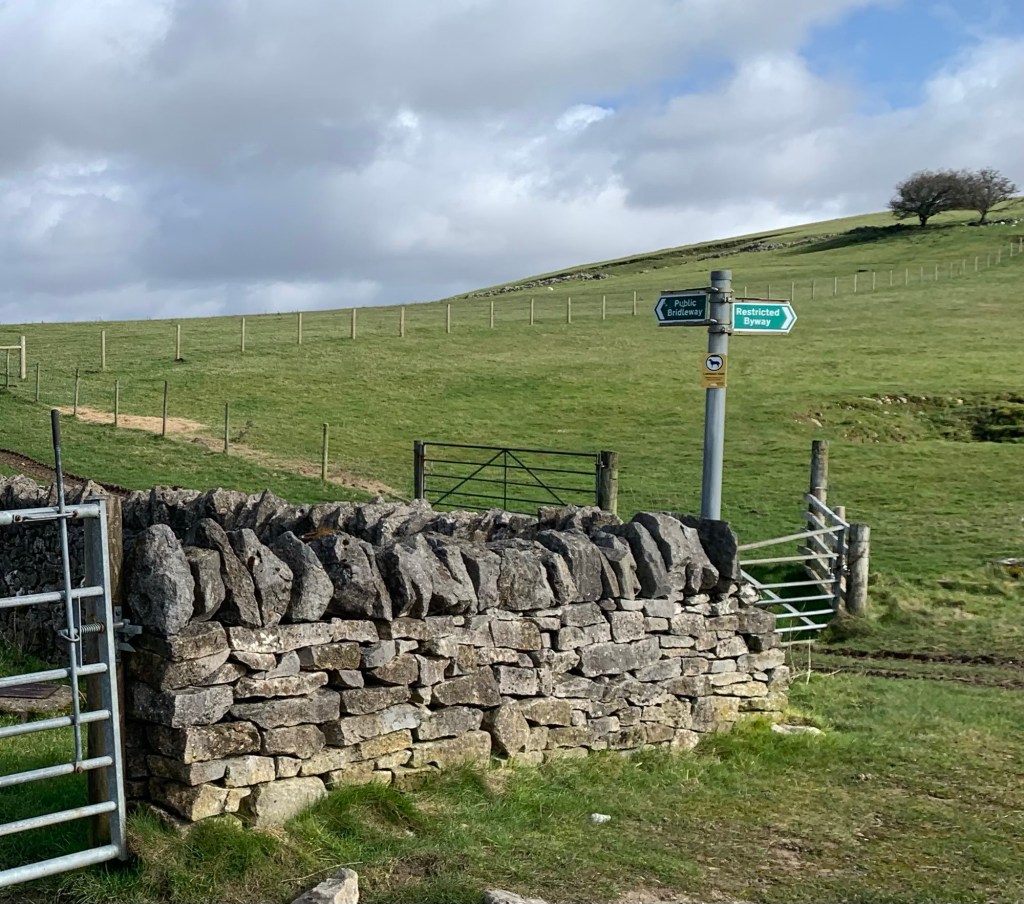
    From the brow of the Longstone Edge Road our next path heads off right, for just a few metres on a track past a large green sign and then we take the path signed on the left

    Take the path signed to the left

    and head through an area of delightfully green grazing land being thoroughly enjoyed by the sheep.

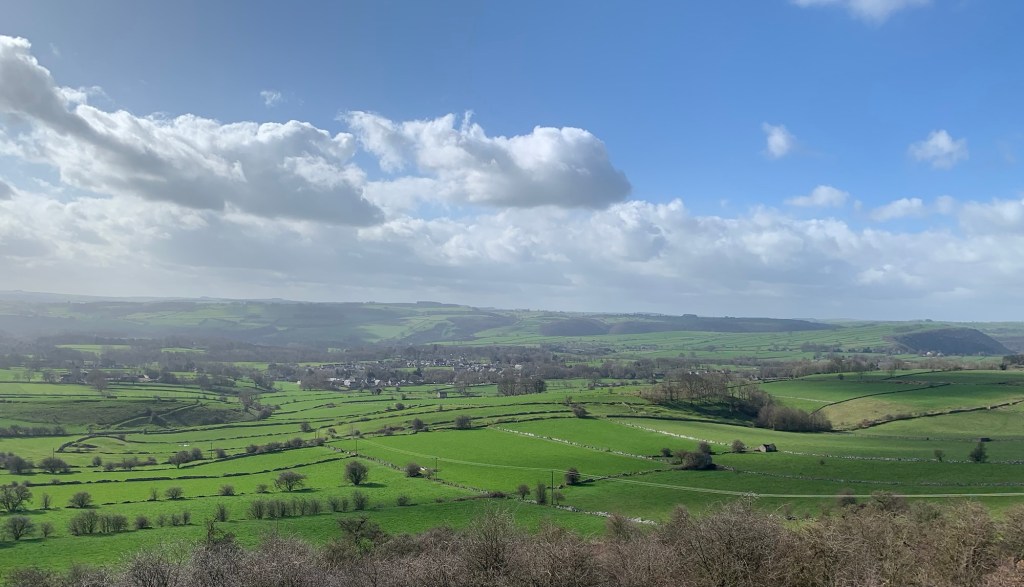
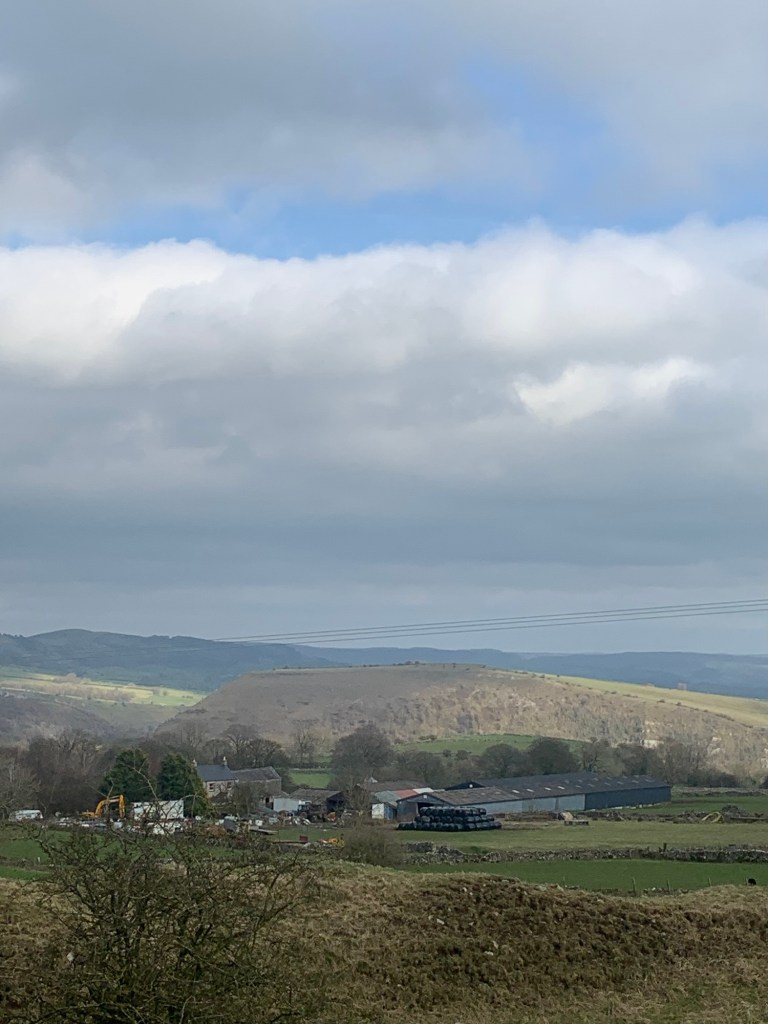
    We are surrounded by beautiful limestone scenery and soon new views open up before us. Ahead we can see the white of the Barrel Inn sparkling in the sunshine in the distance on Bretton Edge and over to our left the telecoms mast on the top of the ancient mound of Tideslow. 

    Closer to us we can see the purpose built Blakedon Hollow Lagoon below to our left.This was created in the 70s for washing fluorspar waste on the site of the old Black Harry Farm. 

    We head straight on and downhill towards another junction of footpaths known as Black Harry Gate, and our way ahead climbs up Black Harry Lane. 

    No sign of the man himself today thankfully but plenty of mentions of this legendary early 18th century local highwayman certainly live on in the place names.

    As we gain height we can look down to our right into the top of Coombs Dale. The path that winds down that steep dark dale would in fact also take us to Stoney Middleton but on such a clear and fresh day we’ve opted for maximum sunlight instead even though it means more hills.

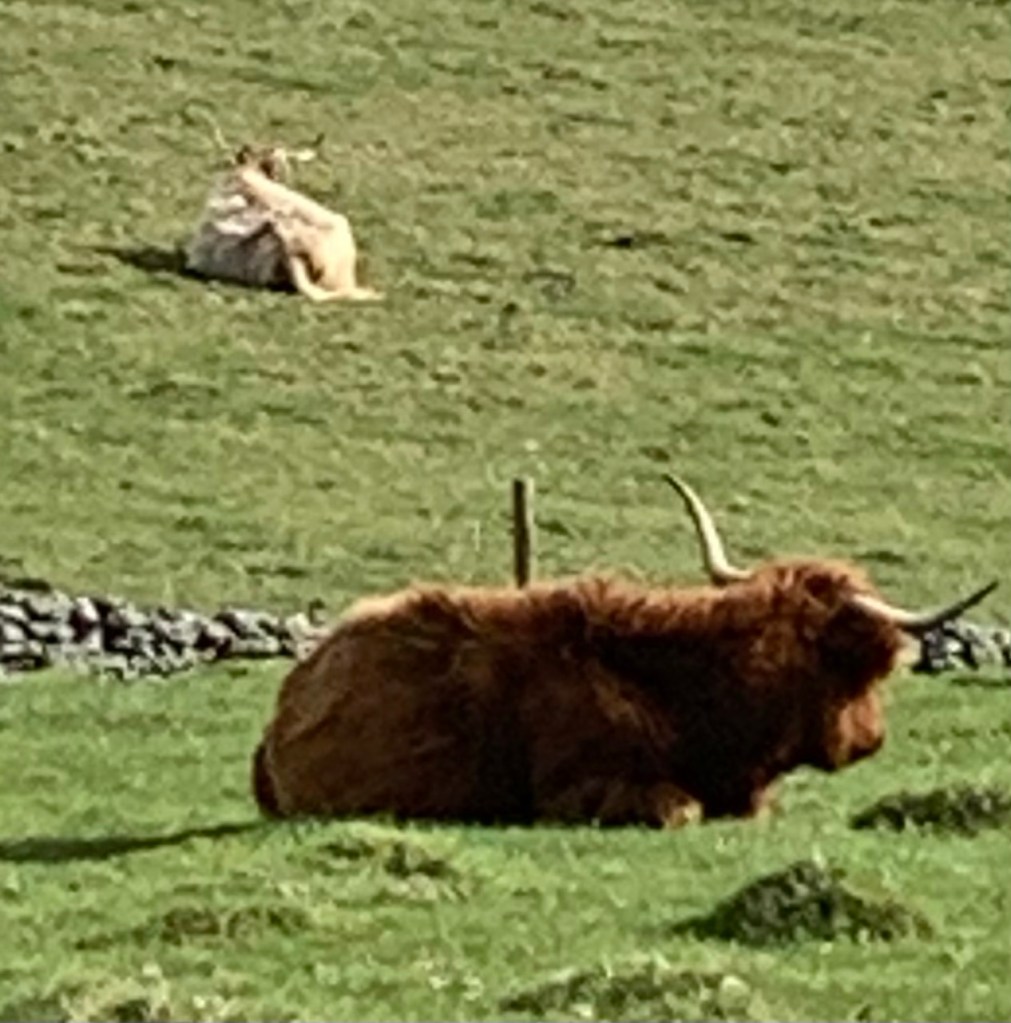
    Everything looks so beautiful today, even the highland cattle look a beautiful colour in the sunlight (from the other side of the wall) but we struggle to get them to do a decent pose for us.

    At the next junction with a tarmac lane, Middleton Lane, we could yet again turn right and follow this down into the village emerging at The Moon pub. However we head straight over once more, pausing to read one of a number of really informative information boards positioned in this area.

    Now we have spectacular views across the valley to Eyam, even spotting the youth hostel perched on the hillside above the village and then our path heads steeply down and we’re soon passing the old Dalton Quarry on our right, which featured as the location for a train crash in the recent Mission Impossible film.

    Tom Cruise was here!

    My impression of Stoney Middleton back in my youth was of everything being grey with dust from the quarrying. It’s as though a veil has been lifted on it these days and there’s certainly a lot of interest that merits investigation if you take the time to explore, as evidenced by the information boards!

    As we continue our descent we get some great glimpses of the limestone outcrops on the other side of the gorge that make for some serious climbing challenges. These are still regarded as some of the most difficult climbs in the UK.

    The path emerges onto the ever busy A623 and we turn right towards the village.

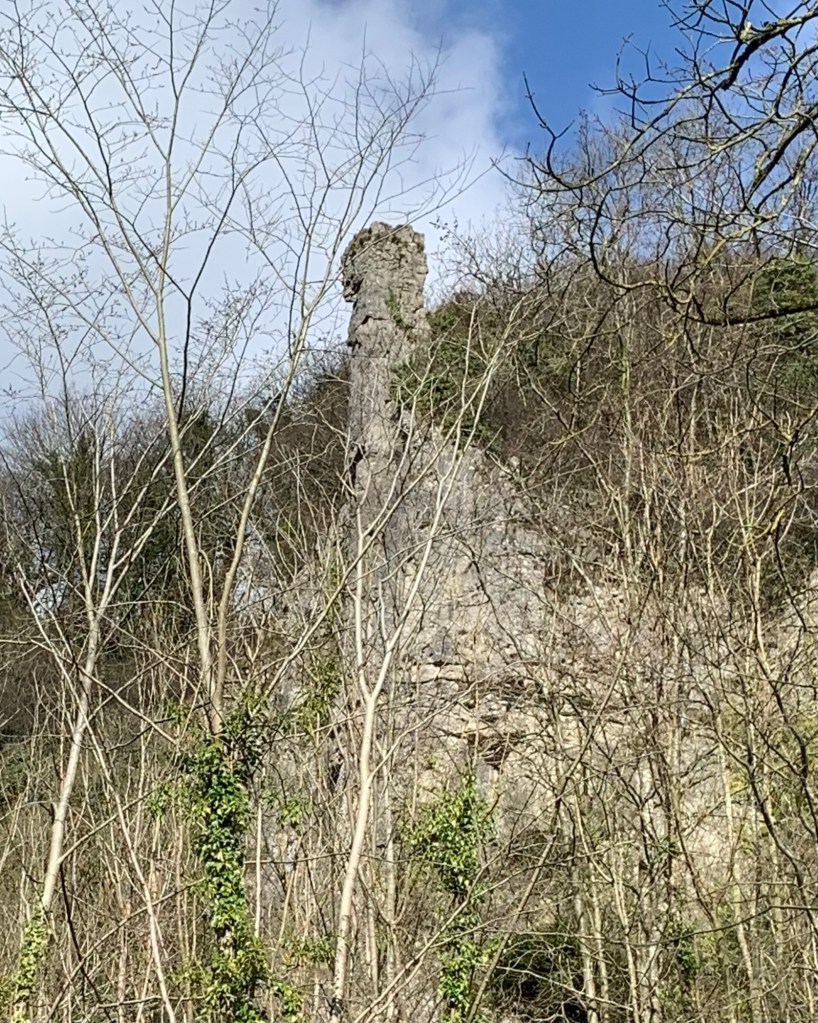
    Imagination is called for now as this would be a fantastic and atmospheric gorge if it wasn’t for the traffic thundering by. We have a crystal clear stream on our right and the limestone cliffs on our left. 

    Below the crags are also some pretty serious cave systems too.

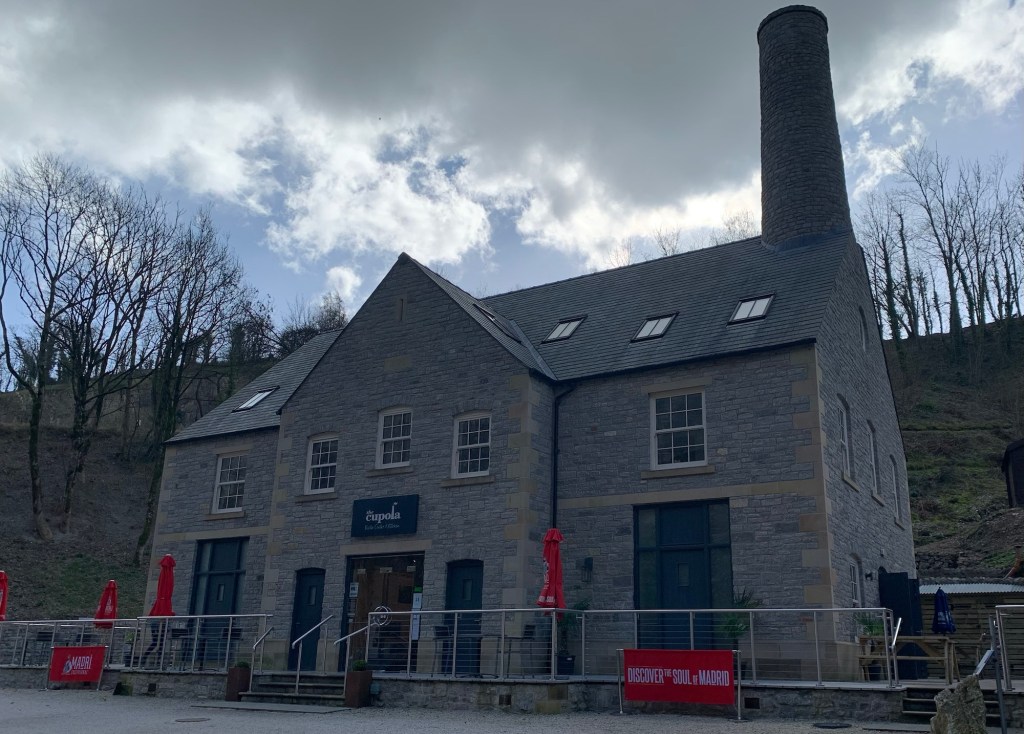
    The recently restored building which houses the Cupola Cafe, built on the site of an 18th century lead smelting mill, soon appears on our right offering us a chance to refuel.

    Inside is an array of yet more information boards with details of the history of the village as a lead mining, quarrying and shoe making centre. There’s definitely lots to learn about this locality.

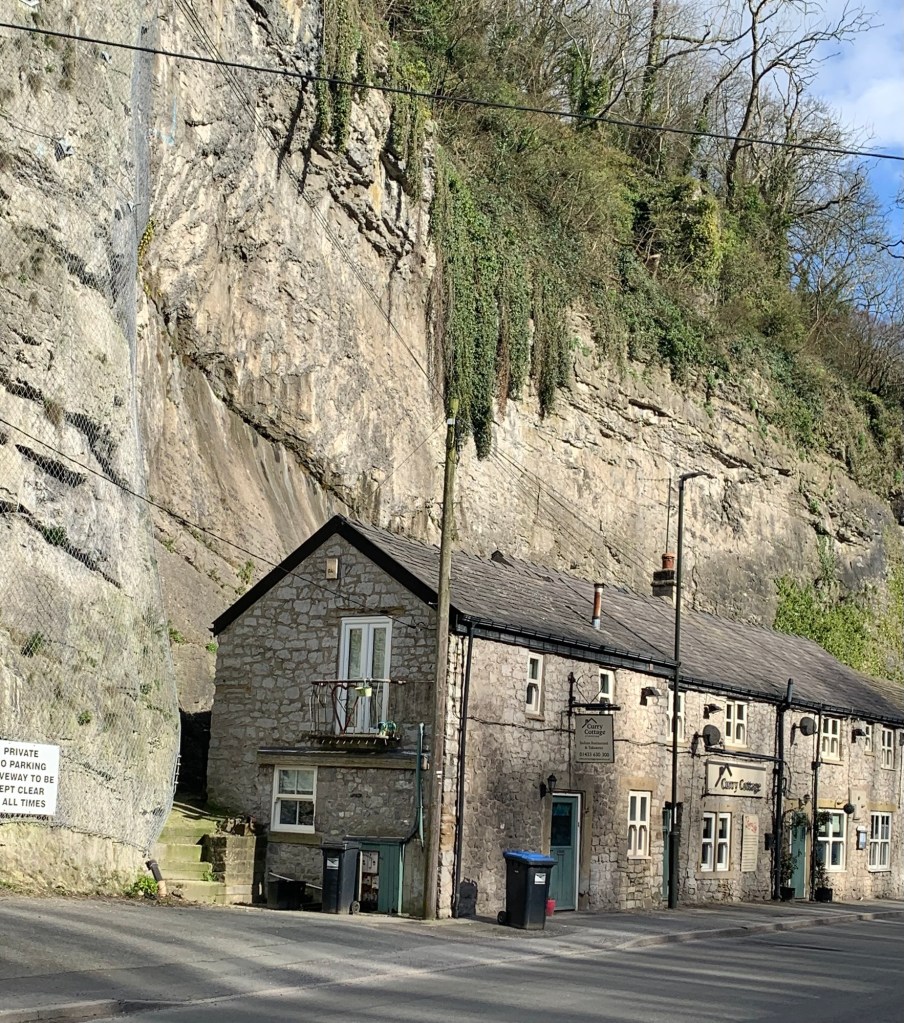
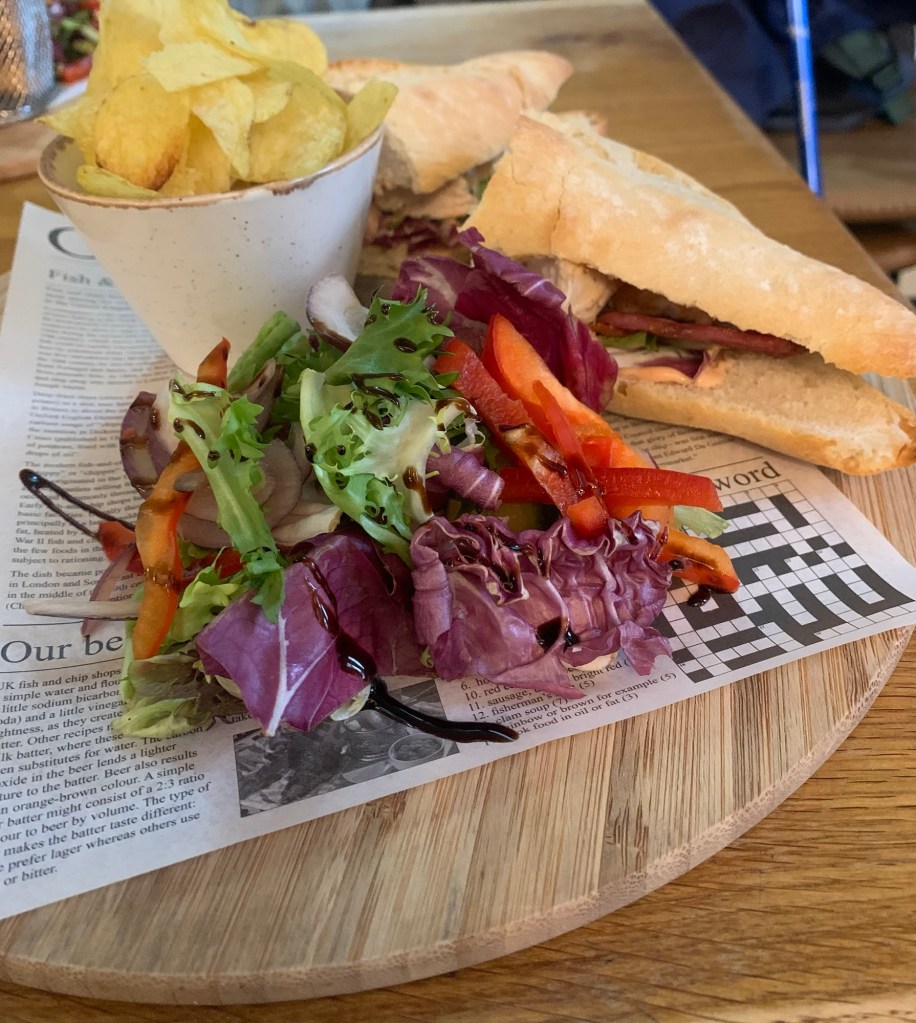
    The cafe is more like a restaurant really but we eventually find a sandwich on the menu which seems a bit pricey but turns out to be enormous. As usual we realise too late that we should have shared one between us ( but funnily enough we never seem to think of this until after the event!) The tea is in a pot and very drinkable. It’s all very fine although it’s a far cry from the old Lover’s Leap transport cafe further along the road ( now a curry restaurant), which used to be the haunt of an eclectic mix of climbers and lorry drivers ( and of course yours truly) back in the day.

    As we resume our travels we pass by the aforementioned building squashed under the cliffs and named of course after the lucky escapee Hannah Baddeley who jumped from above and was saved by her skirts.

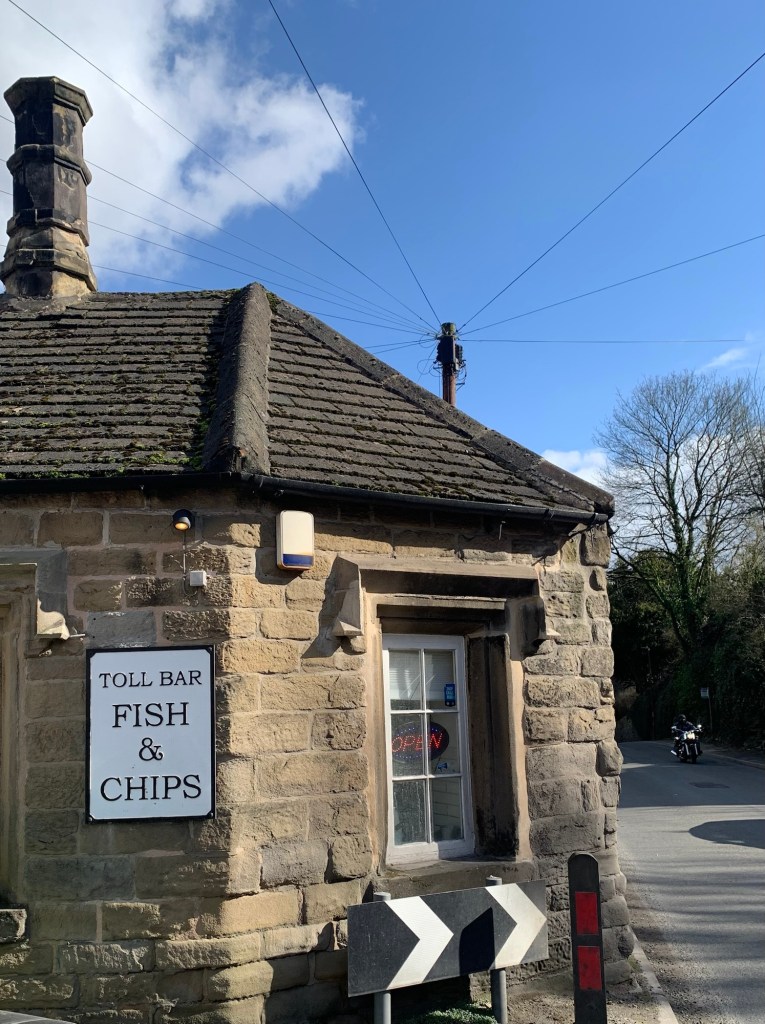
    Just past, we cross the road and take the street to the left of the old toll bar cottage which has been a chippy ( and a good one too) for an amazing 100 years.

    Stoney Middleton is absolutely the gift that keeps on giving! 

    Walking along The Bank past a fascinating conglomeration of dwellings

    we reach the junction with The Nook and get just a sideways glimpse of The Moon pub

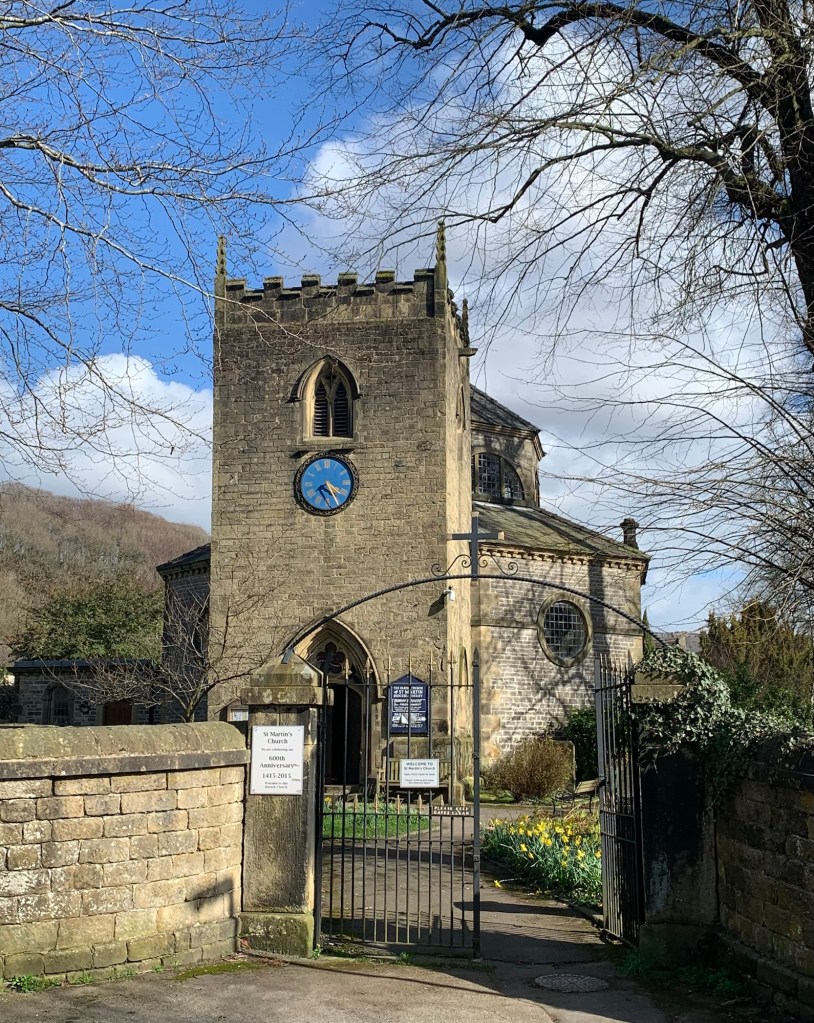
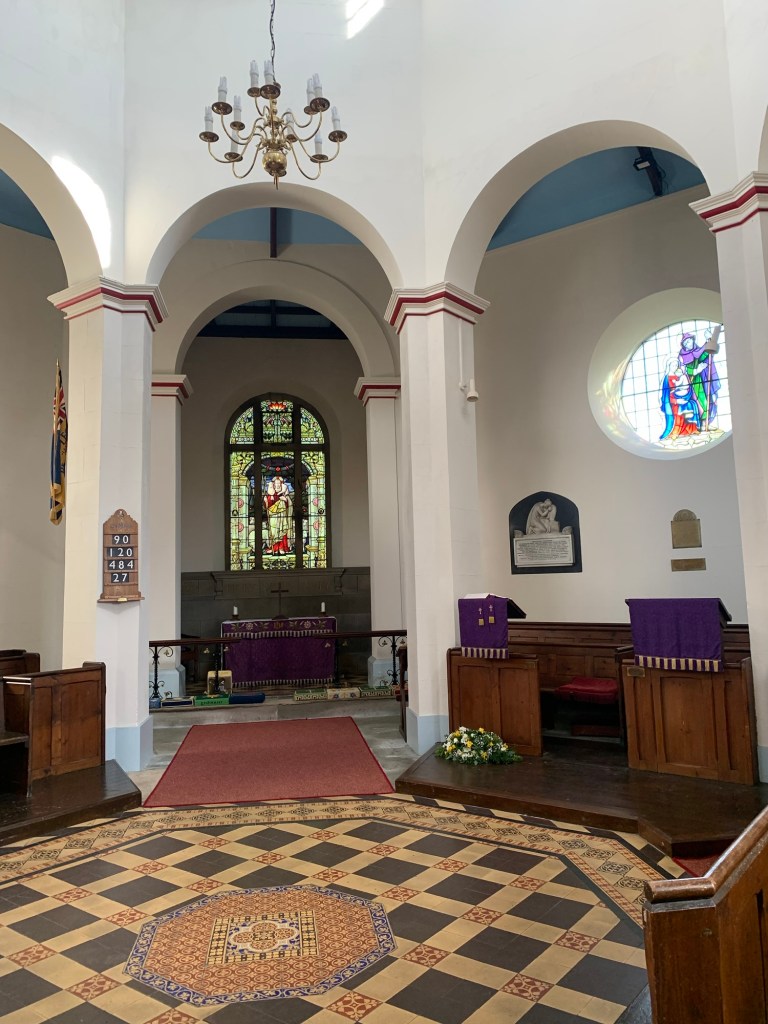
    itself an historic watering hole, with a colourful history, before we’re headed for our next architectural landmark; an  octagonal church, one of only two in the country.

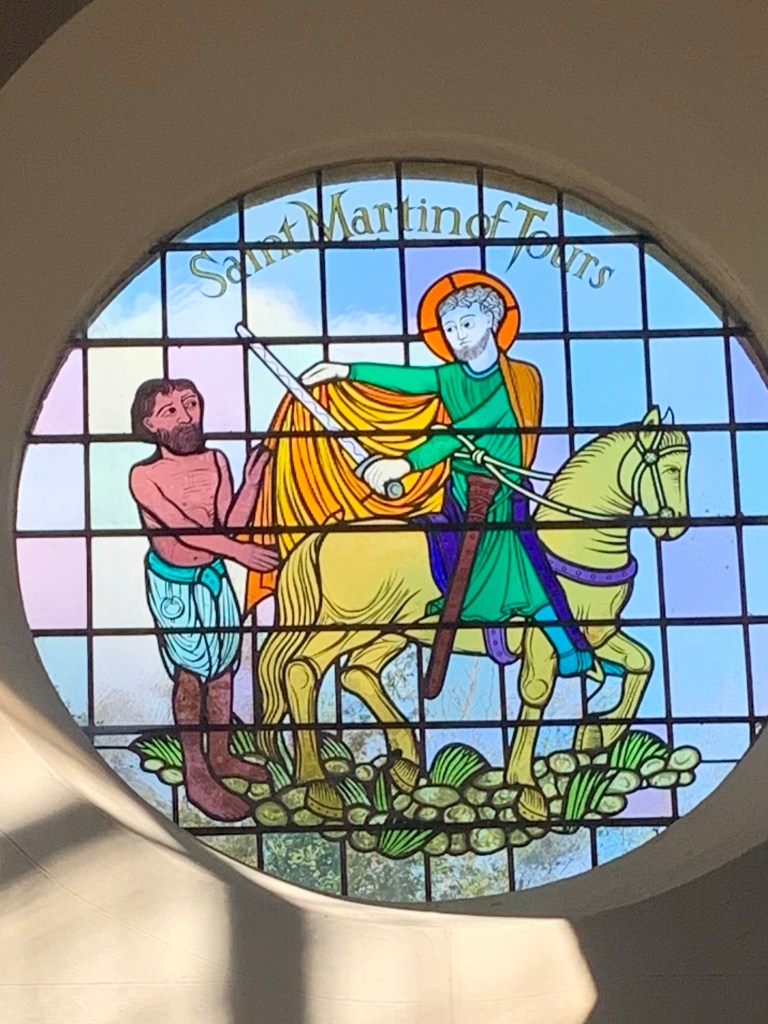
    The Church is dedicated to St Martin of Tours. The stained glass window commemorates the story of St Martin dividing his cape in order to give half to a shivering beggar. 

    There is a lovely atmosphere inside the church which due to its shape feels light and spacious despite it actually being quite small! 

    Outside again we proceed further along The Nook and pass the old Roman Baths …. not actually Roman apparently but with a thermal spring which gained a reputation in the 18th century as being more palatable and safer to drink than the more famous Buxton water. 

    Just past the restored bath house we reach yet another information board (!) and a junction of paths.

    We go straight ahead and then after a hundred metres or so we keep left, gradually climbing away from the more obvious lower path.

    Before we pass through a few trees we get a view of Calver Sough over to our right

    and then continue up to Knoutchley Farm

    heading through the farmyard

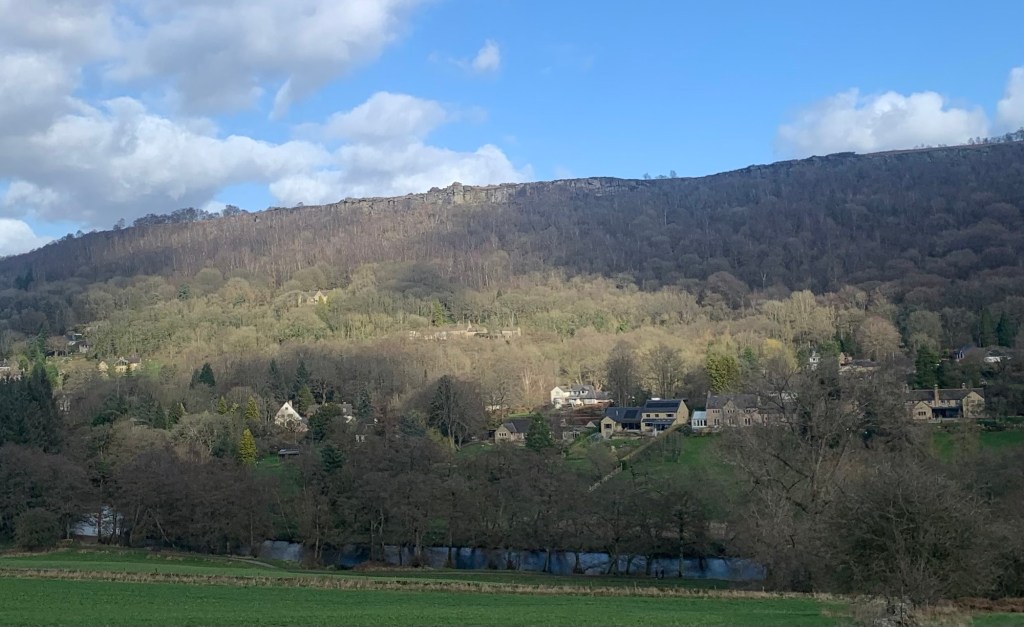
    and down the tarmac drive with fabulous views across to Froggatt Edge, another climbing Mecca but of the gritstone variety of course.

    There’s a dodgy crossing of the B6001 and then we head down a field path which drops us onto the Derwent Heritage Way in the valley bottom.

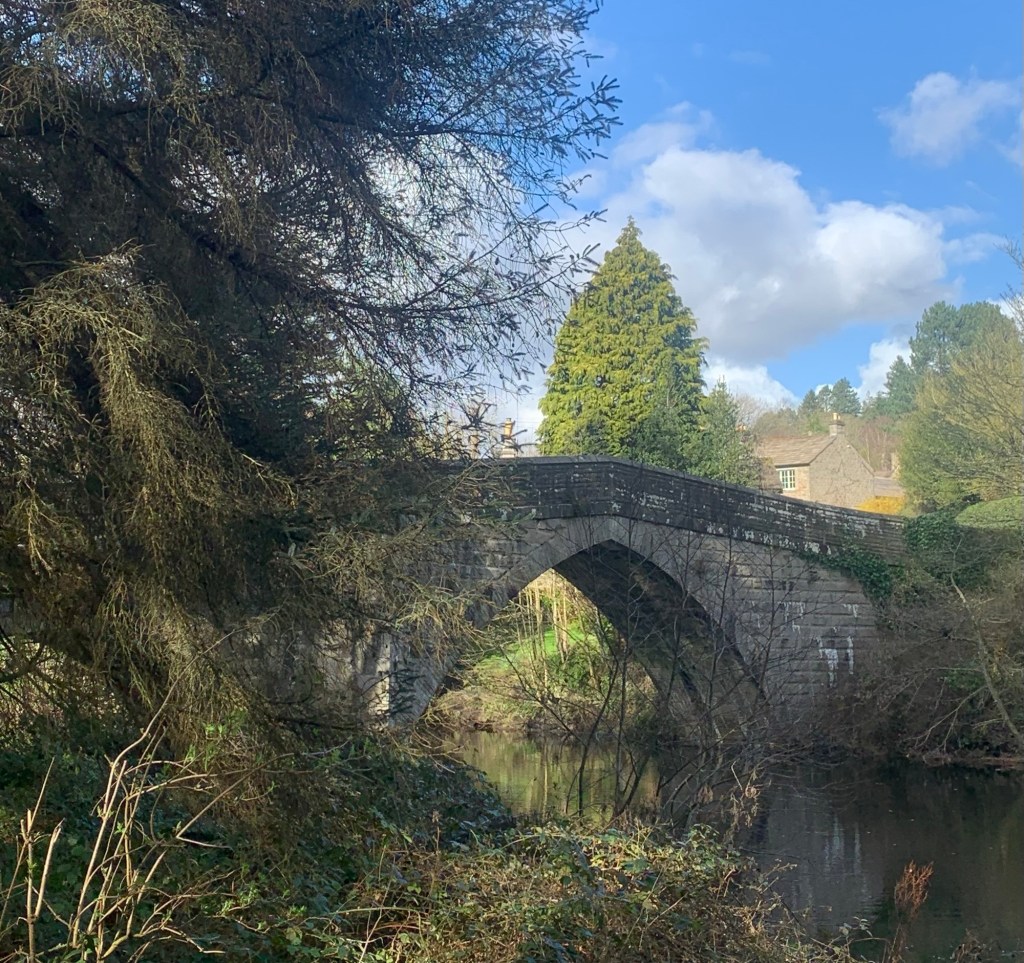
    It’s a well marked and well trodden path along by the river to the elegantly shaped bridge at Froggatt and everything looks absolutely beautiful on this lovely spring day we’re still enjoying.

    We cross the bridge and continue through the village of Froggatt, ( with not an information board in sight!) and at the tiny chapel we continue straight on the DHW along Spooner Lane and then through the woods to emerge at Grindleford Bridge just below the church with its community shop and cafe. This is a great spot to sit outside on a sunny day and enjoy a huge pot of tea ( or a generous sized cafetière of coffee) and when it says the cakes are homemade here, they well and truly are.

    For the last leg of today’s walk we head up the main road past The Maynard and then left down the approach to the station before taking the path up the right hand side of Padley Gorge. We pop out on the road opposite the big white gate to Yarncliffe and then make our way up through Longshaw to the bus stop at Fox House.

    The lighting by now has my favourite afternoon feeling and we’re still bagging amazing views right up to the last minute.

    The 272 comes along just on cue and we’re soon heading home after an astonishingly good walk and a very educational day out.

    https://footpathapp.com/routes/BD7A1321-2849-403E-B297-634CB7D51F3B?units=metric

    Transport 

    218 from Sheffield to Pineapple Farm ( on the edge of Bakewell)

    272 from Fox House to Sheffield 

    Pubs/Cafes

    Hassop Station Cafe

    Cupola Cafe Stoney Middleton 

    The Moon

    Grindleford Community Cafe

    The Maynard 

    Longshaw Cafe

    Fox House pub

    How far?

    Around 20k

    Route Synopsis 

    Briefly along the Monsal Trail to Hassop Station- footpaths to the top of Great Longstone Edge Road- paths to Stoney Middleton- Knoutchley Farm- Derwent Heritage Way through Froggatt to Grindleford Bridge- Grindleford Station- Padley Gorge- Yarncliffe- Longshaw- Fox House 

    Dogs?

    Not ideal for dogs due to livestock 

    Map

    OS White Peak 
  • R is for Rowsley

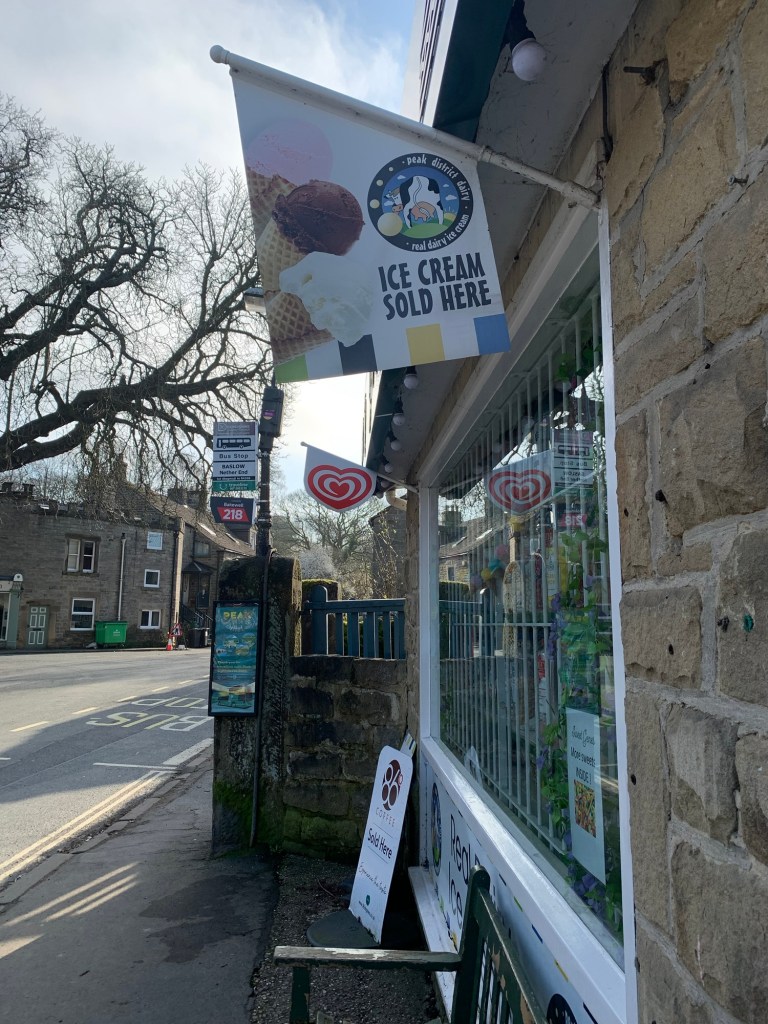
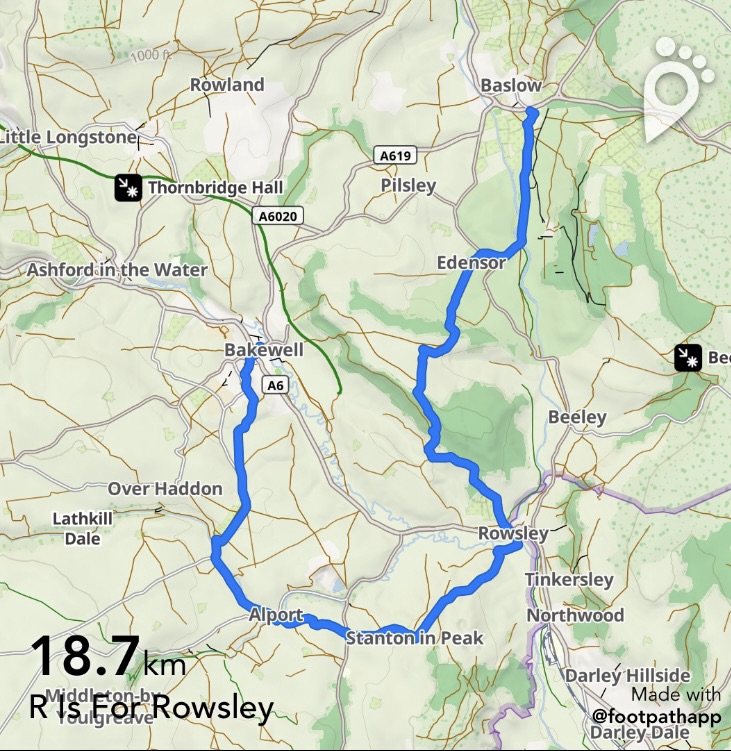
    It’s a familiar start to today’s walk as we alight from the 218 at the sweet shop on the green at Baslow Nether End and head through the park to Edensor.

    The weather is easily the best so far for any of this year’s alphabet walks and it’s a great tonic for both body and soul.

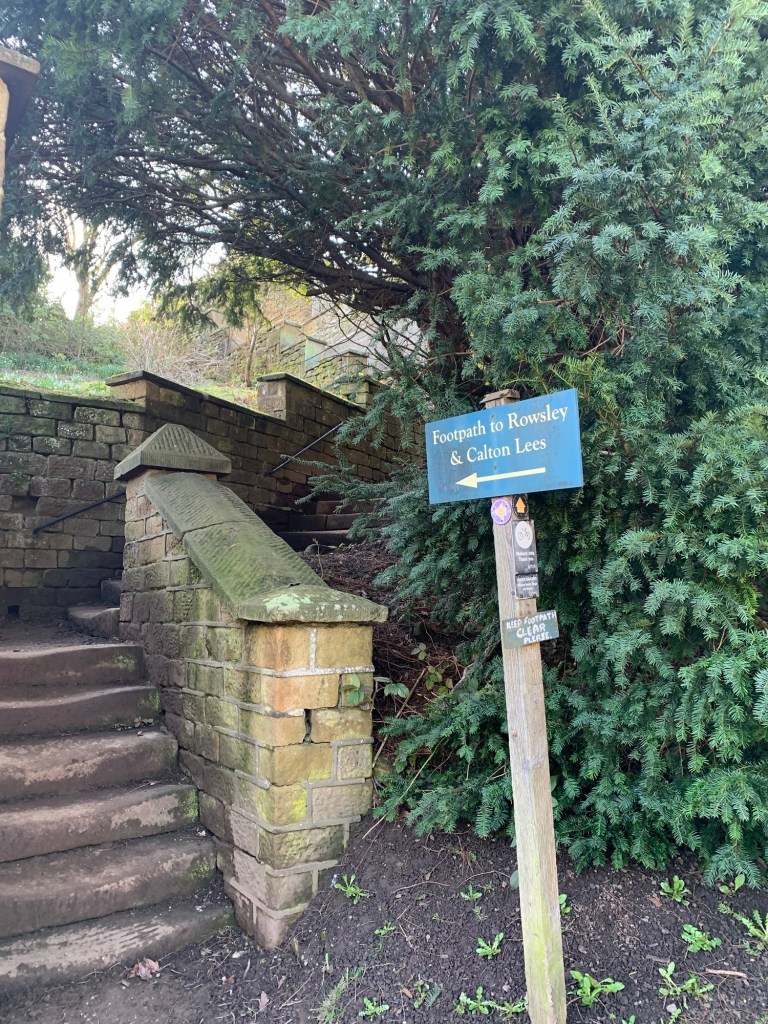
    At Edensor as we head uphill through the village we are looking for a footpath sign on our left hand side. This leads us up a flight of old stone steps and through a stile onto the parkland of Chatsworth.

    Given the number of visitors that come to Chatsworth you’d expect the paths to be more than obvious but that’s certainly not the case with this one. Without field boundaries and with very little definition underfoot there are a few footpath posts in the ground from time to time and that’s about all.

    For this reason I have captioned the following photos to try to give you some bearings to head for and of course if you download the footpath app ( link at end of post) you should be able to follow the exact route we’re taking.

    Head straight ahead aiming between the two huge trees
    Head further uphill towards the next wood
    From the tree on the edge of the woods you can spot a footpath marker ahead.

    It’s very liberating to be sauntering through the open grassland of the park with space all around us and thanks to today’s sunshine and a relatively dry week we’ve not too many boggy moments to hold us up.

    Jolly good show that the Duke of Dev allows us to wander through his backyard eh?

    As we gain height the views back are breathtaking

    and we enjoy an almost bird’s eye view of Chatsworth House ( which still looks massive even from this distance!) As we head towards the top of our first hill we pass through a gate into woodland

    and follow the diagonally ascending cart track

    to emerge a few hundred metres later onto more parkland and a new set of views.

    We initially head straight on here but soon turn right at a finger post

    turning away from the more popular path which continues downhill to Carlton Lees ( garden centre and cafe) and then a few hundred metres later we veer left onto a very faintly defined path leading diagonally down towards some woods.

    There’s a gate and a stream running under the path which now briefly becomes a track which we follow as it bends to the left

    before heading right and steeply up our next hill of the day.

    There’s a huge flock of sheep spread out across the hillside. Many have their new lambs with them which is very sweet and as usual at this time of year soon has us vowing never to eat a lamb Rogan Josh ever again. 

    It’s quite a steep climb up to the next wooded area and again it’s not particularly defined so we just head for the gate we can spot ahead leading into the next area of trees.

    Once through this gate the path lies to our right heading off at an angle through the wood.

    It’s clearly well trodden and soon bends left continuing through pleasant woodland

    ( mainly larch I think) and not so thick as to stop the sunlight filtering through. We are surrounded by birdsong. It’s slightly muddier through this section but nothing too difficult to avoid and we’re soon losing height quite rapidly until we emerge onto a broader track and a sign which tells us we’re now on Haddon Hall territory.

    Keep this sign on your right and turn left along the path

    So we’ve swapped from the Cavendish’s to the Manners’ domains and we reckon we’re now probably more or less on the hillside directly behind Haddon Hall, not that we can see anything to prove it.

    We’re pondering on the contrast between the very visible house of the Devonshires and the more secretive, hidden away nature of Haddon Hall when we glimpse an unusual view of Bakewell through the trees over to our right

    and then emerge onto a junction of paths and signs.

    We do not want to head towards Bakewell and neither do we want the track straight ahead. Instead we need to turn left along a well-made track which initially has us feeling as though we’re going back on ourselves.

    However, very soon we are treated to spectacular views on our right with Rowsley below us and further afield we can see a good way down the Derwent Valley.

    It’s a straight-forward descent as the track becomes a lane

    and then a road as we reach the village

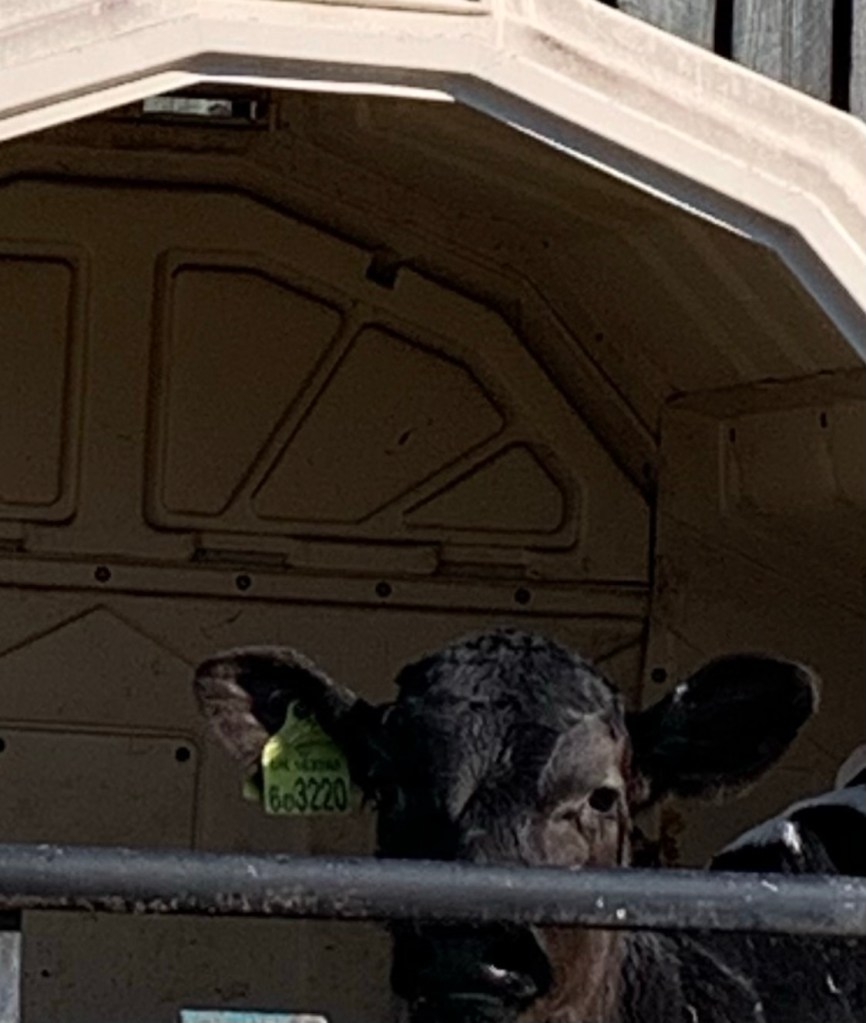
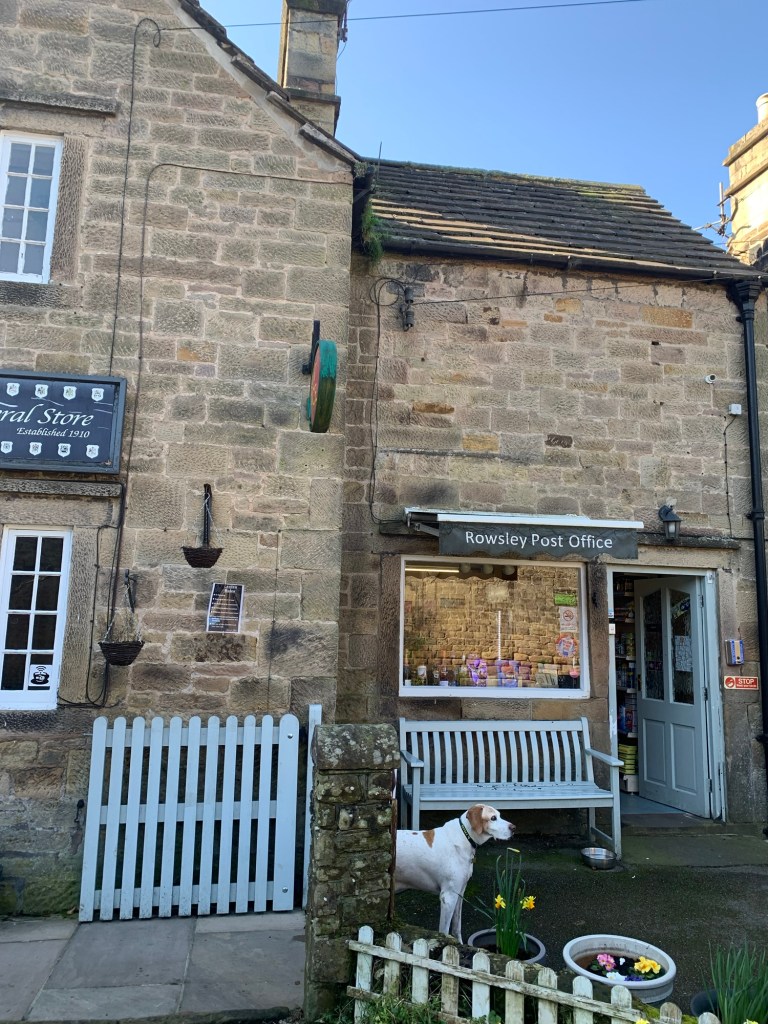
    and just before we arrive at the Post Office we pass a number of very new looking calves each in its own little shelter ( and proving quite difficult to photograph.)

    So here we are at Rowsley, our R for today’s walk.

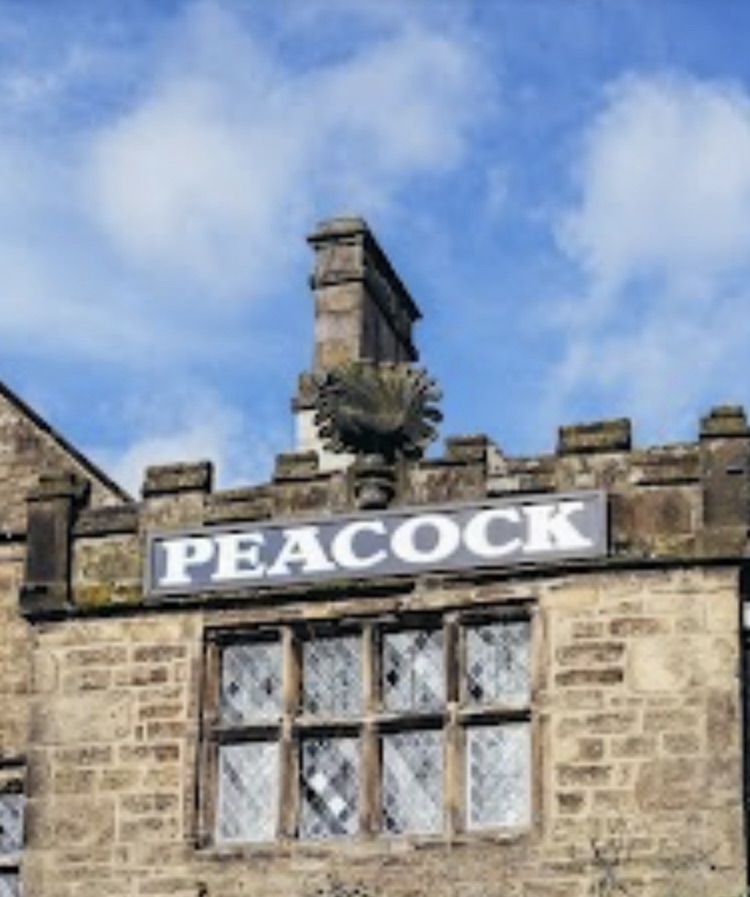
    Besides the post office and new calves, Rowsley also has a couple of pubs; the rather splendid 17th century building of the Peakcock with its amazing stone peacock, ( which features in the crest of the Manners’ family) above its name,

    and the more budget friendly Grouse and Claret. It also has a school which we’ll be passing shortly and the old flour mill ( about which more later) 

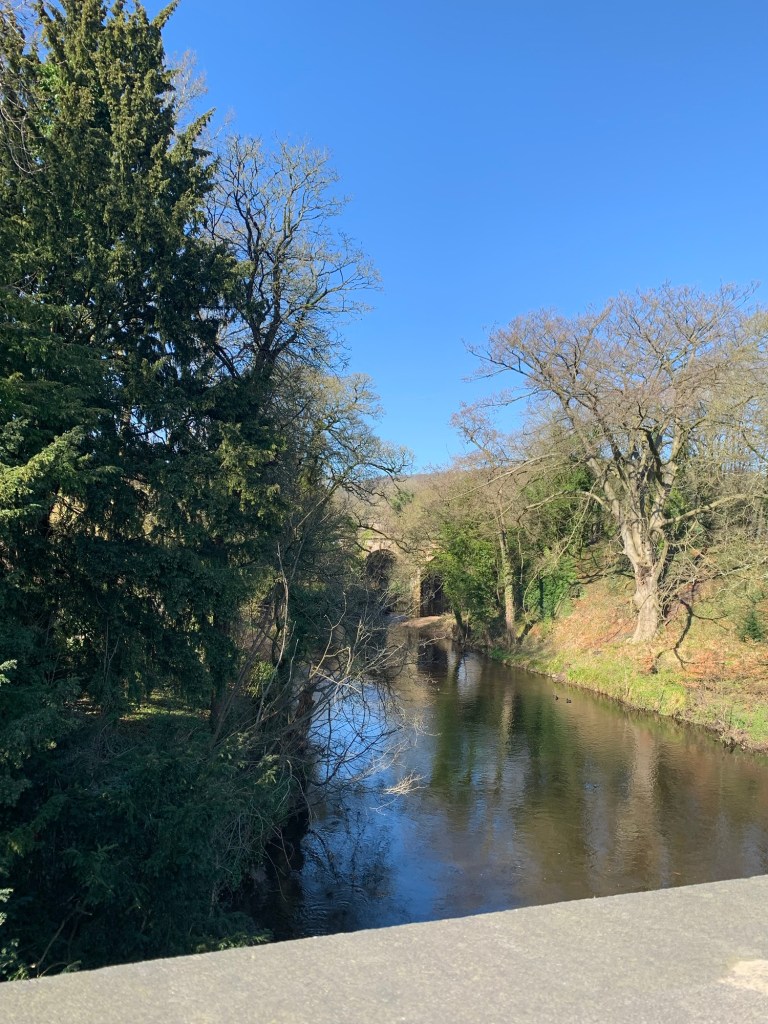
    Rowsley is built around the confluence of the Wye and the Derwent thereby marking the end of the River Wye’s journey down from Buxton

    and its other claim to fame is that around Christmas time you could well see a certain bearded fellow in a red coat chugging past on a steam train.

    There’s also the peak village outlet built in 1999 around the old station building and housing various shops and a number of cafes.

    We head over here for a cuppa and for some reason choose Masarella’s. Sadly it’s not the best decision we’ve ever made;  although the tea is in a proper pot the panini melt is a bit like trying to eat shoe leather. Perhaps it’s just bad luck, they are extremely busy as we seem to have timed our arrival to coincide with a coach party. At least this has the temporary effect of making us both feel very young and sprightly ( everything’s relative) but all in all, we’re glad to get back outside again as soon as possible, making a mental note to try elsewhere next time.

    Making our way back over the bridge over the Derwent and past both the pubs we cross the A6 at the pedestrian lights and head along the lane past the school.

    The road bends right after the bridge over the Wye

    and we can see the buildings of Caudwells Mill over the other side of the river.

    This used to be a great place to visit. As a working flour mill you could see the machinery in action, buy the flour and other artisan goods but best of all you could enjoy one of the best cafes ever known to be in existence.

    The mill always seemed popular and well supported but sadly it met it’s demise a couple of years ago and unless it’s rescued and put back on its feet sometime soon I guess it’s just going to have to stay as a memory. But the latest news is that the flour shop has secured a new lease of life so fingers crossed for the rest of it.

    We’re soon climbing up a pretty steep hill with an amazing conical hill, Peak Tor on our right. There’s evidence of a ditch surrounding the mound and it’s thought to have been a Celtic settlement.

    We can see Two Dales on our left through the trees and in the valley bottom the engine sheds for the steam railway.

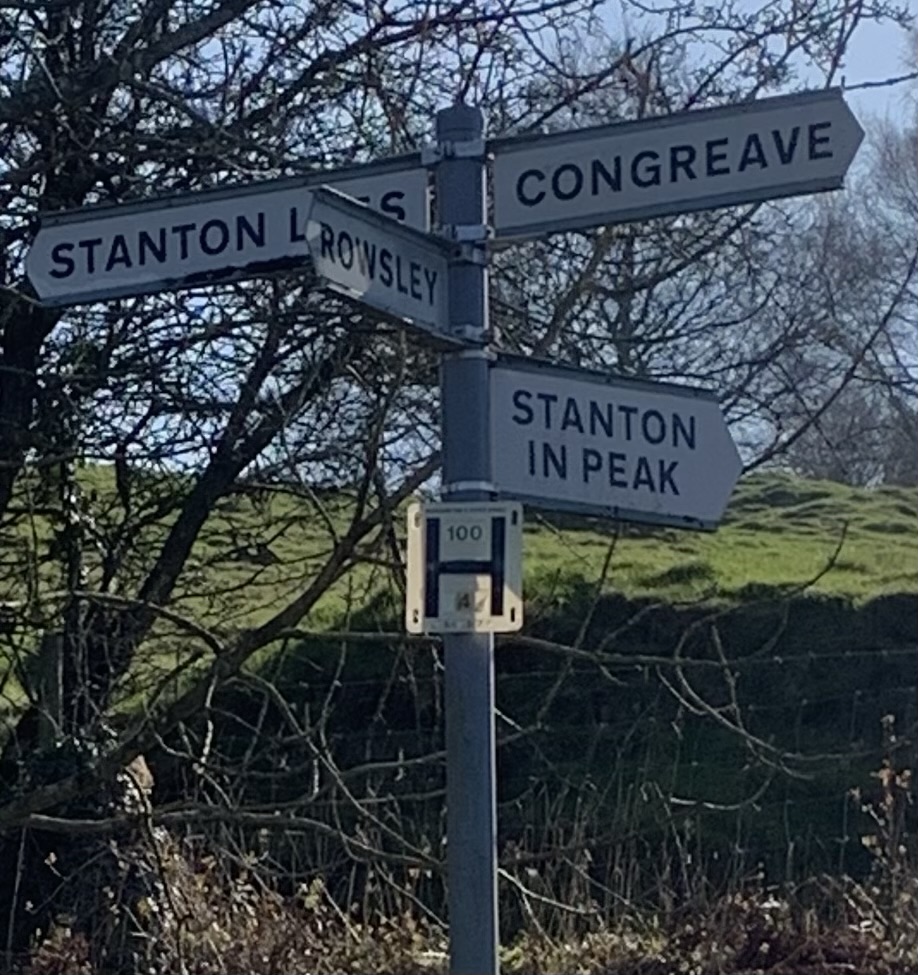
    At the hamlet of Pilhough there’s a junction with a large house on our left and we follow the road signed for Stanton in the Peak.

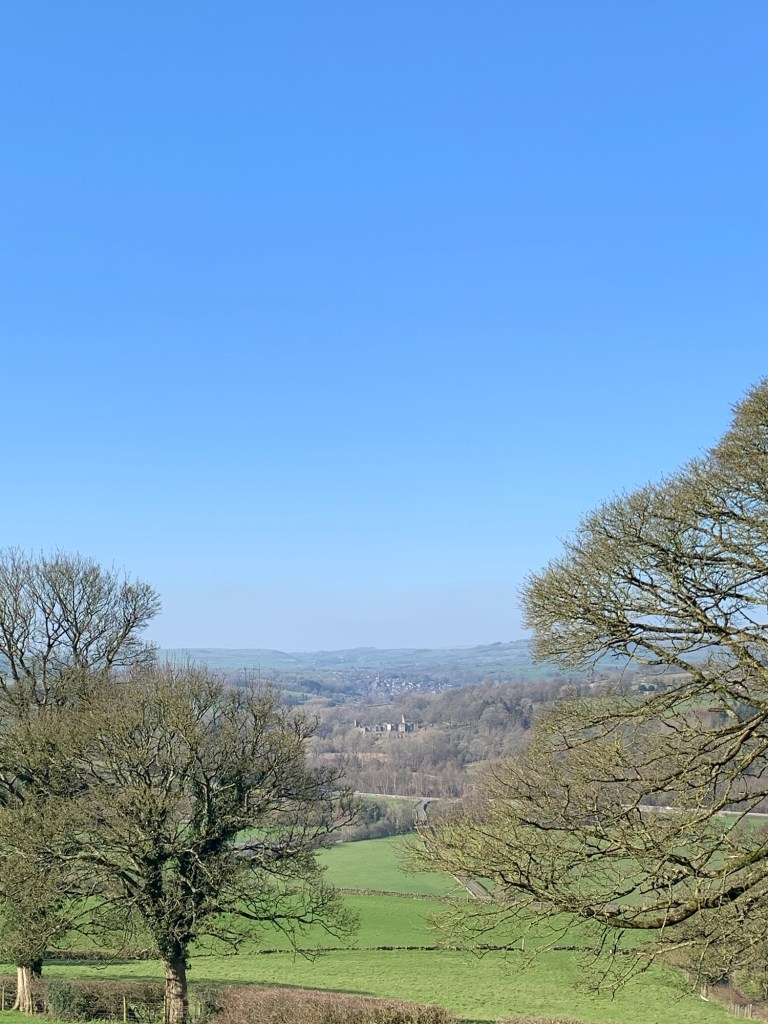
    Now the views start to open up in the opposite direction along the valley, giving us a spectacular sighting( at last ) of Haddon Hall, and Bakewell further afield.

    We pass a lovely old stone viewing point built onto the side of the road and from here we can also spot Youlgreave, Alport and Over Haddon. Absolutely spectacular and we couldn’t have chosen a better day for views.

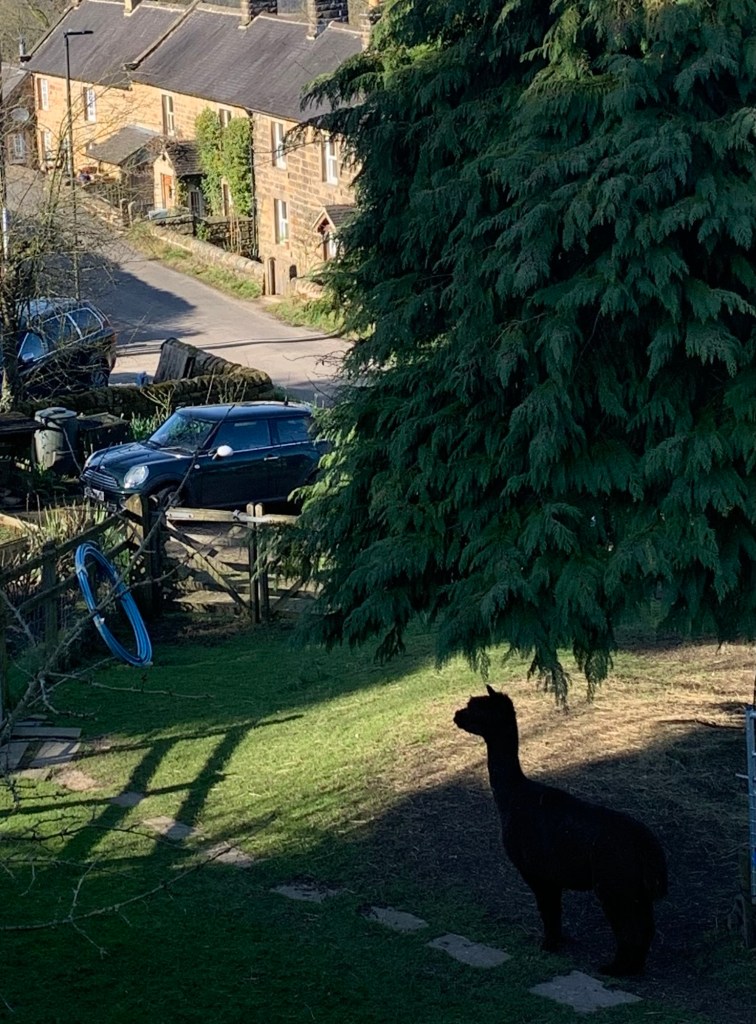
    Before arriving alongside the church yard at Stanton in the Peak we also spot a cheeky alpaca to add to our catalogue of today’s fauna. 

    Stanton in the Peak is an historic village with an interesting collection of dwellings ranging from small cottages to a stately home.

    At the village green we head downhill to the right past a variety of dwellings, the village school and an extremely interesting old pub on our left which we decide to investigate further. 

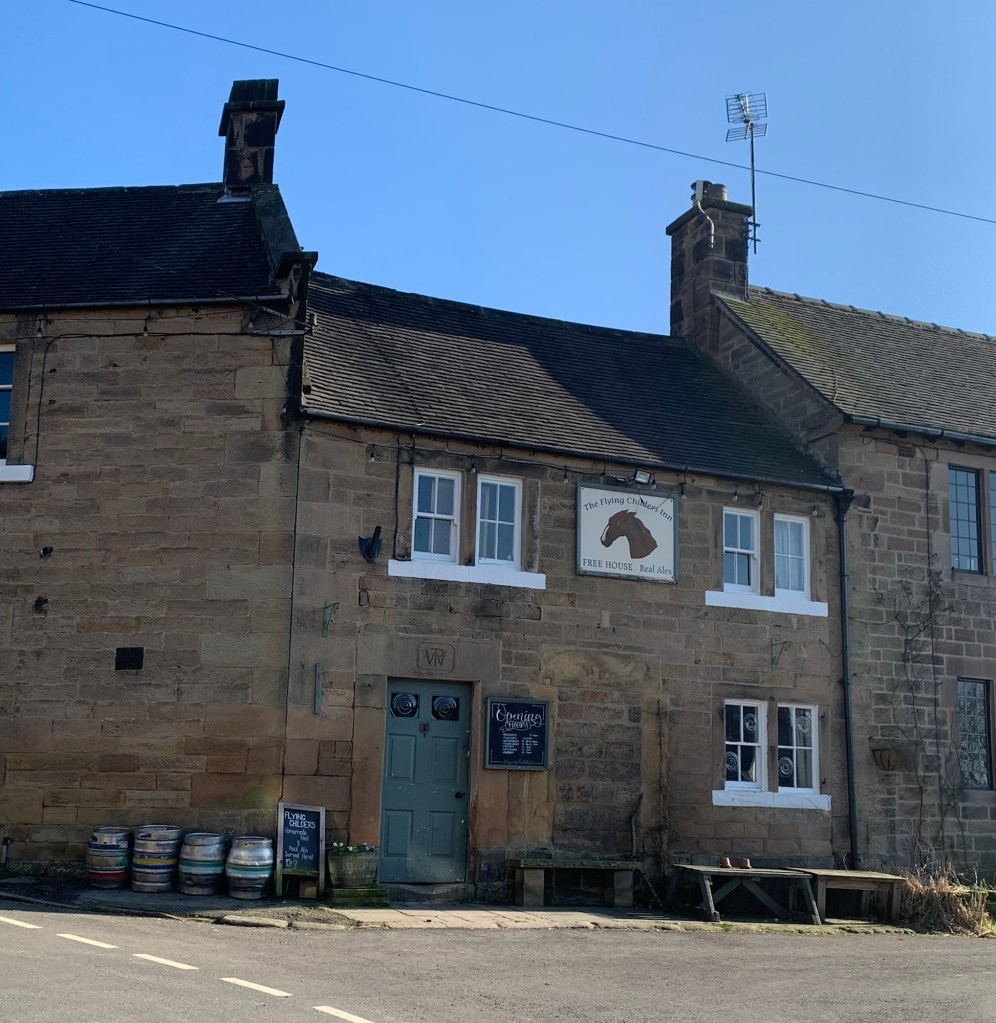
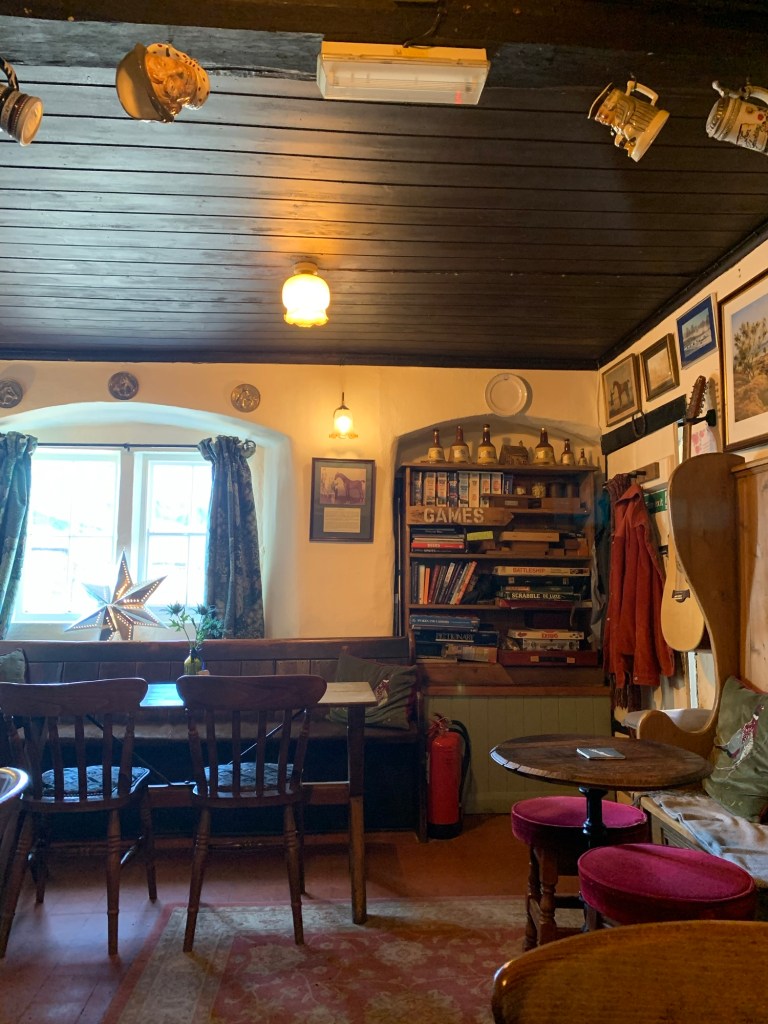
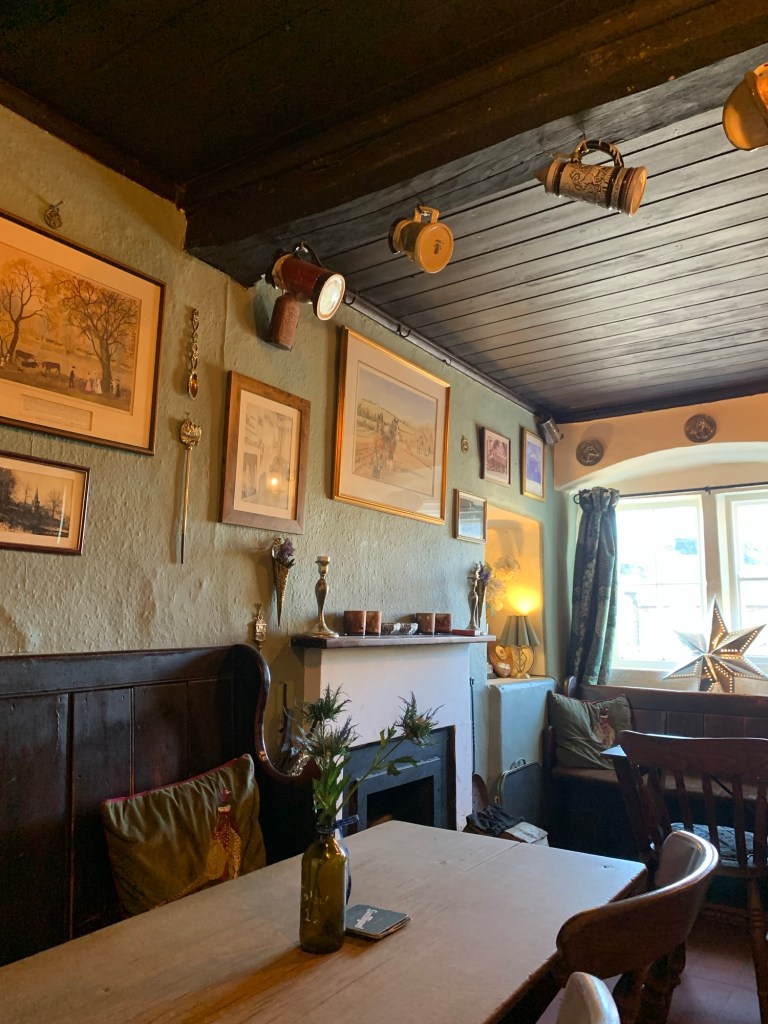
    The Flying Childers has authentic atmosphere in spades and also happens to sell draught Bass so it more than makes up for our previous stop….we just wish we’d come here to eat too!

    Apparently it’s named after a racehorse belonging to one of the Dukes of Devonshire and dates back to the eighteenth century when it was formed by knocking four cottages together into one.

    After discussing various routes which could bring us back this way again soon ( could we really justify coming again next week for a possible S for Stanton in the  Peak?) we drag ourselves away and continue heading downhill to a T junction with a footpath opposite.

    We’re on a field path here as opposed to the previous parkland but it’s still grazing and co incidentally still completely undefined. The knack seems to be to head right slightly away from the stone wall, pass roughly mid way between a ruined barn on the right and a much smarter affair on the left and once over the crest of the incline to head for an obvious green finger post and gate onto a lane.

    Then it’s simply left along the lane until we reach a static caravan site on our right. There’s a footpath through the site on the right, but we continue a few metres further along and turn right along the driveway.

    Partway along the path branches off left

    and we pass through a series of hilariously narrow stiles over the next few fields along an obvious path.

    Assuming you’re not permanently wedged partway through a stone wall for the rest of your days, the path emerges onto a lane

    and then it’s right and downhill to the pretty bridge over a very turbulent river and here we are in Alport.

    What a lot of lovely villages there are around here.

    Once across the bridge it’s probably best to turn left but either way will soon join Alport Lane, the main road to Youlgreave.

    Crossing the road at the phone box we marvel again at the swollen river, the River Lathkill which we now follow alongside heading towards Over Haddon.

    In character with many rivers in limestone areas the Lathkill can completely disappear in places at some times of year, but it’s well and truly in evidence today. Even when we can’t see the river as we walk along, we can certainly hear it.

    There are various options leading off the valley path that would get us back to Bakewell. The first one would be to cross the river at Raper Lodge and head up through the woods and along part of the old Portway. We were up that way not so long ago so we continue further along to enjoy a bit more of the valley path

    until we reach Conksbury Bridge where the path crosses to the opposite river bank.

    It’s not much further along the river until the road which heads up to the village of Over Haddon with its much recommended Lathkill Hotel offering both refreshments and views in good measure.

    However we decide to save that treat for another day and we head up the road from Conksbury Bridge on the last hill of what’s turned out to be a fairly hilly day. Keeping straight on along the road

    until we branch right onto the footpath to Bakewell we head off across the fields towards the town.

    Soon we’re passing the first houses on Burton Edge Road,

    the cemetery and the chapel of rest

    and we finish up with a characterful descent down Butts Road to Rutland Square and the bus stops for our journey home.

    A fabulous day out with a nice mix of parkland, woodland, lanes, rivers and villages, excellent views and quite a few hills. 

    Transport 

    218 from Sheffield to Baslow 

    218 or 257 home from Bakewell to Sheffield 

    Pubs/Cafes

    Baslow 

    Sweet Genes for a takeaway 

    Rowsley 

    Rowsley Post Office does refreshments

    Grouse & Claret

    Peak village various options 

    Stanton in the Peak

    The Flying Childers

    Over Haddon

    The Lathkill Hotel

    Bakewell 

    Red Lion

    How far?

    Around 25k

    Route Synopsis 

    Through Chatsworth from Baslow to Edensor, across the park to Rowsley, Stanton in the Peak, Alport , ( Over Haddon) Bakewell 

    Should be ok for dogs but sheep with lambs wandering through the park on today’s walk….keep a lead handy at all times.

    Map

    OS White Peak 
    https://footpathapp.com/routes/DEB9D005-15EF-41E9-8C81-453F698BA8AB?units=metric

  • Q is for…? Surprisingly we notch up not one Q but three! Read on for a walk of Quality.

    In case you noticed we’d not blogged a walk for a few weeks and put it down to our failing to find a Q, well think again….today we visited three!

    The real reason for the lack of blogs was that half of us was away in the land Down Under enjoying sunny climes and spectacular scenery whilst the other half was out squelching through mud and rain and fog and snow and generally finding nothing much to write home about.

    But now all that’s changed, including the weather: two consecutive days of Spring this week has the birds singing and the buds on the trees and with the Ann & Jan walking duo reunited,  off we go on the 218 to Pineapple Cottage, the stop for the Monsal Trail just on the outskirts of Bakewell.

    Crossing the road, there are steps down onto the trail where we head away from Bakewell passing Hassop Station Cafe after a few minutes walk, both of us enjoying the weather, warmth and catching up on a few weeks of conversation.

    We seem to time our arrival at Thornbridge perfectly as the cafe has just opened and so we pop in for a pot of tea and thereby bag our first Q of the day: 

    Q for Quackers

    We’re not sure how the cafe got its name although there are various plastic ducks in evidence amidst other quirky artefacts. It’s too early for more than a cuppa (and only chance for a very quick play on the piano before we’re on our way again) but from previous experience we can definitely recommend the pasties and sausage rolls here and the scones look pretty decent too.

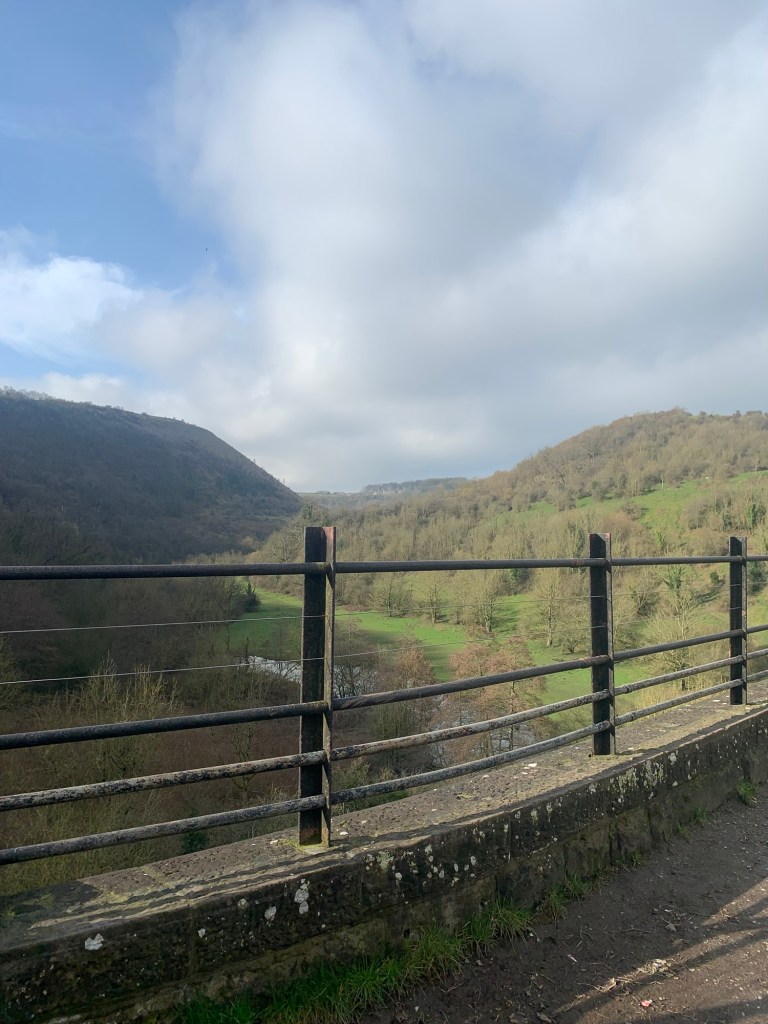
    Once rehydrated we’re soon back on the trail and emerging through Headstone Tunnel onto the viaduct still surrounded by suggestions of Spring.

    I can never walk across the viaduct without remembering my Great Uncle Syd who used to tell me stories about his time as a fireman ( not the Fireman Sam variety) on the steam trains from Derby to Manchester. This was in the days when the Monsal Trail was part of the Midland Railway network and one of my favourite tales was about them having to stop the train to dig through snow drifts on the way to Buxton. More recently I have searched for photos of such an event without success but judging by images I did find, I reckon he was probably referring to the winter of 1947 as that certainly looks like it was an extreme weather event for the UK.

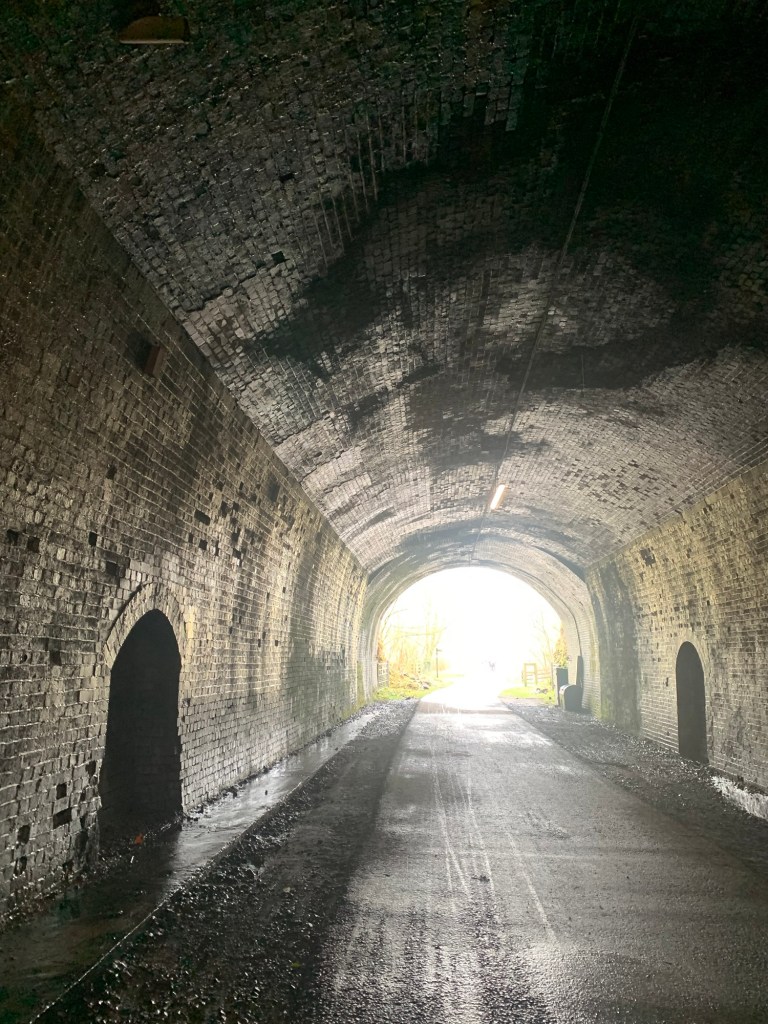
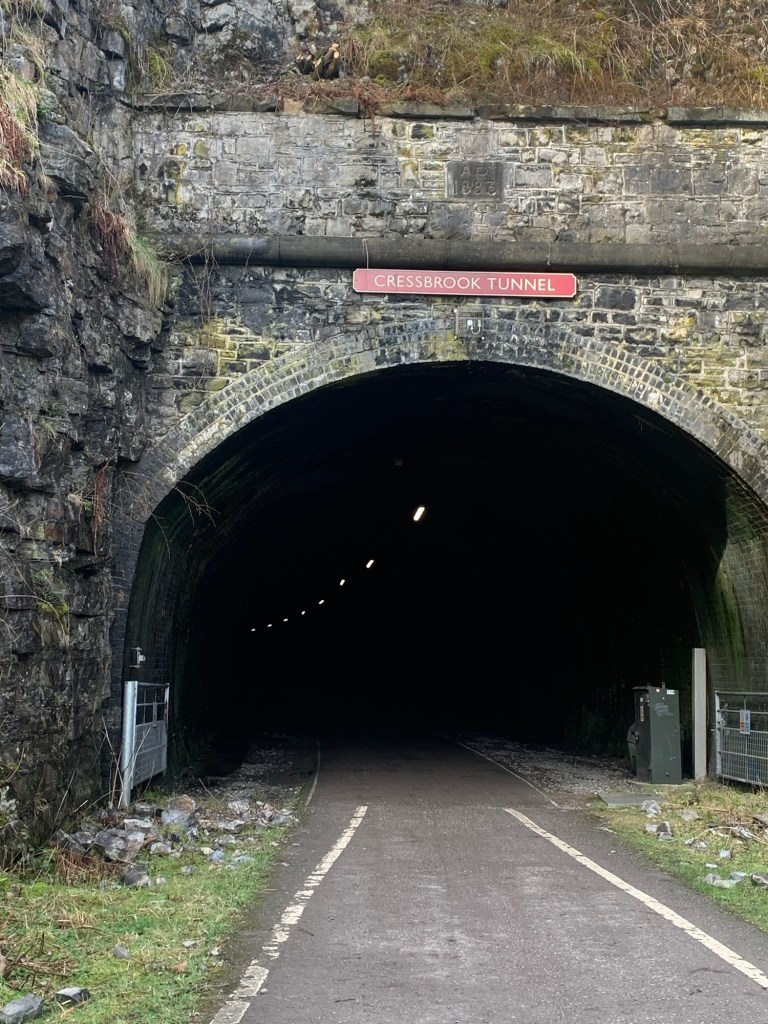
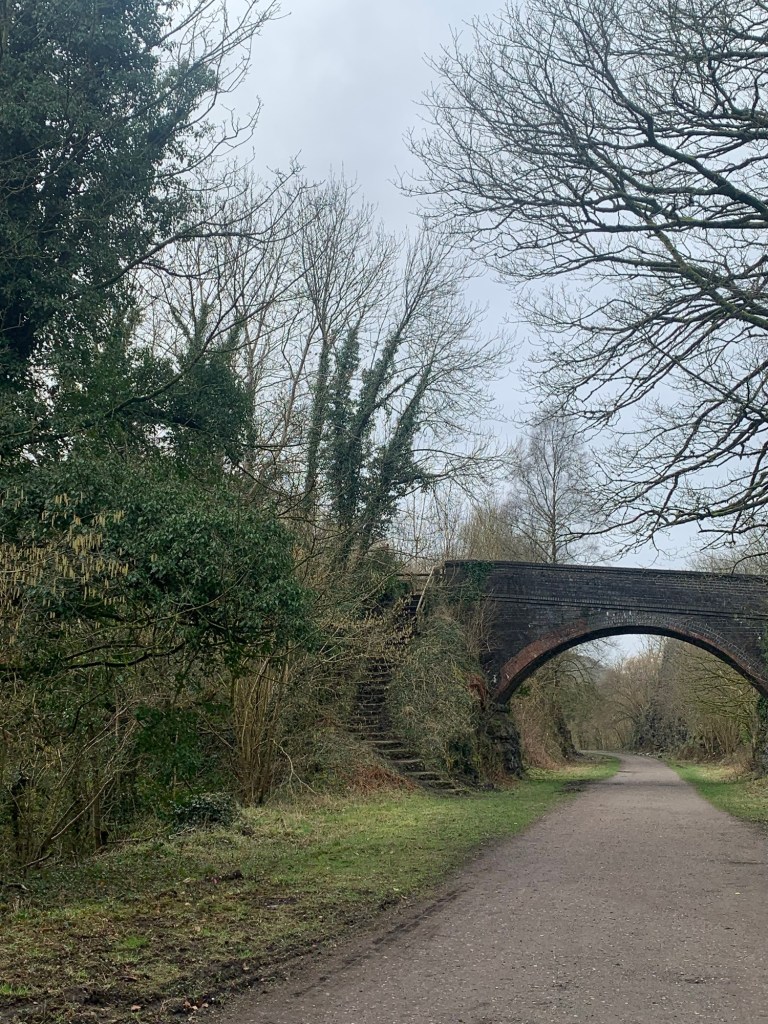
    Anyway back to our lovely Spring day and continuing through the Cressbrook Tunnel we’re soon running parallel with the river, which we can spot winding its way steeply below us in the valley bottom.

    On sighting Litton Mills down below us we look out for a flight of steps rising on our left at the side of a bridge over the trail. 

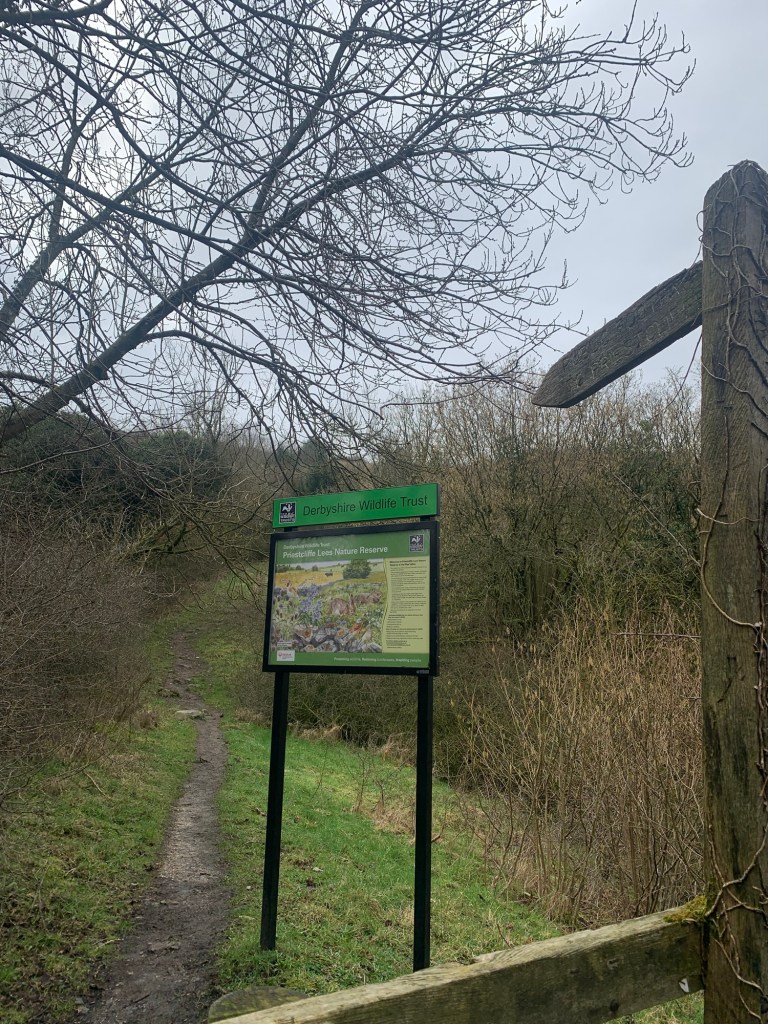
    We climb up here and through the stile on our left into the Priestcliffe Lees nature reserve. 

    Litton Mill is now converted into accommodation but has a terrible history of exploitation of child labour vividly described in John Bull’s book The Peak District, A Cultural History or for a gripping but suitably sanitised fictional version I’d also recommend the children’s adventure book The Devil’s Mill by Walt Unsworth.

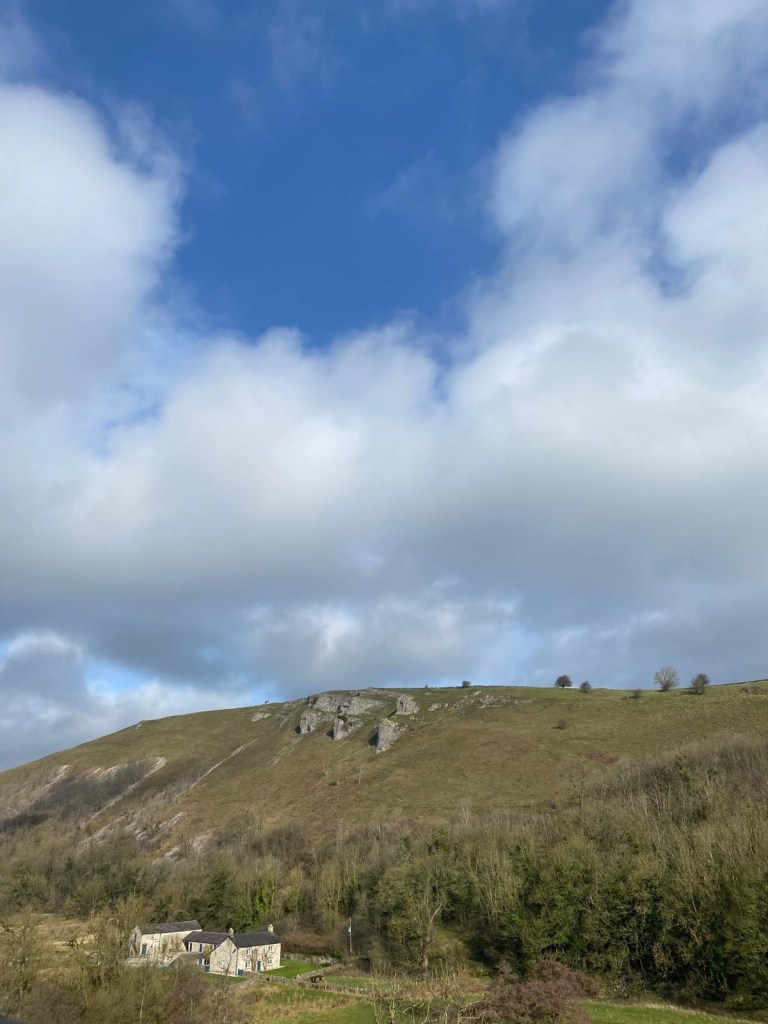
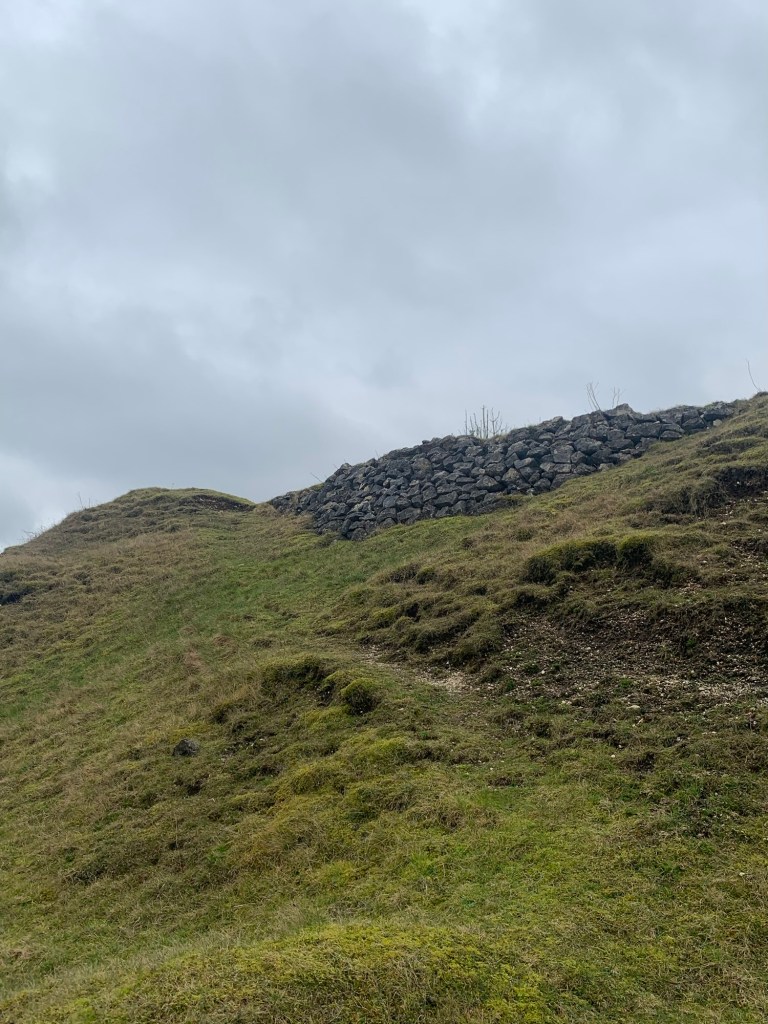
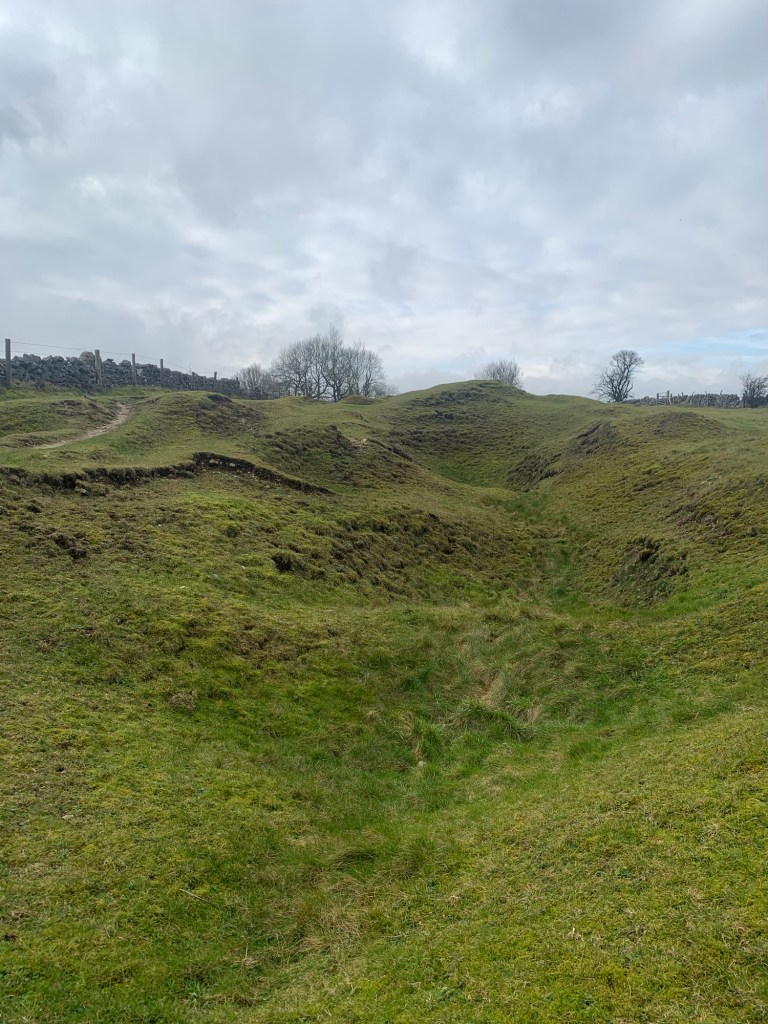
    After our flat-as-a-pancake walk along the trail we are now going up, up and up. There’s no denying it’s steep but the views along the valley side are very interesting and we’re soon passing through an area with those familiar lumps and bumps that indicate this was also an area of lead mining back in the day.

    Once we’ve finished climbing ( for the time being at least) we pass by an obvious lead mining rake and over a stile where we walk parallel to a stone wall enjoying amazing views to our left and some lovely trees on our right.

    Descending to a further stile next to a dew pond we turn briefly left along a cart track and then take the next signed path on our right.

    The terrain is fascinating and unexpected as we now find ourselves in a small dry dale, heading downhill steeply into another dale bottom which we cross in order to head steeply up again on the other side.

    After this, things plateau out a little as we continue over grazing land with numerous stiles in numerous stone walls, all riddled with fossils and with interesting views in all directions. A real limestone upland treat!

    We know we must be near Taddington but the village seems to keep itself hidden, almost until we find ourselves faced with the ever busy A6 to cross. Our path continues directly opposite and leads us past the back of some dwellings and onto the main street of the village.

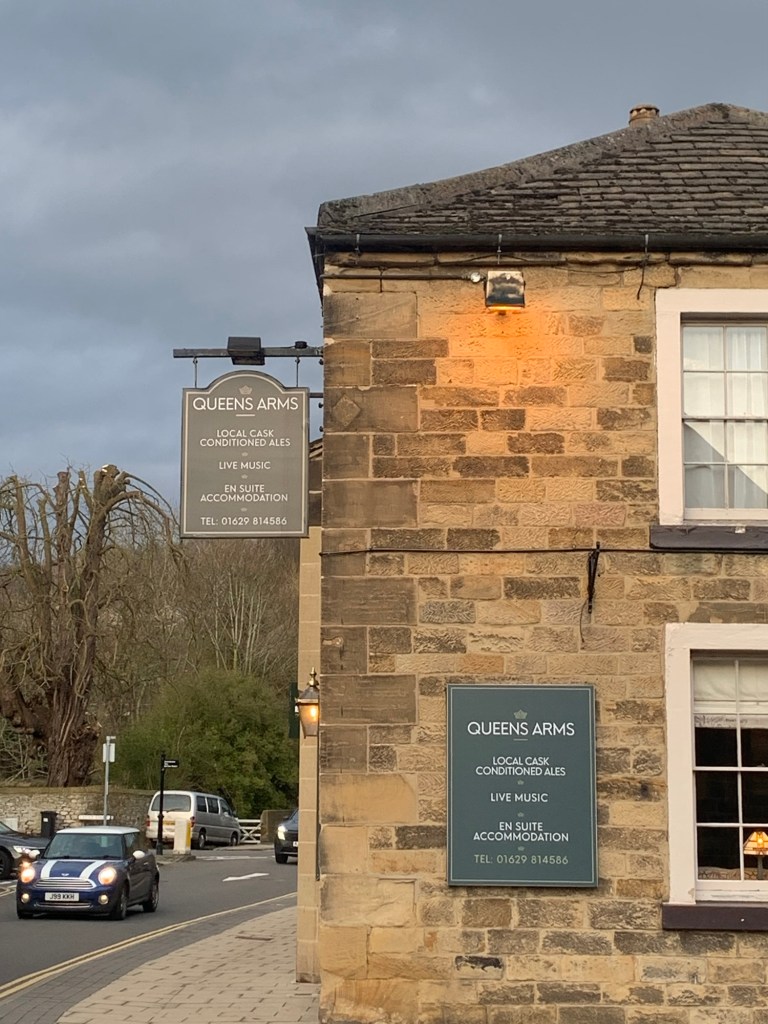
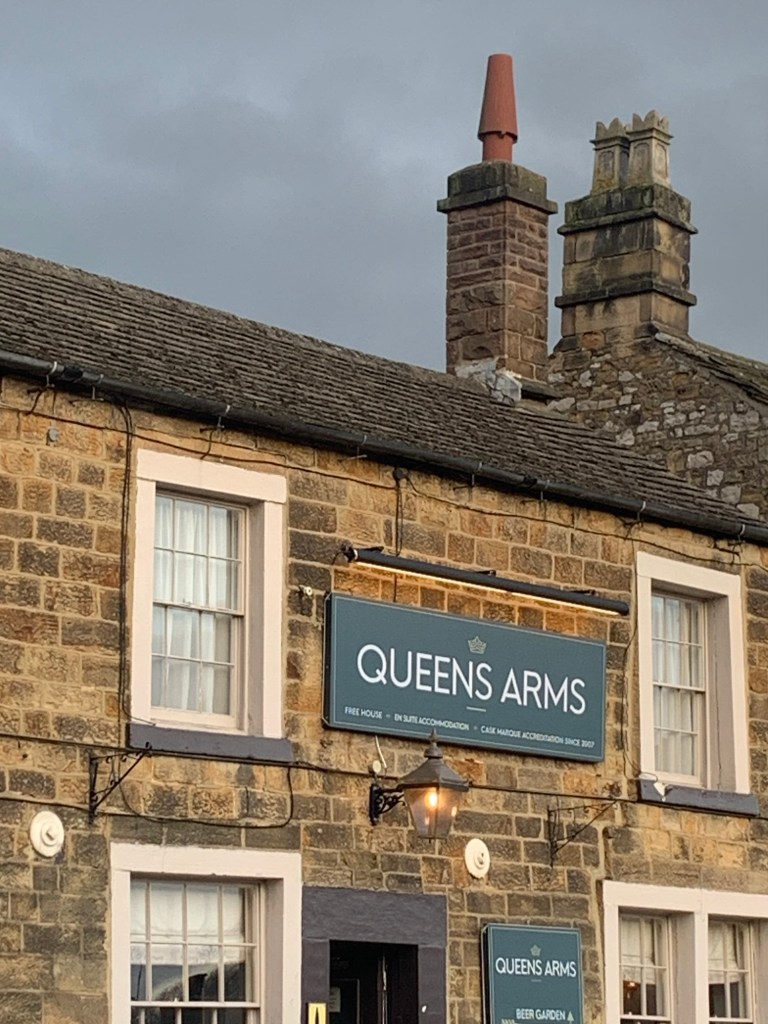
    It’s a brief walk to our left and here we are at Q number two: The Queen’s Arms, Taddington. 

    It seems that many Queens Arms were pubs previously in existence but renamed after Queen Victoria in her honour and it’s likely that this was the case here. The first pub on the site dates back to 1736 and was known as the Miner’s Arms and it’s thought the name was later changed to commemorate Victoria’s diamond jubilee.

    That’s particularly handy for us today as the only place name we could find beginning with Q was  Quarndon ( near Derby) and although there’s some nice walking down there it’s definitely far from handy when you start to consider the public transport options.

    But Q or no Q, I’d take any excuse to visit this pub, it’s been a favourite of mine for many years. 

    And of course today I feel I just have to opt for a Queen’s Club Sandwich to keep the theme going. When it arrives I think there’d have been enough to feed her entire entourage!

    Feeling rather full, we return to our walk and head out of the village, and for a while we’re retracing our steps from part of our C for Chelmorton walk. This happens on and off between here and our journey’s end in Bakewell but it’s been quite a while since C and in any case, everything always looks so different in the opposite direction. 

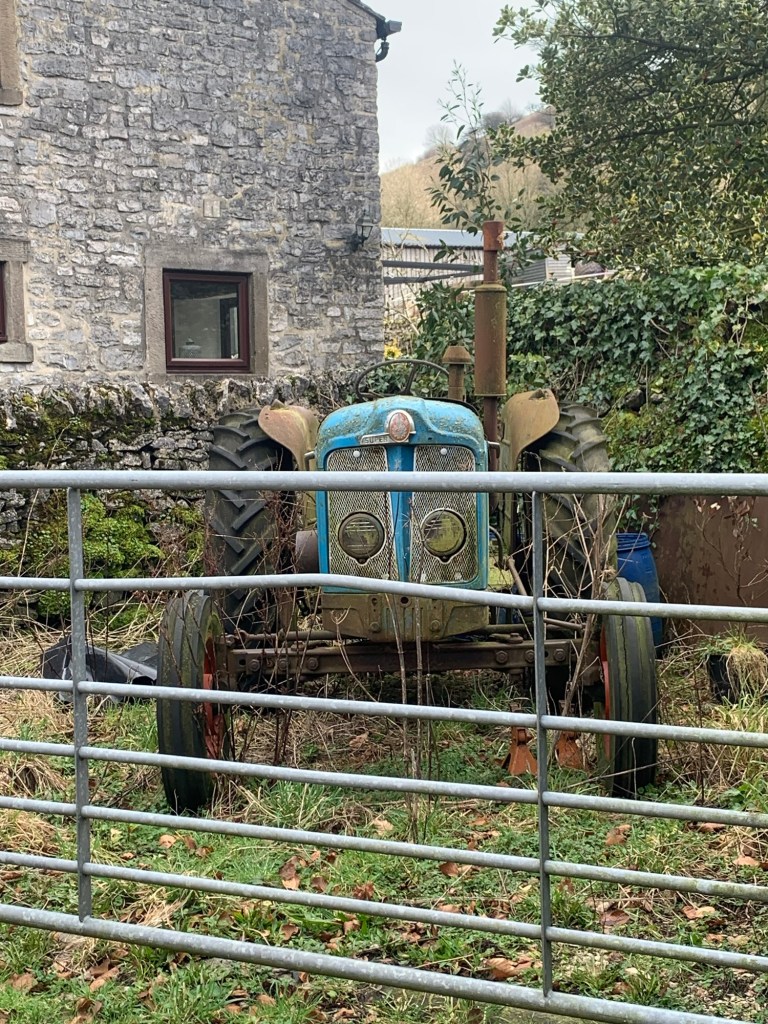
    On the way out of the village we see two really tiny ponies ( too small to photograph!) and a characterful old tractor which seems like it’s come straight out of a kiddie’s story book.

    Taddington is bordered by such a network of lanes and paths that the options between here and Bakewell are almost endless. In summer our route would probably be different and more footpath bound but today , as it’s been very wet for so long, we are on a mud-avoidance policy and for this reason we stay on the tarmac from hereon in.

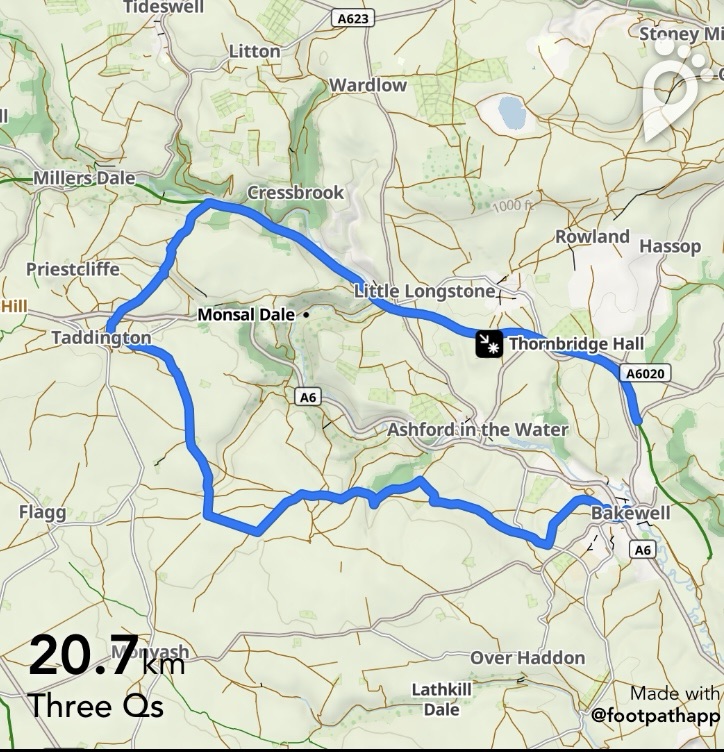
    I’m not going to give a step by step commentary of the route as you can click on the map at the end of the post to see exactly where we’ve gone today and equally you can see what other possibilities there are and decide for yourselves which way to follow depending on weather, time of year or your love of mud over tarmac.

    Having said all that, today’s turns out to be an extremely pleasant route as there’s hardly any traffic and since we’re not busy looking at our feet, we get the opportunity to fully enjoy the views. 

    Not least of these are the views across to Fin Cop the Iron Age settlement which looks incredibly imposing from this angle.

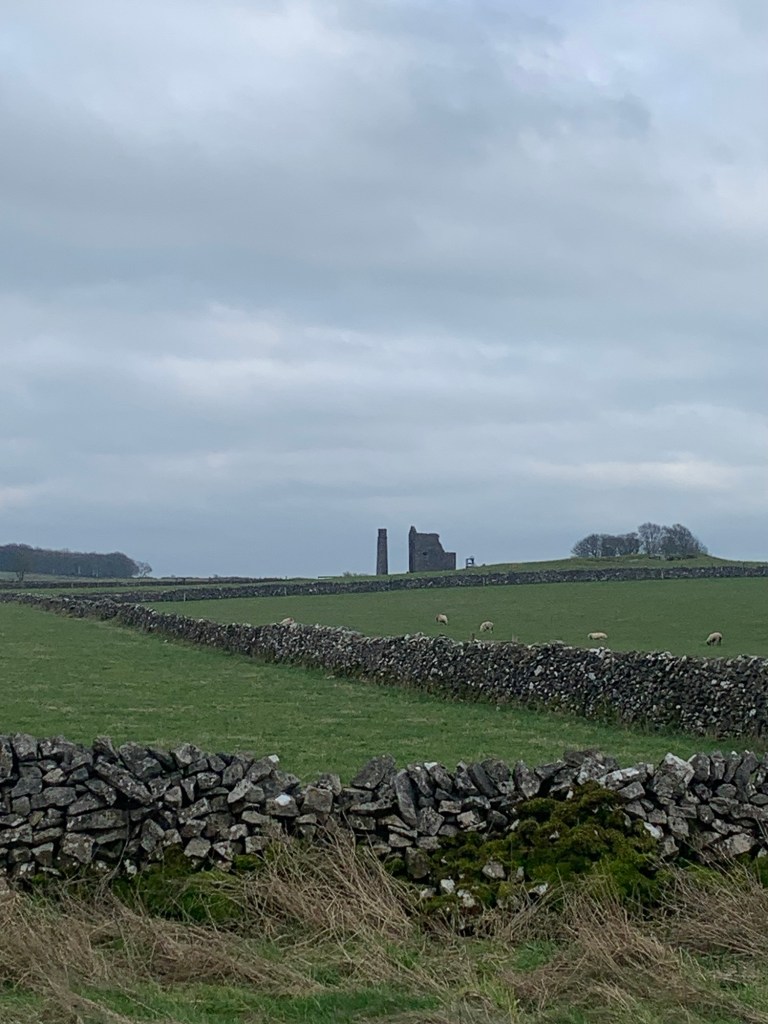
    We wander through Sheldon spotting Magpie Mine on the way

    and then a little later  we can see the roofs of Ashford-in-the-Water in the valley and over towards Ball Cross and Bakewell golf club up ahead of us.

    We even see our old friend Beeley Moor ( featured in our K for Kelstedge) beautifully highlighted by the afternoon sun. Next thing we know we’re descending Stanedge Road past St Anselm’s School and arriving into Bakewell by the Church, down North Church Street.

    Just as we’re drawing level with The Rutland Hotel we can see there’s a bus in and waiting but it’s not a 218 and the new(ish) fangled display on the bus shelter tells us we just have time for a quick drink in our third Q of the day, Another Queen’s Arms, this one on the corner of Bridge Street and Market Street.

    This was apparently known as The Durham Ox before it was extensively rebuilt during the time of Victoria’s reign and renamed after her.

    There’s a handy window looking out onto Bridge Street so we can spot the bus coming into the town and still get back to the stop in time. That’s the theory anyway and it certainly works today, rounding off a very pleasant day out with a bang-on-time bus to take us home. 

    A top quality day out! 

    https://footpathapp.com/routes/D0C58523-D288-4ED7-8E17-89B8717CA7BD?units=metric

    Transport 

    218 from Sheffield to Pineapple Cottage, Bakewell 

    218 or 257 home from Bakewell to Sheffield 

    Pubs/Cafes

    Quackers Cafe Thornbridge 

    Queens Arms Taddington 

    Queens Arms Bakewell 

    How far?

    Around 25k

    Route Synopsis 

    Monsal Trail from near Hassop Station to Litton Mills-Prisetcliffe Lees-Taddington-Sheldon-Bakewell 

    Should be ok for dogs 

    Map

    OS White Peak 
  • P is for Pilsley

    If we’d thought of it sooner we could have included Beeley in today’s itinerary and then the walk might have been subtitled 

    “A Tour of the Chatsworth Estate Villages” ….but that’ll just have to join the list of walk ideas for another day. 

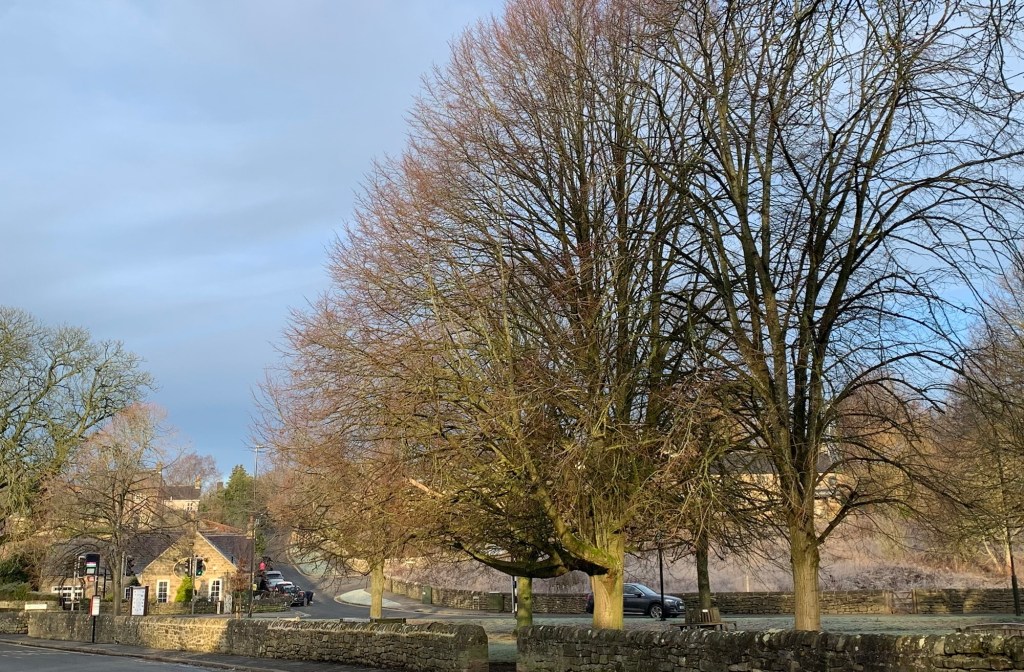
    We began by catching the 218 to Baslow and were surprised by the hard frost which had not been forecast but which made for an incredibly beautiful bus ride before we’d even taken a step.

    After getting off the bus at Baslow Nether End by the sweet shop on the corner of the car park, we turn back on ourselves and walk along the lane that heads over the bridge and onto the footpath to Chatsworth. 

    The bridge over the Bar Brook ( the same stream which we walked by on Big Moor a few weeks ago as part of M for Milthorpe) is under repair so excuse the lack of photo. Maybe that’s not too surprising as it’s definitely been around a while (current bridge 1759, but even before then there was a packhorse bridge here.)

    Interestingly this lane and bridge used to be the main turnpike road that led to Chesterfield until it was diverted to the route of the current A629 by one of the Dukes of Devonshire after he’d had the Golden Gates built.

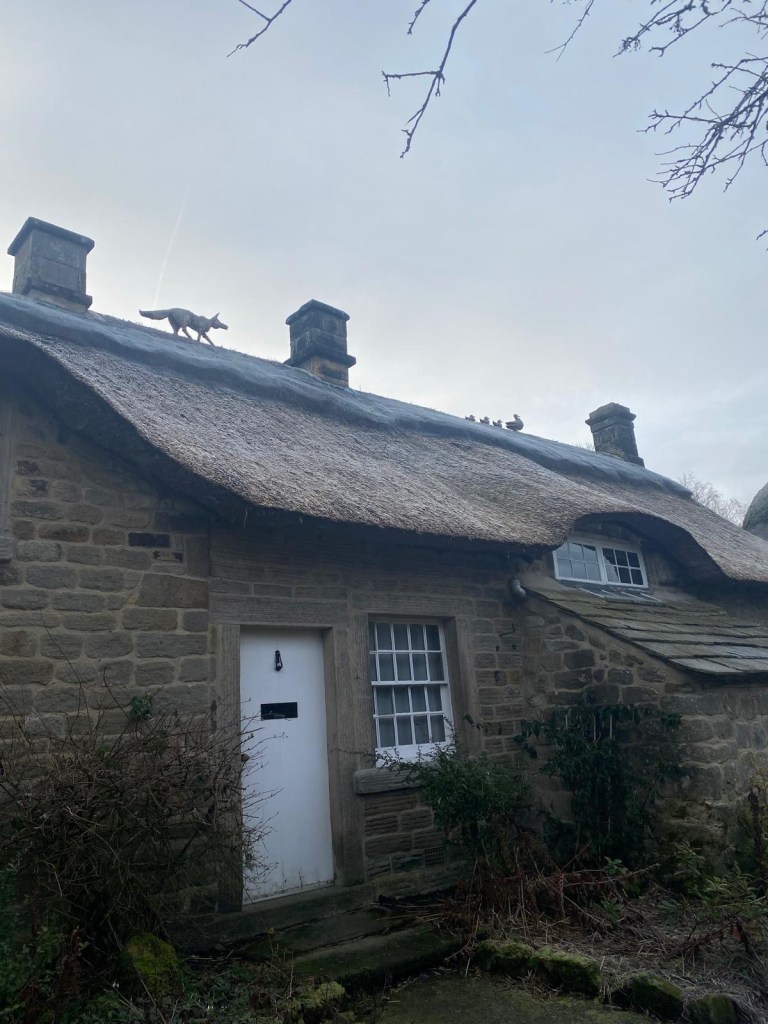
    Once over the bridge we turn right past the “chocolate box”thatched cottage  which looks as though it’s been time-travelled into Baslow from somewhere in Thomas Hardy’s Dorset. This also has a long history, parts of it dating from the 17th century. I guess that somehow it has managed to hold on to its thatch whilst over time, other Peak District cottages have lost theirs.

    Today we spot some interesting added extras on the roof as we pass by.

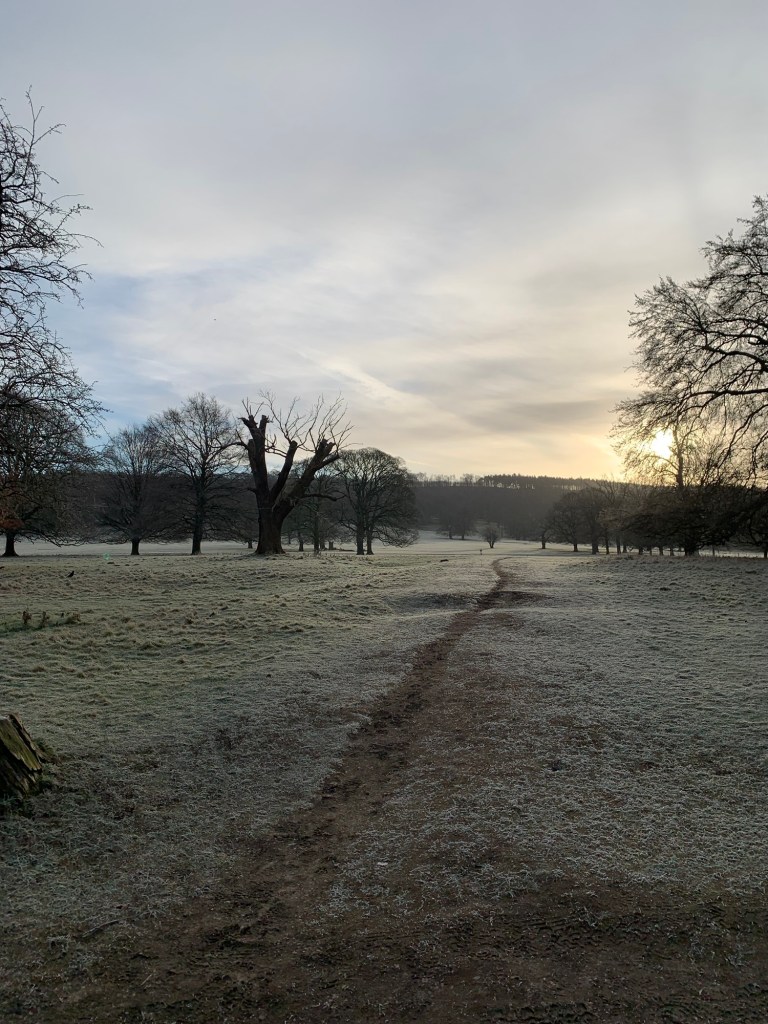
    We are soon passing through the wheel-chair friendly Cannon Kissing Gate and we’re instantly stunned by the beauty of the park under the magic spell of the frost.

    We head straight on along the main footpath passing the pagoda type lodge with the Blue Plaque to Joseph Paxton, gardener and architect, and on past the cricket field.

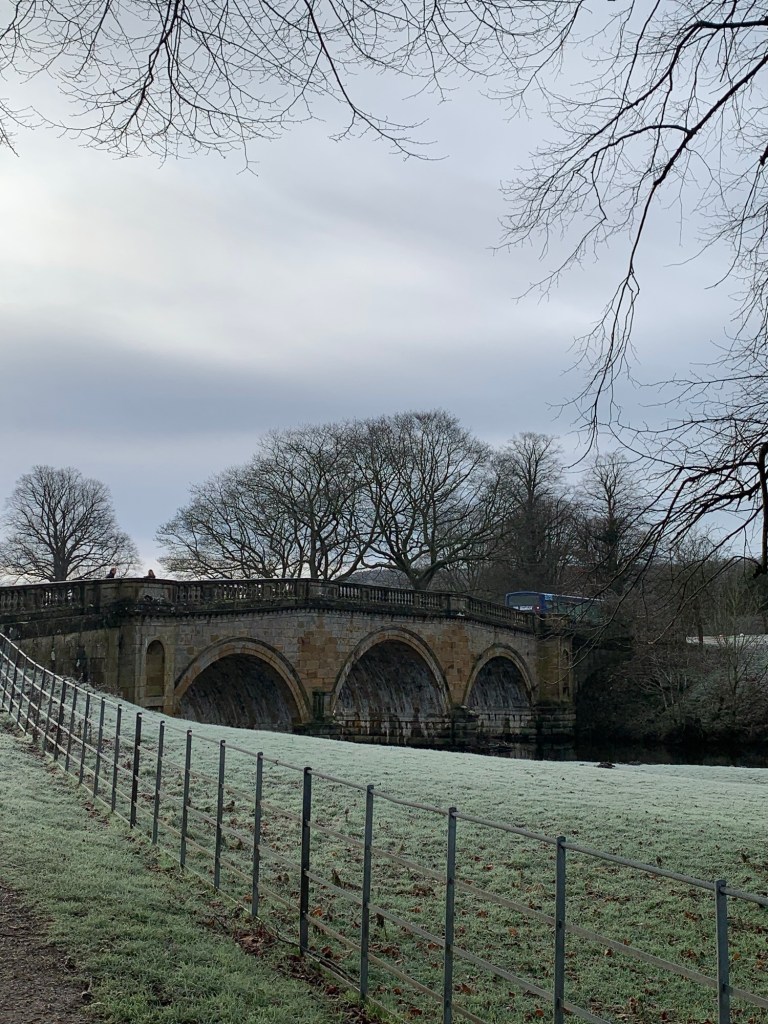
    At Queen Mary’s Bower we head right, crossing over a chilly looking Derwent on Paine’s Bridge and taking the path over to Edensor,  the first of our two estate villages for today.

    So it’s not only the turnpike road that the Duke of Devs had rebuilt when it was in their way.

    Apparently the original village of Edensor spoiled the view from the great house and so the 4th Duke had the village relocated. The building that’s now the tea room is one of the few remaining original buildings in the village and although initially they hung onto the medieval church, even that was eventually demolished and replaced by the current, larger church of Saint Peter.

    Seems a shame but there’s an amusing story that accounts for the quirky styles of the rebuilt village that we’re now walking through. 

    When the Duke was presented with a variety of house plans by the architect, ( Joseph Paxton and his young assistant John Robinson) he was apparently unable to decide on a single style. So, on an impulse, he chose one of each, which has resulted in the eclectic mix of Norman Arches, Swiss Cottages, Italian Villas and Mock Tudor that we’re duly spotting today as we walk past.

    The road becomes a cart track as we climb up to meet the lane that runs between Bakewell and Pilsley.

    It’s usually a great spot for views up here and today is no exception.

    We turn right, promptly losing all the height we just gained. At the bottom of the hill we turn right at the T-junction with the main road and then left past the village school designed by Joseph Paxton ( him again!) and into the village of Pilsley, the P of today’s walk.

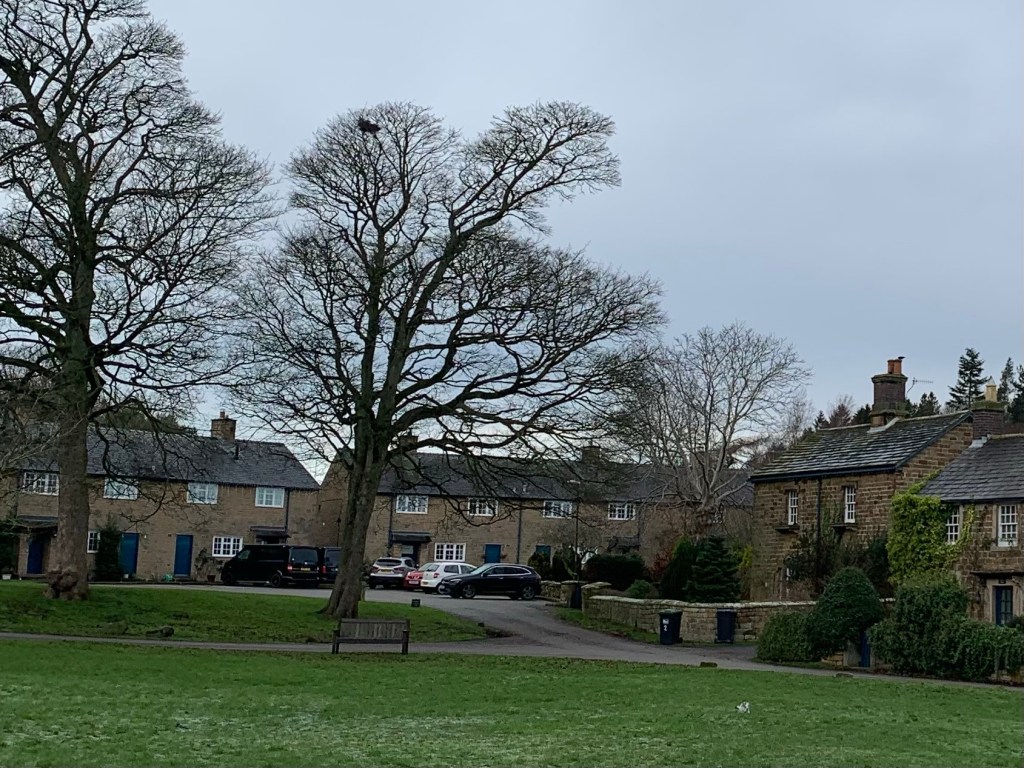
    Our second Chatsworth estate village turns out to have also had a substantial rebuild and expansion by the Chatsworth team, partly in order to accommodate some of those poor old displaced Edensor residents. Indeed there’s a large village green bordered by houses which were built specifically for this purpose.

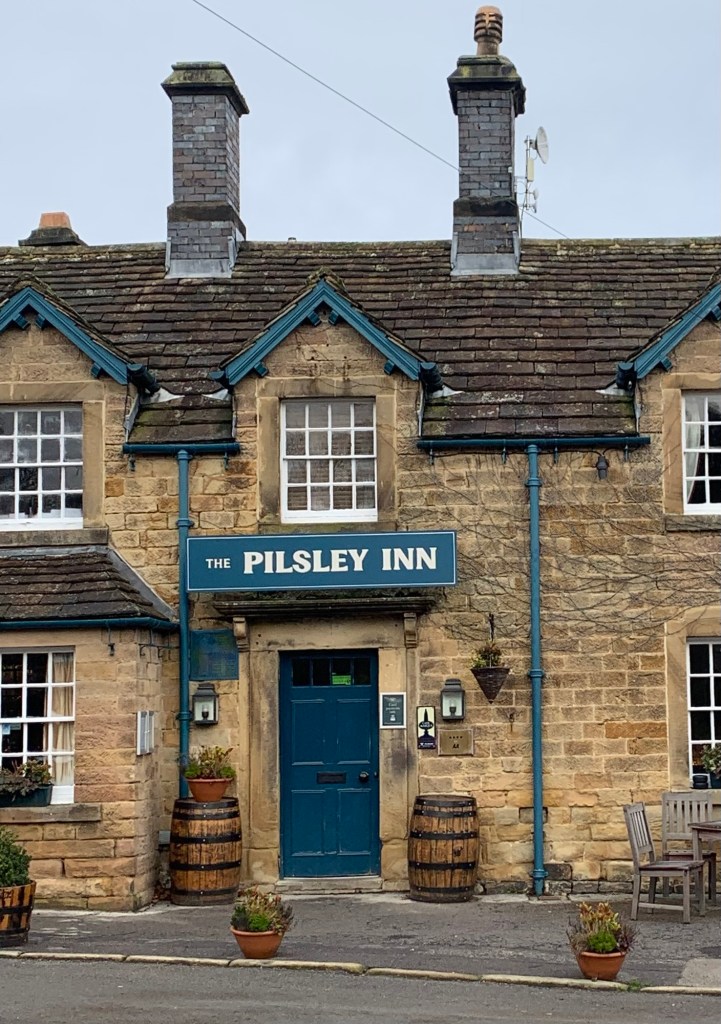
    However the row of buildings which include the Pilsley Inn are clearly much older ( by centuries?) and were part of the old village, here long before the estate.

    Facing the pub we turn left along what was once another packhorse route which at one point carried lead from the mines around Monyash all the way to the coast.

    The tarmac peters out as does the village and soon the track arrives at a three way junction where we take a right along a very good path bordered on our right by woodland and with views over the fields to our left.

    We ignore a finger post about half way down the track although this is actually a short cut taking the corner off the track if you fancied a steeper descent.

    Passing through some trees the track crosses a stream before depositing us on the side of the very busy 13 Bends Bakewell Road.

    However it’s not too bad as we turn right along the road. There’s a bit of a path along the grass verge and it’s only about 100 meters later that we’re crossing over to follow a very open and pleasant track on the opposite side.

    Having spotted an interesting looking ( Chatsworth designed?) barn over on our left

    there’s a right fork in the path through some woodland

    and then we pick our way through some wet ground over another stream

    before climbing uphill towards the village of Hassop.

    Home Farm is a bit of a messy one but it’s clear enough where the footpath leads and we spot a few cows having lunch

    before we plunge out onto yet another busy road, this time it’s the B6001 which heads from Bakewell to Calver. 

    There are a few blind bends to negotiate which adds to the excitement and although we just about manage to register the grandeur of the building opposite

    and the somewhat incongruous looking Catholic Church:

    …..it’s not until we’re opposite the ( decidedly closed) Old Eyre Arms that we pause to take stock.

    There’s actually a lot of interesting things about Hassop and it’s by way of a change today that the grandiose Hassop Hall ( mainly hidden behind a stone wall) has no links whatsoever with the Dukes of Dev or the Cavendish family. Instead, this village is all about the Eyres, another  family with a long history in Derbyshire.

    Besides rather obviously explaining the name of the pub, this also explains the unusual church as the Eyres were one of the old Catholic families of the area, amongst other things linked with the grim story of the Padley Martyrs and incidentally with part of the family having lived in North Lees Hall ( featured in our walk for N). And of course the surname Eyre became forever synonymous with a certain plain Jane, thanks to Charlotte Brontë.

    It follows that the Eyres were loyalists and its interesting that the hall, now a private hotel and wedding venue was used, thanks to them, as a royalist garrison during the English Civil War giving rise to a number of skirmishes in the area.

    We drag ourselves away from this fascinating hot bed of history and take the lane on our right which after the main road is pleasantly free of traffic. We enjoy some splendid views back over to where we’ve walked from.

    As we start to gain a bit of height we pass an interesting house on our left and spot it’s called the Old School House. That certainly ties in with the style of the building although it seems a bit away from it all, location wise. But yes, it seems this was probably the Catholic school for 100 pupils which is mentioned in connection with the Hall and the church.

    The road gets steeper and veers to the right before straightening up again towards the top of the hill where we take the footpath signed to the left.

    Now we’re walking along a low ridge, sometimes in the woods and sometimes on the edge of the trees. There are amazing views on either side either over towards Baslow and The Edges and actually all the way back to Chatsworth where we’ve walked from today,

    or on the other side over to Longstone Edge.

    And the sun is now keeping us company for yet another beautiful winter walk.

    We pass through Bank Wood, cross a lane and then continue on the path through Bramley Wood enjoying the views when we get them

    and marvelling at the number of buds on the Rhododendrons when we don’t. So we’re definitely coming back here when it’s Rhododendron time!

    The descent into Calver would make an excellent mud-sledging slalom course. The only drawback is we’ve not brought a sledge. Miraculously we both stay upright which just leaves us with a field path to cross

    and a few residential looking driveways ( all part of the path)

    and then, here we are in Calver. 

    We head for the old village cross

    and then go left along Folds Lane which takes us onto Sough Lane and along to the crossroads.

    However there are doubtless other options for arriving at the same spot since Calver is a fascinating conglomeration of lanes, ginnels and footpaths, most probably a relic of its industrial heritage as a lead mining and mill town.

    Right now though we’re firmly focused on the present moment as we’re well aware that our journey home today is courtesy of the 65 bus and there aren’t a lot of them about. As I have mentioned before, at Calver Sough crossroads I always have to think carefully about our choice of bus stop because the last thing you need after a good walk is to find yourself standing at the wrong stop as your bus goes sailing past! 

    Happily though we manage to treat ourselves to takeaway drinks ( and cake) from the cafe and have just enough time to devour everything at the ( correct) bus stop before the good old 65 arrives bang on time to take us home. 

    Another stunningly beautiful winter walk. We can’t decide whether we’re incredibly lucky or whether it’s just always better when you’re out in the elements than when you’re stuck inside? I guess it’s actually both of the above, but whatever the truth of the matter we very much recommend today’s walk as a massively suitable winter walk or for that matter, any other season of the year. We hope you enjoy it as much as we have.

    Transport 

    218 from Sheffield to Baslow

    65 or 257 home from Calver Sough to Sheffield 

    Pubs/Cafes

    Various options in Baslow but we’d always recommend The Pavilion Cafe even if it’s not particularly handy in this case.

    The Sweet Shop also does hot drinks and is VERY handy for today’s walk.

    Edensor’s Tea Cottage is housed in one of the oldest buildings in the village. It used to double up as the Post Office but has gone considerably up market since those days. Find the link in the main text.

    Pilsley has its pub ( link in text) and also on the edge of the village is Chatsworth Farm Shop Cafe which has fantastic views if you’re sitting outside ( in summer, not today!)

    Hassop Hall is not open to the public in my experience…. I once wandered in, mid hike as someone had told me you could get tea and scones there, only to be politely escorted off the premises 😊

    Calver Sough: Cafe 19 at the crossroads has been through various guises but in our opinion is currently very good ( and the shop next door has to be the most splendid Spar Shop ever: well worth a browse!)

    The Calver Arms used to be called the Eyre Arms (just to be different!) but has fairly recently, very sensibly changed its name. 

    How far?

    Around 18k

    Route Synopsis 

    Baslow, Chatsworth, Edensor, Pilsley, Hassop, Calver.

    Should be ok for dogs 

    Map

    OS White Peak 
    https://footpathapp.com/routes/5E95AD75-D46B-4BA2-9707-E84D5297A4EF?units=metric

  • O is for Odin Sitch

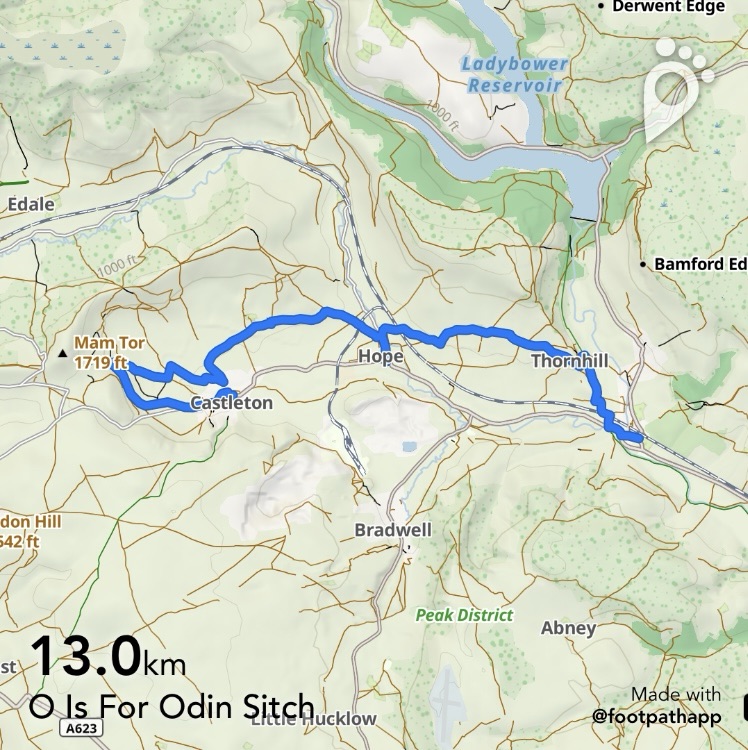
    Slithering our way along icy Sheffield pavements to reach the bus stop it seemed a madcap idea to be heading out to the Peak at all today but actually, once the 272 reached the Hope Valley we could see the paths were clear and the plan to head for Castleton started to seem like a good one after all.

    After alighting from the nice warm bus at Castleton bus station we continue straight ahead to the corner of How Lane and then briefly take a right along Millbridge before turning left along the lane which cuts through to the back of the big car park.

    We pass some cold looking ducks swimming on the stream known as Peakshole Water which flows down from Peak Cavern.

    At the other side of the car park another stream, Odin Sitch, which is no less than the “O”of today’s walk, joins with Peakshole Water. But of course there’s more to our plan than a mere 500 metres walk between the bus and the car park….read on for more details of what turns out to be an easy but perfect winter walk, sheltered, not too muddy and almost ice-free.

    We head past the information centre and turn right out of the car park along the road which leads towards the Winnats Pass.

    The castle ruins are always imposing but seem to be looking particularly bleak and inhospitable today.

    Where the motor road now turns left to head up the pass, we continue right along the old road which used to be the main route to Chapel-en-le-Frith before a great chunk of Mam Tor fell away and took the road with it.

    https://www.roads.org.uk/blog/road-slid-away#:~:text=Published%20on%2028%20August%202022,exposed%20plateaux%20and%20sheltered%20gorges.

    Nowadays the tarmac road leads to Treak Cliff Cavern and then beyond here reaches a turning circle which is the end of the road for motor vehicles.

    It’s a bit of a van-life haven along here at times although there’s not much evidence of that today; maybe it’s too cold?

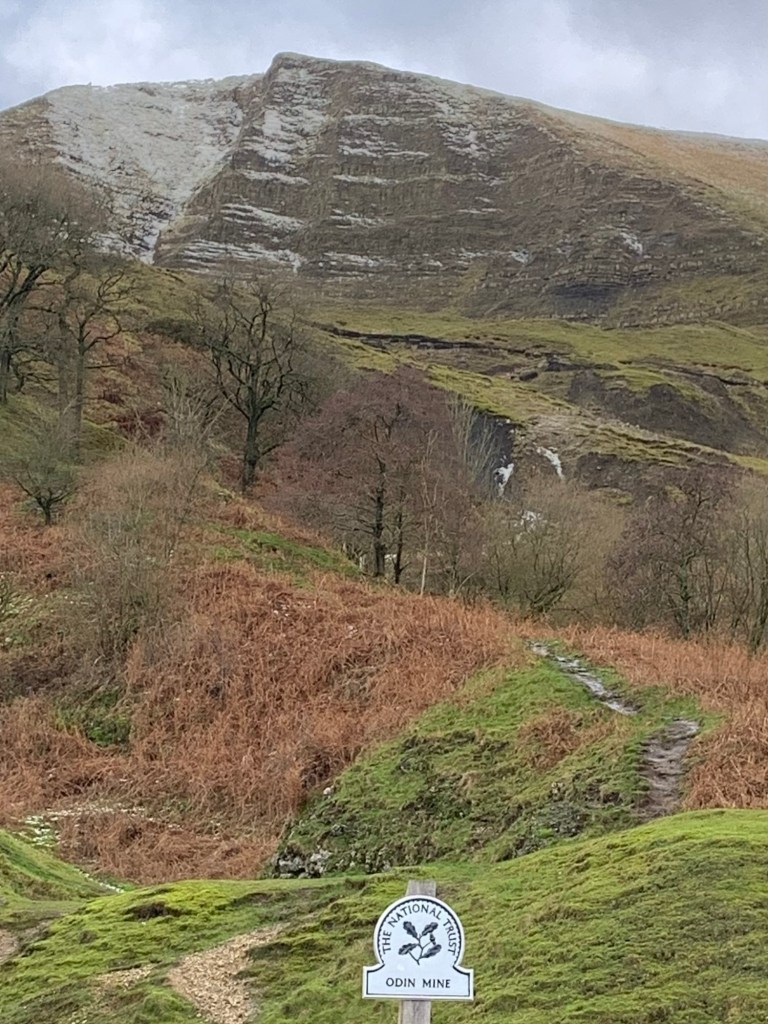
    A National Trust sign on the left of the road marks the way over to Odin Mine but the only way we’d get through the gate today would be to paddle through an enormous puddle. We don’t fancy cold, wet feet for the remainder of the walk so unfortunately we decide to give it a miss. Not that we were planning anything like a bone fide caving expedition, but we had been looking forward to having a nosy in the cave and the gorge.

    We will have to come back in the summer.

    Odin Mine has the claim to fame of being one of the oldest and longest worked lead mines in the country. It’s thought the Romans mined here for lead and there are written records reaching back to the 13th century. 

    In fact, you could say that for anyone who’s interested there’s an absolute “mine” of information available. (Sorry!)

    The following links seemed particularly interesting:

    https://www.themodernantiquarian.com/site/2895/odin-mine

    https://castletonhistorical.co.uk/wp-content/uploads/2016/10/the-odin-mine.pdf

    https://pdmhs.co.uk/MiningHistory/Bulletin%206-4%20-%20Odin%20Mine,%20Castleton,%20Derbyshire.pdf

    On the opposite side of the road to the mine there’s the footpath we’ll be following along Odin Sitch down the valley.

    First we pass the remains of the crushing wheel, where the ore was crushed and all around us its clear to see  the unnatural shapes of overgrown slag heaps.

    A Sitch is a local name for a small stream. Apparently its roots come from the Old Norse language and maybe this chimes in with the use of Odin too as he was a Norse  god? Or, as one of the articles on the mine mentions, another possibility is that Odin was Owd Den ( or old Dane) ….. I guess we’ll never know but I have to admit that we chose Odin Sitch for our O purely on the basis of it being such a great sounding name, whatever it means.

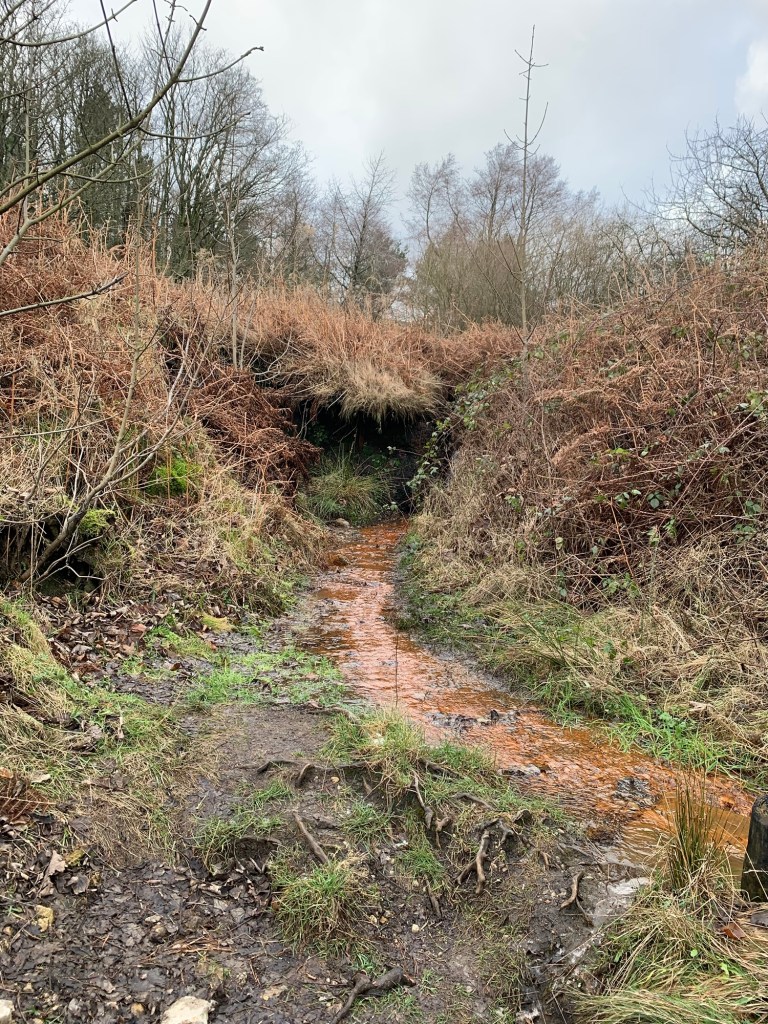
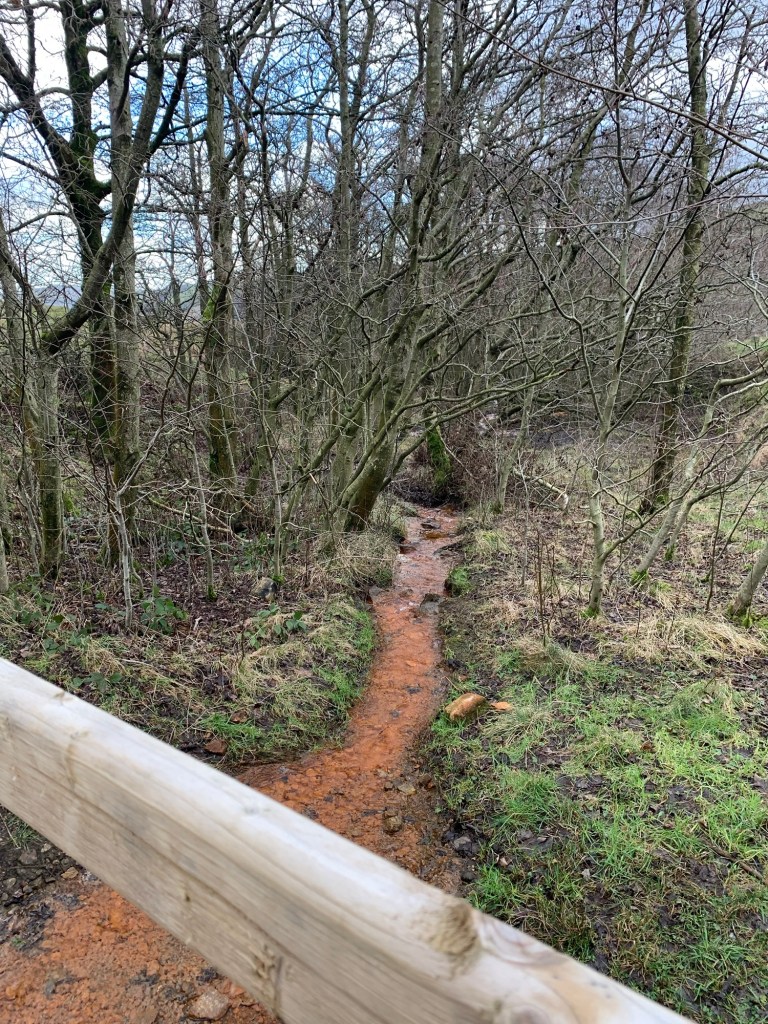
    As we descend to the footbridge over the Sitch it’s initially a little underwhelming and we think perhaps the name’s the best bit? But even if it’s not a raging torrent it makes up for it by being a bright orange colour. This is thanks to iron sulfides in the waste from the old mine reacting with water and oxygen and forming iron oxide. It reminds us of a similar orange stream in Ecclesall Woods which I’m sure many of you ( especially owners of dogs who like a paddle) are familiar with. 

    The path is excellent as it winds through mounds of overgrown mining debris and we have already spectacular views down the Hope Valley.

    It’s possible to follow the Sitch, which incidentally is now crystal clear and a little more substantial, all the way back into Castleton but, since we’ve already walked through the village once today, we choose to turn left instead over the stream.

    We’re following the path signed towards Dirty Lane which loops around the village to join Hollowford Road. Here we turn left before forking right at the outdoor activity centre onto Robinlands Lane and continuing, onto the footpath.

    This is one of my favourite paths along the Hope Valley and it does not disappoint today. We are surrounded by fabulous views and with such a dramatic sky and lighting, even the same view is changing constantly.

    We have to keep stopping to look back at Mam Tor with its little cap of snow and every time we look it’s different. And now I’m ending up with a huge string of Mam Tor photos to edit…. but none of them can come anywhere close to being here; get your boots on and get on the 272 and come and see for yourself!

    The path takes us on to Hope via some characterful outbuildings and over the railway.

    As we emerge onto the Edale Road we have to choose between left to the Cheshire Cheese or right to the Adventure Cafe. The cafe wins and we actually demolish two pots of tea here amongst other refreshments.

    After feeding our faces and slaking our thirst we retrace our steps along Edale Road to where Bowden Lane forks right and crosses over the River Noe.

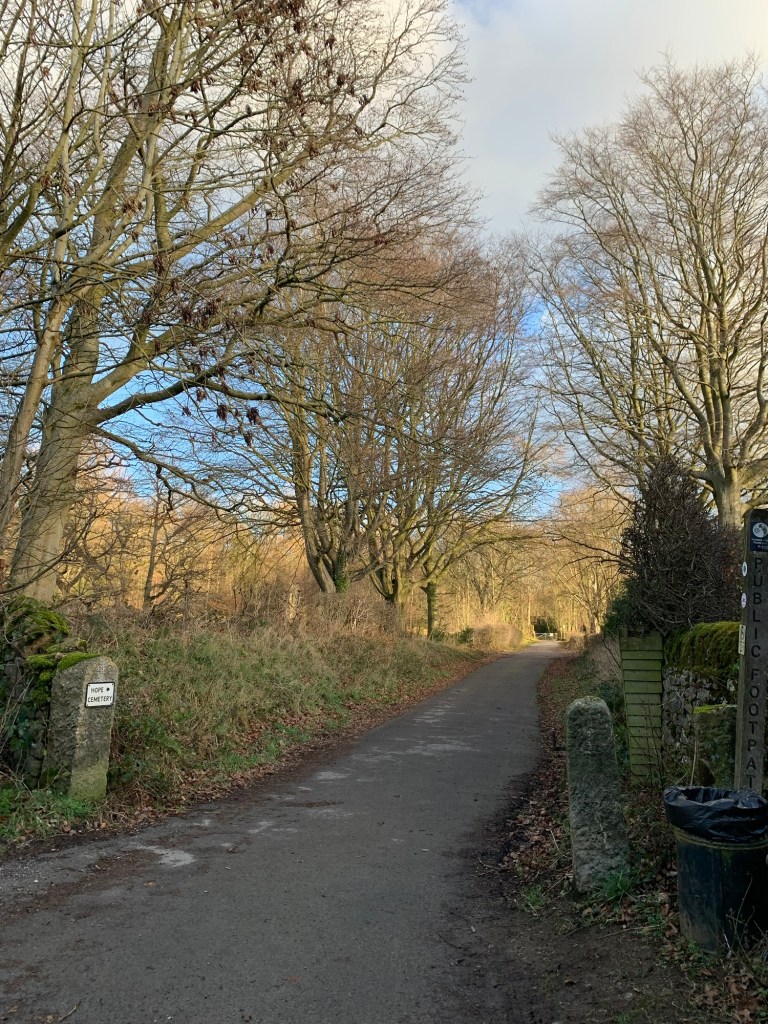
    After this we need the second path on the right which is also signed for Hope Cemetery.

    It’s initially a track and then once through the railway tunnel becomes a footpath. We’re still revelling in the views from all directions

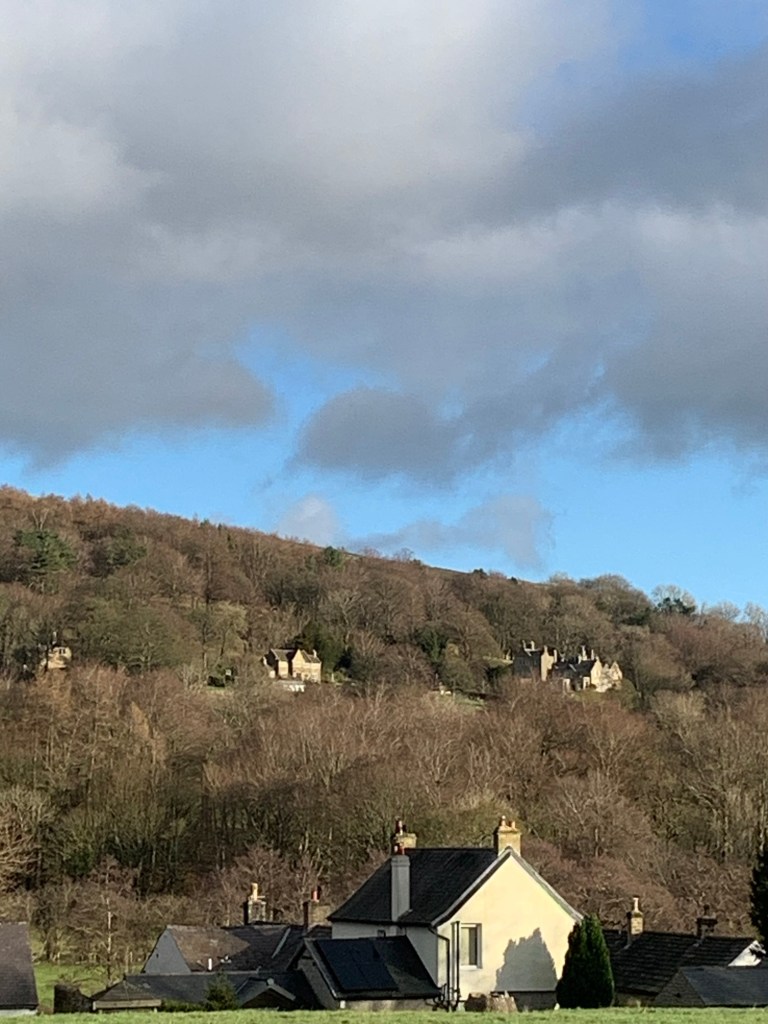
    and we’re also trying to work out where the splendid mansion we saw perched on the hillside from back before Hope actually is.

    It doesn’t seem to be Aston Hall which had been my guess…. maybe it’s Birchfield?….

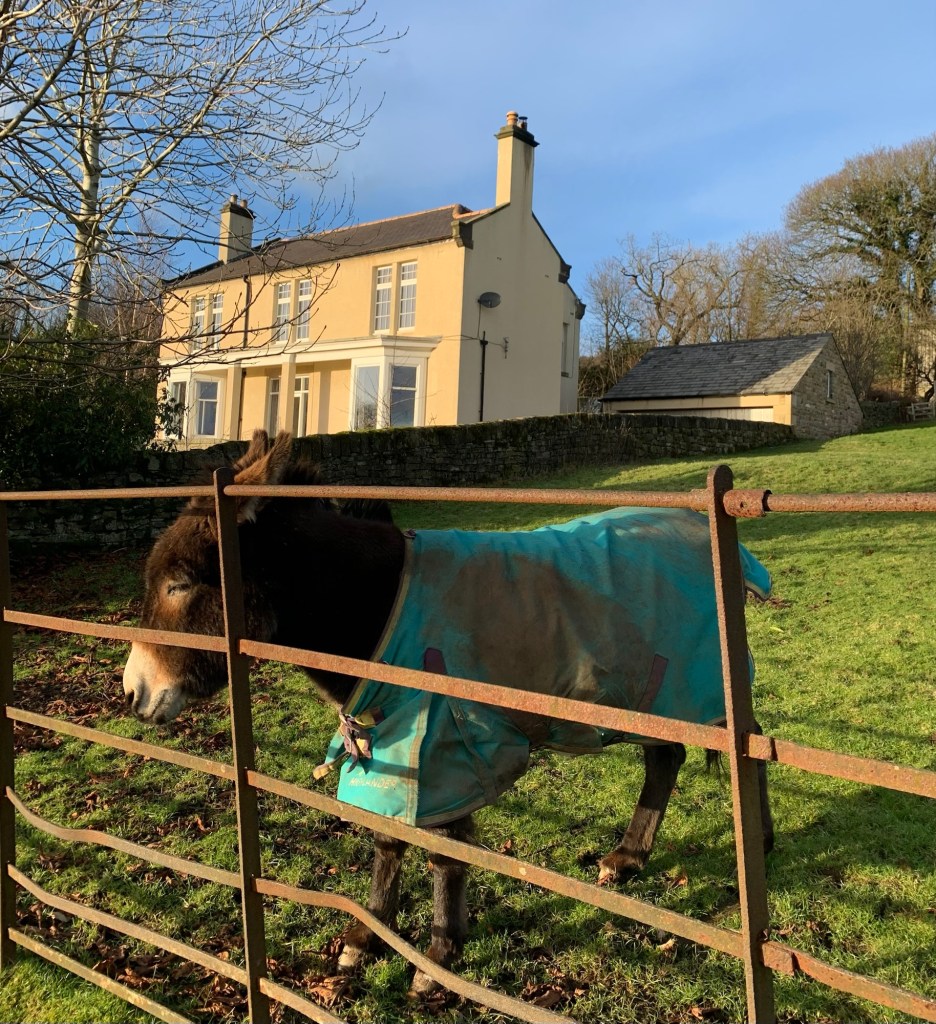
    When the path joins Aston Lane we turn left and approaching the hamlet of Aston we break right onto a path which passes in front of another splendid, if less grand, house and your actual Little Donkey ( no doubt resting after a tough Nativity season.)

    We rejoin the lane in time to pass by Aston Hall which although smaller than the one we’ve been looking for is nonetheless very interesting and looks to have a history.

    The back lane continues, it’s easy walking which just makes it easier still to drink in the scenery.

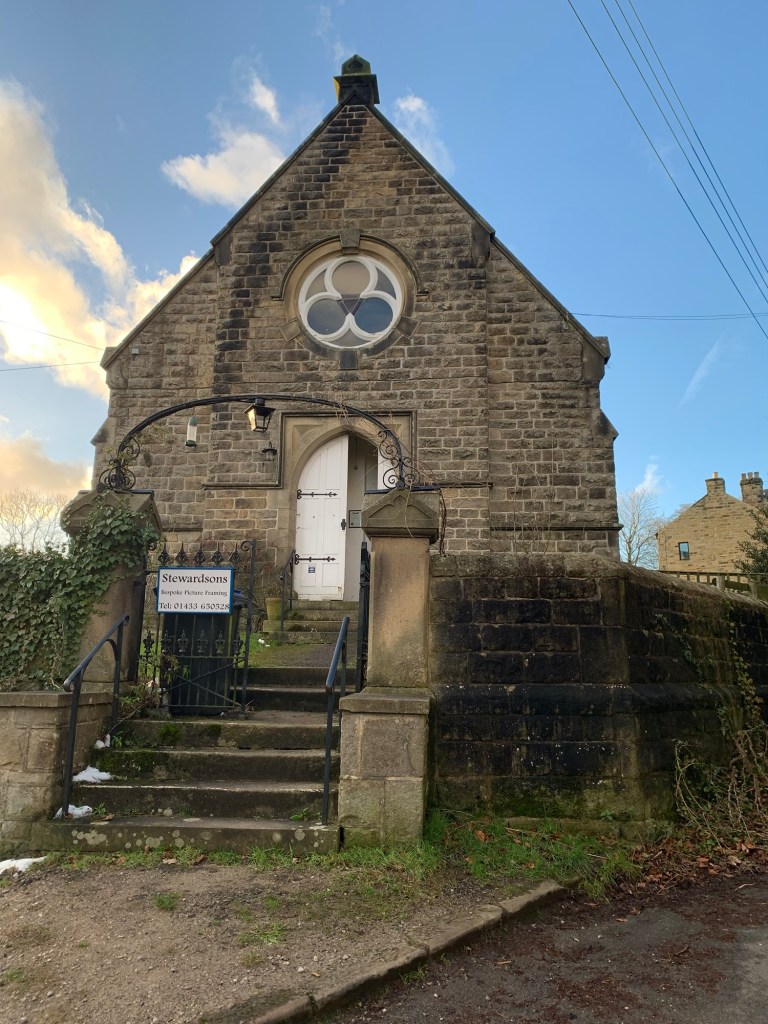
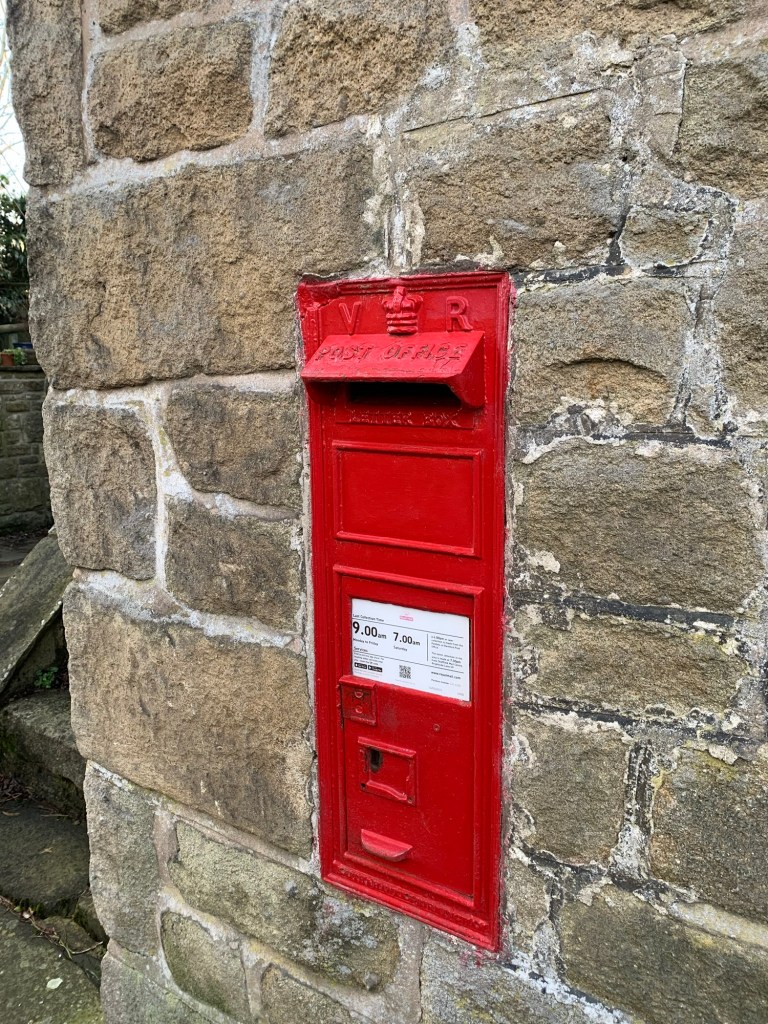
    Further along we come to the next hamlet of Thornhill with its converted chapel, now a picture framers and, an unexpected high point of the day, a V for Victoria post box!

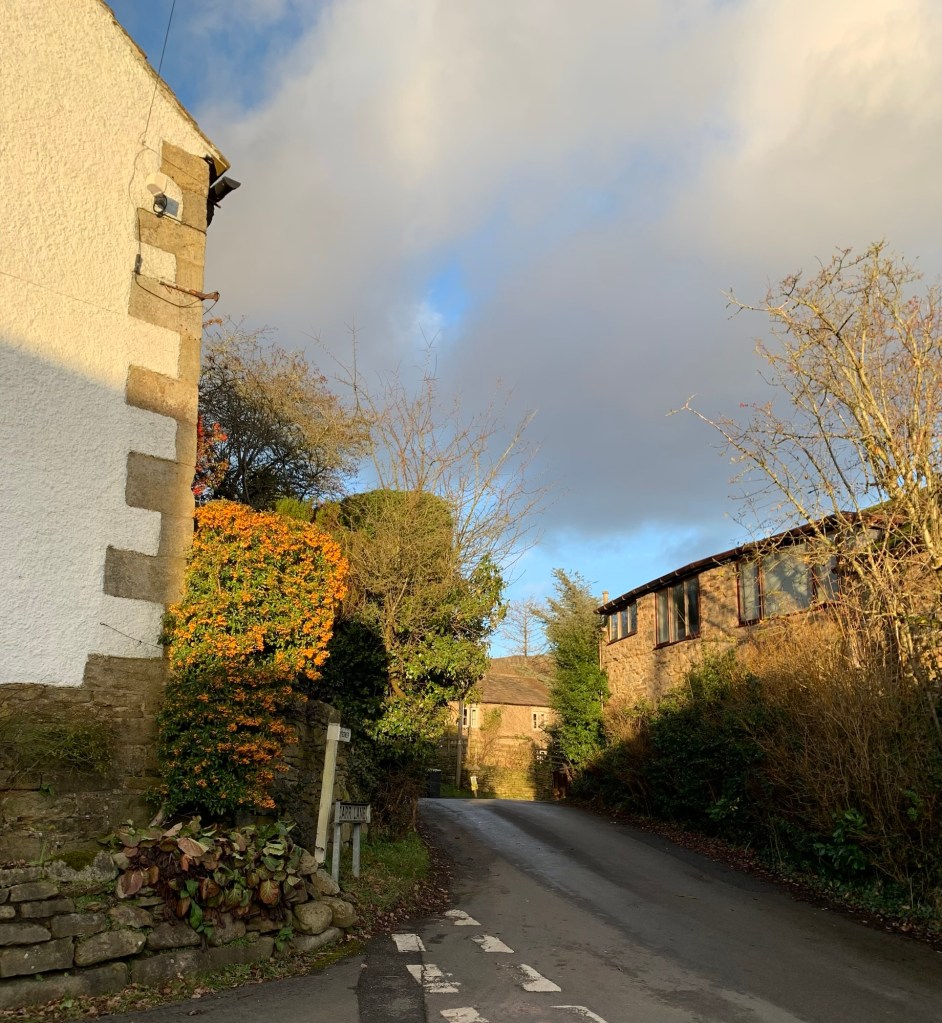
    At the T junction we head left along Carr Lane signed towards Ladybower.

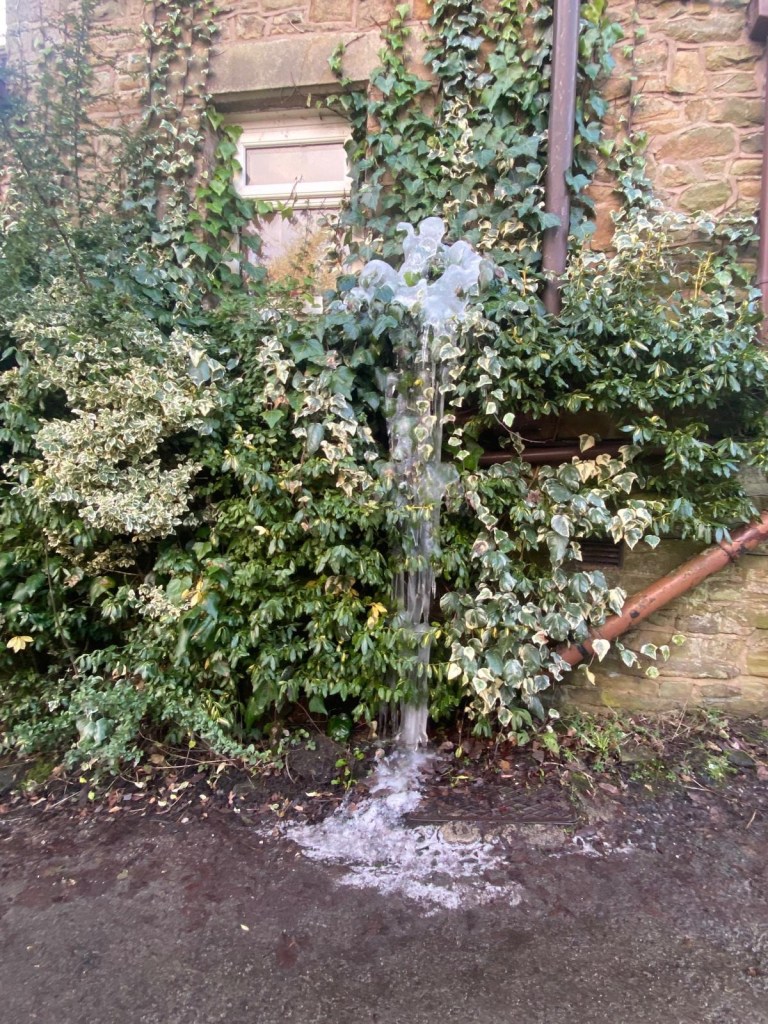
    Along Carr Lane on the side of a building we are treated to an accidental ice sculpture which reminds us just how cold it is. Maybe it’s a warning of what’s just around the corner….

    Just after this and before a private roadway on the right is a finger post taking us down onto the old railway track.

    Aside from the frozen down pipe this is the first ice we’ve encountered since leaving home and although it looks nightmarish as all the steps are completely covered in ice, we manage to make our way through the undergrowth steeply down the side of the path. At the bottom at least we have the gate to hold onto as we skate through to the railway track. Unfortunately this too is sheet ice.

    It must have escaped the sun all day and it’s definitely getting colder rather than warmer now. No matter, once again we walk along the edge of the track through the undergrowth and we even get chance to pause and look across the valley to a shadowy Bamford Mill and a sun-soaked Bamford Edge.

    Once we get alongside the old Water Board house ( of later years a Quaker community) everything is strangely once more back to normal-going underfoot. 

    For some reason I find the paths here confusing so, in case you do too, first we have the Quaker house building on our left as we emerge from the railway track and with the gate to the allotment gardens straight ahead of us.

    Then we turn left along the lane, passing the front of the house

    and then we turn right through a footpath in the corner of the bend.

    This path takes us across the field and then right under the railway line

    and out onto the main A6187 just next to Bamford Garden Centre.

    We’re just in time for a takeaway coffee from the Wild Kettle which we take with us to the bus shelter at Bamford turn around. 

    We don’t even have time to get cold waiting for the bus, partly due to the nice hot coffee and the shelter of the shelter…. But also due to the promptness of the 272 which is soon hurtling us back to the city of Sheff after our first alphabet walk of 2026, and a very good start to the year.

    We’ve got a number of ideas for P but we’re trying not to get too excited because we need to see what next week’s weather has in store for us. 

    Mind you, here we are being very careful and moderate…. look at this lot climbing The Downfall! Now there’s an adventure.

    https://footpathapp.com/routes/8C64954F-68E2-49DE-A9AC-86953566EC06?units=metric

    Transport 

    272 from Sheffield to Castleton 

    272, 257 or train home from Bamford to Sheffield 

    Pubs/Cafes

    Numerous options in Castleton, we’d probably recommend Three Roofs Cafe or the Old Cheshire Cheese 

    Several options in Hope, our favourites mentioned with links in the text 

    Bamford 

    Wild Kettle 

    How far?

    Around 16k

    Route Synopsis 

    Castleton, Broken Road, Odin Mine, Odin Sitch, Dirty Lane, Hope, Aston, Thornhill, Bamford.

    Dogs?

    Yes….maybe a chance of orange paws?!

    Map

    OS Dark Peak 

  • N is for North Lees Hall

    Today we start our walk from Miller & Carter at Park Head.

    The buses that travel this far along Ecclesall Road from town include the 81, 272, 65 or 218.

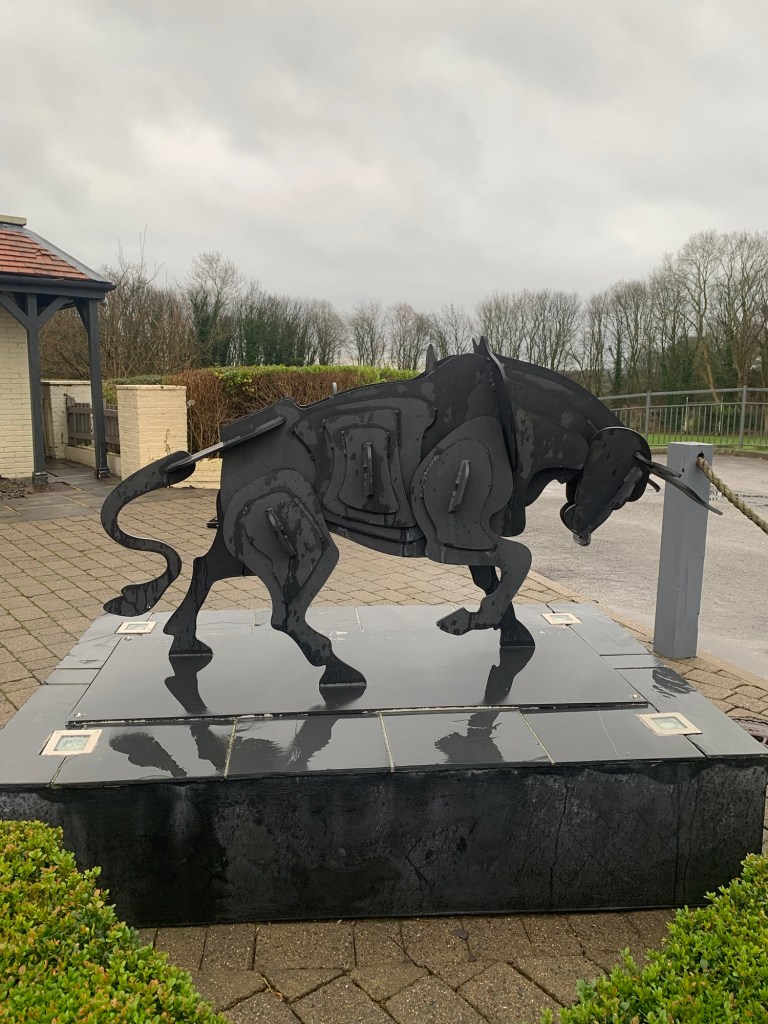
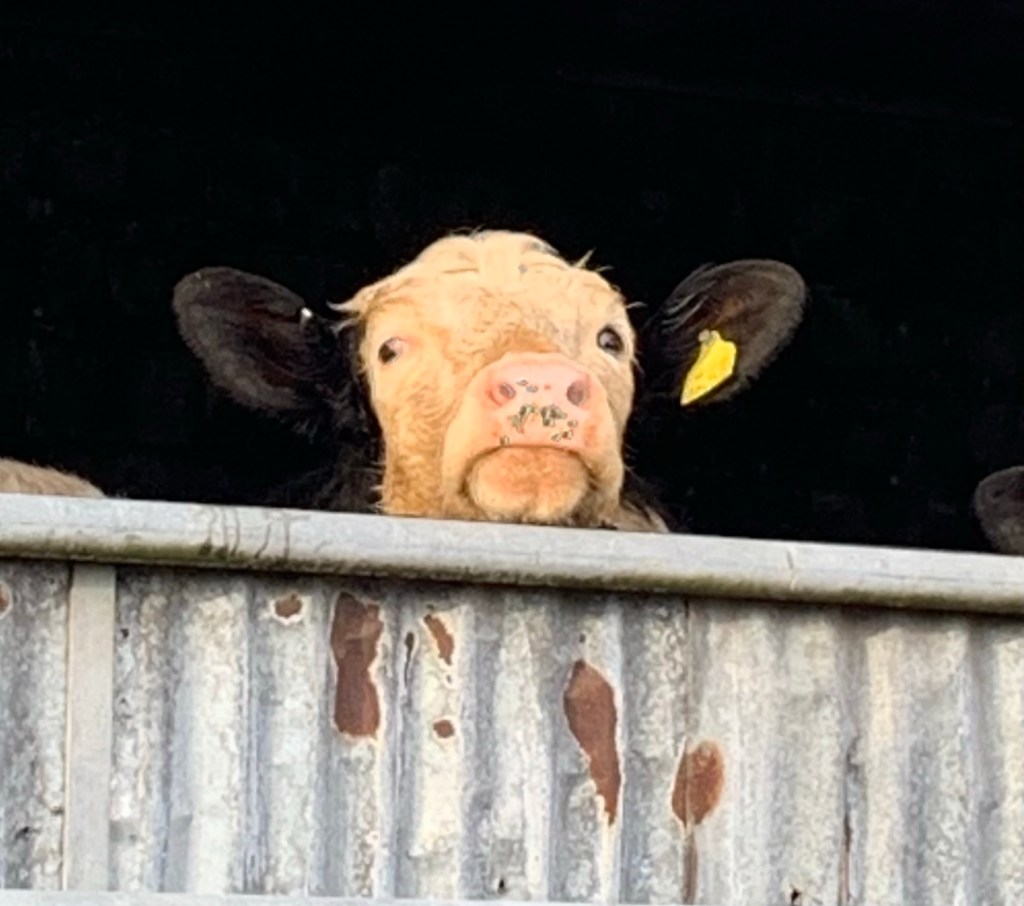
    As we alight, we make our first and only encounter of the day with a bull….this is the kind of bull we’re both very happy to make an acquaintance with. 

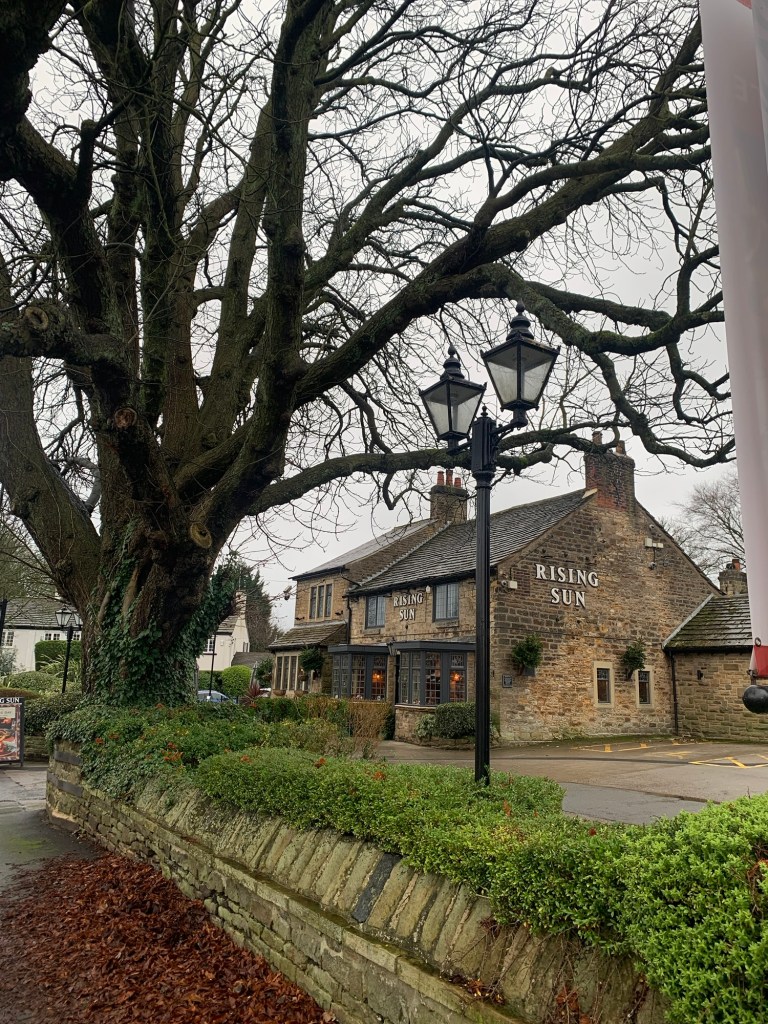
    We walk down the first part of Abbey Lane until we cross over to the Rising Sun pub. If it was later in the day this is a good place for an actual pot of tea, would you believe?

    And it’s definitely not the ruin of either of us poor girls by the way …..but of course it’s not; the Rising Sun of the song was in New Orleans and we’re about to walk through Whirlow. 

    If you just think of Whirlow as a fairly recent up-market suburb then maybe you should think again as here and there on this first section of our walk are tantalising glimpses of old Whirlow and, as archeology groups have discovered, some of it is very old indeed.

    As we walk up Little Common Lane we say a quick hello to St Luke’s; such an amazing Sheffield institution that continues to do so much for so many people when the chips are down.

    The history of Clifford House, now part of St Luke’s is well worth a read and also provides a general insight into the area.

    As we cross Ecclesall Road and continue along Whirlow Lane it’s easy to imagine the lane as it would have been prior to the building of the turnpike road ( now Ecclesall Road). Continuing up hill and around a corner to the left we see further dwelling houses and old farm buildings that have obviously been around for centuries.

    At the T junction with Broad Elms Drive we turn left towards Whirlow Hall Farm.

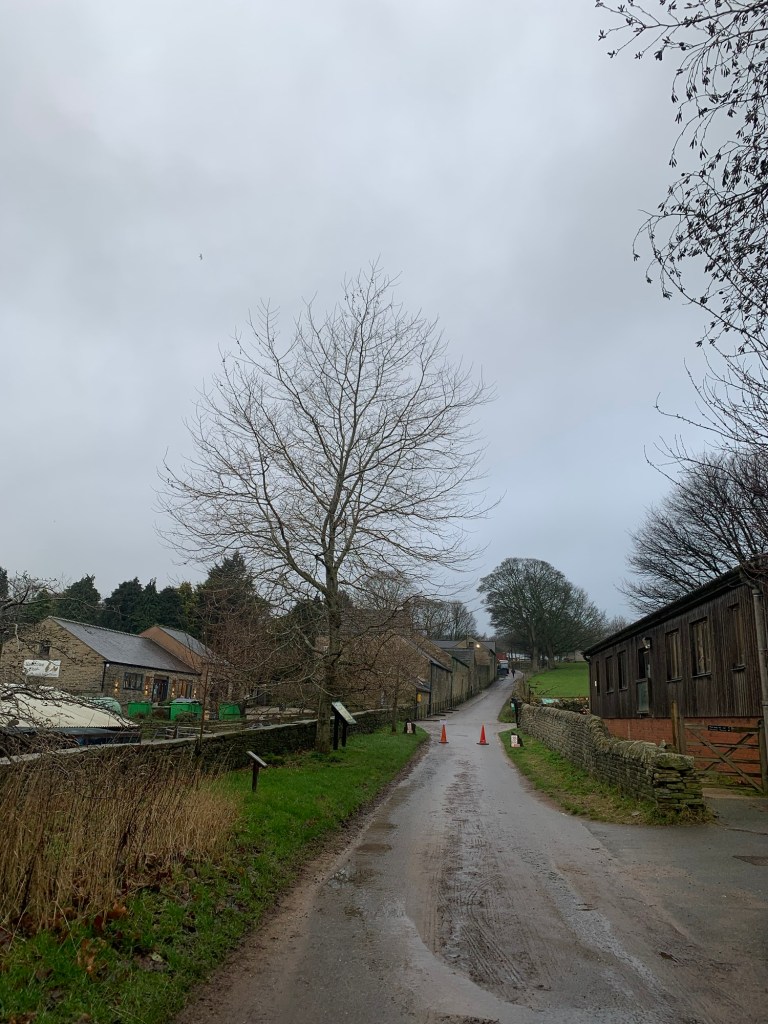
    We’ve been walking for less than half an hour and here’s the second amazing Sheffield institution of the day. 

    We take the lane through the farm yard

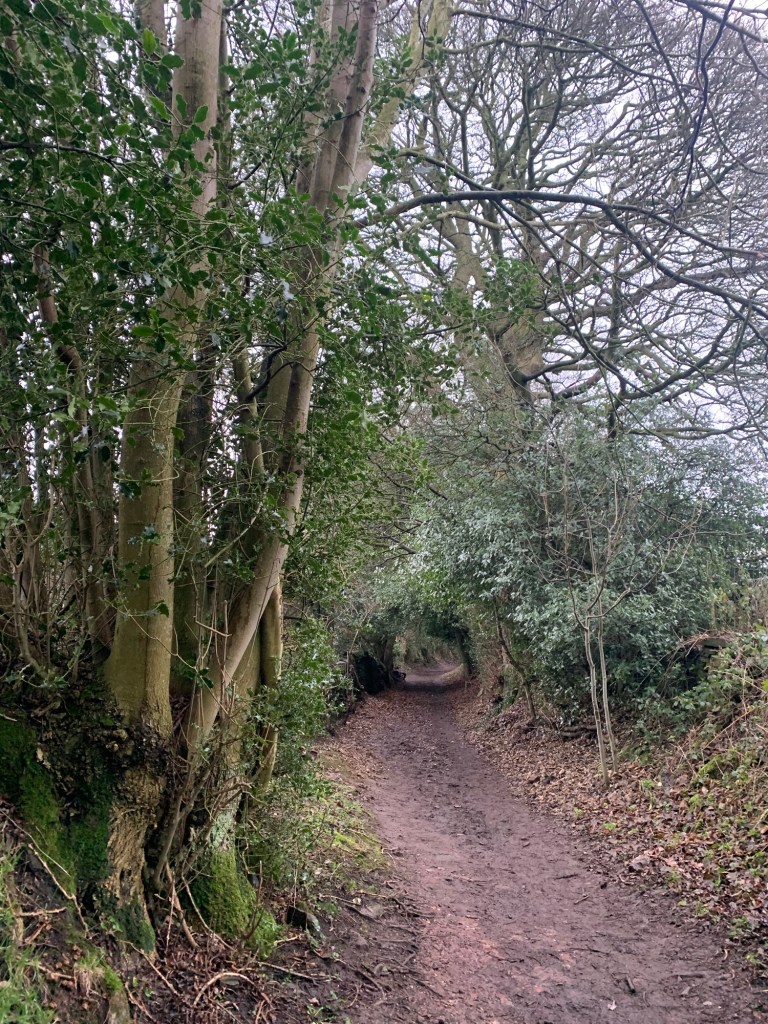
    and at the top we turn left onto an atmospheric old trackway known as Fenny Lane

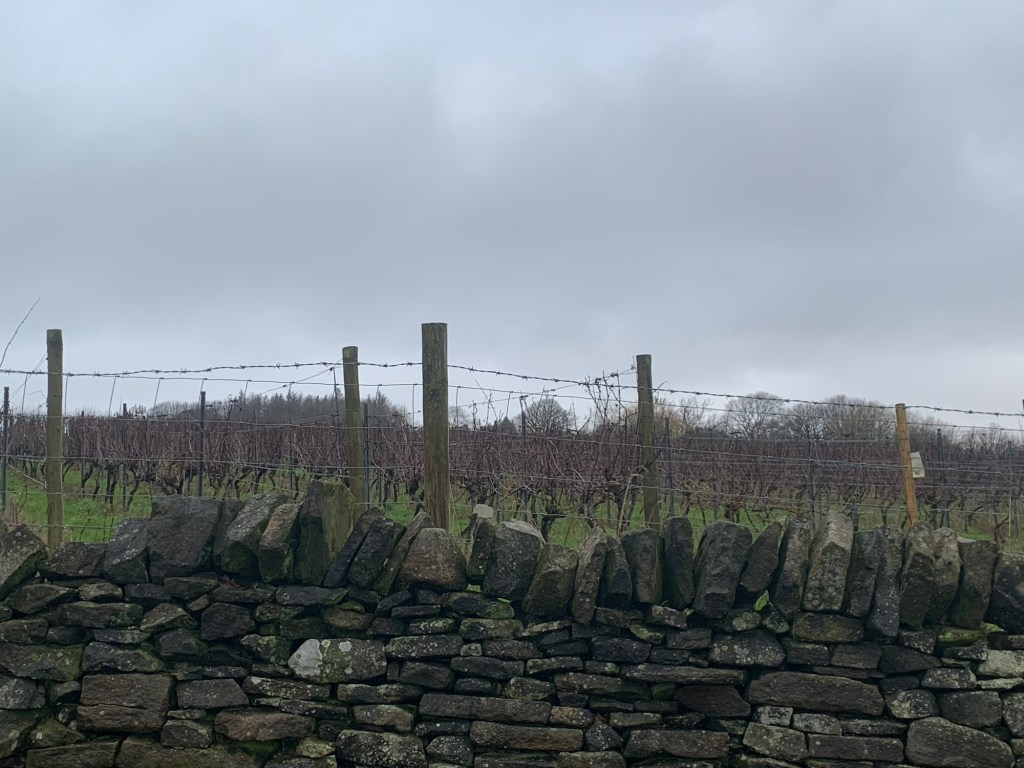
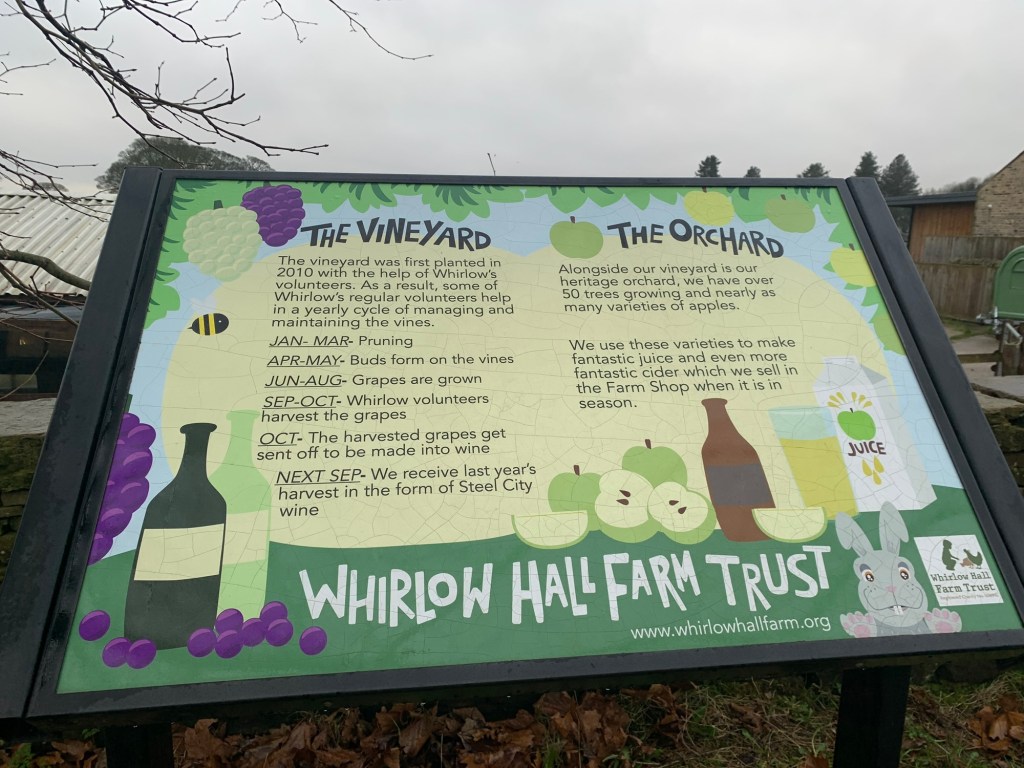
    before taking the first stile on our right over the field (next to the vineyard no less, although it’s not looking very Mediterranean today)

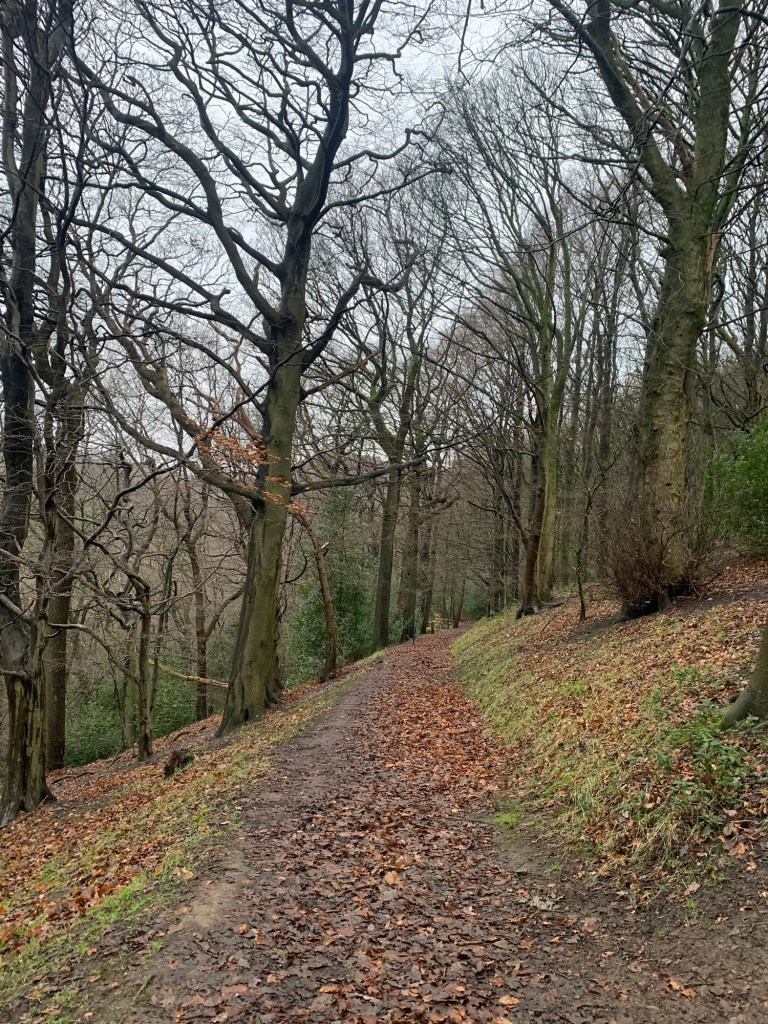
    to where a further stile takes us onto a descending path through the woods to join the main path up the Limb Valley.

    https://www.archaeologicalresearchservices.com/Whirlow%20Heritage%20Trial.pdf

    There’s so much history here…..archeology groups have found evidence of a Roman settlement at Whirlow and it’s thought to have been pre-dated by an Iron Age settlement even earlier still.

    The high vantage point of the area near the farm must have been of strategic importance and this sheltered valley of the Limb Brook would have been handy for sheltering livestock.

    The name Limb itself is probably linked to the word Limit (rather than a body part!) and it’s thought that the brook was the border between the ancient kingdoms of Mercia and Northumbria before also becoming part of the border between Yorkshire and Derbyshire later, for many years.

    Part way along the path the trees are especially atmospheric, after which the woods gradually give way to smaller trees and scrub as we climb up towards the top of the valley.  

    Before the path ends at a junction with Sheephill Road we pass an area of old coal mining debris on our right and it’s fascinating to think how many changes this, now rural, landscape has been through.

    We turn left briefly along Sheephill Road (although it would be possible here to turn right and pop into the Norfolk Arms for refreshment if required) and then branch off right onto the car parking area at the beginning of the path over Houndkirk Moor.

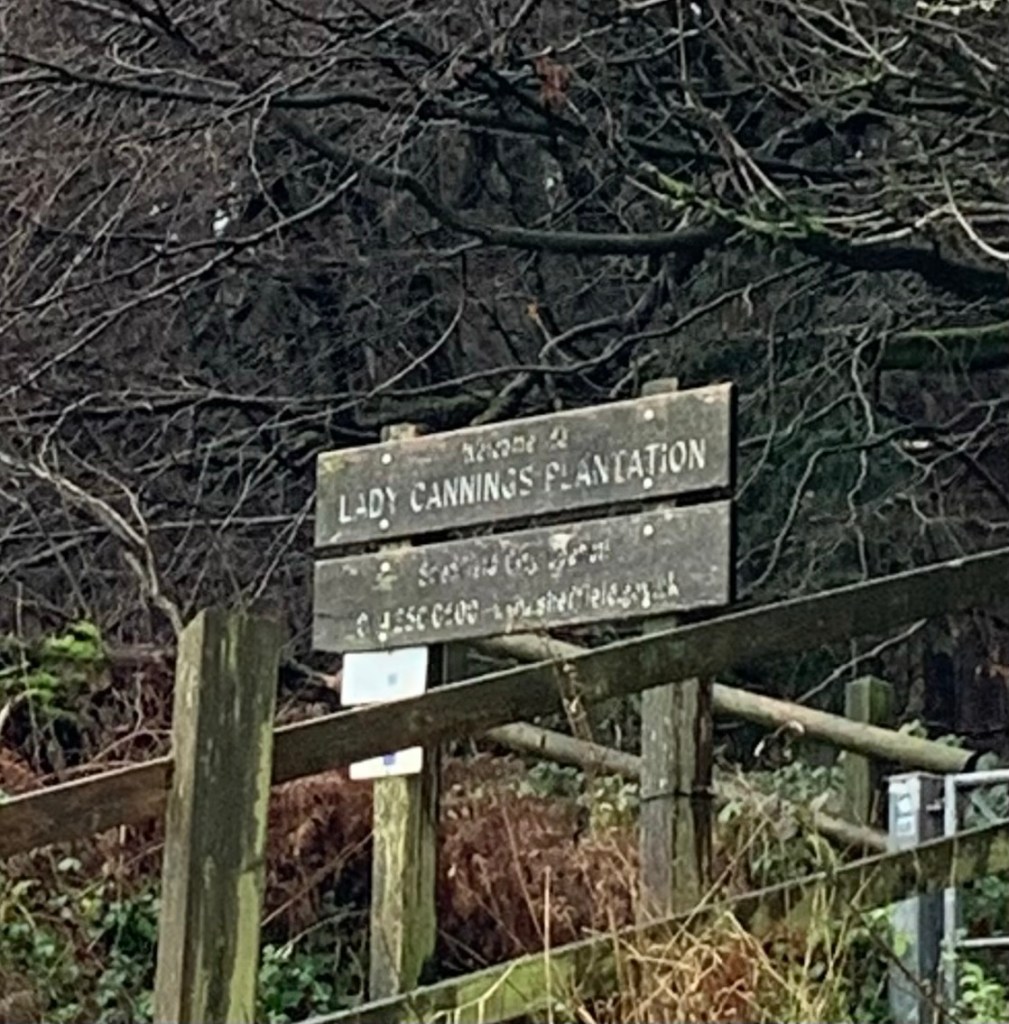
    Then we quickly branch off right onto the path between the conifers, through Lady Cannings Plantation.

    This is part of the mountain bike circuit known as Cooking on Gas which must have introduced thousands of people into mountain biking since it was set up in 2017. Its a great example of what can be done when different groups partner up ( Sheffield Council, Ride Sheffield and the Go Outdoors outdoor gear shop, for example) although, due to it’s popularity, it’s taken so much hammer since being established that there’s currently a big crowd funding initiative underway to try to get some major repairs done.

    We keep on the main path that heads straight up through the plantation and pop out of the trees at the top where we notice the weather is beginning to pick up.

    We head right along the track which meets the Ringinglow to Hathersage Road and cross straight over to continue along the open moorland path on the opposite side of the road. 

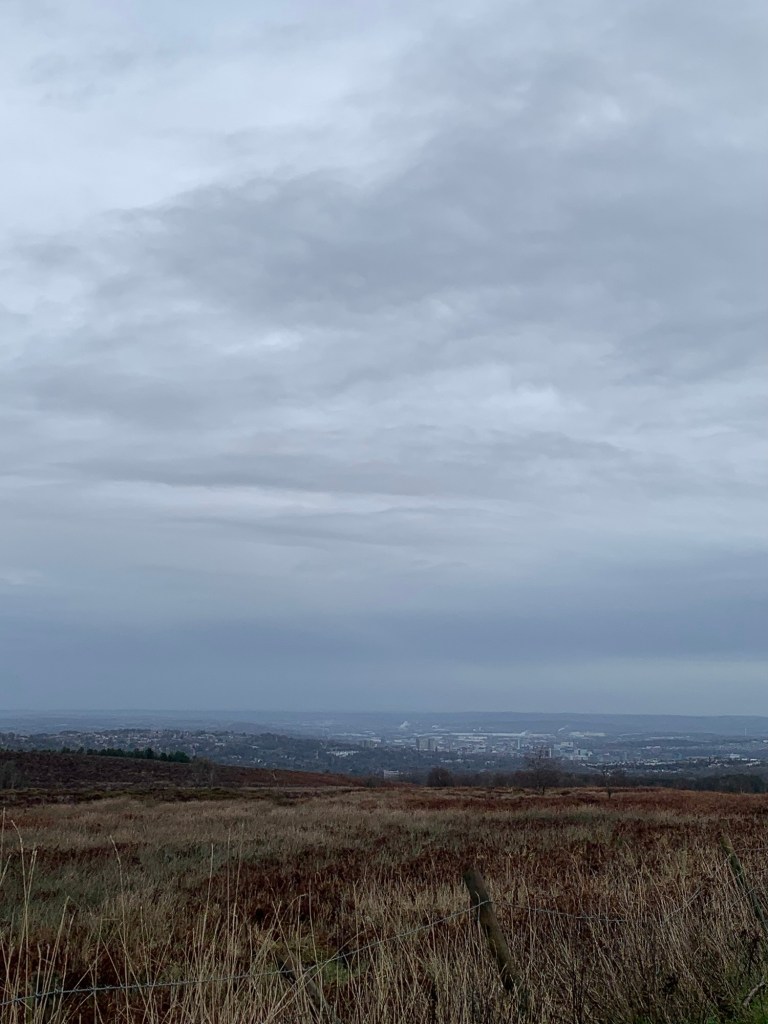
    We think the views of Sheffield from here are some of best there are and it’s great that today is now managing to give us some vistas after a wet and gloomy start, the haziness just adds to the effect.

    Ringinglow itself is a rather lumpy and bumpy affair ( the moor not the village) and this is mainly due to the remains of more mines and quarries although it’s thought there could be a bit more pre history thrown in for good measure.

    The route finding just needs a little care as we keep straight on past the white posts

    and then straight on again at the small footpath marker,

    taking care not to not veer off to the right onto the other path.

    We head through some old quarries in a roundabout kind of way but keep our sights on Brown Edge Farm which can be clearly seen straight ahead. Once onto a grassier area it’s easy enough to spot the way over to the stile which leads onto the footpath through the farm.

    Heading through the next gate we just keep on through the main stock yard,

    pausing to take a quick photo of an inquisitive cow,

    and then follow the driveway down to where it meets Fulwood Lane, enjoying yet more splendid views ahead.

    We walk left along the lane and just as we pass Knoll Top Farm on our right we take the path signed off to the left, through yet more evidence of old industrial activity.

    The path turns to the right and then meets a  broader track which we  cross at right angles and climb a stile to follow the path down the wall side to join Brown Hills Lane.

    We head left along the lane for a few hundred metres and then keep straight on through the very obvious bright blue water board gate.

    This path will lead us all the way around the three reservoirs that make up Redmires.

    By now we can hardly believe our luck YET AGAIN with the weather and the combination of the sun and the stillness makes for some stunning reflections on the water.

    The path around the resrs is imprinted on my memory as a wet and boggy one but, probably because I’ve been avoiding it for a while on this basis, I’m in for a very pleasant surprise with several stretches of stone flagging making life a lot easier than it used to be.

    We’re soon at the bottom of the track that will take us up to Stanage Pole

    and as I notice some more stone flags, this time of the very old variety, I recall a book I read about The Long Causeway, which attempts to trace the origins of this path as an old pack horse route all the way out from Sheffield town centre to Hathersage.

    There’s a disputed theory that this is also the course of a much older Roman route way which might have led from Templeborough ( Rotherham) to Navio ( Brough), either way, we’re definitely not the first people to have walked up here.

    And, if it’s views you’re after the 360 degree panorama from the pole takes some beating.

    Once past the pole we only continue a little further along the Causeway because we need to drop down to the left below the Edge and onto the path through Stanage plantation.

    Besides offering spectacular views back up to the rocks this also emerges conveniently next to a toilet block. 

    The path continues through the woods below the toilets

    and hey presto, here we are at today’s N; North Lees Hall.

    What an amazing building…we have to confess to being nuts about the Brontës so it’s off to a good start as the inspiration for Rochester’s house in Jane Eyre.

    Now owned and rented out by English Heritage I was once lucky enough to visit here on an English Heritage open day and even got to pace back and forth across the roof re-imagining the epic of the fire and Bertha’s death.

    But there’s a load more history to this place and its location surely makes it a striking building to visit whatever your interests.

    We’re very happy to have chosen it as our N.

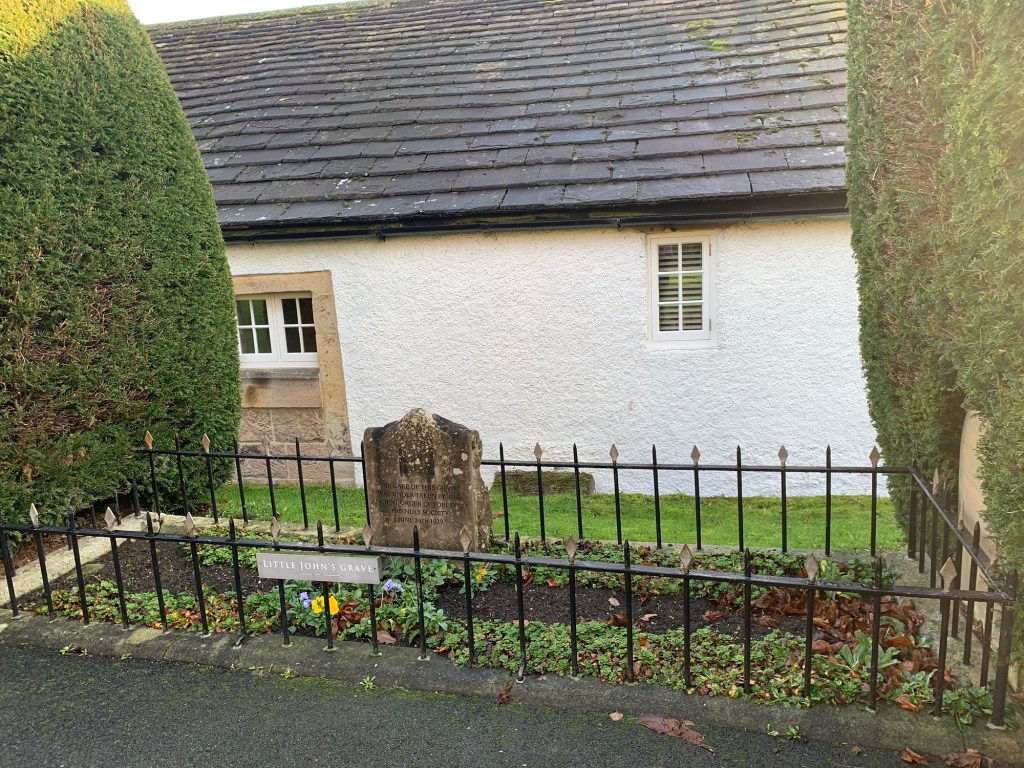
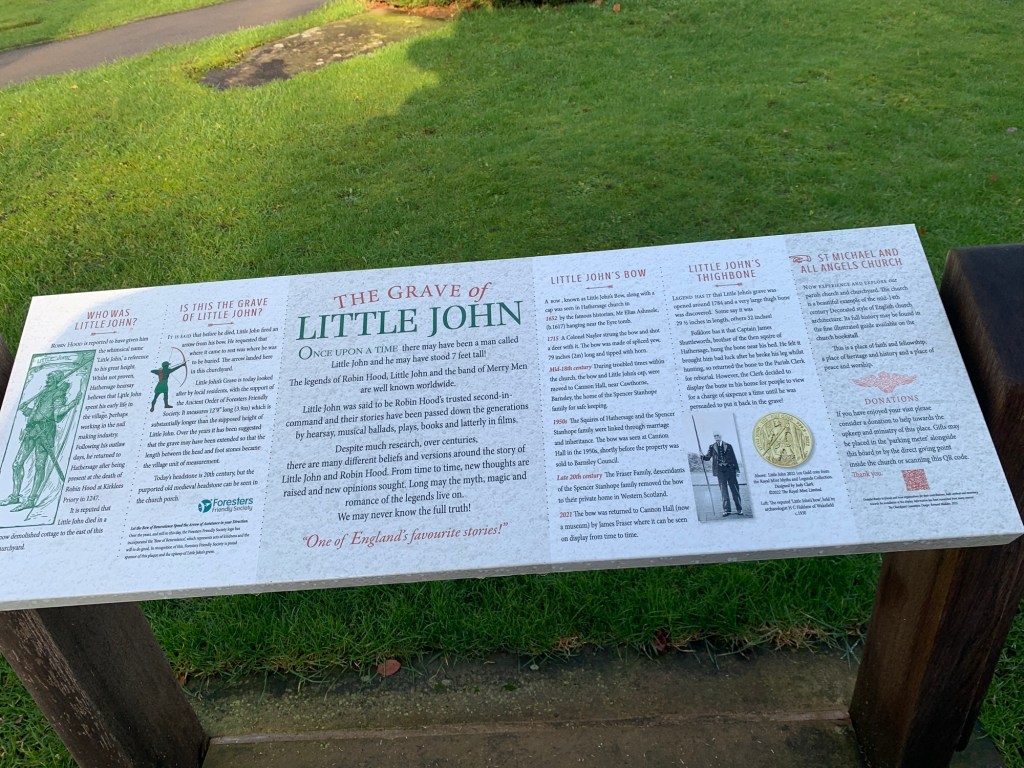
    The fun’s not all over yet though as we continue on our way towards Hathersage via the footpath at the bottom of the drive to North Lees , around the back of Cowclose Farm and finishing with a climb up to Hathersage church ( up a steep bank that’s part of an ancient Norman earthwork known as Camp Green) and featuring a passing visit to Little John’s Grave before we head to the Pool Cafe for our refreshment.

    we are returning to Sheffield by train but buses are another possibility with the 272 heading into town via Fox House or the 257 which heads into the city along the Manchester Road.

    We have thoroughly enjoyed this walk and heartily recommend it to you all.

    Transport 

    81, 272, 65 or 218 from Sheffield to Park Head

    Train, 272 or 257 from Hathersage to Sheffield 

    Pubs/Cafes

    Rising Sun

    Whirlow Hall Farm cafe 

    Norfolk Arms

    Pool Cafe Hathersage 

    How far?

    Around 20k

    Route Synopsis 

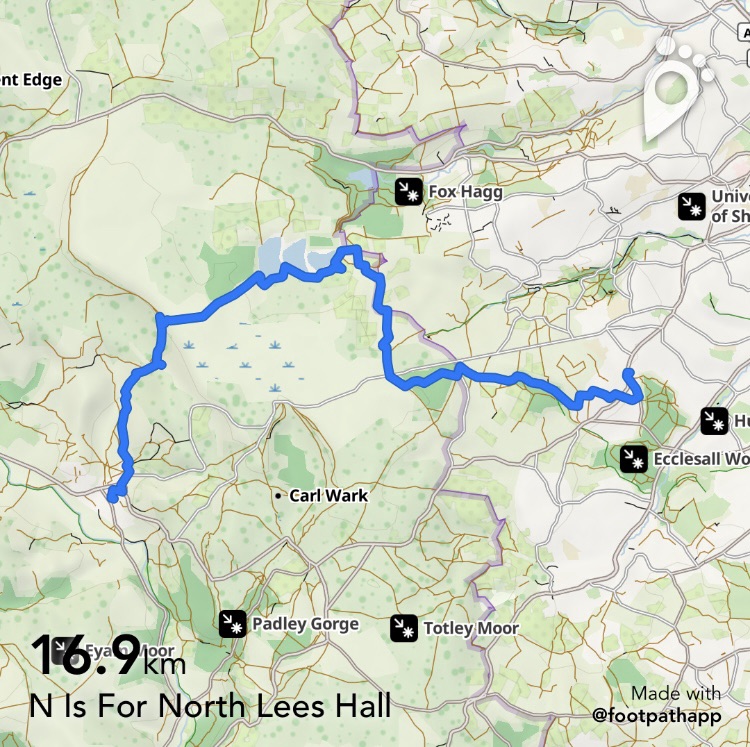
    Park Head, Whirlow, Ringinglow, Redmires Reservoirs, Stanage Pole, North Lees Hall and Hathersage 

    Dogs?

    Yes….we saw lots of them today!

    Map

    OS Dark Peak 

    https://footpathapp.com/routes/F1D0987F-C172-44D0-BAC1-07DD71D5EB72?units=metric

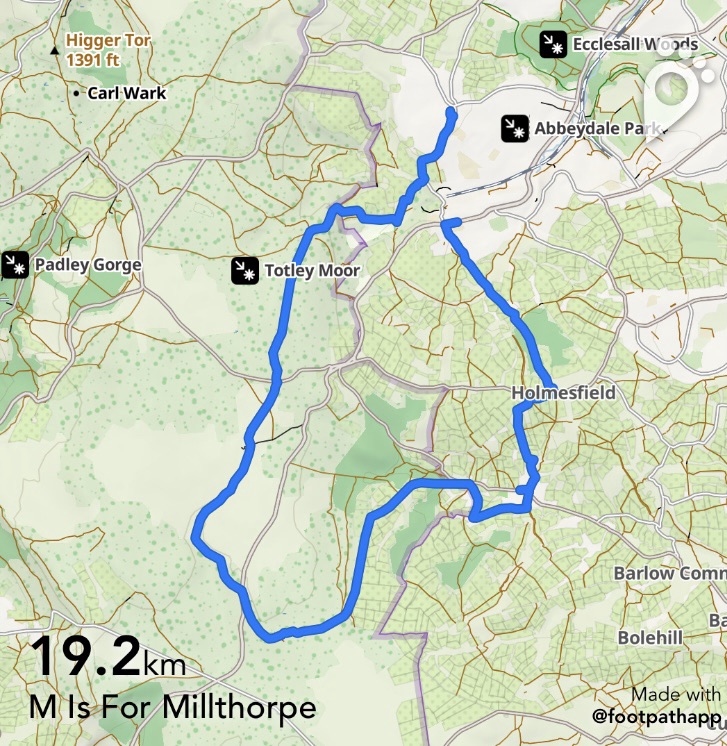
  • M is for Milthorpe

    Today we start by catching the 81 to Dore. Dore is the southern terminus of the bus route and we get off at the last stop which is opposite the Co-op.

    We walk back along Devonshire Terrace Road, past the garage on the corner and take a right along Church Lane where we soon pass the church.

    The church has recently had a makeover and is looking very smart. Originally it was built by Richard Furness who seems to have had his finger in lots of pies back in the late 18th/early 19th centuries.

    Although born in Eyam apparently he was the local school master here in Dore, not to mention also being the doctor, surgeon and vicar besides drawing up the plans for the church.

    His life story is certainly a colourful one.

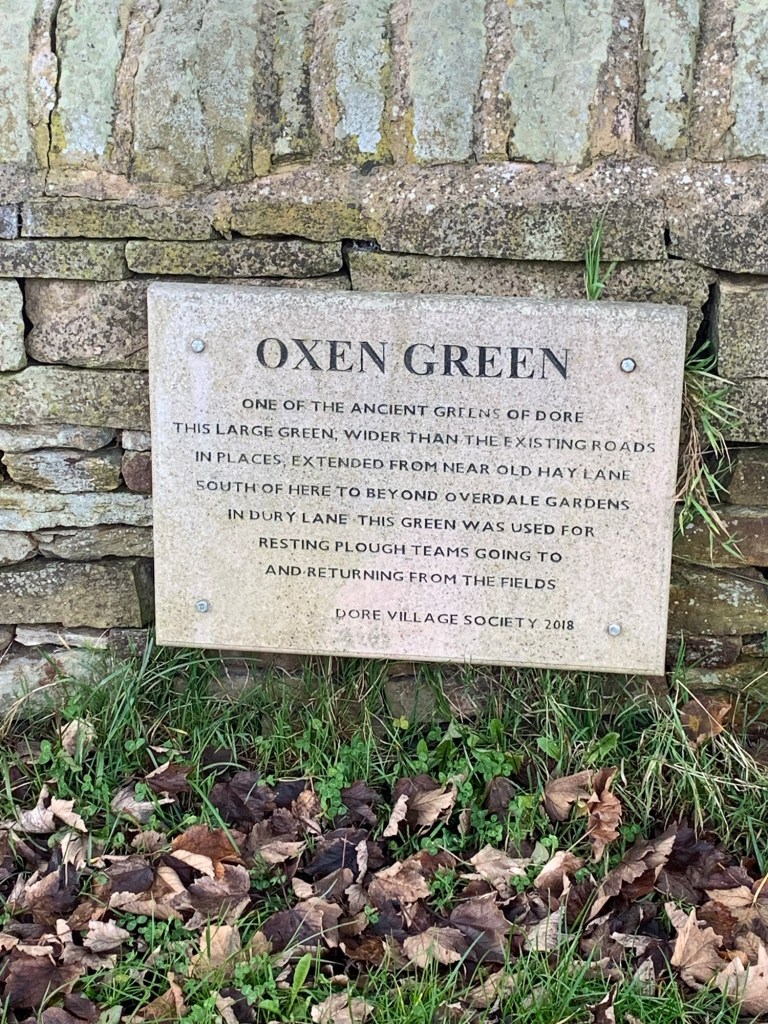
    We pass onwards along Church Lane and after the junction with Furniss Avenue ( different spelling, different guy?) we briefly cross over to read a plaque about one of the ancient village greens of Dore.

    The Dore Village Society has done a lot of local historical research on the area and there’s even a village trail if you want to find out more.

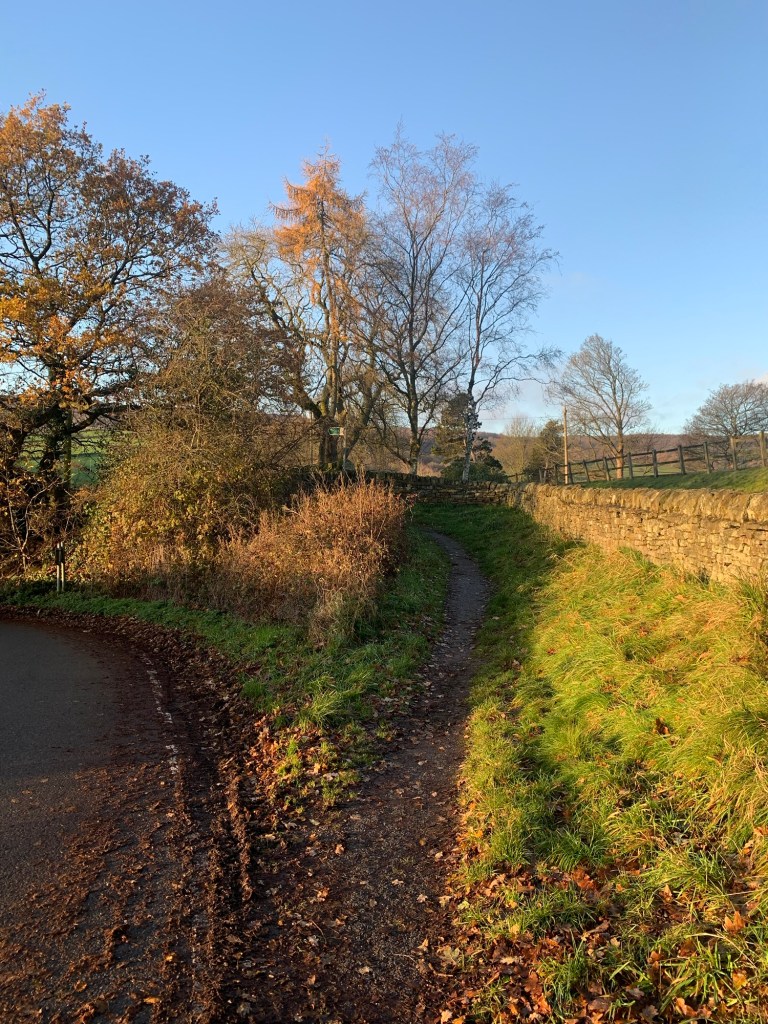
    Part way along, Church Lane changes it’s name to Old Hay Lane and just before the road turns sharply to the left we continue straight on, ignoring the driveway to Broadstorth Farm

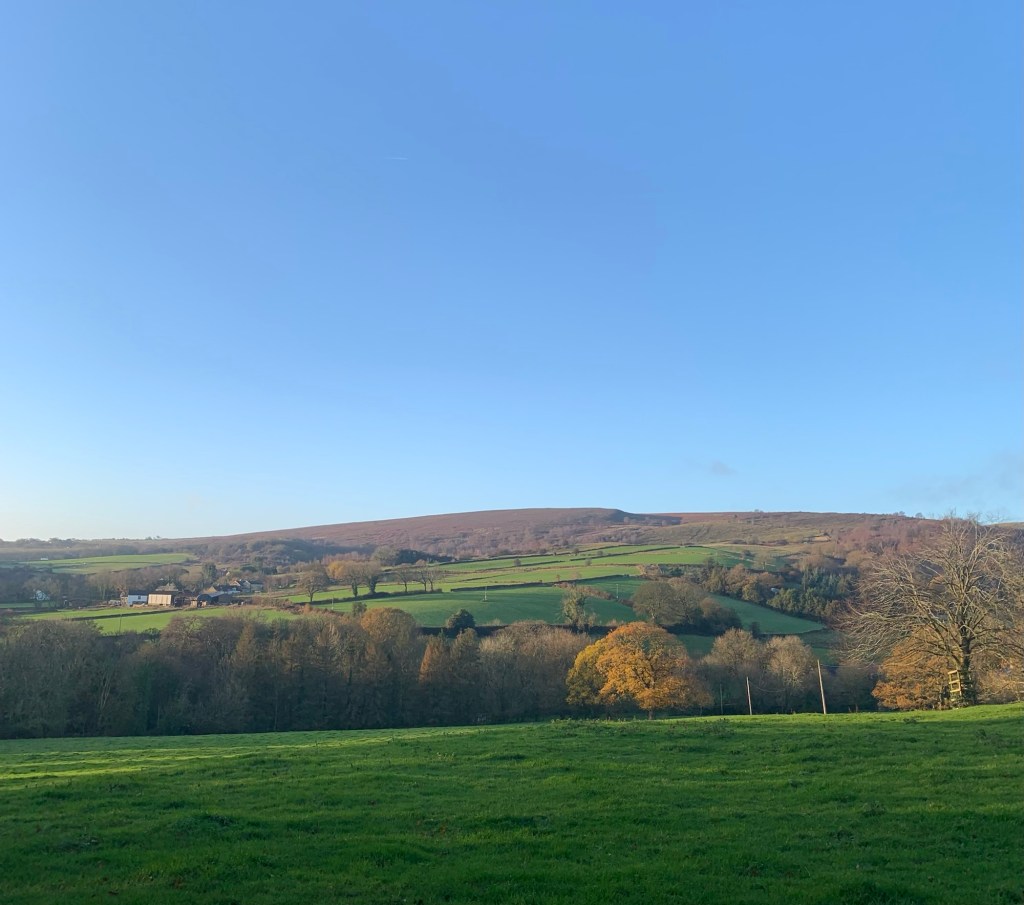
    and clambering over a stile to be rewarded with instant views of Totley Moss and Blacka Moor.

    The path runs down the field parallel to the wall and parallel to Old Hay Lane. It’s probably safer than continuing on the road which has by now become very narrow and like a sunken hollow way, ( which I think means it has to be a VERY Old Hay Lane indeed.)

    At the bottom of the field we climb another stile and cross the driveway leading to Avenue Farm to a small gate

    which leads us down steps and over a stream, Blacka Dyke (or Old Hay Brook?)

    We turn right past some buildings which used to be part of a mill and just when it looks as though we’re going to arrive at someone’s front door

    we do a left and a little dog leg onto a field path with views of the open moorland once more.

    At the end of the field path we pass some more buildings

    and at the lane we turn briefly right and then left along Lane Head.

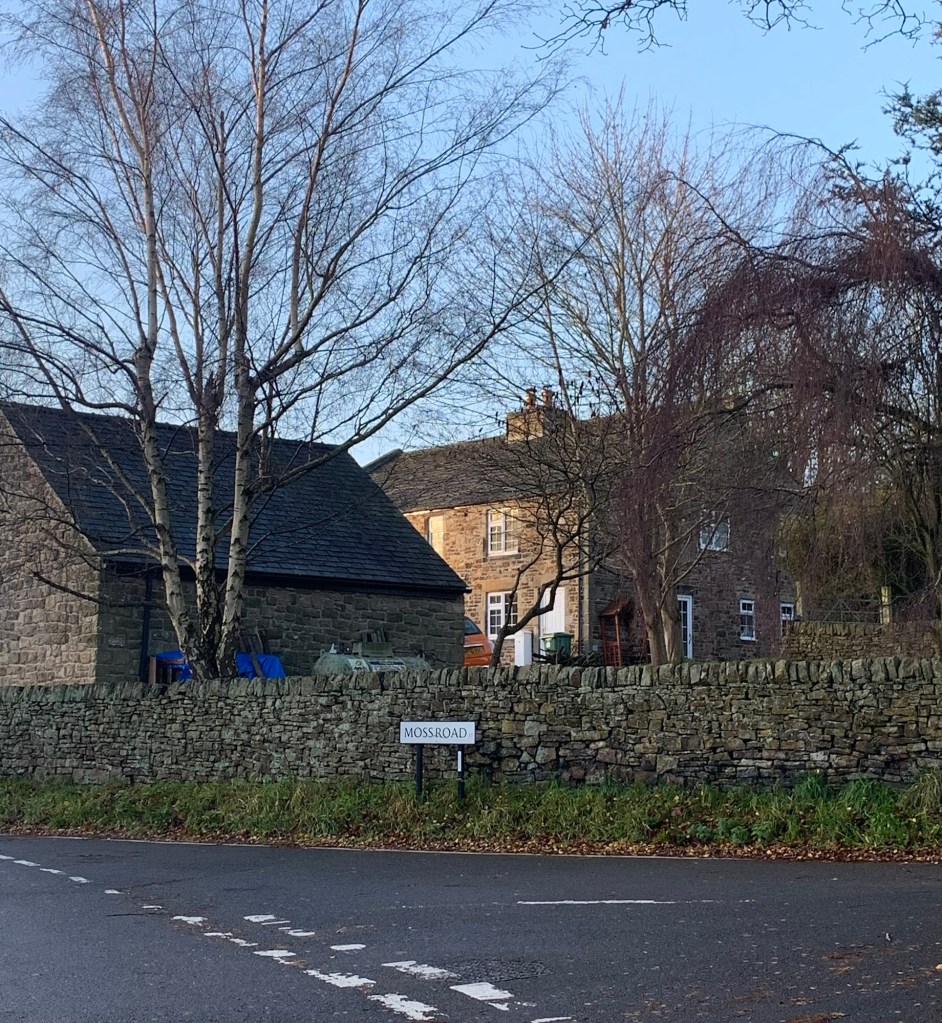
    Now we’re looking out for Moss Road on our right, which will take us up onto the moor.

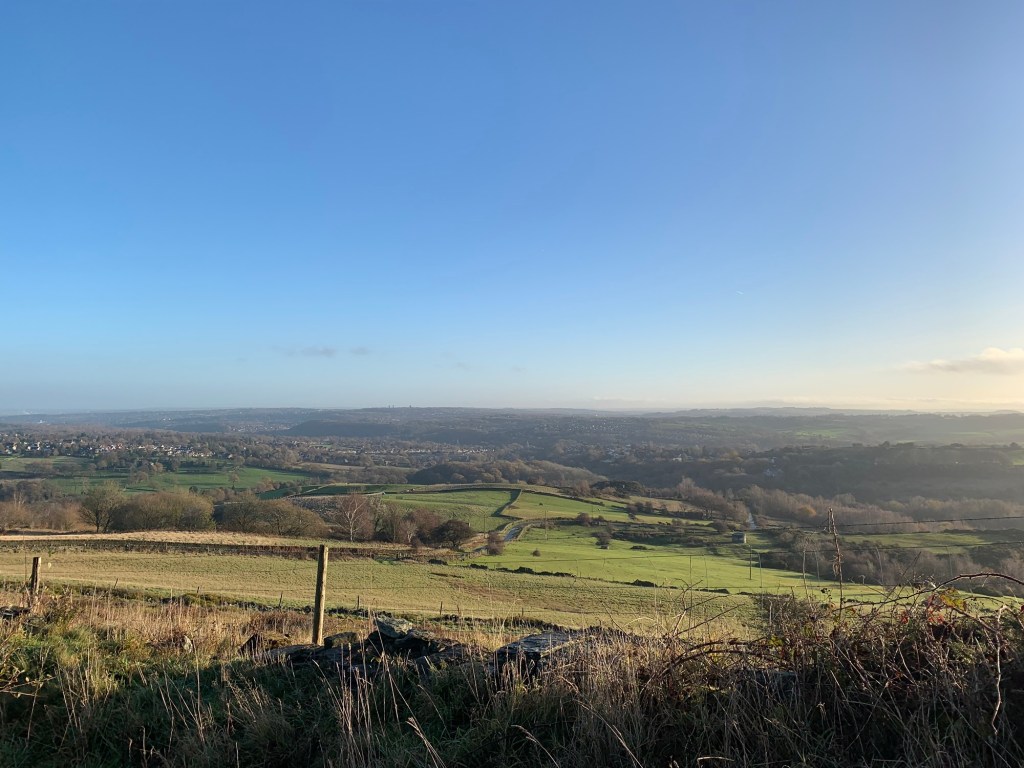
    We have been incredibly lucky with the weather yet again and as we gain height the views back over Abbeydale and towards Sheffield are spectacular.

    The lane turns left and becomes a track after a drive straight ahead leads to the remote residence of Bolehill Lodge, originally built as a gamekeeper’s lodge but with obvious references to lead smelting living on in its name.

    We climb a bit more and then we’re at the gate onto the open moor.

    We go through the gate and keep straight ahead, ignoring the first path which is almost immediately on our left. 

    However as we walk we are looking out for the next path to the left which initially is not as clear as the main track across the moor.

    Today a dog walker conveniently shows the way. If you find yourself dropping down to a footbridge retrace your steps, you have turned off too soon! Keep climbing up a little further….

    It’s a wet patch of moor at the best of times but we manage to pick our way through without getting a boot full and once past the massive cairn over to our left on Brown Edge the views ahead open up and the path becomes firmer under foot.

    There’s been much speculation about the cairn with suggestions that it might be prehistoric in origin, aligning with the sun and Whirlow and all manner of theories. In fairness there does appear to be evidence of an ancient stone circle nearby.

    However I can’t help enjoying the story of the bored 1980s college student having built it whilst living in (now demolished) student accommodation in Totley.

    The track meets the busy Owler Bar to Fox House B6054 by an enclosure which I think is something to do with the Gas Board and we cross straight over to the path opposite as we begin our walk across Big Moor. 

    The footpath arrows point right

    but we plunge straight ahead over some more wet stuff. Surprisingly though, compared with some of my visits to Big Moor it’s not too bad and we’re soon passing another isolated dwelling on our right, Bar Brook Cottage. 

    Currently an HQ for the Eastern Moors Partnership I imagine this was originally a Water Board construction as are many of the paths we’re following today. easternmoorshistoryandarcheology.wordpress.com

    We cross straight over the tarmac driveway to the house and head straight on once again.

    By now we’re on a well drained track which makes for delightful walking and everything near and far looks so beautiful today in the bright light of the low winter sunshine.

    We pass the little reservoir which these days is often frequented by wild swimmers but there’s no one braving the elements today.

    There’s an odd sculpture that we feel obliged to take a photo of and then we are onto the edge of the area of the moor which is well known for its prehistoric significance.

    Over to our left we spot a couple of stone circles without even leaving the path but if you’re interested and have a few hours to spare there’s a lot more to be seen further off piste.

    Over to our right on the other side of the stream we can see the plateaued area known as Swines Sty which is reputedly the site of an ancient neolithic settlement

    and which involves even rougher walking and is even further off piste if you’re really intent on rediscovering the distant past.

    If you’re happy just sticking to the path perhaps it’s sufficient to say that one of the archeological curiosities of the moor is how it seems as though the living quarters are situated on one side of Bar Brook while the burial sites and stone circles are on the other. 

    Pondering such things we come to the end of the track and have to move swiftly back into the 21st century in order to nip across the busy A621 Sheffield to Baslow Road

    but straight opposite we’re immediately back on another good track which takes us to Ramsley reservoir and then onto Fox Lane.

    Either path will work out fine here as both lead onto Fox Lane

    We turn left along the lane which is quiet enough today and then at the T junction we head straight on through the trees with Shillito Woods car park above us on our right.

    Now there’s also a footpath option at the T junction ( through the white gate) which I’ve always taken previously but although it can be very pretty in the Spring I also remember it regularly being a bit of a mud-fest so today we’re staying on the tarmac instead.

    This choice turns out to be a good one because for a start we only see one car the whole time but more importantly due to being elevated as opposed to being on the path in the valley bottom, we get some cracking views. In fact we even reckon we can see part of our route to Ingmanthorpe from last month’s walk for I.

    In the opposite direction we can see back over towards Brown Edge and the cairn, Totley Moss and Big Moor, where we were just a few hours ago.

    Our road heads steeply downhill to join the main road ( the B6051) through the Cordwell Valley but we only follow this briefly to the right before we turn right again along the lane towards Unthank.

    We used Unthank for our U last time we went through the alphabet but we’ve not been along here since. Nothing looks to have changed though as we take the path on our left just before the few buildings of the hamlet begin, and head through the fields to Milthorpe.

    It’s a great way to approach the village and so much better than driving through it on the B road. With the stream below us on our left, our path then joins a back lane which we follow left as it leads us down to a ford and footbridge and past some of the lovely old buildings of Milthorpe including the old Mill, all tucked away from the main thoroughfare.

    At the T junction with the main road we turn left to the Royal Oak where we are looking forward to sharing a cheese board!

    It’s a lovely old pub and the food is unusual and amazing. The portions are huge and the prices are very fair. We have been here before and it’s every bit as good as we remember it. We spend most of our lunch break trying to think of ways to include Milthorpe in the rest of the alphabet walks! 

    Brim full of cheese ( and with some in our packs for later) we head back along the road to the phone box and war memorial and turn left uphill.

    After a few hundred metres there are two footpath signs to the left.

    Whereas the footpath leads straight ahead through a gate we opt for the Bridleway on the left which crosses over another stream and then winds its way prettily up the hill to Holmesfield.

    View towards Holmesfield

    On emerging from the path onto another lane we turn right

    and then right again as we meet the main road, the B6054.

    After a few minutes we’re at The Angel pub where we turn left past the rather quaint millennium garden and onto a path through woodland.

    At the end of the path we keep straight ahead on the tarmac road

    until we reach the footpath on our left which circumnavigates the fiercely private Woodthorpe Hall.

    The path is obvious and once back into the open we head downhill with more great moorland views in the now failing winter light

    to cross over Totley Brook after only a brief tangle with mud.

    Once across the bridge it’s important to head straight on up the bank and straight on again at a footpath sign in order to get to the stile which will take us along a field path and into old Totley.

    As the buildings begin we pass Totley Old Hall and the old school ( which looks like it’s having a makeover) the church down to our right and some lovely old cottages mingling in with newer builds. 

    With the old Fleur de Lys pub ( now flats) on our left we head across the crossing and turn right for the bus stop just past the Cross Scythes ( still a pub) and the end of a very satisfying walk.

    There’s a choice of buses back to Sheffield from here; either the 97 or the 218, which is always a good thing and fine by us.

    However you could easily make this into a circular walk by continuing down Hillfoot Road past The Crown and back onto Old Hay Lane and Dore, although by so doing you would be reducing your choice of buses as the only bus to serve Dore village is the 81.

    Counting our blessings with the weather gods having given us yet another amazing day out we’re now looking forward to what next week will bring us. 

    Transport 

    81 to Dore

    97 or 218 from Totley Cross Scythes to Sheffield 

    Pubs/Cafes

    Dore Cafe

    Royal Oak, Milthorpe 

    The Angel, Holmesfield 

    The Cross Scythes, Totley

    How far?

    Around 19k

    Route Synopsis 

    Dore, Totley Moor, Big Moor, Ramsley Reservoir, Shillito Woods, Fox Lane, Unthank, Milthorpe, Holmesfield, Totley 

    Dogs?

    Probably okay although there have been problems with dogs and highland cattle on Totley Moor.

    Map

    OS White Peak and a little bit of Google Maps 
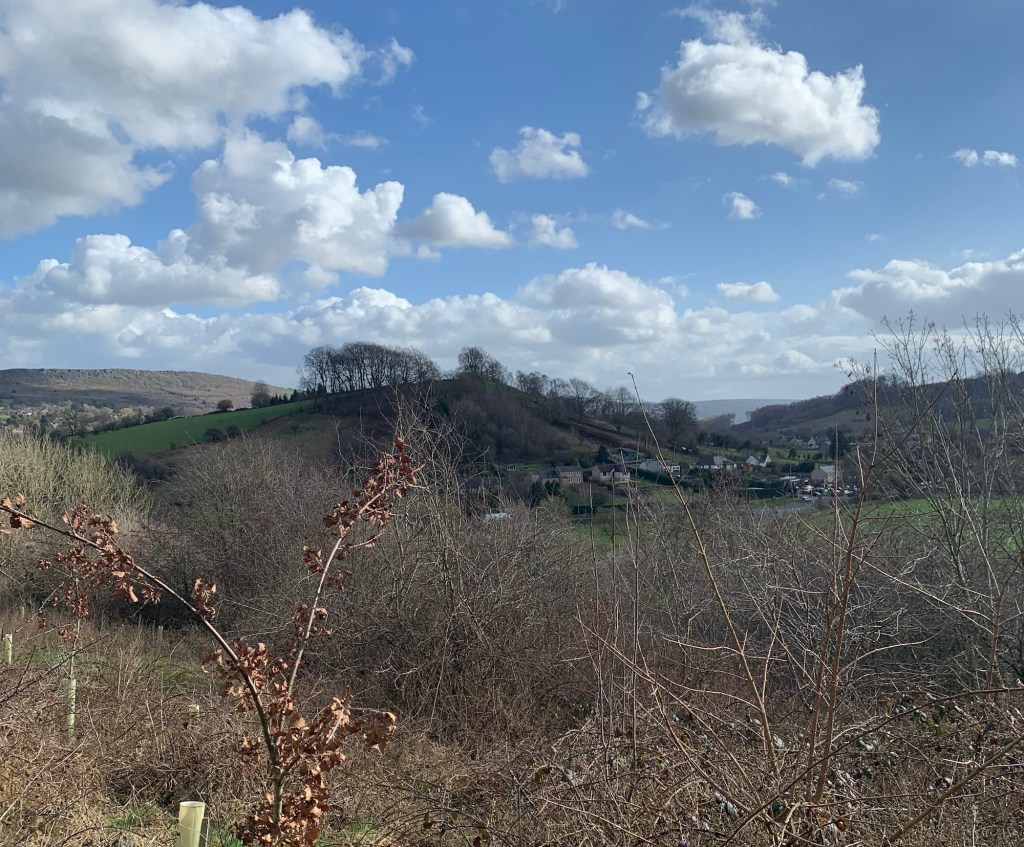
    https://footpathapp.com/routes/715D047C-4581-4998-9DAF-FCFFD52C5AF7?units=metric

  • L is for Little Longstone, Longstone Moor and Lover’s Leap ( with Litton as an optional extra.)

    This week, whilst we felt relieved to have successfully survived the scarcities of I, J and K, we were now faced with a positive glut of Ls to choose from…. and so, we got greedy and chose lots of them!

    Little Longstone had to be a priority as it’s already a two-for-the-price-of-one opportunity and not surprisingly, that led to the inclusion of nearby Longstone Moor. Originally, we’d optimistically included the village of Litton before our cafe stop but in reality tea and cake ( and thoughts of bus times home) won out, although we still finished the day in style with another buy-one-get-one-free and this time it was Lover’s Leap.

    Taking the 218 towards Bakewell we alighted at Pineapple Farm which is the stop just before the housing of Bakewell begins. It’s rather a perilous one for the driver so if you ( or the driver) miss it, don’t panic, just get off at the next stop and back track to where the road crosses over the Monsal Trail.

    Crossing the road is another peril but once over there’s a stile and steps down by the side of the bridge and onto the trail.

    Retrospective view of the way down onto the trail ( because I didn’t want to be run over while getting a photo from the road.)

    We enjoy getting a reasonable pace going along here as it’s easy walking and will help to warm us up, on this spectacularly bright and clear but cold November day.

    We’re soon whizzing past Hassop Station Cafe and then Quackers at Thornbridge without any slackening off although both are cafes we’re very fond of and would heartily recommend.

    Shortly after the old Thornbridge station there’s a crossroads of paths across the trail with the one on the left heading towards Ashford and ours on the right heading for Little Longstone.

    We follow a field path without too much mud today, to emerge at the road through the village just down the hill from The Packhorse pub. We’re almost opposite the old Manor House stables which have been stylishly refurbished as modern day holiday lets, (with castellations!)

    We turn right along the road and pass Stocks House next to the village stocks, both stocks and house dating from around the 17th century,  followed by the very impressive ( also 17th century) Manor House itself.

    For a small village, it feels like Little Longstone has a lot of splendid buildings and we certainly enjoy their beauty and individuality as we pass by them today.

    Later when I decide to find out more about the history of the place I incidentally discover what might also be a link to its name…

    The “Longsdon” family has been associated with the village since the 13th century, with their wealth increasing in the 17th century through involvement in the wool and cotton trades. 

    Aha! 

    And, as is so often the case in Derbyshire, the village’s prosperity was also linked to the lead-mining industry that flourished here and of which we’ll soon see plenty of evidence once we’re heading over the moor.

    We turn off Butts Road at the first finger post on our left

    and head along a field path

    which unexpectedly suddenly reveals splendid views of Beeley Moor, part of last week’s walk; K for Kelstedge.

    Surprise view over towards Beeley Moor

    After admiring some highland cattle from the safe side of an electric fence we head past Dale Farm and it’s out-buildings on a farm track which takes us to Moor Road, the lane that leads up to Longstone Edge from Great Longstone.

    I must just point out that this route omits the inclusion of Great Longstone despite its being another very interesting spot because we agreed it would not count as an L. That’s a penalty for our being so purist! (But maybe the silver lining is we’ve got a good G lined up there for next time?)

    Moor Road is used for an annual cycling hill climb event where various categories of cyclists pit themselves against the 2.2km uphill climb with an average gradient of over 7%. It’s great to see ( and probably great to participate if cycling hill-climbs is your thing) with a great atmosphere and lots of positive support.

    We head uphill ( thankfully not on our bikes!) and at the sharp right hand corner we head straight ahead onto a footpath through some trees and then up steps as we climb ever more steeply up onto Longstone Moor.

    Almost immediately we pass an overgrown ruin which I assume is a relic of the lead mining days and this is followed by numerous other lumps and bumps for the next couple of hours of our walk.

    As we’ve often remarked it’s unreal especially on a beautifully clear day like today, to think of our modern day rural ramblings taking place on the same ground that was once a hotbed of industrialisation.

    The views back through the trees are spectacular. In particular we spot the flat top of Fin Cop the Iron Age hill settlement, looking quite different from this angle to when we looked over to it on our C is for Chelmorton walk many weeks ago, back near the beginning of this alphabet.

    Once we’re through the gate and onto the moor the hill is almost done and then, next thing, we are rewarded with amazing views stretching ahead of us towards Mam Tor and Kinder. We feel as though we can see forever on this perfect day for enjoying the Peak in all its glory.

    The moorland path is a delight too; no disappearing acts like last week’s Beeley experience, and useful signs where you need them.

    Longstone Moor is not just any old L, it’s a beauty and has to be one of the top places for views in all of the Peak District.

    On days like this I want to walk all the paths at once but we settle for heading straight ahead and then when we reach a wall on the boundary of the moor we turn left following the path along the wall side.

    The path crosses a lane

    and then we walk through brighter-than-bright-green grazing pasture.

    We even have a laugh re-enacting the Genesis video from “I Can’t Dance” with our shadows until we reach the road just uphill of the village of Wardlow. 

    Turning right and heading down towards the village we are rapidly calculating kms/per hour, bus times and daylight hours and reluctantly we decide that today we’ll not be including the village of Litton in our litany of Ls.

    We solemnly declare that we will repeat this walk unabridged sometime next Spring or Summer when the days are longer …and then we head straight down the road to Yondermans Cafe at Wardlow Mires ( is that what it was really all about, I hear you wonder?)

    Just for anyone who fancies it, the Litton Loop as we might call it, would be added onto today’s walk by turning left about a quarter of the way through the village of Wardlow along a track which suddenly gives onto a stunning surprise view down into Cressbrook Dale, Peters Stone, Tansley Dale and ahead, the aforementioned Litton. You’ll need to head to the right dropping down into the valley bottom and then follow the winding path opposite up Tansley Dale with a couple of track/field path options leading you into the village of Litton.

    Litton has a community shop and cafe and there’s also the Red Lion if you fancy something stronger. Both are situated to the left of the point at which you will reach the Main Street. 

    To exit the village follow back along the road which is known as Mires Lane out of the village and then look for a path on your right which will lead you down the opposite side of the valley to Peter’s Stone and after a short stretch along the main road you will be back at Yondermans cafe and en route once again.

    Yondermans is a not to be missed experience which has morphed over the years from an old style transport cafe to a favourite motorcycle stop off and now seems to be covering all bases for all comers ( eg everything from bacon butties to pumpkin soup.)

    I’ve never known it not to be open and it’s often bursting at the seams so I guess that says something. Curiously I feel that over time the size of the sausage rolls and cakes is growing whilst the size of their mugs of tea  is shrinking. Not sure what that says, except that today I could have easily done with two mugs.

    Back outside after our cafe stop, now we really feel the cold as we’re waiting to cross the busy A623. We need to get moving again.

    The footpath is directly opposite and starts through the muddy stock yard of the farm.

    There are footpath signs scrawled on the farm buildings so you can’t go wrong and the path is soon back on the green pastures of this typical limestone scenery.

    We aim straight ahead initially, for the grand farmhouse known as Stanley House, another listed building, but in the last field before the house, since it’s only grazing land, we take a diagonal across to the stile in the top right corner just to save walking two sides of the field.

    Now we’re heading across a steeplechase of stiles and fields whilst enjoying even more views as we go. We’re heading towards Brosterfield Farm which is nowadays another splendid looking holiday refurb. I think this one does weddings too ( so be prepared to feel somewhat under dressed if you happen to be strolling by at the same time as the wedding party.)

    The path gives onto a lane at the end of which is a cattle grid and a kind of ranch archway with the name of the farm overhead. Reminds me of something from an American Western film set. 

    We’re very near a road junction so we first need to turn left for a few paces and then right in order to get onto the next lane.

    We pass a couple of houses and then we turn left onto a bridle way immediately before the junction with the main road ( the A623 again)

    This Bridleway is a favourite route of ours to Eyam as for the most part it’s easy underfoot and allows plenty of time to look around at the landscape.

    We nod towards The Barrel up on Bretton Edge, its whitewashed frontage always a good landmark and as the track heads into Eyam it’s well signed and straightforward. We head through a small housing estate and then right along the road past the church. We’re impressed by the Christmas deer up above the door of the Mechanics Institute, it must have been fun getting them up there.

    We realise we’ve been this way before on a previous alphabet walk ( G is for Grindleford also passes through Eyam) but this time at the triangle near the bus shelter we now head in a different direction as we head along the lane known as Lydgate.

    We pass the Lydgate graves and then keep straight on to the footpath ( not the Bridleway on the left) that takes us over the top of Lover’s Leap and to the famous Boundary stone.

    The Lover’s Leap story is a favourite Derbyshire tale of Hannah a jilted lover who decides to throw herself off the cliff behind us but who is saved by her long skirts getting caught in the trees and acting like a parachute.

    Back in the day, this tale also gave its name to another transport cafe down on the main road in Stoney Middleton, (now a restaurant), which I still mourn the departure of. In my memory, the mugs of tea there used to be enormous….

    Anyway, Lover’s Leap is today’s final L ( well double L actually) and having paused to read the information board, all that remains is for us to decide on our route to Calver Sough crossroads and the bus home.

    There’s a lovely back way from Stoney to Calver Sough avoiding the road but I’m afraid to say that we don’t take it today as we’re thinking we’d better focus on getting transport home.

    Actually it would be great to do S for Stoney Middleton when we get that far as it’s such a fascinating village and then we could come back and do the whole area justice.

    As it is today we just peg along the main road ( the A623 AGAIN!) which is very busy but at least has a pavement all the way to the crossroads.

    I always find catching the bus from Calver Sough a bit confusing because there are different stops for different buses and of course, just to complicate things further, buses that go to different parts of Sheffield.

    We end up catching a Bakewell bound 257 to Baslow from where we eventually pick up the usual 218 to get home.

    However it would be possible to catch an opposite direction 257 from here to Sheffield if that takes you nearer to home.

    Yet another option, also with its own different stop at the crossroads, (although beware, it is infrequent) , is the 65 to Sheffield.

    As a final thought I guess another option if you have made faster progress than we have today would be to walk through Calver village to Curbar and then follow the Derwent Valley Heritage Trail footpath from there to Baslow and catch the 218.

    So many possibilities to choose from, I will let you work it out!

    Well today has been a spectacular one for views and as always the Peak District is so full of interest. We’ve been very lucky with the weather and we’ll hold onto today in our memories because at this end of the year, we might not see anything to match today again in a while.

    See you next week for M.

    Transport 

    218 from Sheffield to edge of Bakewell 

    Buses back from Calver Sough: 257 or 65

    Or 257 to Baslow and then the 218

    Pubs/Cafes

    Yondermans 

    How far?

    Around 18k

    Route Synopsis 

    Monsal Trail, Little Longstone, Longstone Moor, Wardlow, Wardlow Mires, Stanley House, Brosterfield Farm, Eyam, Stoney Middleton, Calver Sough

    Dogs?

    Sheep but no cows.

    There were a number of stiles 

    Map

    OS White Peak
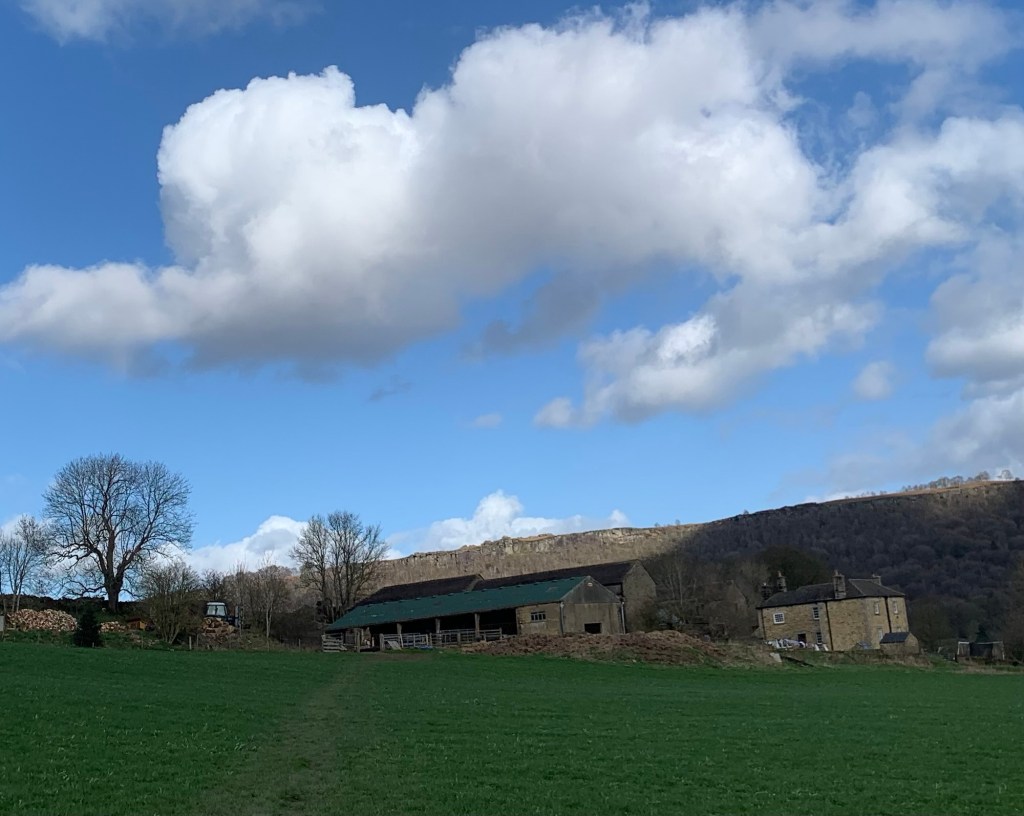
    https://footpathapp.com/routes/639B0111-961F-44BE-B6F3-CEF891382A00?units=metric

    Details of the Litton Loop add-on

    https://footpathapp.com/routes/16931398-BDC0-4E4A-BA70-06C43F57F300?units=metric

  • K is for Kelstedge

    Today’s walk starts from the small hamlet of Kelstedge which lies on the A632 Chesterfield to Matlock Road, and is part of the parish of Ashover.

    Since the X17 stops here on its way between Barnsley and Wirksworth we thought it would make for a handy “K” walk. It’s fair to say that “K” has proved to be another letter of the alphabet with a fairly limited number of places for us to choose from.

    The journey from Sheffield via Chesterfield passes quickly enough and soon we alight near The Kelstedge pub surprised that it’s not raining (yet).

    I’m intrigued by the place name Kelstedge as it somehow sounds ancient but unfortunately I’ve not been able to find a definitive origin yet.

    Maybe it was Kel’s homestead or Kel’s pool or even Kel’s ladder (?) but in lieu of any expert information it looks like we’ll just have to be content with not knowing.

    It’s quite busy on the A633 so our walk starts with a bit of a sprint to get over the road. Then off we set along Vernon Lane which turns out to have a number of interesting old houses along it before it becomes a footpath. 

    We’re soon descending to a footbridge over a stream just where it joins with another to become the River Amber ( of Ambergate and Amber Valley fame)

    Whilst the main track appears to head straight on we take the right fork up some steps and past a seat straight out of Lord of the Rings, soon emerging onto a lane where we turn left.

    There seems to be a glut of footpaths and a criss-cross of back lanes around here which makes me think this could be another interesting walking area outside of the Peak National Park and therefore somewhat less trodden.

    I’ve also noticed over the many years I’ve been walking, that numerous paths and lanes can be an indication of an area having had an industrial or otherwise more significant past than it currently has.

    Later I discovered this was indeed the case here….

    Soon after our left turn, a road forks off to the right

    but we continue straight on along Eaton Lane in order to take a left at the next junction and then the path to the right of Prestedge Farm ( there’s that “stedge” suffix again…. maybe Priest’s homestead?… who knows?)

    The track turns out to be a drive to Whitfield Farm but just at the right angled left turn there’s a pathway straight ahead along the side of a wood and through an old stone squeeze stile.

    The next lane we come to is Hodge Lane. We turn left and continue to follow the tarmac ignoring various paths on either side and heading straight ahead. Gaining height we have some magnificent views behind and once again congratulate ourselves on the weather holding off.

    Turning back to the direction of our walk, we notice the sky has suddenly gone rather dark and as we arrive at the T Junction with the B5057 we have a brief stop to don various waterproofs.

    This seems to do the trick as we really only get a bit of a shower before things brighten up again.

    We’re not far now from Darwin Forest Country Park which has a number of nicely presented walk leaflets available online so I’ve been hoping this would have a positive knock-on effect on the definition of our next path. However as we clamber over the stile by the finger post it would seem I was hoping in vain.

    There’s absolutely no sign of a path but we walk across the field on the diagonal anyway and luckily we can soon see there’s an official way out in the far corner taking us over yet another lane and onto yet another signed and stiled but entirely undefined path and taking yet another diagonal across a field.

    Then in the next field ( no sign of a bull) we keep the wall on our right and in the far corner we find a stream and some rough heaps of rocks and then a very wet and boggy patch over to the next gate.

    Funnily enough once through here we are on better defined territory ( perhaps our route is coinciding with a Country Park walk leaflet?)

    and we might actually be walking along part of the perimeter of the park as we follow the path along the wall side towards the buildings of Darley Forest Grange.

    Our path crosses directly over Flash Lane

    and through the small but intriguingly named Upper Dogkennel Plantation

    before another stile brings us quite suddenly out onto the wildness of Beeley Moor.

    The path is a little wet underfoot but clear and easy enough to follow and very dramatic.

    It’s exhilarating to be out on the open moorland and a complete contrast to the first part of the walk.

    We’re soon at the junction with the rather busy Chesterfield/Rowsley Road but there’s a bit of a grass verge which we follow left crossing the top of the pleasant looking Bent Lane which descends towards Darley Dale. 

    Just past this junction we spot a gate with an access sign over the other side of the main road which we hope will lead us further over Beeley Moor.

    Initially this looks like my perfect kind of path; an easy going, green trackway through wild peat moorland, but after about 5 minutes of skirting around what looks like old quarry or mine workings, the track reduces to a narrow path. This begins to look suspiciously more and more like a sheep trod and finally fizzles out into thick bracken….or maybe we just lose it?

    However the lack of path is definitely compensated for by the incredible views which are opening up around us and the sensational lighting and autumn colours.

    We can see over to Stanton Moor, we can see Over Haddon. The forested hillside between the Derwent and the Wye is a magnificent patchwork of colour bordered by the bright green of the high pastures behind Carlton Lees. It’s a fantastic view point and apart from the sheer beauty of it , this is also handy for working out where we are, or might be!

    We seem to have walked more or less north west across the moor and have arrived at further signs of what looks like old quarrying. I idly suggest all these old quarries might have something to do with getting stone for building Chatsworth House, which checking things out later turns out to be a pretty good guess if Wikipedia is anything to go by:

    “Three hundred years ago coal was mined on Beeley Moor for lead-smelting and for local homes. Chatsworth House was built from the high quality gritstone quarried on the moor. Beeley Moor was also renowned for grouse shooting.”

    Also see the following link for information on the coal mining on the moor including fascinating diary entries which say so much about daily life in this area in a very different time.

    We scramble down the bank near the stones, making our way through the bracken and head for the intake wall.

    Alongside this we find another ( or continuation of the same?) path and follow it to the right.

    I can see the intake wall on the map and the plan is to follow it until we hit the road which heads down into Beeley village.

    It’s rough walking but not too strenuous although we get continuous views of a delightful looking footpath which we’re running parallel with a few hundred metres the other side of the wall. It’s tantalisingly inaccessible but if we’d followed a lower level valley side route avoiding the moor we’d probably have missed those stunning views. That’s what we tell ourselves anyway as we clamber along.

    Eventually we can see the road we’re heading for and after a patch of difficult wet ground we get to a battered old gate which gives us our way out.

    Perhaps if we’d kept to a higher point on the moor we might have found another or easier way….maybe we’ll have a look at doing that another day… but for now we’re happy with having crossed the moor and even more happy to be back on firmer ground with a cafe calling us downhill into Beeley.

    Turning left along the road, we start to descend when, a few moments later, we think our plans have been thwarted. Ahead it looks as though the road is completely blocked off. 

    But although there’s absolutely no way down for motor traffic due to a landslip partway down the road ( maybe not such firm ground afterall?)  for pedestrians it’s easily passable and we even meet a cyclist coming up the other way; obviously a hill lover!

    The road leads us down into the Chatsworth estate village of Beeley with its pub and Old Smithy cafe which is where we’re  now heading with a vengeance as the heavens have begun to open.

    The cafe is quite large and also very popular as all things Chatsworth tend to be. We’re pleased to get a table and a proper pot of tea.

    We don’t want to stop for too long as we’re always aware of bus times but as we step back outside it’s like stepping under an ice-cold power shower! 

    Undeterred we head up the road past the old chapel and then past the delightful looking church

    and the very interesting building of the old vicarage

    before we cross over the main road and get onto the path which takes us to the bridge at Carlton Lees.

    There’s plenty of water swirling down the Derwent as we squelch our way along the river path through the park.

    The parkland of Chatsworth is like a third contrast of our walk after the woodland paths and lanes in Part 1 and the wild moors of Part 2.

    However we’re too wet to be appreciating the aesthetics of the walk at the moment especially when we see a bus in the distance meandering its way towards the House from Edensor and it’s obvious we’re not going to make it.

    We console ourselves with the fact that it could just as easily be the 218 from Sheffield  as the one from Bakewell and when we get to Queen Mary’s Bower we decide to just keep on through the park to Baslow in the hope of intercepting the school bus, rather than messing around trying to catch a bus from the stop up at the House.

    It’s raining like Noah’s flood and when we make it to Baslow we take it in turns to stand in the shelter or get even wetter at the bus stop. I’ve seen the bus go straight past before now if no one’s standing at the stop so we think it’s an inconvenience worth enduring.

    Politely late, the 218 finally comes along, full of noisy Lady Manners school kids who’ve obviously not had enough outdoor playtime today. We’re now not just soaking wet but also in danger of going deaf from the racket! Only joking, we love the school bus because it’s always late but never cancelled. It’s generally great entertainment to see the kids wearing off their pent up energy after a day at school, doing all kinds of daft things and then saying thank you so nicely to the driver when they get off.

    One way or another it feels like we’ve had quite an adventure. Would I recommend this walk? Yes, I would…. just be prepared for making it up yourself over the moor.

    Alternatively there are numerous paths and lanes which could be investigated for other options dropping down into the Derwent Valley sooner than Beeley.

    Transport 

    X17 from Sheffield to Kelstedge

    218 from Baslow to Sheffield 

    Pubs/Cafes

    The Kelstedge Inn

    The Foresters bar and restaurant Darwin Forest Country Park 

    The Beeley Inn

    The Old Smithy cafe Beeley

    How far?

    Around 18k

    Route Synopsis 

    Kelstedge- Hodge Lane- Darwin Forest Grange- Beeley Moor-Beeley-Chatsworth Park

    Dogs?

    Today we encountered no livestock. (In fact the only human being we encountered all day was the lone cyclist.)

    There were a few stiles 

    Map

    OS White Peak
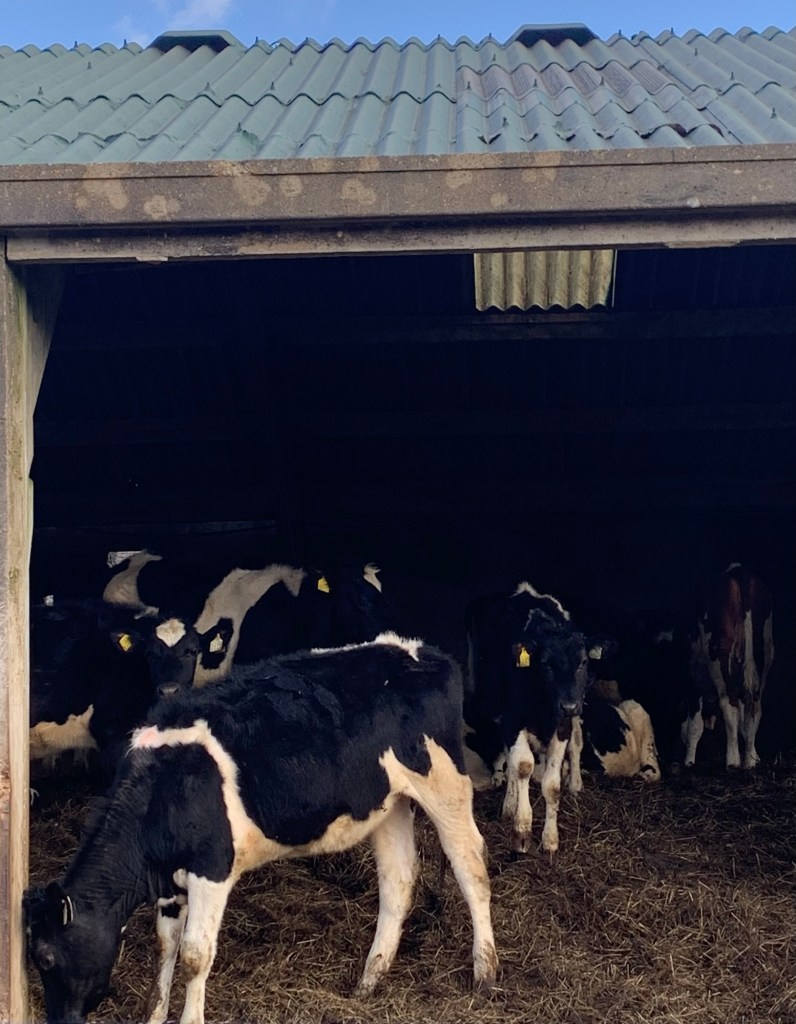
    https://footpathapp.com/routes/9DC3AF0E-4AB4-4ECC-9D4C-D434AC154BFC?units=metric